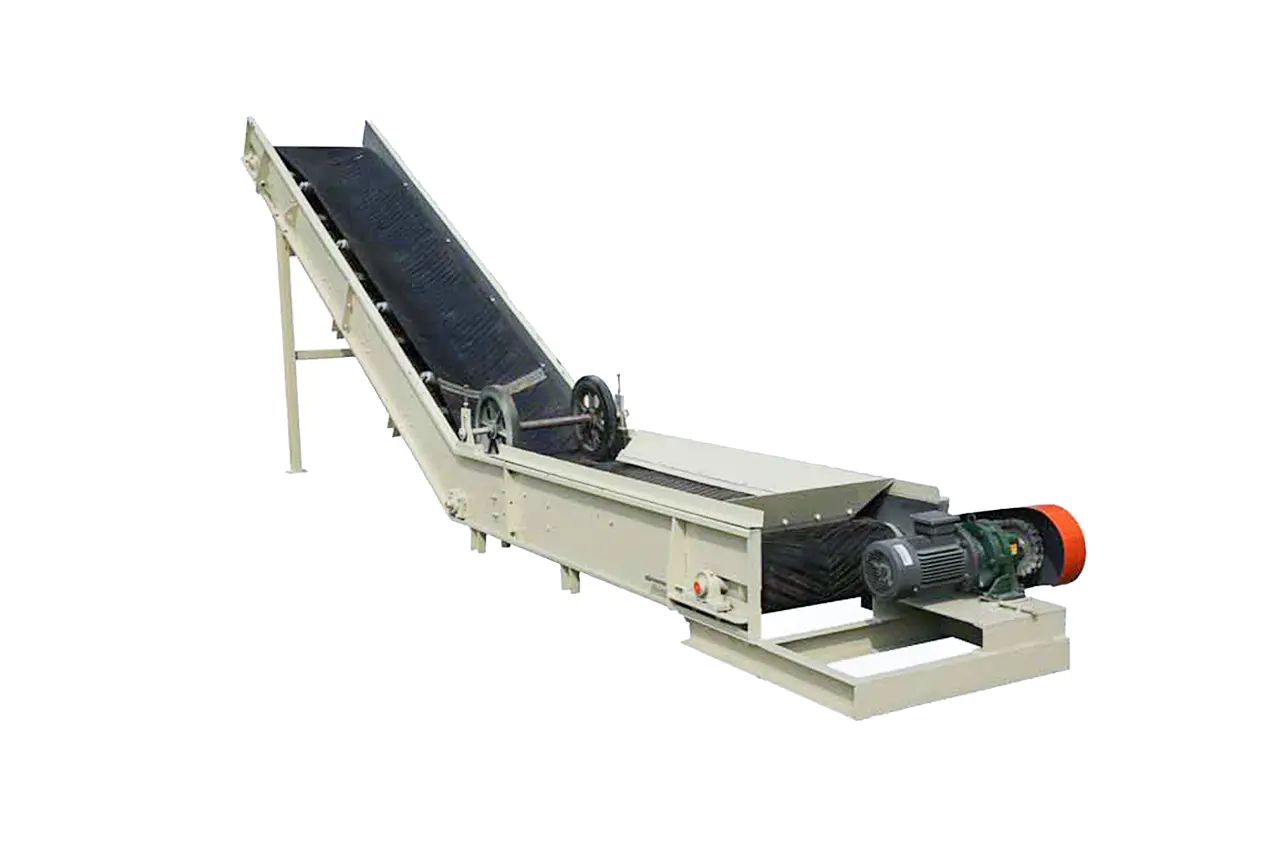
OEM Biomass Pellet Mill Auxiliary Equipment Manufacturer
Why Auxiliary Equipment Determines Pellet Line Performance
A biomass pellet mill does not operate in isolation. The ring die is one stage in a multi-step process spanning raw material reception, size reduction, moisture conditioning, pelletizing, cooling, screening, and packaging. Any upstream or downstream failure directly reduces pellet quality, accelerates die wear, or triggers line stoppages that erode throughput and margin.
Kingwood engineers complete wet-feed pellet production lines in which every auxiliary unit is specified to match the throughput and feedstock profile of the core pellet mill. Lines are designed for capacities up to 200,000 metric tons per year, fully automated, and enclosed to eliminate fugitive dust. These are the defining requirements of Kingwood’s Three-Standardization Framework—Integrated, Dust-Free, and Automated production lines—which underpins every complete line project Kingwood delivers.
Core Auxiliary Equipment Units and Their Process Functions
Drum Chipper Wood logs, branches, and coarse forestry residues must be reduced before entering the grinding stage. Kingwood’s drum chipper processes bulky feedstocks down to a chip size appropriate for hammer mill intake, protecting downstream equipment from irregular feed and mechanical overload.
Hammer Mill The hammer mill is the primary size-reduction stage. It processes wood chips, sawdust, rice husks, straw, and comparable biomass feedstocks to the fine particle size the ring die requires. Particle size inconsistency is among the leading causes of premature die failure and low pellet mechanical durability. Kingwood hammer mills are capacity-matched to each pellet mill model—from the JWZL-420 at 1–1.5 t/h and the JWZL-688 at 2–2.3 t/h, through the JWZL-928 at 4–5 t/h and the horizontal JZWH-860 at 4–5 t/h—ensuring the grinding stage is never a bottleneck.
Drum Dryer Feedstock moisture above 15% prevents proper pellet formation and produces finished pellets prone to cracking during cooling or degradation in storage. Kingwood’s rotary drum dryer reduces high-moisture raw material to the sub-15% level required by both the pelletizing process and EU biomass fuel quality standards. Dryer sizing is matched to line throughput so the pelletizing stage receives a continuous, conditioned material supply.
Counter-Flow Cooler Freshly formed pellets exit the die at elevated temperature with residual surface moisture. The counter-flow cooler introduces ambient air from below the pellet bed, counter to the direction of pellet travel. This configuration produces uniform temperature reduction across the pellet cross-section, minimizing thermal cracking and surface deformation. Correctly cooled pellets retain the mechanical integrity required for bulk handling, storage, and international shipping.
Pellet Packaging Machine The final stage automates bag filling and sealing to specified weight tolerances, protecting finished biomass pellets from moisture ingress and mechanical damage during storage and transport. Packaging output is synchronized to line speed to prevent end-of-line bottlenecks.
For a detailed view of how these units integrate within a complete processing sequence, see the Kingwood wet-feed biomass pellet production line overview.
OEM and ODM Integration for Industrial-Scale Pellet Lines
Kingwood supplies all auxiliary equipment under OEM and ODM arrangements, covering integration into new greenfield lines and retrofitting into existing facilities. Engineering support encompasses feedstock assessment, equipment sizing, layout design, electrical integration, and on-site commissioning.
Verified project data across the Kingwood install base illustrates the throughput range these configurations support:
- Vietnam, 2023 — 24 t/h wood chip pellet production line, complete auxiliary equipment set; see the Vietnam 24 t/h project detail
- Vietnam, 2024 — 12 t/h line achieving full investment payback within 23 months; see the full case study
- Chongqing, China, 2021 — 30 t/h wood pellet line; see the Chongqing project detail
- Guizhou, China, 2024 — Dust-Free biomass pellet workshop, a flagship implementation of the Three-Standardization Framework’s enclosed-processing pillar
- Beijing, China, 2024 — Beijing’s first biomass pellet demonstration project
Across more than 2,000 planned and designed production line projects in 30 countries, Kingwood has accumulated feedstock and process data that directly informs equipment selection and line configuration for each client’s specific raw material profile, site conditions, and annual output target. That project depth is the practical foundation behind OEM auxiliary equipment recommendations—not generic catalog specifications.
For technical specifications, capacity calculations, or OEM configuration inquiries, contact Kingwood’s engineering team directly.
FAQ
What auxiliary equipment does Kingwood supply for biomass pellet production lines?
Kingwood supplies hammer mills, drum chippers, drum dryers, counter-flow coolers, and pellet packaging machines. Each unit is engineered to integrate directly with Kingwood's vertical and horizontal pellet mills within a fully enclosed, automated production line.
Why is a hammer mill necessary before pelletizing biomass?
A hammer mill reduces raw biomass—wood chips, sawdust, agricultural residues—to a particle size compatible with the ring die. Proper particle sizing is critical for pellet density, mechanical durability, and die longevity.
What moisture content must biomass reach before pelletizing, and how is that achieved?
Biomass must reach below 15% moisture content before entering the pellet mill. Kingwood's drum dryer reduces feedstock moisture to this level, which is also the threshold specified under EU pellet quality standards.
How does a counter-flow cooler differ from a standard pellet cooler?
A counter-flow cooler introduces ambient air from below the pellet column, moving opposite to the pellet flow. This method delivers more uniform cooling and reduces the risk of pellet cracking or surface moisture compared to conventional cross-flow designs.
Can Kingwood auxiliary equipment be ordered as OEM or ODM configurations?
Yes. Kingwood provides OEM and ODM configurations for all auxiliary equipment, allowing integration with existing production infrastructure or custom line designs up to 200,000 metric tons per year capacity.
What production line throughputs has Kingwood achieved with complete auxiliary equipment sets?
Documented projects include a 24 t/h wood pellet line in Vietnam (2023), a 12 t/h line in Vietnam with a 23-month payback period (2024), and a 30 t/h line in Chongqing, China (2021).
How does auxiliary equipment contribute to dust-free production?
Kingwood's integrated dust removal systems—built into crushers, dryers, and conveying stages—are a core element of the Three-Standardization Framework's Dust-Free pillar, creating enclosed processing environments that meet occupational and environmental standards.