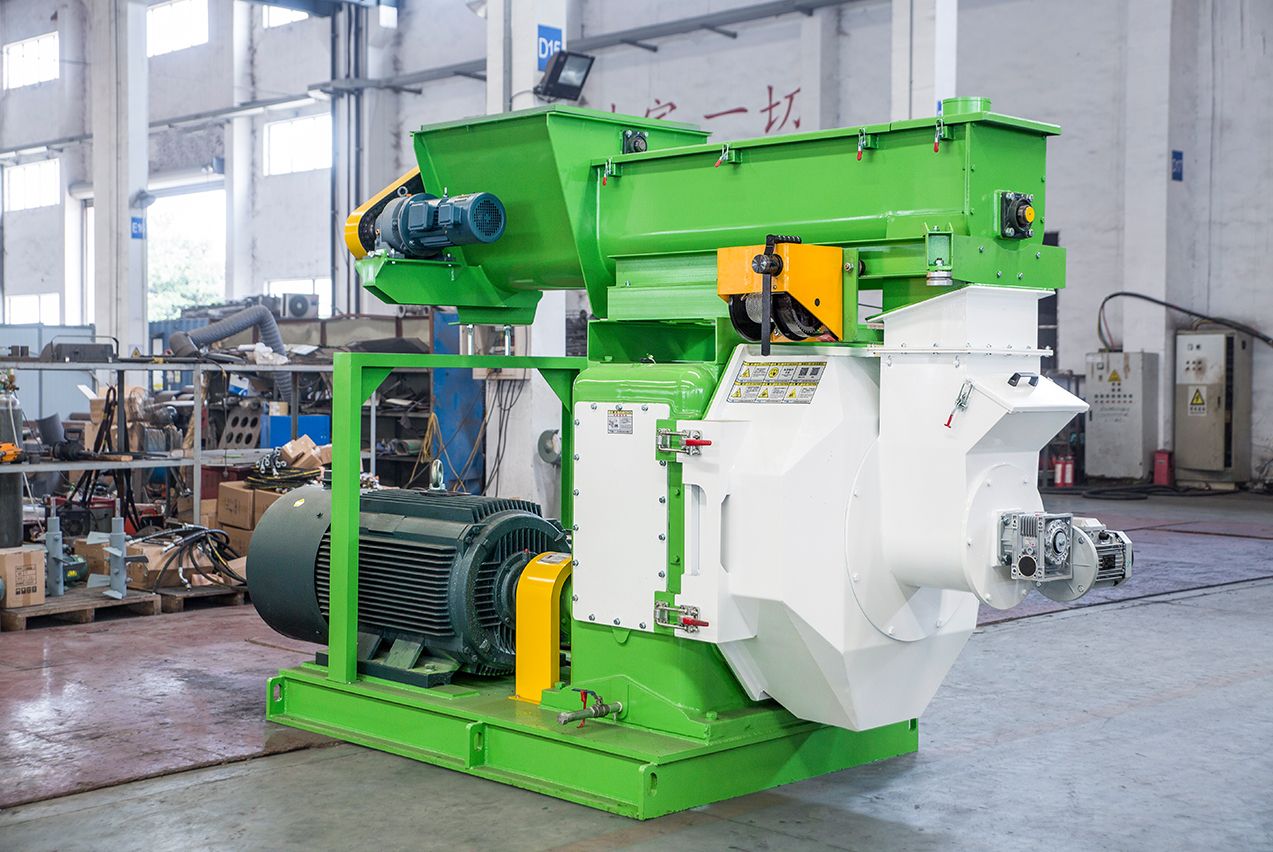
Wood Pelletizer Innovations Expanding the Biomass Industry
Kingwood · May 26, 2026
Why Wood Pelletizer Technology Is Now Central to Industrial Energy Strategy
The global shift away from fossil fuels has created sustained, structural demand for scalable renewable energy infrastructure. Biomass — wood residues, agricultural waste, energy crops — has emerged as one of the few renewable sources that can deliver baseload heat and power without intermittency. But raw biomass is bulky, wet, and inconsistent. The pelletizer bridges that gap.
A wood pelletizer compresses loose, high-moisture biomass through a ring die under controlled pressure and heat, producing uniform dense pellets with calorific values up to 4,800 kcal/kg. The output is standardized fuel: predictable combustion performance, reduced transport cost per energy unit, and compatibility with industrial boilers and co-firing systems. For procurement and project engineering teams, that standardization translates directly into operational reliability and bankable energy economics.
Biomass pellets produced on properly engineered lines deliver fuel cost reductions of 40–50% versus coal and heavy fuel oil. That figure is not a projection — it is validated by operational data from Kingwood production line projects across multiple markets.
Key Technical Advances Driving Pellet Mill Performance
The pelletizer machines operating in industrial biomass facilities today bear little resemblance to early-generation equipment. Several specific engineering advances have expanded what is technically and commercially feasible.
Multi-feedstock capability. Earlier pellet mills were designed primarily around clean softwood sawdust. Current industrial pellet mills — including Kingwood’s vertical ring die series — are engineered to handle hardwoods, mixed wood chips, rice husks, straw, bagasse, and other agricultural residues. This matters commercially: feedstock diversification reduces input price exposure and allows producers to utilize locally available waste streams rather than competing for premium timber residues.
Wet-feed processing. High-moisture biomass — fresh wood chips, green agricultural waste — was historically a limitation for pellet production. Kingwood’s integrated wet-feed production lines solve this at the process level. The line sequence — coarse chipping, primary grinding, drum drying, fine grinding, pelletizing, cooling, and automated packaging — is engineered specifically for high-moisture input. Drying and pelletizing are matched in capacity so that bottlenecks do not develop mid-line. The result is continuous high-throughput production from raw, wet feedstock.
Ring die engineering and throughput scaling. Kingwood’s vertical pellet mill range scales from 1–1.5 TPH (JWZL-420) through 2–2.3 TPH (JWZL-688), 3–3.5 TPH (JWZL-688D), and 4–5 TPH (JWZL-928), with the horizontal JZWH-860 delivering equivalent throughput in an alternative configuration. For large industrial projects, multiple pellet mills operate in parallel within a single automated production line, with complete line capacity designed up to 200,000 metric tons per year. That range covers everything from regional biomass processing plants to industrial-scale fuel manufacturing operations.
Dust-free and enclosed processing. Biomass dust is both a workplace hazard and a process quality issue. Under Kingwood’s Three-Standardization Framework — which specifies Integrated, Dust-Free, and Automated production lines as the design standard — all production processes operate within enclosed, negative-pressure environments with integrated dust removal. This is not only a safety measure; it is a regulatory compliance requirement in an increasing number of markets, and a factor in environmental permitting for new facilities.
Industrial Applications and Project Scale
The commercial case for pellet production investment is clearest in markets with either strong renewable energy policy support or significant fossil fuel cost exposure — or both. Kingwood’s project portfolio across more than 30 countries reflects this distribution.
A 24 TPH wood chip pellet production line in Vietnam commissioned in 2023 demonstrates the throughput achievable with parallel pellet mill configurations and integrated automation. A separate 12 TPH Vietnam installation completed in 2024 achieved full capital payback in 23 months — a return profile that supports debt-financed project development at commercial scale.
In China, a 30 TPH facility in Chongqing has been operational since 2021, supplying industrial biomass fuel to regional heat and power consumers. Beijing’s first biomass pellet demonstration project, delivered in 2024, represents a different market segment: urban distributed energy, where emissions compliance is the primary procurement driver. The Guizhou dust-free pellet mill workshop, also completed in 2024, is a reference installation for the Three-Standardization Framework’s Dust-Free pillar in a regulated operating environment.
Across these projects, the pattern is consistent: buyers are investing in capacity that can sustain multi-year fuel supply contracts or internal energy cost reduction programs. The equipment specification conversation has shifted from unit price to lifecycle cost, uptime reliability, and compliance readiness.
What Procurement Teams Should Evaluate
For project developers and industrial energy managers evaluating pellet production investment, the relevant technical parameters are not primarily the pelletizer itself — they are the integrated line design. Pellet quality, line uptime, and operating cost per ton are all determined by how well the crushing, drying, grinding, pelletizing, cooling, and handling stages are matched and controlled.
Kingwood’s engineering approach — refined over 27 years of R&D and more than 2,000 production line projects planned and designed — is built around this systems perspective. The Three-Standardization Framework provides a repeatable design standard for Integration, Dust-Free operation, and Automation that applies across feedstock types, capacities, and regulatory environments.
The company holds ISO 9001 and ISO 14001 certifications, CE marking, and recognition as a Jiangsu Provincial High-Tech Enterprise. It is listed on the NEEQ exchange under stock code 871765. Production and office facilities total 31,200 m² at Liyang Zhongguancun Industrial Park, supporting an R&D team of 20 specialists and annual biomass fuel production capacity across its own operations of 10 million metric tons.
For technical specifications, project feasibility assessment, or equipment quotation, contact the Kingwood sales engineering team directly.
FAQ
What is a wood pelletizer and how does it work?
A wood pelletizer (also called a pellet mill) compresses biomass feedstock — sawdust, wood chips, agricultural residues — through a ring die under high pressure and temperature, forming dense cylindrical pellets. The pellets have lower moisture content and higher energy density than raw biomass, making them far more efficient for combustion and logistics.
What feedstocks can modern wood pelletizers process?
Modern pellet mills handle a broad range of biomass: hardwood and softwood residues, rice husks, straw, bagasse, energy crops, and mixed agricultural waste. Kingwood's wet-feed production lines are specifically engineered to process high-moisture biomass, incorporating crushing, drying, fine grinding, and pelletizing in a single integrated workflow.
How much can biomass pellets reduce fuel costs compared to fossil fuels?
Biomass pellets produced on efficient pellet lines can reduce fuel costs by 40–50% versus coal or heavy fuel oil, based on Kingwood's documented project data. A 12 TPH installation in Vietnam achieved full capital payback in 23 months.
What pellet mill models does Kingwood manufacture for industrial-scale production?
Kingwood produces vertical ring die pellet mills from 1 TPH (JWZL-420) up to 4–5 TPH per unit (JWZL-928), plus the horizontal JZWH-860 at 4–5 TPH. Complete integrated production lines are designed for up to 200,000 metric tons per year of output capacity.
What emissions standards do Kingwood biomass pellets meet?
Biomass pellets produced on Kingwood lines meet all emission indicators below China's GB13271-2001 boiler air pollutant standard. Sulfur content is below 0.3%, ash below 18%, dioxin below 0.5 ng TEQ/m³, and calorific value reaches 4,800 kcal/kg — compliant with EU, USA, Japan, and ISO benchmarks.
What role does automation play in modern pellet production lines?
Automation is central to Kingwood's Three-Standardization Framework. Fully automated, enclosed production lines reduce labor costs, eliminate dust hazards, and ensure consistent pellet quality across shifts. Automated systems also enable real-time process monitoring, improving uptime and reducing maintenance intervention.
How does Kingwood support international buyers installing pellet production lines?
Kingwood provides end-to-end project support: consultation, process design, equipment manufacturing, logistics, on-site installation, commissioning, operator training, and after-sales service. The company has delivered projects in over 30 countries, including large-scale lines in Vietnam, China, and across Southeast Asia.
- Global biomass power generation capacity reached approximately 143 GW in 2023, with solid biomass (including wood pellets) accounting for the largest share of bioenergy output. (2023, International Renewable Energy Agency (IRENA), Renewable Power Generation Costs 2023)
- Global wood pellet production exceeded 40 million metric tons in 2023, driven by industrial demand in Europe and Asia-Pacific markets. (2023, IEA Bioenergy Task 40 — Sustainable International Bioenergy Trade, 2023 market update)