Wood Pellet Mill Price: What Drives Cost & How to Budget
Kingwood · May 26, 2026
Why Wood Pellet Mill Prices Vary So Widely
A search for “wood pellet mill price” returns listings from under $3,000 to well above $180,000. That gap is not a market anomaly — it reflects genuinely different machines serving different production scales.
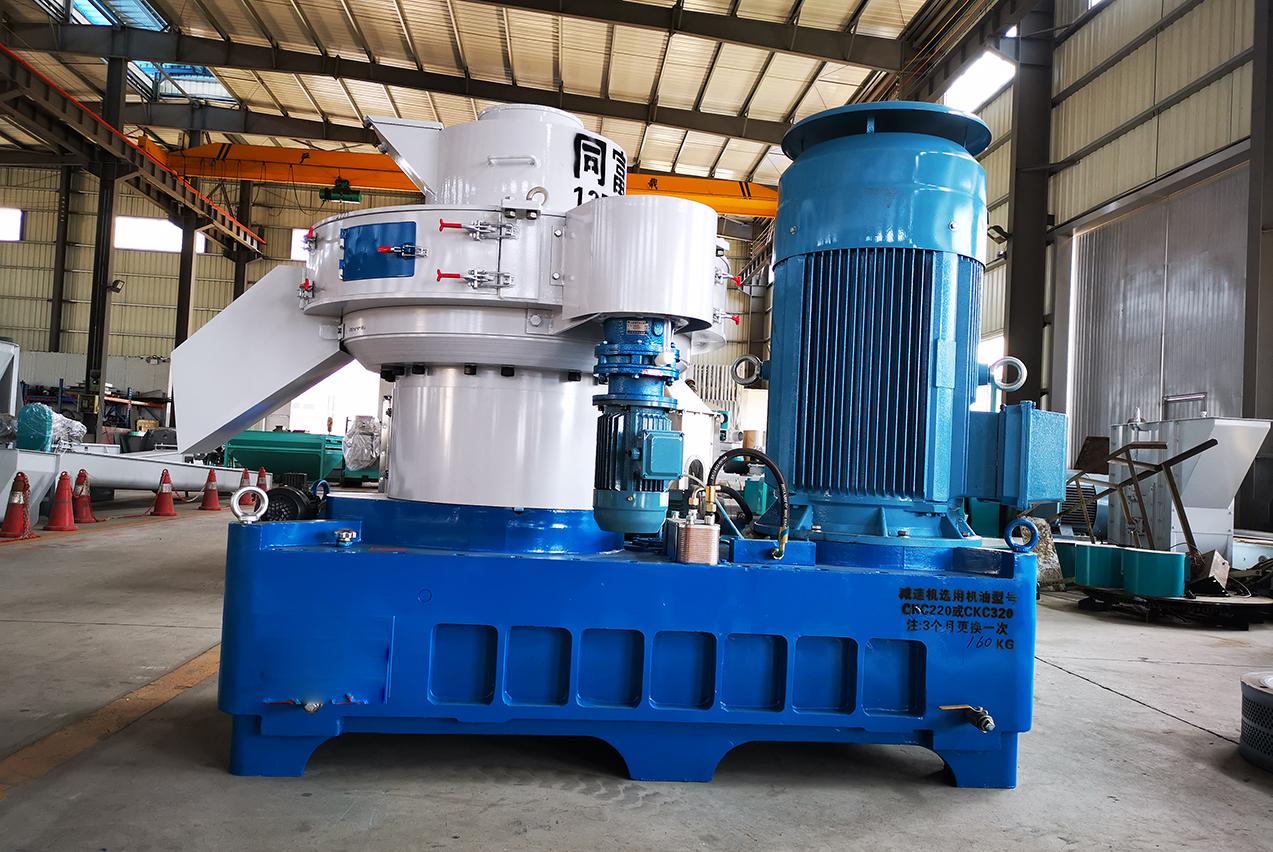
At the low end, small flat die mills with motors below 22 kW target farm-scale or pilot use, producing a few hundred kilograms per hour. At the high end, industrial ring die systems with motors above 280 kW and die diameters up to 860 mm run continuous multi-shift production at 4–5 t/h or more. Comparing these by price alone is no more meaningful than comparing a light commercial van to a 40-tonne freight vehicle.
Three Broad Price Tiers
| Category | Typical Capacity | Motor Range | Indicative Price (FOB China) |
|---|---|---|---|
| Small / flat die | 50–500 kg/h | 7.5–22 kW | $2,000–$8,000 |
| Mid-range ring die | 1–3 t/h | 90–200 kW | $18,000–$55,000 |
| Industrial ring die | 3–6 t/h | 200–400 kW | $55,000–$180,000+ |
What the table cannot capture is variance within each tier. Two machines listed at the same price and rated capacity can differ significantly in die material grade, bearing brand, gearbox precision, and spare parts availability. Those differences determine uptime, pellet quality, and five-year total cost of ownership — not the purchase price alone.
The Five Core Factors That Determine Final Price
Understanding what you are paying for prevents both overpaying for unused capacity and under-buying equipment that constrains your operation within 18 months.
1. Ring Die Diameter
Die diameter is the most direct proxy for throughput and machine cost. A 420 mm die — as used in the Kingwood JWZL-420 — produces 1–1.5 t/h at 90 kW. The JWZL-688 with a 688 mm die reaches 2–2.3 t/h at around 200 kW. The JZWH-860 with an 860 mm die delivers 4–5 t/h at 280–355 kW. Each step up in die size roughly doubles capital cost; budget accordingly rather than extrapolating linearly.
2. Motor Power and Efficiency Class
Standard asynchronous motors cost less upfront but draw disproportionate current at partial load. The JWZL-688D uses a permanent magnet synchronous servo motor that maintains high efficiency across varying load rates and provides smoother torque control, reducing die wear. For a 200 kW machine running two shifts, a 10% improvement in electrical efficiency produces measurable savings over a full production year — enough to partially offset the motor upgrade cost.
3. Die and Roller Shell Material Grade
Ring die quality separates reliable mills from high-maintenance ones. A CNC-drilled die with vacuum heat treatment holds tighter hole tolerances and resists surface fatigue significantly longer than a conventionally machined die. Higher-grade chromium-molybdenum alloy roller shells wear more slowly, maintaining nip geometry and keeping Pellet Durability Index (PDI) above the 97.5% threshold that commercial buyers require. Lower-grade components may reduce purchase price by 20–30% but typically require replacement two to three times more frequently under equivalent operating conditions.
4. Capacity Step Pricing Is Non-Linear
Moving from 1–1.5 t/h (JWZL-420) to 2–2.3 t/h (JWZL-688) roughly doubles motor power and substantially increases die and gearbox mass — price increases approximately 2–2.5×. Moving further to 4–5 t/h (JWZL-928 or JZWH-860) adds structural steel, larger bearings, and higher-rated seals, representing another 1.5–2× increase. A 3× capacity step does not cost 3× the machine price.
5. Gearbox, Bearings, and Sealing Systems
These are the components buyers least scrutinize in a quote but most notice in operation. Precision-ground hard-tooth-surface gearboxes reduce noise and transmission losses. The labyrinth mechanical seal on roller bearings — standard across Kingwood machines — prevents lubricant contamination that shortens bearing life in dusty production environments. A non-stop refueling system permits lubrication while running, eliminating the production stoppages that accumulate to multiple days of lost output per year in facilities that require manual greasing shutdowns.
Ring Die vs Flat Die: When the Price Premium Is Justified
A flat die mill at 300–500 kg/h typically costs $3,000–$12,000. A ring die mill at comparable output costs $15,000–$25,000. That 2–3× premium is real, and it is not always warranted.
Flat die is appropriate when: output requirements are consistently below approximately 500 kg/h — small farms, research facilities, or early-stage pilot projects. For dry, low-density materials at this scale, flat die mechanics are adequate and maintenance is simpler.
Ring die is justified when: production requirements exceed 500 kg/h on a sustained basis. The rotating die and stationary roller configuration handles higher feed rates more efficiently, generates less heat per ton of output, and scales to much greater capacities. For wood chips, sawdust, palm shell, and bamboo — the standard industrial feedstocks — ring die mills deliver more consistent bulk density above 600 kg/m³ and reliable PDI at sustained throughput.
Three-to-five-year total cost of ownership frequently reverses the initial price comparison. A flat die mill operating near its upper limit shows higher specific energy consumption (kWh per ton) and more frequent die changes than a ring die mill running at moderate load. Over a multi-year operating horizon, the ring die’s higher acquisition cost is typically recovered through lower energy costs, fewer die replacements, and higher uptime — particularly with feedstocks that have variable moisture content or fiber length.
Budgeting a Complete Production Line, Not Just the Pellet Mill
The wood pellet mill price is one line item in a broader capital budget. First-time plant builders frequently anchor on the pelletizer cost and underestimate total CapEx by 40–60%.
A complete biomass pellet production line for wet feedstock requires equipment beyond the pellet mill itself:
- Drum chipper: Reduces logs and branches to chip size suitable for downstream grinding.
- Coarse hammer mill: Reduces chips to approximately 15 mm particle size for dryer feed.
- Drum dryer: Brings moisture from 30–50% down to 10–14% required for reliable pelletizing. Dryer sizing must match pellet mill throughput precisely; undersized dryers create the most common bottleneck in new installations.
- Fine hammer mill: Reduces dried material to 3–8 mm for optimal die filling and pellet density.
- Counter-flow cooler: Brings pellet temperature from 70–90°C at mill exit to ambient +5°C, stabilizing pellets before packaging.
- Dust collection, conveyors, bagger: See pellet mill auxiliary equipment for configuration options.
Civil works — concrete pads, structural steel, electrical infrastructure — typically add 15–25% of equipment cost in Southeast Asian markets. Dust collection systems, if not included in the base equipment quote, add $15,000–$60,000 depending on line scale. Packaging systems range from $8,000 for basic bulk-bag fillers to $80,000 for automatic small-bag lines. Budget all of these before comparing supplier quotes on the pellet mill unit alone.
Kingwood’s Three-Standardization Framework — integrated, dust-free, and automated production lines — adds structured cost upfront through enclosed conveyors, water-film dedusting, and automated feed controls. These systems reduce labor headcount, eliminate dust-related fire risk, and satisfy environmental compliance requirements that regulators in Vietnam, Indonesia, and the EU increasingly enforce. Lines built to this standard also qualify more readily for green energy subsidies across multiple markets.
Red Flags in Low-Price Quotes
A quote that appears 30–40% below market for the stated specifications almost always reflects specific compromises.
Die and roller quality shortcuts are the most common. Low-cost suppliers frequently use standard carbon steel dies without vacuum heat treatment and conventional rather than CNC hole-drilling. Inconsistent hole geometry causes uneven pellet formation, elevated fines content, and PDI well below the 97.5% commercial threshold. Buyers encounter this first in customer rejections, not in equipment inspection.
Lubrication system gaps are the leading cause of early bearing failure in field installations. Machines without non-stop lubrication systems force scheduled production stops for greasing; field data across multiple installations shows bearing failure at 800–1,200 hours under inadequate lubrication conditions.
After-sales infrastructure absence is the most costly gap to discover after purchase. Low-price suppliers frequently carry no stocked spare parts, employ no trained commissioning engineers, and maintain no regional service network. When a bearing fails at hour 700, the real cost of the low-price machine becomes apparent.
Before accepting any quote, request documented test data confirming bulk density above 600 kg/m³ on dry sawdust at 10–14% moisture, and PDI of 97.5% or higher. Ask specifically whether ring dies are drilled on a fully automatic CNC machine and whether vacuum heat treatment is applied. Ask for photos of the machining facility, not only of finished units.
How to Request a Quote That Returns Accurate Numbers
Suppliers who ask the following questions before quoting are far more likely to return a realistic price:
- Feedstock type: Wood chips, sawdust, agricultural straw, palm shell, bamboo — each affects die specification and conditioner configuration.
- Incoming moisture content: Above 20% requires a dryer sized correctly to the line capacity.
- Particle size after initial crushing: Determines hammer mill screen and motor selection.
- Target output in t/h and daily operating hours.
- Pellet diameter and end-use market: 6 mm for boiler fuel, 8 mm for industrial co-firing, different length-to-diameter ratios for export certification requirements.
A complete quote itemizes: machine unit with motor specification, first-year consumables spare parts package (ring die, roller shells, hammer mill blades, bearings), installation and commissioning scope, operator training days, and warranty terms. A quote line that reads only “1 × pellet mill, 3 t/h, $X” is incomplete and will expand later.
Kingwood follows a structured project development sequence: raw material analysis → site analysis → market and policy review → production line planning → cost estimation. With over 2,000 production line projects planned and designed since 1999, and active installations across 30 countries, the reference base for realistic cost estimation is extensive. The JWZL-420, JWZL-688, JWZL-688D, JWZL-928, JWZL-1068, and JZWH-860 cover 1 t/h to 5+ t/h per mill unit, with multi-mill configurations reaching 30 t/h and above at sites such as the 30 t/h installation in Chongqing, China.
Kingwood machines carry CE, ISO 9001, and ISO 14001 certification. R&D is conducted by 20+ senior engineers, with university research partnerships supporting ongoing product development. To discuss your specific project and request a tailored quotation, provide feedstock type, incoming moisture content, and target daily output.
FAQ
What is the typical price range for an industrial ring die wood pellet mill?
Industrial ring die pellet mills producing 3–6 t/h (such as the Kingwood JWZL-928 or JZWH-860) typically range from $55,000 to $180,000+ FOB China, depending on die diameter, motor specification, and included auxiliary systems.
Why do two pellet mills with the same rated capacity have different prices?
Die material grade, CNC machining precision, vacuum heat treatment, bearing brand, gearbox quality, and after-sales service infrastructure all vary between suppliers at similar headline capacities. These differences determine uptime, pellet quality, and five-year total cost.
How much does a complete biomass pellet production line cost versus a single pellet mill?
Buyers who anchor on pellet mill price alone typically underestimate total CapEx by 40–60%. A complete wet-feed line also requires a drum chipper, hammer mills, drum dryer, counter-flow cooler, dust collection, and packaging systems — each a separate capital item.
When does a ring die pellet mill justify its higher price over a flat die mill?
Once sustained production exceeds approximately 500 kg/h, ring die mills deliver lower specific energy consumption, more consistent pellet bulk density above 600 kg/m³, higher PDI (≥97.5%), and longer die life — making the 2–3× purchase premium economically justified over three to five years.
What PDI standard should I require when evaluating pellet mill suppliers?
Commercial biomass pellet buyers — particularly for export or industrial co-firing — require Pellet Durability Index (PDI) of 97.5% or higher. Request documented test data at your target feedstock and moisture before accepting any quote.
What information should I provide to get an accurate pellet mill quote?
Provide feedstock type (sawdust, wood chips, agricultural straw, palm shell), incoming moisture content, particle size after initial crushing, target output in t/h, daily operating hours, and pellet diameter with intended end-use market.
Does CE certification matter for pellet mills sold outside Europe?
CE is legally required for the EU market. Outside Europe, it functions as a credible third-party signal confirming the machine meets defined safety and manufacturing standards — reducing buyer risk even where it is not legally mandated.
- Global industrial wood pellet demand reached approximately 32 million metric tons in 2023, with Asia-Pacific import volumes growing at over 8% annually, driving sustained capital investment in large-scale pellet production equipment. (2024, IEA Bioenergy Task 40 — Sustainable Biomass Trade, 2024 Annual Report)
- The global biomass pellet equipment market was valued at approximately USD 680 million in 2023 and is projected to expand at a CAGR of 6.4% through 2030, driven by co-firing mandates and renewable energy policy in the EU, Japan, and South Korea. (2024, Grand View Research — Biomass Pellet Equipment Market Report, 2024)