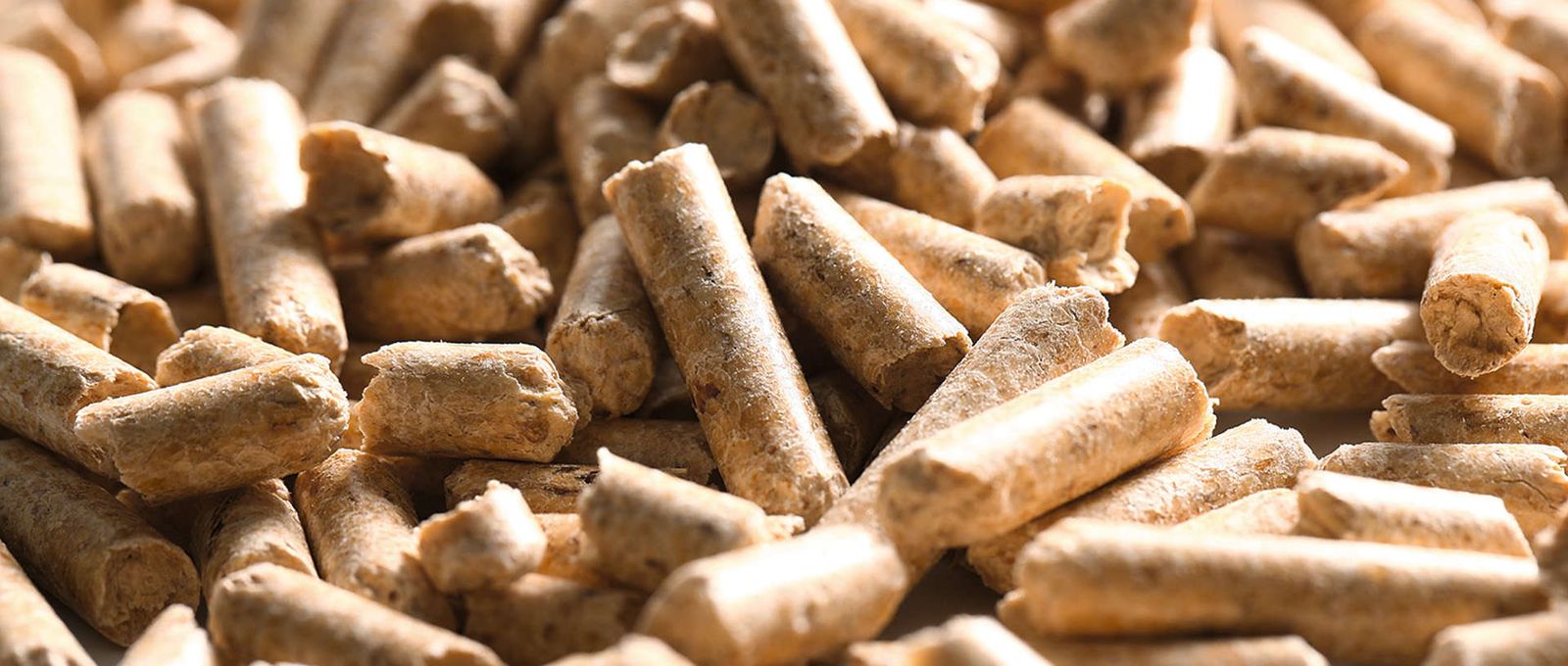
Sustainable Raw Material Supply for Wood Pellet Production
Kingwood · May 26, 2026
Securing a reliable, cost-effective supply of biomass feedstock is one of the most consequential operational decisions a wood pellet producer makes. Input material typically represents the largest variable cost in the production budget — and supply chain fragility is a primary reason projects fail to achieve projected returns. The strategies below address the full procurement lifecycle, from forest management to plant gate.
Diversify Feedstock Sources to Reduce Supply Risk
No single biomass stream is immune to seasonal variation, regional weather events, or policy change. Producers that depend exclusively on one feedstock — say, clean pine sawdust — are exposed whenever that supply tightens. A robust sourcing strategy draws from multiple streams simultaneously:
- Primary wood residues: sawmill chips, edgings, and sawdust from nearby timber processors
- Forestry residues: logging slash, thinnings, and small-diameter roundwood from certified harvests
- Agricultural residues: rice straw, wheat straw, sugarcane bagasse, and corn stover where regionally available
- Dedicated energy crops: short-rotation coppice (willow, poplar) or miscanthus for producers with sufficient land access
Each feedstock stream has distinct moisture content, bulk density, and particle size characteristics. Kingwood’s wet-feed pellet production lines are engineered specifically to handle this variability — integrating coarse grinding, drum drying, fine grinding, and pelletizing in a single automated sequence, with enclosed dust removal throughout. Blending feedstocks at the chipper or hammer mill stage, rather than trying to correct quality issues downstream, is the most cost-efficient approach.
Apply Sustainable Forestry Practices and Certification
Feedstock availability over a 10- or 20-year project horizon depends entirely on whether the forests supplying it are being managed responsibly. Sustainable forest management — encompassing reforestation commitments, selective harvesting, soil protection, and biodiversity safeguards — is not simply an ethical position; it is a commercial necessity.
Third-party certification schemes such as the Forest Stewardship Council (FSC) and the Programme for the Endorsement of Forest Certification (PEFC) provide auditable chain-of-custody frameworks. For producers supplying industrial customers in the EU, Japan, or South Korea, certified feedstock sourcing is increasingly a contractual prerequisite under national renewable energy regulations. Building certified supply relationships early protects market access as compliance requirements tighten.
Waste-to-energy integration offers a complementary approach: diverting wood residues from sawmills, furniture manufacturers, and construction demolition — materials that would otherwise go to landfill or low-value combustion — into the pellet feedstock mix. This simultaneously reduces procurement cost and improves the sustainability credentials of the finished biomass fuel.
Optimize Production Processes to Reduce Material and Energy Waste
Even a well-sourced feedstock strategy is undermined by inefficient conversion. Two process variables have an outsized impact on unit economics: moisture content at the pelletizer inlet and fines generation through the size-reduction sequence.
Excess moisture forces the dryer to work harder — raising energy cost per tonne and reducing dryer throughput. Kingwood’s drum dryer systems are sized for the full moisture range of wet biomass inputs, enabling producers to accept lower-grade feedstock (and pay lower feedstock prices) without sacrificing pellet quality. The counter-flow cooler at the discharge end stabilizes pellet temperature and hardens the surface, reducing fines in packaging and transport.
On size reduction, correctly sequenced drum chipping and hammer milling — matched to the pellet die specification — minimizes over-grinding and the associated energy waste. Kingwood’s Three-Standardization Framework (Integrated, Dust-Free, and Automated production lines) structures the entire line around these efficiency principles, from raw material intake to finished pellet packaging.
The JWZL-688D, rated at 3–3.5 t/h, and the JWZL-928, rated at 4–5 t/h, are designed for continuous-duty operation with mixed feedstocks, reducing downtime caused by material variation. For a real-world benchmark, a 12 t/h Kingwood installation in Vietnam achieved full capital payback in 23 months — a result directly attributable to both low-cost local feedstock sourcing and optimized process efficiency.
Build Long-Term Supplier Relationships and Supply Chain Integration
Spot procurement is consistently more expensive than contracted supply. Producers who invest early in structured supplier relationships — including formal volume commitments, quality specifications, and sustainability requirements — achieve more stable input costs and preferential access when regional supply tightens.
Effective long-term feedstock contracts should specify:
- Volume bands with agreed minimum and maximum call-off quantities per period
- Quality parameters: maximum moisture content, acceptable particle size range, and ash content thresholds consistent with the finished pellet specification (Kingwood biomass fuel targets moisture below 15%, ash below 18%, and sulfur below 0.3%)
- Sustainability certification status of the source material
- Price adjustment mechanisms tied to recognized timber or agricultural commodity indices, protecting both parties from extreme market moves
Vertical integration — where the pellet producer also manages a portion of the biomass supply through ownership or long-term forest management agreements — offers the highest degree of supply security, though it requires significant capital commitment. Partial integration, combined with a diversified set of contracted third-party suppliers, represents a practical middle ground for most industrial-scale operations.
For producers evaluating equipment capable of handling the full range of these feedstock strategies, the JWZL-688 biomass pellet mill offers a proven starting point at 2–2.3 t/h capacity, with a clear upgrade path through the JWZL-688D, JWZL-928, and JWZL-1068 models as production scale grows.
FAQ
Why is feedstock diversification critical for wood pellet producers?
Relying on a single biomass source exposes producers to price volatility and supply disruptions. Diversifying across wood residues, agricultural residues, and dedicated energy crops strengthens supply chain resilience and stabilizes input costs across production cycles.
How do sustainable forestry certifications affect raw material sourcing?
Schemes such as the Forest Stewardship Council (FSC) provide auditable frameworks ensuring timber is harvested from responsibly managed forests. Certified sourcing reduces regulatory risk, satisfies increasingly strict customer ESG requirements, and protects long-term fiber availability.
What role does waste-to-energy conversion play in feedstock strategy?
Integrating sawmill residues, logging slash, and wood-processing by-products into the feedstock mix converts low- or zero-cost waste streams into pellet-grade raw material, reducing procurement costs while improving regional waste management outcomes.
How does process optimization reduce raw material cost per tonne of pellets?
Advanced drying, fine grinding, and pelletizing technologies — such as Kingwood's wet-feed production lines — minimize moisture-related energy losses and reduce fines rejects. Each efficiency gain directly lowers the raw material input required per tonne of finished biomass pellets.
What should long-term supplier contracts include for biomass feedstock security?
Effective contracts specify volume commitments, moisture content and particle-size tolerances, delivery schedules, sustainability certification requirements, and price-adjustment mechanisms linked to timber or agricultural commodity indices — reducing both supply risk and cost unpredictability.
How can government policy support a cost-competitive wood pellet supply chain?
Subsidies for certified sustainable forestry, R&D grants for biomass processing equipment, renewable energy mandates, and favorable grid-access rules for biomass co-firing all improve the economics of domestic feedstock supply and incentivize long-term investment in production capacity.
Which Kingwood equipment is suited to processing diverse or high-moisture biomass feedstocks?
Kingwood's wet-feed pellet production lines handle high-moisture biomass through integrated crushing, coarse grinding, drying, fine grinding, pelletizing, and packaging stages. The JWZL-688 and JWZL-928 pellet mills, rated at 2–2.3 t/h and 4–5 t/h respectively, are designed for mixed-feedstock inputs with fully automated, enclosed processing and integrated dust removal.
- Biomass accounted for roughly 55% of global renewable energy consumption in 2023, underscoring the scale of feedstock demand pellet producers must plan for. (2023, IEA Renewables 2024 report (International Energy Agency))
- Kingwood has planned and designed over 2,000 biomass pellet production line projects across 30 countries, with a combined annual biomass fuel capacity exceeding 10 million metric tonnes. (2025, Kingwood company data, kingwoodpellet.com)