Flat Die vs. Ring Die: Wood Pellet Compression Methods Explained
Kingwood · May 26, 2026
How Wood Pellet Compression Works — and Why the Method Matters
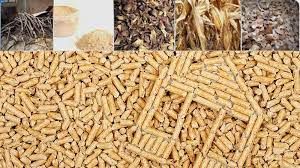
Biomass pellets are manufactured by forcing processed, dried, and ground raw material through a die under high mechanical pressure. The compression method determines pellet density, dimensional uniformity, throughput rate, and ultimately, combustion performance. Two primary die configurations dominate the industry: flat die and ring die. Selecting the wrong type for your production scale is one of the most common and costly engineering mistakes in biomass fuel plant design.
Both systems share a common operating principle: rollers press feedstock through die holes, generating heat and pressure sufficient to activate the lignin binders naturally present in wood fiber. No adhesives are required. The difference lies in die geometry, throughput architecture, and the mechanical forces involved.
Flat Die Pellet Presses: Characteristics, Advantages, and Limitations
In a flat die press, a horizontal perforated steel plate serves as the die. One or more rollers rotate across its surface, compressing feedstock downward through the die holes. The pellets are extruded from the underside and cut to length by a fixed knife.
Where flat die presses work well:
- Low capital entry point. Flat die machines carry significantly lower acquisition costs, making them viable for smallholders, agricultural cooperatives, or pilot-scale R&D operations.
- Material flexibility. Flat die presses can process a wider range of biomass types — sawdust, wood shavings, rice husks, straw, and other agricultural residues — without major mechanical reconfiguration.
- Simple maintenance. Fewer moving components and accessible die geometry reduce downtime for smaller operations without dedicated maintenance teams.
Where flat die presses fall short:
- Throughput ceiling. Flat die systems are not engineered for continuous high-volume production. Output rates are inherently limited by the die surface area and roller contact geometry.
- Pellet quality variance. Density and hardness consistency are harder to maintain across a flat die, resulting in pellets with lower bulk density and reduced mechanical durability — factors that affect both combustion efficiency and transport logistics.
- Scalability. Flat die presses do not scale linearly. Stacking multiple units introduces complexity without the structural advantages of a purpose-built high-throughput system.
For operations producing for internal use, local heating markets, or initial market entry, a flat die press can be a rational short-term choice. It is not a credible foundation for commercial biomass fuel supply.
Ring Die Pellet Mills: Industrial-Scale Performance
The ring die configuration is the established standard for industrial wood pellet production. Raw material is fed into the interior of a rotating cylindrical die. Fixed rollers inside the ring press feedstock radially outward through die holes drilled through the die wall. Pellets emerge on the outer circumference and are cut to specified length.
Structural advantages of ring die pellet mills:
- High throughput. The continuous rotational mechanism and large active die surface area enable output rates that flat die systems cannot approach. Kingwood’s JWZL-928 vertical biomass pellet mill, for instance, delivers 4–5 t/h from a single unit. The horizontal JZWH-860 achieves the same 4–5 t/h range in a format suited to different plant layouts.
- Pellet quality consistency. Ring die geometry distributes compression forces uniformly, producing pellets with tight bulk density, consistent diameter, and high mechanical durability — prerequisites for EN ISO 17225 or ENplus certification compliance.
- Operational durability. Ring die systems are engineered for continuous multi-shift operation. Die and roller service intervals are longer, and wear parts are standardized for rapid replacement.
- Integration with automated lines. Ring die pellet mills are the natural centerpiece of fully integrated production lines incorporating upstream drying, grinding, and downstream cooling and packaging.
Considerations for ring die investment:
- Higher initial capital. Ring die mills require greater upfront investment than flat die equipment. This is recoverable at commercial throughput volumes — a Kingwood 12 t/h production line deployed in Vietnam achieved full payback within 23 months — but the business case must be modeled carefully.
- Feedstock preparation requirements. Ring die mills perform optimally with feedstock ground to consistent particle size and dried to below 15% moisture content. This necessitates upstream hammer mill grinding and drum dryer integration, which adds system complexity but is standard in any professional plant design.
Choosing the Right Compression Method for Your Biomass Pellet Operation
The compression method is an output of your production design, not an independent choice. Key decision variables include:
| Factor | Flat Die | Ring Die |
|---|---|---|
| Target throughput | < 1 t/h | 1 t/h and above |
| Pellet quality requirement | Basic | Commercial / export grade |
| Feedstock type | Mixed biomass | Primarily wood-based |
| Automation level | Manual / semi-auto | Fully automated |
| Investment horizon | Short-term | Long-term, ROI-driven |
For any operation targeting commercial biomass fuel volumes — whether supplying industrial boilers, co-firing power plants, or export markets — a ring die pellet mill integrated into a complete automated production line is the technically correct specification. Kingwood’s complete wet-feed pellet production lines are engineered to handle high-moisture raw biomass through the full process sequence: drum chipping, coarse grinding via hammer mill, drying, fine grinding, ring die pelletizing, counter-flow cooling, and automated packaging — with enclosed processing and integrated dust removal throughout.
Kingwood has engineered over 2,000 biomass pellet production line projects across more than 30 countries. The 24 t/h wood chip pellet line deployed in Vietnam in 2023 and the 30 t/h installation in Chongqing, China demonstrate ring die systems operating at the throughput levels that define viable commercial biomass fuel production.
If your project requires a technical assessment of which compression method and production line configuration fits your feedstock, site, and output targets, contact Kingwood’s engineering team directly.
FAQ
What is the main difference between a flat die and a ring die pellet press?
A flat die press compresses biomass between two horizontal rollers across a stationary die — a simpler, lower-cost mechanism suited for small-scale runs. A ring die press feeds material into a rotating cylindrical die where rollers force it through radial die holes, producing pellets at significantly higher throughput, density, and consistency.
Which compression method produces higher-quality wood pellets?
Ring die pellet mills consistently produce pellets with tighter density, more uniform diameter, and greater mechanical durability. This translates to better combustion efficiency and improved storage stability — critical metrics for commercial biomass fuel buyers and power generators.
Can a flat die press handle agricultural residues as well as wood?
Yes. Flat die presses are relatively versatile and can process sawdust, wood shavings, straw, rice husks, and other agricultural residues. However, output rates and pellet durability remain lower than ring die systems regardless of feedstock.
What throughput can a ring die pellet mill realistically achieve?
Industrial ring die pellet mills scale into multiple tonnes per hour. Kingwood's JWZL-928, for example, delivers 4–5 t/h, and complete automated wet-feed pellet production lines can be engineered up to 200,000 tonnes per year of biomass pellet output.
Is a ring die pellet mill worth the higher capital cost?
For operations targeting commercial biomass fuel volumes, yes. Higher throughput, lower per-tonne energy consumption, and longer die service life reduce total cost of ownership. A Kingwood 12 t/h line in Vietnam reached full investment payback within 23 months.
What feedstock moisture levels can ring die systems handle?
Ring die mills perform best with feedstock dried to below 15% moisture content — consistent with EU and ISO biomass fuel standards. Kingwood's integrated wet-feed production lines include drum dryers upstream to condition high-moisture raw biomass before pelletizing.
What auxiliary equipment is required alongside a pellet press?
A complete pellet production line typically includes a drum chipper for size reduction, a hammer mill for fine grinding, a drum dryer for moisture control, the pellet mill itself, a counter-flow cooler to stabilize pellets post-press, and a pellet packaging machine. Kingwood engineers fully integrated, dust-free, automated lines covering all these stages.
- Global wood pellet production reached approximately 42 million metric tons in 2023, driven by industrial co-firing demand across Europe and Asia. (2024, IEA Bioenergy Task 32 — Biomass Combustion and Cofiring Annual Report 2024)
- Kingwood has planned and designed over 2,000 biomass pellet production line projects across more than 30 countries since 1999. (2025, Jiangsu Kingwood Industrial Co., Ltd. — Company Profile 2025)