Key Advantages of a Wood Hammer Mill for Biomass Processing
Kingwood · May 26, 2026
What a Wood Hammer Mill Does — and Why It Matters for Biomass Lines
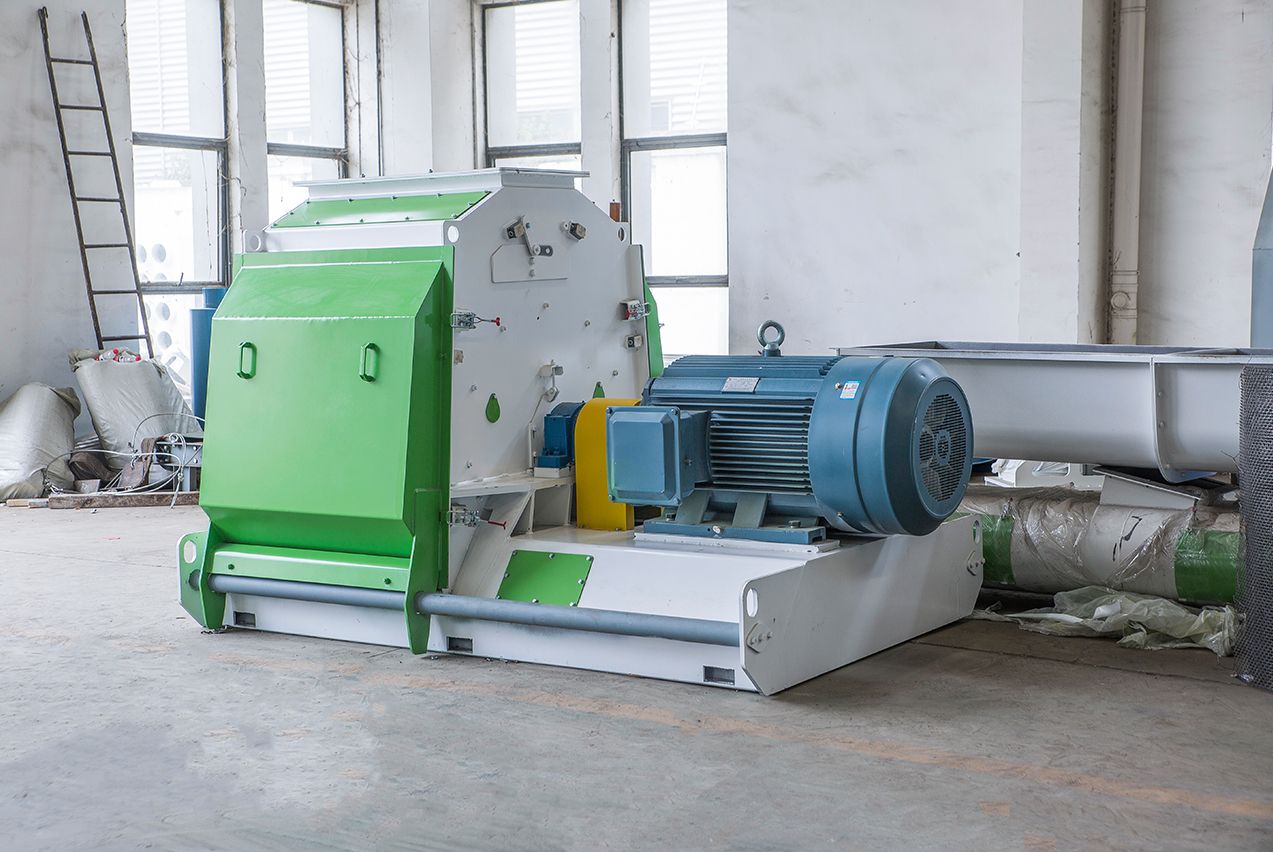
A wood hammer mill is the size-reduction workhorse of any biomass pellet production line. Its function is straightforward: high-speed rotating hammer blades inside an enclosed crushing chamber reduce raw biomass — wood chips, agricultural residues, bark, hulls — to a consistent particle size that downstream dryers and pellet mills can process efficiently.
Without controlled particle sizing upstream, pellet mill dies wear unevenly, throughput drops, and pellet density becomes inconsistent. This is why the hammer mill is not optional equipment in a serious production line — it is a critical process stage.
Kingwood integrates its industrial hammer mill as part of complete wet-feed biomass pellet production lines capable of processing high-moisture feedstocks through a full sequence: drum chipping, coarse grinding, drying, fine grinding, pelletizing, cooling, and packaging — all within an enclosed, automated system.
Technical Features That Drive Performance and Uptime
Hammer blade design and wear resistance
The hammer blades on an industrial wood hammer mill carry the full mechanical load of size reduction. Kingwood’s hammer blades are forged to maximize friction contact area and treated with abrasion-resistant surface technology to extend service intervals. For biomass applications where silica-bearing feedstocks like rice hulls and straw are common, blade durability directly determines maintenance frequency and line availability.
Adjustable screen system
Screen aperture controls final particle size. Kingwood hammer mills use an elasticity screen design that simplifies replacement during material changeovers, reducing downtime. The “U”-shaped hitting groove geometry improves material throughput by directing crushed particles toward screen holes more efficiently — a practical detail that affects both capacity and specific energy consumption.
Feedstock versatility
The machine handles a broad feedstock range: wood with incoming diameter from 50 mm to 200 mm, bamboo, rice hulls, cotton stalks, tree bark, wheat straw, and similar agricultural residues. This flexibility matters for producers who source biomass from mixed supply chains or who need to shift between material types seasonally.
Cyclone separation and dust control
An air blower system transports crushed material from the chamber. When paired with a cyclone separator, fine particles are captured from the airstream before discharge — reducing ambient dust levels, recovering material that would otherwise be lost, and feeding fines directly into downstream infeed conveyors. This configuration is a design requirement under Kingwood’s Dust-Free production line standard, one of the three pillars of the Three-Standardization Framework.
Safety interlocks
The operating door includes a safety interlock that prevents the rotor from engaging when access panels are open. This is a baseline industrial safety requirement for enclosed high-speed machinery and is standard across Kingwood’s hammer mill range.
Integration into Complete Biomass Pellet Production Lines
A hammer mill operating in isolation delivers limited value. The meaningful question for any B2B buyer is how the unit integrates within a complete production line — and what design choices affect total line performance.
In Kingwood’s wet-feed pellet production line architecture, the hammer mill occupies two positions:
- Coarse grinding — immediately after drum chipping, reducing incoming wood pieces to a size compatible with the dryer infeed
- Fine grinding — after drying, reducing dried material to the particle size required by the ring die pellet mill
This two-stage grinding approach allows the dryer to operate on coarser, more uniformly sized particles (improving drying efficiency), while the final grind before pelletizing is optimized for die specification and pellet density targets.
Kingwood has planned and designed over 2,000 production line projects across 30 countries. The Vietnam 24 t/h wood chip pellet production line commissioned in 2023 and the 12 t/h Vietnam line commissioned in 2024 — which achieved investment payback within 23 months — both incorporate hammer mills as integrated line components rather than standalone units.
For operations targeting output above 10 t/h, single-pass grinding is rarely sufficient. Line design must account for recirculation of oversized fractions, screen selection matched to pellet die geometry, and conveying system capacity between grinding and drying stages. These are engineering decisions that affect capital cost, operating cost, and pellet quality simultaneously.
Selecting the Right Hammer Mill Configuration
Several parameters should drive equipment selection for biomass pellet line applications:
- Incoming material diameter — pre-chipped feedstock entering a hammer mill should be within the machine’s rated intake range (typically 50–200 mm for industrial units); oversized material requires upstream drum chipping
- Target particle size — set by the pellet mill die specification; finer pellet diameters require finer grinding and correspondingly smaller screen apertures
- Moisture content of incoming material — wet grinding (before drying) places different demands on hammer geometry and screen design than dry grinding
- Required throughput — must be matched to the overall line capacity to avoid bottlenecking; for reference, Kingwood’s pellet mill models range from 1 t/h (JWZL-420) up to 4–5 t/h (JWZL-928), with multi-mill line configurations reaching 30 t/h as demonstrated in the Chongqing 30 t/h installation
Kingwood’s engineering team provides line design support from feedstock assessment through commissioning. Founded in 1999 and operating with 20 R&D specialists from its 31,200 m² facility in Liyang Zhongguancun Industrial Park, Kingwood holds ISO 9001, ISO 14001, and CE certifications and is listed on NEEQ (stock code: 871765).
For detailed hammer mill specifications or complete line design consultation, contact Kingwood’s technical sales team directly.
FAQ
What materials can a wood hammer mill process?
Industrial wood hammer mills handle a wide range of biomass feedstocks: wood chips, bamboo, rice hulls, cotton stalks, tree bark, wheat straw, and other agricultural residues. The screen size can be adjusted to meet specific particle size requirements downstream.
How does screen size affect hammer mill output?
Screen aperture directly controls the final particle size of the crushed material. Operators select screens matched to downstream pellet mill die specifications — finer screens for smaller-diameter pellet dies, coarser screens for pre-drying stages. Kingwood hammer mills feature elasticity screens that are straightforward to replace during material changeovers.
What is the role of a hammer mill in a complete pellet production line?
In a wet-feed biomass pellet production line, the hammer mill performs the coarse and fine grinding stages after chipping and before drying or pelletizing. Proper size reduction ensures consistent feedstock density and moisture distribution, which directly affects pellet quality and ring die service life.
What safety features do industrial wood hammer mills include?
Key safety provisions include an operating-door safety interlock that prevents startup when access panels are open, enclosed crushing chambers to contain dust and debris, and optional cyclone separators to capture fine particles from the airstream.
How does a cyclone separator integrate with a hammer mill?
A cyclone separator connects to the mill's discharge airflow to separate fine biomass particles from the transport air. This prevents material loss, reduces ambient dust, and feeds the collected fines directly into downstream dryer or pelletizer infeed conveyors — supporting the Dust-Free production line standard.
What diameter of wood material can an industrial hammer mill accept?
Heavy-duty hammer mills suited for biomass pellet line integration typically accept wood feedstock with diameters from 50 mm up to 200 mm, depending on rotor width and hammer configuration. Pre-chipping with a drum chipper is recommended for larger-diameter logs or branches.
How does Kingwood's hammer mill fit within the Three-Standardization Framework?
Kingwood's hammer mill is engineered as a component of Integrated, Dust-Free, and Automated production lines under the Three-Standardization Framework. Enclosed feeding, cyclone dust collection, and automated discharge conveyors allow the unit to operate within fully enclosed, PLC-controlled line configurations.
- Global wood pellet production reached approximately 42 million metric tons in 2023, with industrial-scale demand driving investment in high-throughput upstream grinding equipment. (2023, IEA Bioenergy Task 40 — Woody Biomass for Energy Annual Report 2023)
- Kingwood has planned and designed over 2,000 biomass pellet production line projects serving customers across 30 countries, with combined annual biomass fuel output capacity exceeding 10 million metric tons. (2025, Kingwood corporate data — kingwoodpellet.com)