Beijing's First Biomass Fuel Demo Project by Kingwood
Kingwood · May 26, 2026
Beijing TV Covers Kingwood’s Landmark Biomass Fuel Project
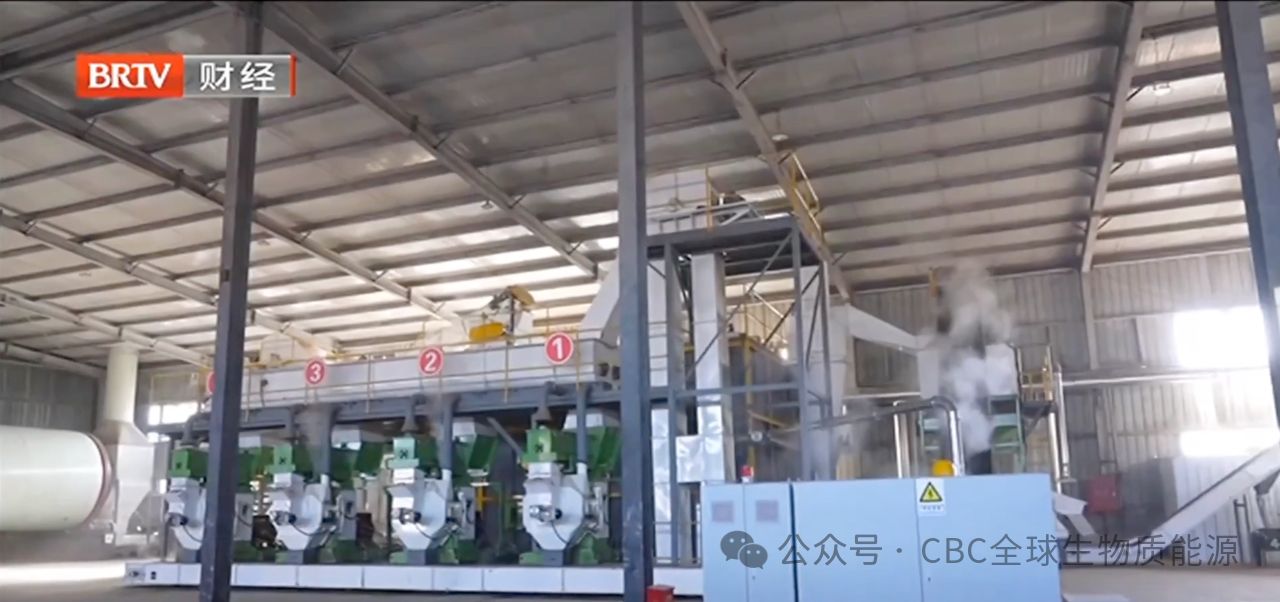
On January 26, Beijing TV broadcast a four-minute special report on the commissioning of Beijing’s first biomass pellet fuel demonstration project. Designed, engineered, and constructed by Jiangsu Kingwood Industrial Co., Ltd. for Longji Energy Group, the plant represents a tangible step in converting the capital’s mounting landscaping waste into a viable, zero-carbon energy source.
Beijing’s urban afforestation program expands the city’s green coverage each year. The byproduct is approximately 5.2 million tons of garden prunings and large wood waste annually — material that historically had no scalable disposal route. Longji Energy Group responded to national policy directives by investing in a dedicated biomass pellet fuel plant: 135 acres, 100,000 tons annual output capacity, and the ability to process close to 120,000 tons of raw landscaping and wood waste per year.
Kingwood was contracted to deliver the full engineering solution. After more than six months of accelerated project execution, the plant came online as scheduled.
Production Line Architecture: Crushing to Packaging
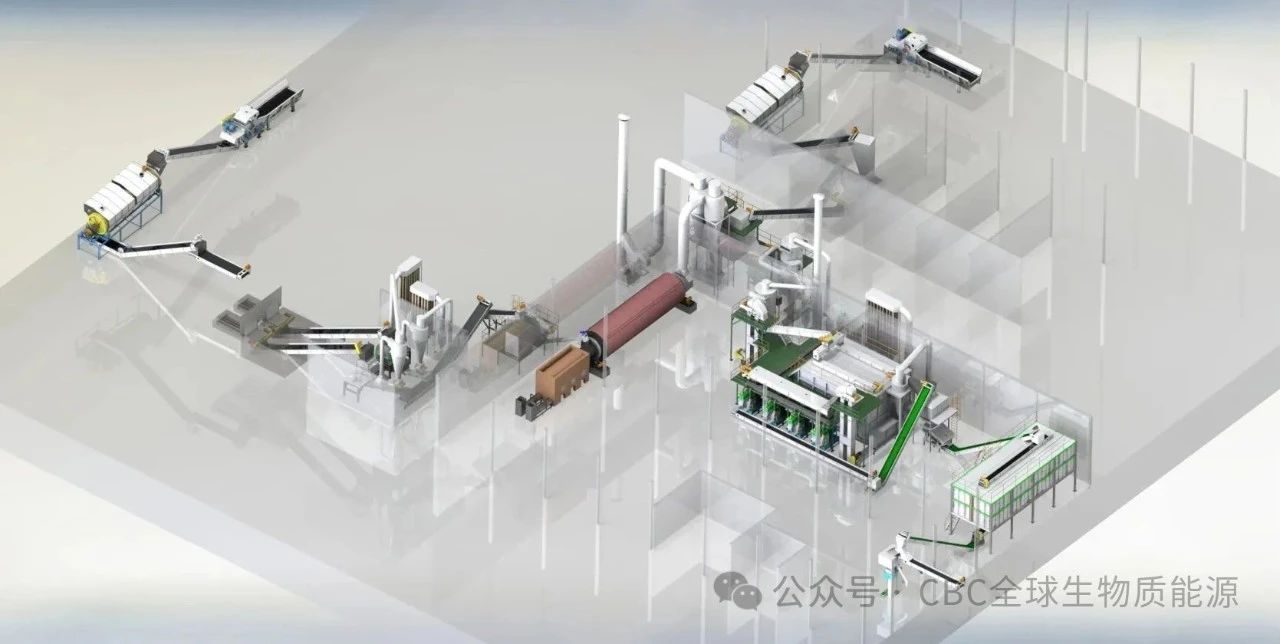
The Beijing demonstration plant follows Kingwood’s wet-feed production line model — a process sequence engineered for high-moisture, variable-particle-size biomass such as urban prunings and construction wood offcuts.
Crushing
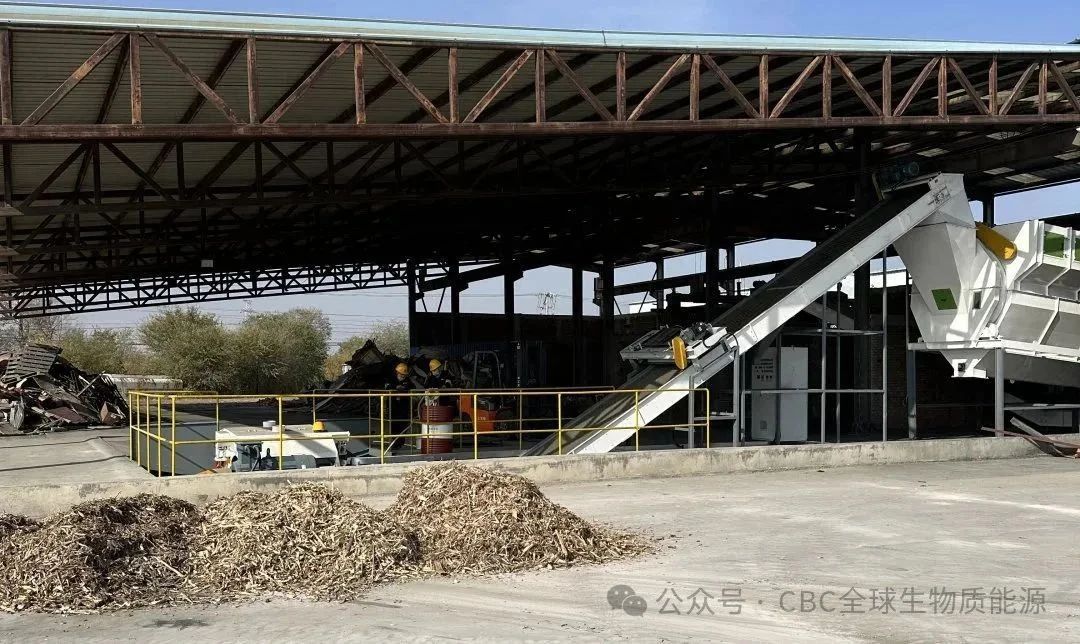
Kingwood’s biomass crusher handles hardwood feedstock including thick branches and root wood. A single unit achieves up to 15 tons per hour, providing the front-end throughput capacity a 100,000-ton/year plant demands. Multiple units can be staged in parallel to match any target capacity.
Material Handling
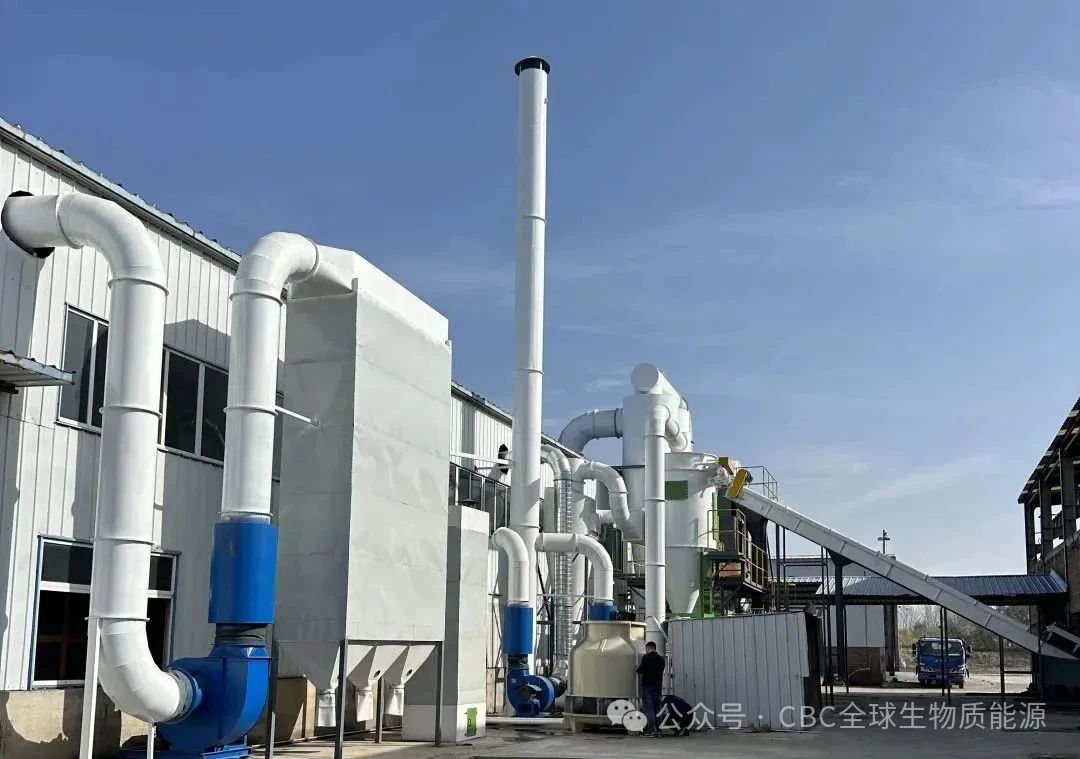
Between process stages, Kingwood deployed its own-developed conveying equipment — belt conveyors, drag-chain conveyors, and bucket elevators. The systems are configured to minimize raw material loss during transfer and can be fully enclosed for dust-free operation. For projects where local air quality regulations or indoor working conditions require it, Kingwood offers custom dust-free transportation solutions as a standard engineering option.
Pelletizing
Kingwood’s pellet mill division holds multiple patents across its biomass granulation equipment range. The vertical ring die pellet mills — spanning models JWZL-420 through JWZL-1068 — are built for high-moisture feedstocks, eliminating the need for pre-drying to extremely low moisture before pelletizing. This architecture suits landscaping waste, which arrives at variable and often elevated moisture content. The result is high output with lower specific energy consumption per ton of finished pellet.
Cooling and Packaging
Following pelletizing, the counter-flow cooler brings pellet temperature and residual moisture within specification before the product enters automated packaging. The fully enclosed processing environment, integrated dust removal, and automated sequencing reflect Kingwood’s Three-Standardization Framework — integrated, dust-free, and automated production lines applied at commercial scale.
Biomass Fuel as a Coal Displacement Strategy
Biomass pellets produced at this plant are targeted primarily at civil heating in Beijing winters. As a zero-carbon renewable fuel, biomass energy qualifies under China’s carbon neutrality framework as a direct substitute for coal in boiler applications. Kingwood’s biomass fuel specification delivers a calorific value of 4,800 kcal/kg with moisture content below 15%, sulfur below 0.3%, and all combustion emissions below the GB13271-2001 national boiler air pollutant standard.
At plant scale, the economics are material. Biomass pellet fuel delivers 40–50% cost savings versus equivalent fossil fuel inputs, making the business case for operators like Longji Energy Group straightforward once feedstock supply is secured. At 120,000 tons of waste processed annually, the Beijing plant simultaneously solves a municipal waste management problem and produces a marketable clean fuel — a dual-value model applicable to any city with significant green waste or forestry residue volumes.
For reference on comparable large-scale installations, see the 30 tph wood pellet production line case study from Chongqing and the 24 tph Vietnam wood chip pellet line, both engineered by Kingwood.
About Jiangsu Kingwood Industrial Co., Ltd.
Founded in 1999 and listed on the NEEQ (stock code: 871765), Jiangsu Kingwood Industrial Co., Ltd. is headquartered at #568 Hongsheng Road, Liyang Zhongguancun Industrial Park, Jiangsu Province, China. The company operates 25,000 m² of production facilities and has planned and designed over 2,000 biomass pellet production line projects across 30 countries. Kingwood holds ISO 9001, ISO 14001, and CE certifications and is recognized as a Jiangsu Provincial High-Tech Enterprise and a Top 10 Brand in Biomass Molding Equipment.
FAQ
What is Beijing's first biomass fuel demonstration project?
A 100,000-ton/year biomass pellet fuel plant covering 135 acres, built by Jiangsu Kingwood Industrial Co., Ltd. for Longji Energy Group. It processes approximately 120,000 tons of landscaping and large wooden waste annually and commenced operations on January 26.
Why does Beijing generate so much landscaping waste?
Beijing's ongoing urban afforestation program generates roughly 5.2 million tons of garden prunings and wood waste per year. Without dedicated processing infrastructure, this material creates disposal pressure and environmental risk.
How does the plant process raw biomass into fuel pellets?
The production line follows a wet-feed sequence: coarse crushing, secondary grinding, drying, pelletizing, cooling, and packaging. Each section was engineered by Kingwood to match the project's throughput and environment requirements.
What is the single-crusher throughput on this project?
Kingwood's biomass crusher on this project achieves up to 15 tons per hour on hardwood feedstocks such as tree branches, handling the high-volume raw material intake the plant requires.
What are the environmental benefits of biomass pellet fuel at this scale?
Biomass pellets are classified as zero-carbon renewable energy. At 100,000 tons annual output, the plant displaces an equivalent volume of coal for civil heating while keeping emissions below China's GB13271-2001 boiler air pollutant standard.
Does Kingwood offer dust-free transportation solutions for similar projects?
Yes. Kingwood supplies self-developed belt conveyors, drag-chain conveyors, and bucket elevators, and can configure fully enclosed, dust-free material handling systems tailored to site layout and regulatory requirements.
How long did it take Kingwood to complete this demonstration project?
The project was completed in just over six months of intensive engineering and construction before being commissioned on January 26.
- Beijing generates approximately 5.2 million tons of landscaping and garden wood waste per year, creating large-scale demand for biomass conversion infrastructure. (2024, Beijing TV broadcast report, January 26 project commissioning coverage)
- The Longji Energy Group plant processes nearly 120,000 tons of biomass feedstock annually, producing 100,000 tons of biomass pellet fuel — enough to supply civil heating and displace coal at scale. (2024, Jiangsu Kingwood Industrial Co., Ltd. project documentation, Beijing demonstration project)