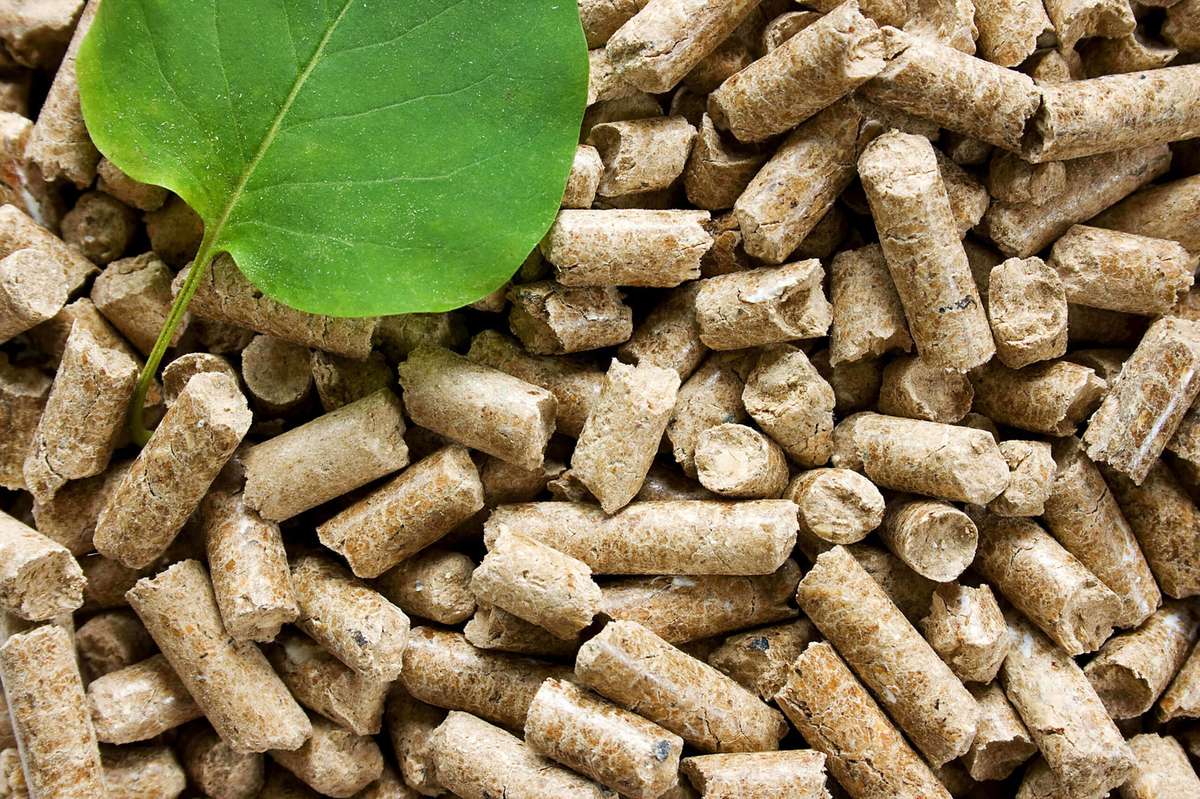
Wholesale Hardwood Fuel Pellets Maker in China
Kingwood · May 26, 2026
What Industrial Buyers Need From a Hardwood Fuel Pellet Equipment Manufacturer
Wholesale procurement of hardwood fuel pellets — or the equipment to produce them — requires verifiable capacity data, proven process engineering, and a supplier with documented international deployments. Generic claims about “advanced technology” are not sufficient at the B2B level.
Kingwood (Jiangsu Kingwood Industrial Co., Ltd.), founded in 1999 and listed on China’s NEEQ stock exchange under code 871765, has spent 27 years engineering biomass pellet production systems for industrial-scale buyers. Its facility occupies 25,000 m² of production space in Liyang Zhongguancun Industrial Park, Jiangsu Province, with a team of 20 R&D specialists focused exclusively on pellet mill technology and integrated line design.
The company’s product scope covers every upstream and downstream process node: drum chipper and hammer mill for size reduction, drum dryer for moisture management, ring die pellet mills for densification, counter-flow cooler for post-pellet conditioning, and automated packaging. Complete wet-feed production lines are engineered to handle high-moisture hardwood feedstock from raw intake through finished pellet packaging — fully enclosed, dust-controlled, and automated.
Hardwood Fuel Pellet Specifications and Multi-Standard Compliance
For wholesale buyers supplying European power utilities, Japanese industrial boilers, or North American district heating systems, pellet specification alignment is non-negotiable. Kingwood’s production lines are engineered to consistently achieve:
- Calorific value: 4,800 kcal/kg
- Moisture content: <15% (meets EU standard)
- Sulfur content: <0.3% (below Japan’s ≤0.5% threshold)
- Ash content: <18% (within ISO <20% limit)
- Dioxin content: <0.5 ng TEQ (well below China’s GB standard of ≤1.0 ng TEQ)
- Boiler emissions: All indicators below GB13271-2001 (China national Emission Standard for Boilers)
These are not aspirational figures — they are the output parameters that production line buyers specify during project scoping and that Kingwood’s process engineering is designed to deliver consistently at throughput rates from 1 t/h to 30+ t/h.
For buyers with coal displacement mandates, hardwood biomass pellets produced on Kingwood lines deliver 40–50% cost savings versus fossil fuels, based on operating data from deployed projects.
Production Line Models: Capacity Reference for Project Planning
Kingwood offers both vertical ring die and horizontal ring die pellet mill configurations. The following models are currently available for project specification:
| Model | Type | Capacity (t/h) |
|---|---|---|
| JWZL-420 | Vertical biomass pellet mill | 1–1.5 |
| JWZL-688 | Vertical biomass pellet mill | 2–2.3 |
| JWZL-688D | Vertical biomass pellet mill | 3–3.5 |
| JWZL-928 | Vertical biomass pellet mill | 4–5 |
| JWZL-1068 | Vertical biomass pellet mill | Contact sales |
| JZWH-860 | Horizontal biomass pellet mill | 4–5 |
For large-scale hardwood fuel pellet production, multiple pellet mill units are deployed in parallel within an integrated line. Complete production lines have been designed up to 200,000 metric tons per year output capacity.
Verified Project Deployments Across 30+ Countries
Kingwood has planned and designed over 2,000 production line projects since founding. Representative deployments relevant to hardwood fuel pellet buyers include:
Vietnam — 24 t/h wood chip pellet production line (2023): A high-throughput export-grade line processing tropical hardwood chips. Full project details available at /case/vietnam-24tph-wood-chip-pellet-production-line/.
Vietnam — 12 t/h wood pellet line (2024): Investment payback achieved in 23 months under actual operating conditions. See the full financial breakdown at /case/vietnam-wood-pellet-line-12-tph-kingwood-payback/.
Chongqing, China — 30 t/h pellet mill (2021): One of China’s largest single-site wood pellet lines at time of commissioning. Project documented at /case/30tph-wood-pellet-mill-in-chongqing-china-september-30-2021/.
Beijing — First biomass pellet demonstration project (2024): Municipal-level clean energy deployment under China’s coal substitution policy, demonstrating regulatory-grade emission compliance.
Guizhou, China — Dust-Free biomass pellet workshop (2024): Implementation of Kingwood’s Dust-Free production line pillar under the Three-Standardization Framework, relevant for buyers operating in jurisdictions with strict occupational dust regulations.
Three-Standardization Framework: Engineering Differentiation for Industrial Buyers
Kingwood’s Three-Standardization Framework is its core engineering methodology, comprising three mandatory design pillars applied to all production line projects:
- Integrated production lines — All process stages (size reduction, drying, pelletizing, cooling, packaging) are engineered as a unified system, eliminating inter-stage bottlenecks and reducing footprint.
- Dust-Free production lines — Fully enclosed material handling and integrated dust collection prevent cross-contamination, reduce fire/explosion risk, and satisfy increasingly stringent occupational health regulations across export markets.
- Automated production lines — PLC-based control architecture with real-time parameter adjustment minimizes operator dependence, maintains pellet density and size consistency, and generates production data for quality documentation.
For wholesale buyers supplying regulated end markets in Europe, Japan, or South Korea, the Dust-Free and Automated pillars directly reduce compliance overhead on the buyer’s side.
Procurement and Project Scoping
Buyers sourcing hardwood fuel pellet equipment from China should evaluate manufacturers on: certified throughput data from real projects, multi-standard pellet specification capability, and post-commissioning technical support infrastructure. Kingwood holds ISO 9001, ISO 14001, and CE certifications, and is recognized as a Jiangsu Provincial High-Tech Enterprise and Specialized & Innovative Niche Leader.
For project scoping — including feedstock assessment, line configuration, and capacity planning — visit the Kingwood pellet mill product page or contact the technical sales team directly through kingwoodpellet.com.
FAQ
What makes Kingwood a credible wholesale hardwood fuel pellets equipment maker in China?
Kingwood (Jiangsu Kingwood Industrial Co., Ltd.) has over 27 years of R&D experience, holds ISO 9001, ISO 14001, and CE certifications, is listed on China's NEEQ stock exchange (code: 871765), and has planned and designed more than 2,000 production line projects across 30+ countries.
What biomass feedstocks can Kingwood's pellet mills process?
Kingwood's equipment processes a wide range of lignocellulosic feedstocks including hardwood chips, softwood sawdust, agricultural residues, and other high-moisture biomass materials. The wet-feed production line handles raw material from crushing through pelletizing without pre-drying.
What production capacities are available for hardwood fuel pellet lines?
Individual pellet mills range from 1 t/h (JWZL-420) to 4–5 t/h (JWZL-928 and JZWH-860). Complete integrated production lines can be engineered up to 200,000 metric tons per year, with real deployed projects confirmed at 12 t/h, 24 t/h, and 30 t/h.
Do Kingwood hardwood fuel pellets meet international quality standards?
Yes. Kingwood biomass pellets achieve a calorific value of 4,800 kcal/kg, moisture content below 15%, sulfur content below 0.3%, and ash content below 18%. These specifications satisfy EU (<15% moisture), US (>2,500 kcal calorific), Japanese (≤0.5% sulfur), and ISO (<20% ash) standards.
What cost advantage do hardwood biomass pellets offer versus fossil fuels?
Biomass fuel pellets produced on Kingwood lines typically deliver 40–50% cost savings compared to conventional fossil fuels such as coal or heavy oil, based on verified customer operating data.
What is Kingwood's Three-Standardization Framework and why does it matter for buyers?
The Three-Standardization Framework consists of three engineering pillars: Integrated production lines, Dust-Free production lines, and Automated production lines. For buyers, this means reduced facility compliance risk, lower labor dependency, and consistent pellet output quality at industrial scale.
Are there verified case studies for Kingwood hardwood pellet production lines?
Yes. Documented projects include a 24 t/h wood chip pellet line in Vietnam (2023), a 12 t/h line in Vietnam with a 23-month payback period (2024), a 30 t/h line in Chongqing, China (2021), and Beijing's first biomass pellet demonstration project (2024).
- Global industrial wood pellet production capacity exceeded 50 million metric tons per year in 2023, with Asia-Pacific demand growing at an estimated 8–10% CAGR driven by coal displacement policies. (2023, IEA Bioenergy Task 40 — Global Wood Pellet Industry and Trade Study)
- Kingwood has planned and designed over 2,000 biomass pellet production line projects, with annual biomass fuel capacity across deployed lines reaching 10,000,000 metric tons. (2025, Kingwood company data, kingwoodpellet.com)