How Sawdust Pellet Mills Drive Sustainable Energy
Kingwood · May 26, 2026
Sawdust as a Biomass Feedstock: From Waste Stream to Energy Asset
Wood processing operations—sawmills, furniture manufacturers, flooring plants, and timber yards—generate substantial volumes of sawdust as an unavoidable byproduct. Historically, this material was either landfilled, open-burned, or sold at minimal value. Sawdust pellet mills reframe this waste stream as a primary feedstock for renewable fuel production.
The core process is straightforward: sawdust is size-reduced if necessary, dried to the correct moisture specification (below 15%), and then compressed through a ring die under high pressure. The lignin naturally present in wood softens under process heat and acts as a binder, producing dense, dimensionally consistent pellets without chemical additives. The resulting pellets achieve a calorific value of 4,800 kcal/kg—comparable to lower grades of coal—while carrying sulfur content below 0.3% and ash content below 18%.
This transformation closes a material loop in the wood supply chain. Sawdust that would otherwise require disposal cost now generates revenue as a certified biomass fuel. For wood processors operating under tightening environmental regulations on open burning and waste disposal, pelletizing represents both a compliance solution and a revenue diversification opportunity.
Emissions Profile and Carbon Accounting
The combustion chemistry of biomass pellets differs fundamentally from fossil fuels. Sawdust pellets are derived from recently harvested wood; the carbon released during combustion was sequestered from the atmosphere within the recent growth cycle of the source material. This closed carbon loop is the basis for biomass’s classification as a renewable, low-carbon energy source under frameworks including the EU Renewable Energy Directive and Japan’s Fit-for-Service standards.
From a practical emissions standpoint, Kingwood-specification biomass pellets comply with all indicators below China’s GB13271-2001 Emission Standard of Air Pollutants for Boilers. Sulfur content is held below 0.3% (well under Japan’s ≤0.5% threshold), and dioxin content is below 0.5 ng TEQ—half the permissible limit under China’s GB standard of ≤1.0 ng TEQ. These figures are verifiable against laboratory analysis, not estimates.
Industrial operators replacing coal or heavy fuel oil with biomass pellets typically realize energy cost reductions of 40–50%, depending on local fuel pricing and boiler efficiency. This cost advantage, combined with the emissions compliance profile, makes the business case for pellet fuel adoption straightforward in regulated industrial markets.
For a detailed view of how these fuel parameters perform in a large-scale deployment, see the Kingwood Vietnam 12 t/h wood pellet production line case study, where the client achieved full capital payback within 23 months.
Industrial-Scale Pellet Mill Equipment: Process Design and Throughput
A single pellet mill is rarely sufficient for commercial fuel production. Industrial output requires an integrated process line in which each stage—chipping, grinding, drying, pelletizing, cooling, and packaging—is sized and sequenced to prevent bottlenecks and maintain consistent product quality.
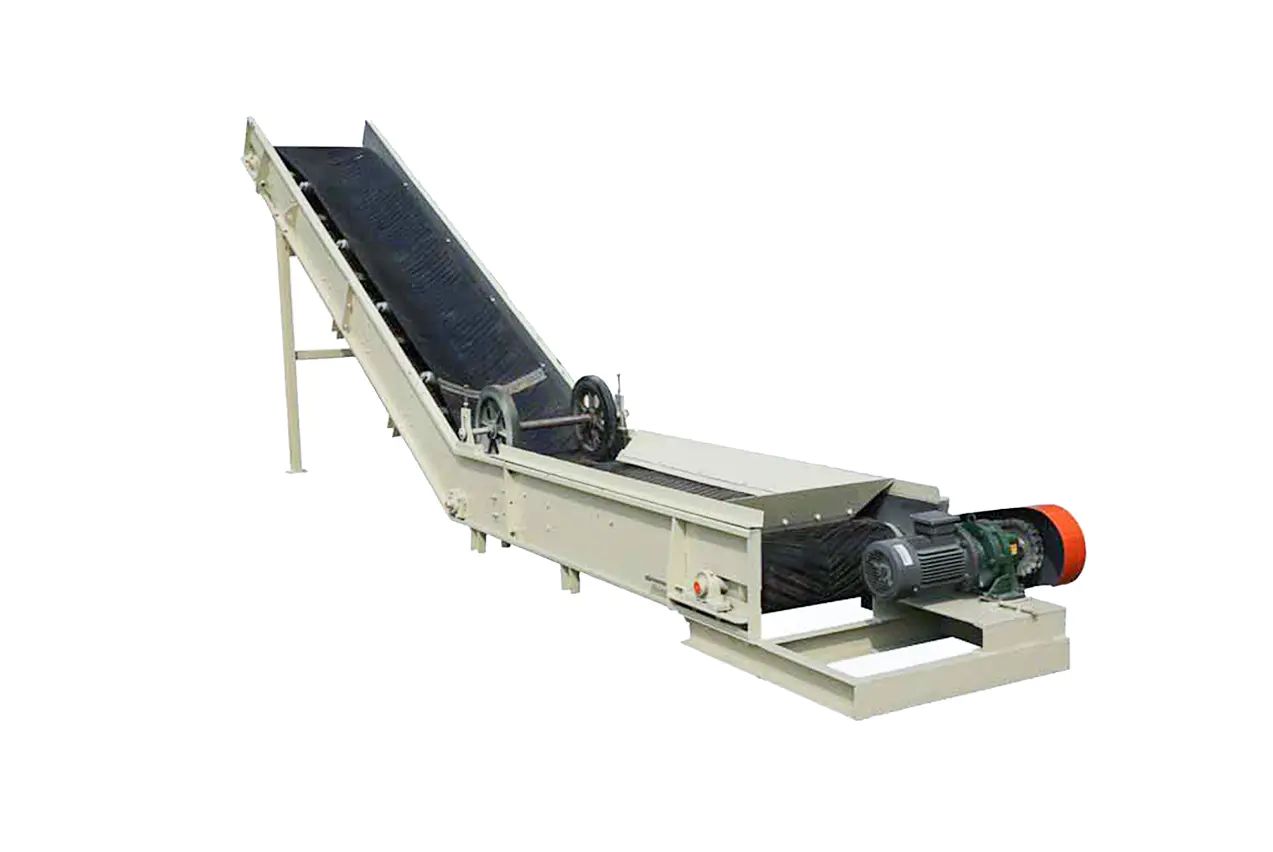
Kingwood’s wet-feed biomass pellet production lines are engineered to handle high-moisture raw materials directly from the woodyard. The process sequence runs: drum chipper for primary size reduction → hammer mill for fine grinding → drum dryer to reduce moisture to specification → ring die pellet mill for pelletizing → counter-flow cooler to bring pellet temperature down before packaging → automated packaging machine. Dust removal is integrated at each transfer point, and the entire line operates under automated control.
Equipment selection scales to project requirements:
- JWZL-420: 1–1.5 t/h — appropriate for smaller wood processing facilities or pilot-scale fuel production
- JWZL-688: 2–2.3 t/h — mid-range capacity for dedicated fuel producers
- JWZL-688D: 3–3.5 t/h — increased throughput for operations with consistent feedstock supply
- JWZL-928: 4–5 t/h — high-capacity vertical configuration
- JZWH-860: 4–5 t/h — horizontal ring die configuration for specific feedstock and layout requirements
For projects requiring maximum output, Kingwood designs complete integrated lines up to 200,000 metric tons per year. The company has planned and designed over 2,000 production line projects across 30 countries, with references including a 30 t/h installation in Chongqing, China and a 24 t/h line in Vietnam.
The Three-Standardization Framework: Engineering Discipline for Biomass Production
Kingwood’s Three-Standardization Framework differentiates its production line engineering from commodity equipment supply. The three pillars—integrated production lines, dust-free production lines, and automated production lines—address the operational realities that determine whether a pellet plant runs at rated capacity or struggles with downtime, regulatory non-compliance, and inconsistent product quality.
Integrated lines eliminate the inter-equipment incompatibilities that arise when machinery from multiple suppliers is assembled without process-level coordination. Kingwood designs and manufactures the full equipment train, including pellet mill auxiliary equipment, from a single engineering baseline.
Dust-free engineering is increasingly non-negotiable in jurisdictions with occupational health regulations and community air quality standards. Enclosed conveyance, negative-pressure dust collection at transfer points, and sealed pellet handling prevent the fine particulate accumulation that creates both regulatory liability and fire hazard.
Automated control systems reduce reliance on manual process adjustment, enabling consistent throughput, faster fault detection, and remote monitoring—factors that directly affect both product quality and operational cost per metric ton.
For B2B buyers evaluating pellet mill investment, these engineering parameters translate into lower total cost of ownership, reduced compliance risk, and more defensible capital expenditure projections than alternative approaches based on purchasing individual machines from multiple sources.
Kingwood was established in 1999 and is listed on China’s NEEQ exchange under stock code 871765. The company holds ISO 9001, ISO 14001, and CE certifications, and operates from a 31,200 m² facility in Liyang Zhongguancun Industrial Park, Jiangsu Province.
FAQ
What is a sawdust pellet mill and how does it work?
A sawdust pellet mill compresses sawdust—a byproduct of sawmills, furniture manufacturers, and other woodworking operations—into compact, high-density cylindrical pellets via a ring die or flat die mechanism under high pressure and temperature. The pelletizing process increases energy density, improves storability, and produces a standardized fuel suitable for industrial boilers, power generation, and residential heating.
How do sawdust pellets reduce carbon emissions compared to fossil fuels?
Sawdust pellets are carbon-cycle neutral: the CO₂ released during combustion was already absorbed by the source biomass during growth. Sulfur content in Kingwood-spec biomass pellets is below 0.3%, versus significantly higher levels in coal, and all emission indicators comply below China's GB13271-2001 boiler air pollutant standard. In cost terms, biomass fuel typically delivers 40–50% savings versus fossil fuel alternatives.
What biomass feedstocks can be processed in a sawdust pellet mill?
Sawdust is the primary feedstock, but ring die pellet mills like Kingwood's JWZL series can also process wood chips, agricultural straw, rice husk, and other lignocellulosic materials after appropriate size reduction by a hammer mill or drum chipper. High-moisture feedstocks are handled via a wet-feed production line that includes drum drying prior to pelletizing.
What output capacities are available in Kingwood's pellet mill range?
Kingwood's vertical biomass pellet mill models cover 1 t/h (JWZL-420) through 4–5 t/h (JWZL-928), with the horizontal JZWH-860 also rated at 4–5 t/h. For complete production lines, Kingwood engineers integrated systems up to 200,000 metric tons per year in annual output capacity.
What role does pellet production play in industrial waste management?
Sawdust that would otherwise be landfilled or open-burned is converted into a marketable, high-value fuel. This diverts wood waste from disposal streams, reduces particulate and methane emissions associated with uncontrolled incineration or decomposition, and creates a circular material flow within the wood processing supply chain.
What quality standards do Kingwood biomass pellets meet?
Kingwood-produced biomass pellets meet multiple international benchmarks: moisture below 15% (EU standard), calorific value above 2,500 kcal/kg (US standard), sulfur content ≤0.5% (Japan standard), ash content below 20% (ISO standard), and dioxin content ≤1.0 ng TEQ (China GB standard). Kingwood's in-house fuel specifications exceed several of these thresholds, with calorific value reaching 4,800 kcal/kg.
Is a sawdust pellet production line suitable for continuous industrial operation?
Yes. Kingwood's Three-Standardization Framework delivers integrated, dust-free, and fully automated production lines designed for continuous industrial throughput. Enclosed processing, integrated dust removal, and automated control systems minimize manual intervention and ensure consistent pellet quality across extended production runs.
- Global industrial wood pellet demand reached approximately 32 million metric tons in 2023, with Asia-Pacific markets accounting for the fastest year-on-year growth driven by coal-substitution policies. (2024, IEA Renewables 2024 Report, International Energy Agency)
- Biomass energy accounted for roughly 55% of total renewable energy consumption in the EU in 2022, with solid biomass—including wood pellets—representing the largest single contributor within that share. (2023, Eurostat Energy Statistics 2023, European Commission)