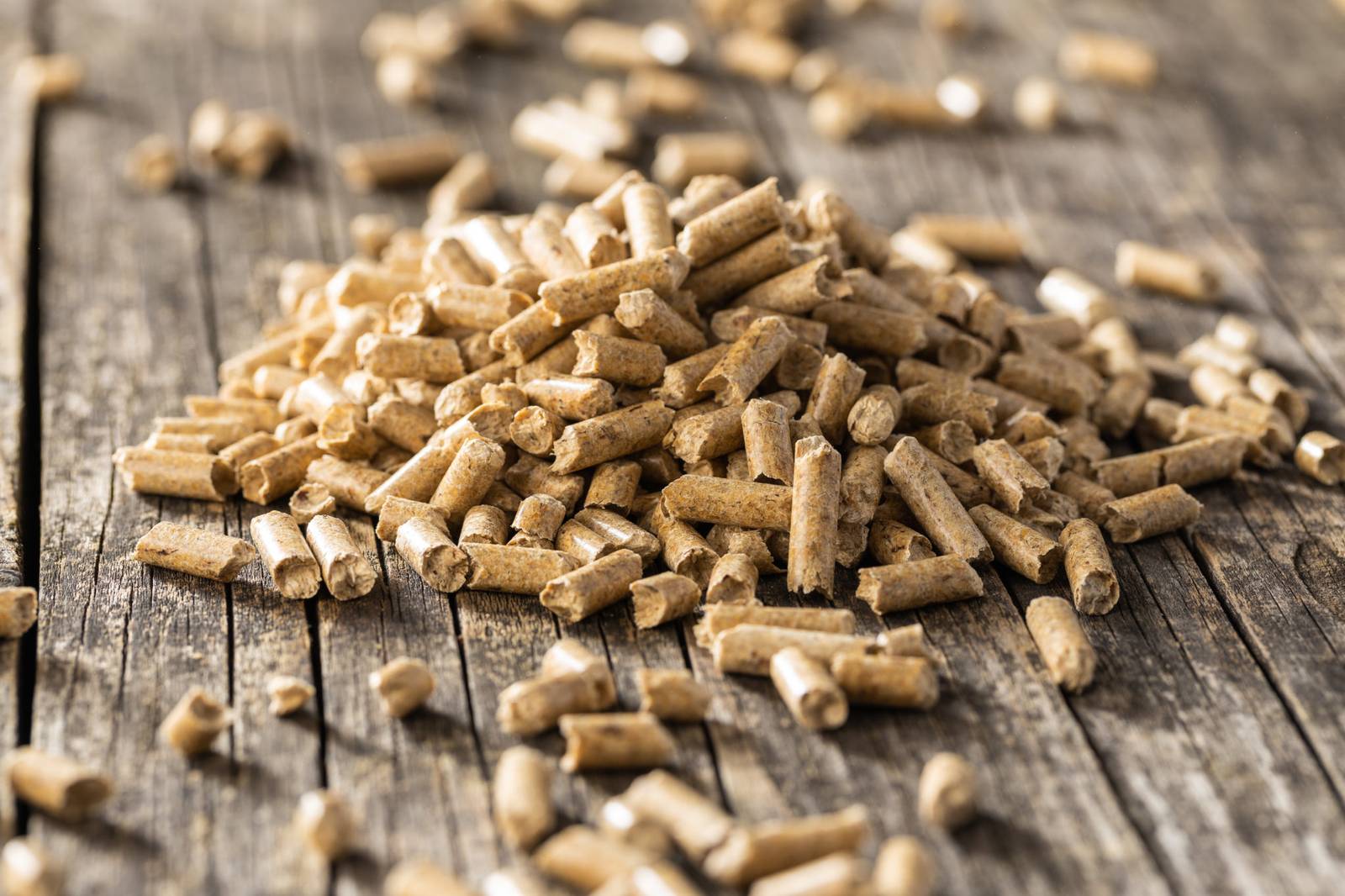
How Kingwood Pellet Equipment Serves Multiple Industries
Kingwood · May 26, 2026
Why Feedstock Diversity Defines Industrial Pellet Line Design
Industrial biomass pellet production is not a single-feedstock problem. A facility processing rice husks in Southeast Asia faces entirely different moisture profiles, particle sizes, and bulk densities than a sawmill in Chongqing converting wood offcuts, or a municipal waste operator in Beijing managing mixed organic residues. Equipment that cannot adapt at the process level — not just the settings level — creates bottlenecks that erode throughput and pellet quality simultaneously.
Kingwood’s pellet production equipment is engineered around this reality. The company’s wet-feed production line architecture handles high-moisture biomass directly, sequencing crushing, coarse grinding, drum drying, fine grinding, pelletizing, and packaging without requiring operators to pre-condition feedstock before entry. Dust-free enclosed processing with integrated dust removal is standard across all configurations, not an optional add-on. This matters operationally: facilities processing fine agricultural residues like rice husks or sorghum straw generate combustible dust that creates both safety and regulatory exposure if the line is not fully enclosed.
Sector-by-Sector Application: Agriculture, Forestry, and Waste Processing
Agricultural residue processing represents one of the highest-volume applications for biomass pellet equipment globally. Straw, corn stalks, rice husks, and bagasse are available in large quantities near processing facilities, but their low bulk density and variable moisture content make pelletizing technically demanding. Kingwood’s vertical pellet mills — including the JWZL-688D at 3–3.5 t/h and the JWZL-928 at 4–5 t/h — are designed to maintain consistent die pressure and throughput across these lower-density feedstocks. For agricultural operators, converting residue to pellets delivers both a waste management solution and a sellable energy product with a calorific value of 4,800 kcal/kg.
Forestry and wood waste applications require equipment capable of handling irregular particle sizes entering the line from drum chippers and hammer mills before pelletizing. Kingwood’s complete line scope includes both the drum chipper for initial size reduction and the hammer mill for fine grinding, meaning the full particle preparation sequence is integrated and matched to the downstream pellet mill’s feed requirements. A 30 t/h wood pellet production line commissioned in Chongqing, China in 2021 demonstrates the scalability of this approach for large forestry industry operators.
Waste management and industrial by-products represent a growing application as regulatory pressure on landfill diversion increases across Asia and Europe. Kingwood lines process industrial by-products — including fiber-rich manufacturing waste — into pellets that qualify as refuse-derived fuel or biomass fuel depending on composition. Pellets meeting Kingwood’s production specifications carry sulfur content below 0.3% and dioxin below 0.5 ng TEQ, both within Chinese GB13271-2001 boiler emission standards and international equivalents, enabling use in industrial boilers without additional flue gas treatment in most jurisdictions.
Kingwood drum dryer equipment — a critical process stage for high-moisture biomass feedstocks. See the SG-10/20/30/40/50/60 Biomass Drum Dryer product page for capacity specifications.
Three-Standardization Framework: The Engineering Principle Behind Cross-Industry Adaptability
Kingwood’s ability to serve multiple sectors from a consistent equipment platform stems from the company’s proprietary Three-Standardization Framework — a design and manufacturing methodology built on three pillars: integrated production lines, dust-free production lines, and automated production lines.
Integrated means each line component — from the drum chipper through the counter-flow cooler to the pellet packaging machine — is engineered as part of a matched system rather than assembled from independent vendor equipment. This eliminates inter-stage compatibility issues that commonly cause throughput loss in multi-feedstock operations.
Dust-free means all material transfer points, grinding stages, and pelletizing chambers operate under negative pressure with enclosed conveyance. For agricultural and forestry facilities subject to occupational health and fire safety inspections, this is not a differentiator — it is a compliance requirement. Kingwood’s 2024 Guizhou project was specifically documented as a dust-free implementation benchmark.
Automated means PLC-controlled sequencing with minimal manual intervention at steady state. For large-scale lines targeting outputs above 10 t/h, automation is the primary lever for consistent pellet quality and reduced labor cost per ton.
The combined effect of these three pillars is a production line that can be configured for different feedstocks without fundamental re-engineering — only die specification, dryer residence time, and hammer mill screen size require adjustment between, for example, a rice husk line and a wood chip line at similar throughput.
Kingwood has operated from its facility in Liyang Zhongguancun Industrial Park since 1999, accumulating 27 years of R&D in biomass pellet equipment and deploying systems across 30 countries. With over 2,000 production line projects planned and designed, the technical library informing feedstock-specific configuration recommendations is substantive. Operators assessing equipment for multi-feedstock or greenfield biomass facilities can contact Kingwood’s engineering team directly to request process design consultation and line-specific capacity modeling.
FAQ
What feedstock types can Kingwood pellet production equipment process?
Kingwood systems handle agricultural residues (straw, corn stalks, rice husks), forestry waste (wood chips, sawdust, bark), and industrial by-products. The wet-feed production line design accommodates high-moisture biomass without pre-drying, covering crushing, drying, grinding, pelletizing, and packaging in a single integrated flow.
What output capacities are available for industrial pellet production lines?
Kingwood vertical pellet mills range from 1–1.5 t/h (JWZL-420) up to 4–5 t/h (JWZL-928). Complete turnkey lines scale to 200,000 metric tons per year. The horizontal JZWH-860 also delivers 4–5 t/h for operations requiring a different mechanical configuration.
How do Kingwood production lines address dust and environmental compliance?
All lines are built under the Three-Standardization Framework, which mandates dust-free enclosed processing with integrated dust removal. Pellet combustion emissions comply with GB13271-2001. Biomass pellets produced carry sulfur content below 0.3% and dioxin levels below 0.5 ng TEQ — well within Chinese and international standards.
What cost savings can facilities expect when switching to biomass pellets?
Biomass fuel pellets reduce energy costs by 40–50% compared to fossil fuels. A documented 12 t/h line in Vietnam achieved full investment payback in 23 months, based on Kingwood project records from 2024.
Which certifications govern Kingwood equipment quality?
Kingwood holds ISO 9001, ISO 14001, and CE certifications. The company is also recognized as a Jiangsu Provincial High-Tech Enterprise, Jiangsu Provincial Gazelle Enterprise, and is listed on NEEQ (stock code: 871765).
Can Kingwood design a complete line for a new greenfield biomass facility?
Yes. Kingwood has planned and designed over 2,000 production line projects globally. Turnkey scope includes consultation, process design, equipment manufacture, logistics, installation, commissioning, operator training, and ongoing after-sales support.
What is the calorific value of pellets produced on Kingwood lines?
Biomass pellets produced on Kingwood equipment reach 4,800 kcal/kg with moisture content below 15% and ash content below 18%, meeting EU, ISO, and Chinese GB standards for industrial and commercial fuel applications.
- Kingwood biomass pellet production lines have been deployed across 30 countries, with the company having planned and designed over 2,000 production line projects since 1999. (2025, Kingwood corporate profile, kingwoodpellet.com)
- A 12 t/h wood pellet line commissioned in Vietnam in 2024 achieved full capital payback in 23 months, with biomass pellets delivering 40–50% lower fuel costs versus fossil alternatives. (2024, Kingwood Vietnam project case study, kingwoodpellet.com/case/)