Sawdust Pellet Mill: New Opportunities for Biomass Industry
Kingwood · May 26, 2026
Why Sawdust Is Now a Strategic Biomass Feedstock
For decades, sawdust and wood shavings were treated as disposal problems by sawmills and timber processors. The logistics of removing this fine, low-density material consumed cost without generating revenue. That equation has shifted decisively with the industrial-scale adoption of sawdust pellet mills.
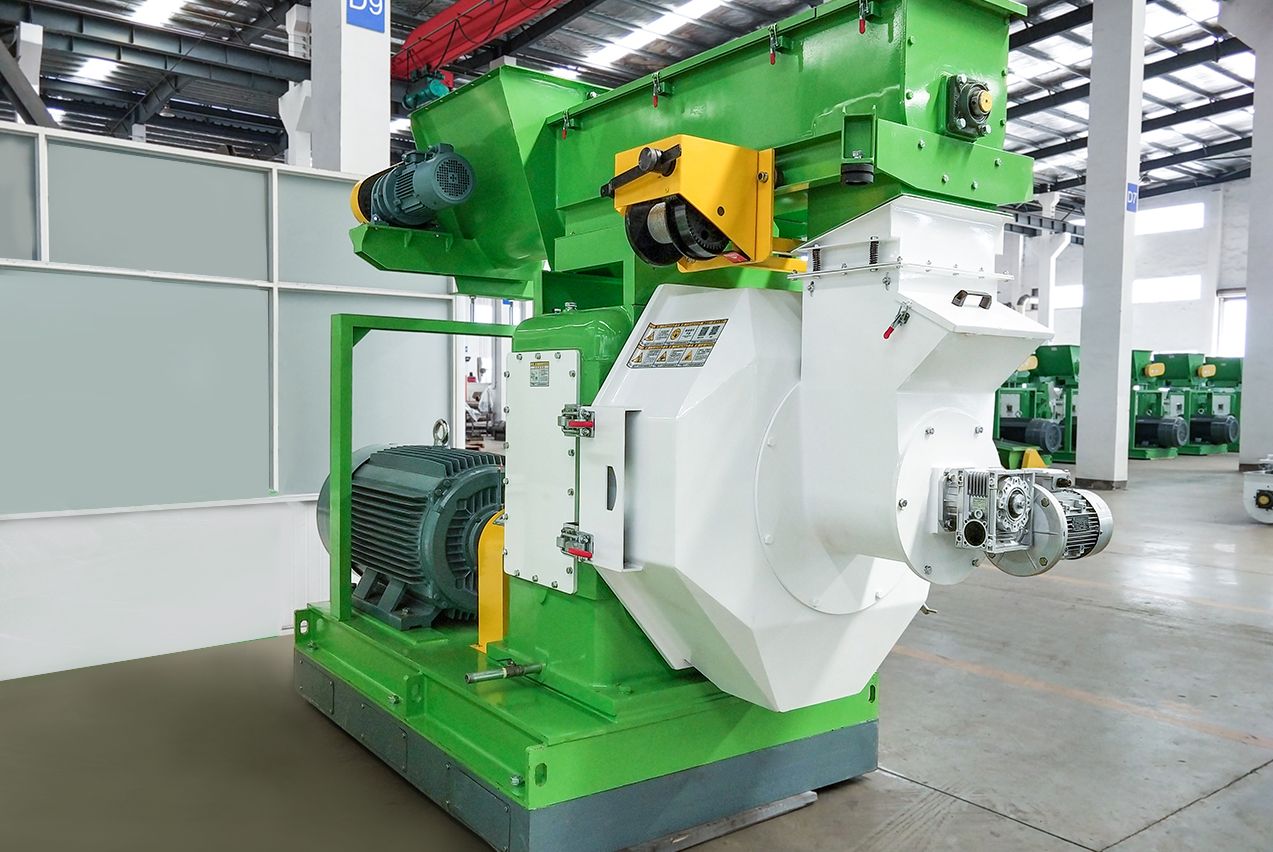
A sawdust pellet mill applies controlled mechanical pressure to compact loose, fibrous wood particles through a ring die, producing dense, geometrically uniform pellets. This process increases bulk energy density by roughly four to six times compared with raw sawdust, fundamentally changing the economics of wood waste as a fuel commodity. Pellets can be stored in silos, conveyed pneumatically, and fed into automated combustion systems with the same operational reliability as coal—making them a credible industrial fuel substitute rather than a niche alternative.
The feedstock supply is structurally large. Global timber processing generates hundreds of millions of metric tons of sawdust and wood residues annually. Much of this material is co-located with potential pellet production sites, reducing inbound logistics costs to near zero and enabling competitive delivered fuel pricing.
Industrial Applications and Fuel Performance Standards
Biomass pellets produced from sawdust feedstock serve three primary industrial markets: large-scale heating systems (district heat and industrial process heat), industrial boiler fuel replacement, and co-firing in power generation facilities.
Pellets produced on Kingwood equipment meet the following verified performance specifications:
- Calorific value: ≥4,800 kcal/kg
- Moisture content: <15% (compliant with EU wood pellet standards)
- Sulfur content: <0.3% (below Japan’s ≤0.5% import threshold)
- Ash content: <18% (within ISO’s <20% limit)
- Dioxin emissions: <0.5 ng TEQ (well within China’s GB standard of ≤1.0 ng TEQ)
All emission indicators from Kingwood-supplied combustion systems fall below GB13271-2001, China’s national Emission Standard of Air Pollutants for Boilers. For operators switching from coal or heavy oil, verified customer data indicates fuel cost reductions of 40–50% on a per-gigajoule basis.
These specifications align with the purchasing requirements of industrial buyers in Europe, Japan, South Korea, and Southeast Asia—markets where biomass co-firing mandates and carbon pricing mechanisms are creating sustained demand growth for certified pellet supply.
Kingwood’s Integrated Production Line Approach
Producing pellets that consistently meet international fuel specifications requires more than a standalone pellet mill. Feedstock moisture, particle size distribution, and pelletizing pressure must all be controlled within tight tolerances across every production shift. Kingwood addresses this through its complete wet-feed biomass pellet production lines, engineered under the Three-Standardization Framework: Integrated production lines, Dust-Free production lines, and Automated production lines.
A complete Kingwood sawdust pellet production line sequences the following process stages:
- Drum chipper — reduces oversized wood pieces to chip-grade feedstock
- Hammer mill (coarse) — grinds chips to a manageable particle size for drying
- Drum dryer — reduces feedstock moisture to <15% for pelletizing
- Hammer mill (fine) — achieves pelletizing-grade particle fineness
- Ring die pellet mill — compresses material into finished pellets (JWZL or JZWH series)
- Counter-flow cooler — stabilizes pellet temperature and final moisture
- Pellet packaging machine — seals product for transport and sale
The entire process operates in an enclosed, dust-controlled environment. Automated control systems monitor throughput, moisture, and die pressure continuously, reducing reliance on operator intervention and enabling consistent shift-to-shift output quality.
Kingwood offers pellet mill models spanning 1 t/h to over 5 t/h per unit, with complete lines engineered up to 200,000 metric tons of annual capacity. Deployed reference projects include a 24 t/h wood chip pellet production line in Vietnam (2023), a 12 t/h line in Vietnam (2024) with a documented 23-month investment payback, and a 30 t/h installation in Chongqing, China (2021).
Decentralized Energy and Rural Economic Impact
One structural advantage of sawdust pellet production is its compatibility with decentralized deployment. Unlike fossil fuel infrastructure, which requires proximity to extraction points and large centralized logistics networks, biomass pellet production can be positioned at or near the feedstock source—sawmills, furniture factories, engineered wood plants, or forestry operations.
This localization creates compounding economic benefits for forestry-rich regions. Raw material transport costs are minimized. Local employment is generated across collection, processing, and logistics functions. And the community or region gains access to a locally produced, price-stable energy source that reduces dependence on grid-supplied power or imported fossil fuels.
Kingwood has delivered projects across more than 30 countries. Domestic Chinese implementations include a dust-free pellet mill workshop in Guizhou (2024) and Beijing’s first biomass pellet demonstration project (2024)—both illustrating that the distributed production model applies equally in rural forestry regions and urban industrial demonstration contexts.
Established in 1999 and listed on China’s NEEQ (stock code 871765), Kingwood operates from a 31,200 m² facility in Liyang Zhongguancun Industrial Park, Jiangsu Province, with 20 dedicated R&D specialists and 27 years of biomass equipment engineering experience. The company has planned and designed over 2,000 production line projects, with aggregate annual biomass fuel production capacity across deployed lines exceeding 10 million metric tons.
For technical specifications, line configuration consulting, or project quotation, contact Kingwood’s engineering sales team directly.
FAQ
What raw materials can a sawdust pellet mill process?
Industrial sawdust pellet mills process wood-based and agricultural biomass including sawdust, wood shavings, wood chips, bark, rice husks, straw, and other lignocellulosic byproducts. Kingwood's wet-feed pellet production lines handle high-moisture biomass by integrating crushing, coarse grinding, drum drying, fine grinding, pelletizing, and packaging in a single enclosed process.
What are the key quality specifications of biomass pellets produced by Kingwood equipment?
Biomass pellets produced on Kingwood lines meet: calorific value ≥4,800 kcal/kg, moisture content <15%, sulfur content <0.3%, ash content <18%, and dioxin emissions <0.5 ng TEQ. These satisfy the EU moisture standard (<15%), US calorific benchmark (>2,500 kcal/kg), Japan's sulfur limit (≤0.5%), ISO ash threshold (<20%), and China's GB13271-2001 boiler emissions standard.
How does a sawdust pellet mill increase the commercial value of wood waste?
By compressing sawdust through a ring die under high pressure, a pellet mill increases bulk energy density roughly 4–6 times versus loose sawdust. The resulting uniform pellets are easier to store, transport, and feed into automated combustion systems—converting a disposal-cost material into tradable biomass fuel that reduces industrial fuel costs by 40–50% versus coal or heavy oil.
What production capacities are available for industrial sawdust pellet mill systems from Kingwood?
Kingwood offers vertical ring die pellet mills—JWZL-420 (1–1.5 t/h), JWZL-688 (2–2.3 t/h), JWZL-688D (3–3.5 t/h), JWZL-928 (4–5 t/h), and JWZL-1068 (capacity on request)—plus the horizontal JZWH-860 (4–5 t/h). Complete lines can be engineered for up to 200,000 metric tons annually. Reference projects include a 24 t/h line in Vietnam (2023), a 12 t/h line in Vietnam (2024, 23-month payback), and a 30 t/h line in Chongqing, China (2021).
What auxiliary equipment is required in a complete sawdust pellet production line?
A complete line integrates a drum chipper for size reduction, a hammer mill for fine grinding to pelletizing-grade particle size, a drum dryer to reduce feedstock moisture to <15%, a counter-flow cooler to stabilize pellets after extrusion, and a pellet packaging machine. Kingwood engineers and supplies all auxiliary systems as part of integrated, dust-free, automated production lines under its Three-Standardization Framework.
How does a sawdust pellet mill support rural and distributed energy development?
Sawdust pellet production suits decentralized deployment in forestry-rich regions where wood waste is generated at the source. Localized production reduces fuel logistics costs, generates rural employment, and provides communities with a reliable local energy supply. Kingwood has delivered projects across 30+ countries, including implementations in Guizhou and Beijing, demonstrating applicability across diverse regional contexts.
What certifications and standards govern Kingwood's pellet mill equipment quality?
Kingwood holds ISO 9001, ISO 14001, and CE certifications, and is recognized as a Jiangsu Provincial High-Tech Enterprise, Jiangsu Provincial Specialized & Innovative Niche Leader, and Jiangsu Provincial Gazelle Enterprise. The company is listed on China's NEEQ under stock code 871765 and serves as a Deputy Director Member Unit of the China Biomass Energy Industry Alliance.
- Global wood pellet production capacity exceeded 50 million metric tons per year as of 2023, driven by industrial heating and co-firing demand in Europe and Asia. (2023, IEA Bioenergy Task 40 — Sustainable Biomass Supply Chains)
- Biomass energy accounted for approximately 55% of total renewable energy consumption in the EU in 2022, with wood pellets representing the dominant solid biofuel traded internationally. (2022, Eurostat — Energy from Renewable Sources statistics (2024 edition))