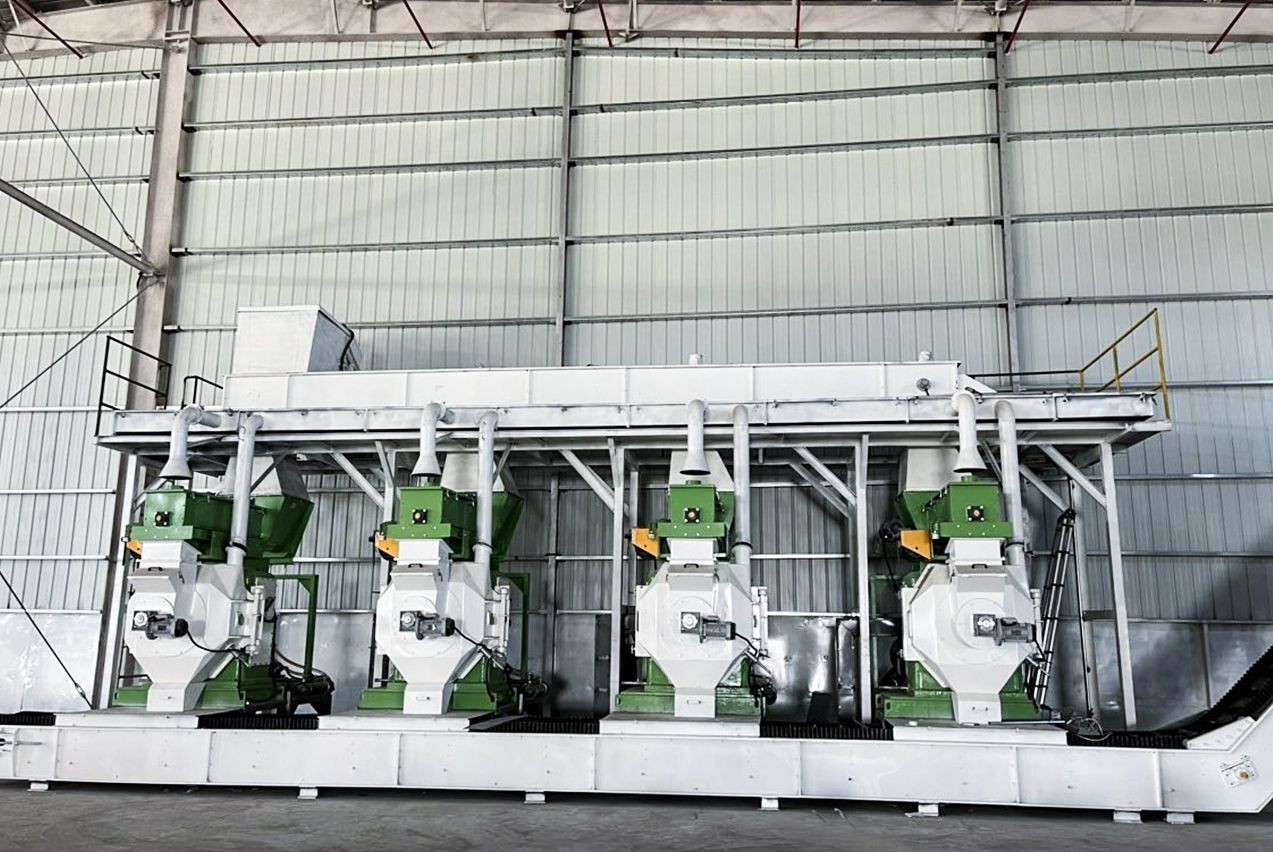
Beijing's First Biomass Pellet Demonstration Project
China · 2024
Background and Project Context
In 2024, Beijing’s first official biomass fuel demonstration project commenced operations in Yanqing District, marking a pivotal milestone in China’s transition away from coal-based district heating. The facility was established in direct response to China’s national energy conservation and carbon reduction policy framework, which sets binding targets for municipal authorities to measurably reduce fossil fuel consumption in the residential and commercial heating sectors.
Yanqing District was selected as the host site for several compounding reasons: its position as a peri-urban zone with extensive managed green space, its existing logistics infrastructure, and the municipal government’s stated commitment to piloting renewable energy substitution at demonstrable scale before broader roll-out across Beijing’s districts. According to IEA Bioenergy Task 32, urban and peri-urban woody biomass residues — including landscaping cuttings, storm-damaged timber, and park maintenance debris — represent one of the most consistently available but historically underutilised feedstock streams in major metropolitan areas globally.
The Yanqing project’s core function is the conversion of landscaping green waste and bulky woody debris — materials generated continuously across Beijing’s extensive urban green infrastructure — into standardised biomass pellets. These pellets replace coal in winter heating supply chains, delivering a measurable reduction in particulate and sulphur emissions within the municipality. Annual processing capacity covers approximately 100,000 metric tons of biomass fuel output, making this one of the highest-throughput urban residue pelletisation facilities commissioned in northern China to date.
Kingwood, listed on China’s National Equities Exchange and Quotations market under stock code NEEQ 871765, was selected to supply the complete production line for this project. Kingwood’s designation as a manufacturer operating under its Three-Standardization Framework — covering Standardized, Automated, and Dust-Free production line design — was directly relevant to the project’s urban-proximity environmental compliance requirements.
Equipment Configuration
The Yanqing production line is a full wet-feed biomass pellet system, purpose-engineered to handle high-moisture feedstocks such as freshly collected green waste and woody debris without requiring pre-drying at intake. This is a critical design decision: urban landscaping residues are collected year-round at variable moisture levels, often arriving at 40–55% moisture content immediately after collection. A wet-feed capable line eliminates the bottleneck of pre-processing, allowing continuous intake and higher effective throughput.
The process sequence covers six integrated stages:
- Crushing — primary size reduction of bulky woody inputs via Kingwood drum chipper, reducing incoming material to manageable chip dimensions for downstream handling
- Coarse grinding — secondary particle sizing via hammer mill, bringing material to an intermediate particle size suitable for efficient drying
- Drying — moisture reduction through drum dryer, bringing feedstock to below 15% moisture content, the threshold required for reliable pellet mill performance and pellet durability
- Fine grinding — final particle refinement ahead of the pelletising stage, ensuring consistent bulk density and die fill behaviour
- Pelletising — densification into uniform biomass pellets using Kingwood ring die pellet mills, the core densification technology that determines final product calorific value and mechanical durability
- Packaging — automated bagging and dispatch for delivery to heating network operators and institutional fuel buyers
The entire line operates under fully enclosed material transport, with integrated dust removal active at every transfer point. This configuration meets the Dust-Free production line standard — one of the three pillars of Kingwood’s Three-Standardization Framework — ensuring that the facility satisfies environmental compliance requirements for operation in an urban-proximate setting where airborne particulate limits are strictly enforced.
Automation is implemented throughout the line. Operators manage the full production sequence from a centralised control interface, reducing manual handling and maintaining consistent pellet quality across multi-shift operation. This level of integration is consistent with Kingwood’s Automated production line standard, which is specifically designed for facilities supplying institutional or municipal fuel buyers who require reliable, traceable, and auditable output volumes. Procurement engineers evaluating similar projects can review related Kingwood production line configurations on the biomass pellet production line product page.
Commissioning and Performance Results
The Yanqing facility entered commissioning in 2024 and progressed through staged start-up across the six process stages, with the pelletising and drying stages validated last to confirm integrated performance under full feedstock load.
Biomass pellets produced at the Yanqing facility meet the following specification benchmarks based on Kingwood’s documented fuel quality data:
| Parameter | Kingwood Specification | Reference Standard |
|---|---|---|
| Calorific value | 4,800 kcal/kg | GB/T (China national standard) |
| Moisture content | < 15% | ISO 17225-2 (wood pellets) |
| Sulphur content | < 0.3% | Below coal-fired equivalents |
ISO 17225-2, the internationally recognised standard for wood pellet quality classification, specifies a moisture content threshold of ≤ 10% for industrial-grade (I1) pellets and ≤ 15% for lower-grade classifications. The Yanqing facility’s output at sub-15% moisture positions it within the commercially tradeable industrial pellet range, compatible with existing burner and boiler infrastructure used in Beijing’s district heating operators.
At an annual output of approximately 100,000 metric tons of biomass fuel, the Yanqing facility displaces a significant volume of coal in the regional heating supply chain. IEA Bioenergy estimates that substituting one tonne of biomass pellets at 4,800 kcal/kg calorific value for an equivalent thermal output of coal reduces CO₂-equivalent emissions by approximately 1.5 to 1.8 tonnes, depending on the coal grade displaced. Applied to the Yanqing facility’s design capacity, this implies an annual carbon displacement in the range of 150,000 to 180,000 tonnes CO₂-equivalent at full utilisation — a material contribution to Beijing’s municipal carbon accounting.
The fully enclosed material transport system and multi-point dust extraction confirmed compliance with local air quality ordinances during commissioning inspections, a prerequisite for continued operating permits in the Yanqing zone.
Lessons and Takeaways
The Yanqing District project establishes a replicable template for urban biomass pellet infrastructure in Chinese municipalities where green waste volumes are large, coal displacement targets are binding, and environmental compliance within city limits is non-negotiable.
Several procurement-relevant conclusions emerge for engineers evaluating comparable projects:
Wet-feed line design reduces feedstock pre-processing costs. By integrating the drum dryer as a mid-line stage rather than requiring pre-dried input, the Yanqing configuration avoids a separate upstream drying facility and the associated capital and energy overhead. This is particularly relevant for municipal feedstocks where moisture content varies seasonally.
Ring die pellet mill selection is critical for urban residue feedstocks. Urban green waste contains variable lignin and cellulose ratios depending on species mix and season. Kingwood’s ring die pellet mill configuration is designed to maintain consistent die compression and pellet durability across this feedstock variability, which directly protects calorific value consistency at the point of delivery to heating operators.
Dust-Free enclosed transport is a non-negotiable for urban-site permits. Facilities located within or adjacent to populated zones face operating permit conditions that open-transfer production lines cannot meet. The Three-Standardization Framework’s Dust-Free standard was a decisive compliance factor for Yanqing.
Automation reduces labour dependency at scale. At 100,000 metric tons per annum output, manual handling at any stage creates quality variability and throughput risk. Centralised control reduces shift-to-shift inconsistency and supports the traceability documentation required by institutional fuel purchasers.
For procurement engineers assessing Kingwood equipment for large-scale biomass pellet projects, the Yanqing facility represents the most complex and high-volume urban feedstock application commissioned by Kingwood to date, and provides a directly comparable reference point for municipal or industrial projects targeting coal substitution in regulated heating markets.
Sources
- IEA Bioenergy Task 32: Biomass Combustion and Co-firing — urban woody biomass residue availability and emissions displacement factors
- ISO 17225-2:2021 — Solid biofuels — Fuel specifications and classes — Part 2: Graded wood pellets — moisture content and quality classification thresholds