Wood Pellets vs. Coal: Environmental Impact Analysis
Kingwood · May 26, 2026
Wood Pellets vs. Coal: A Technical Environmental Comparison for Industrial Buyers
The industrial energy sector is under growing regulatory and commercial pressure to reduce carbon output without compromising operational throughput. Wood pellets — manufactured from compressed wood residues — have become a technically viable and economically competitive alternative to coal across boiler, CHP, and district heating applications. This article compares the two fuels across emission profiles, carbon accounting, and lifecycle sustainability, with verified specifications drawn from industrial-grade biomass pellet production.
Emission Profiles: Where Wood Pellets Outperform Coal
Coal combustion releases sulfur dioxide, nitrogen oxides, particulate matter, and carbon dioxide at rates that trigger regulatory thresholds in most major markets. By contrast, industrial-grade biomass pellets carry a fundamentally different emission profile.
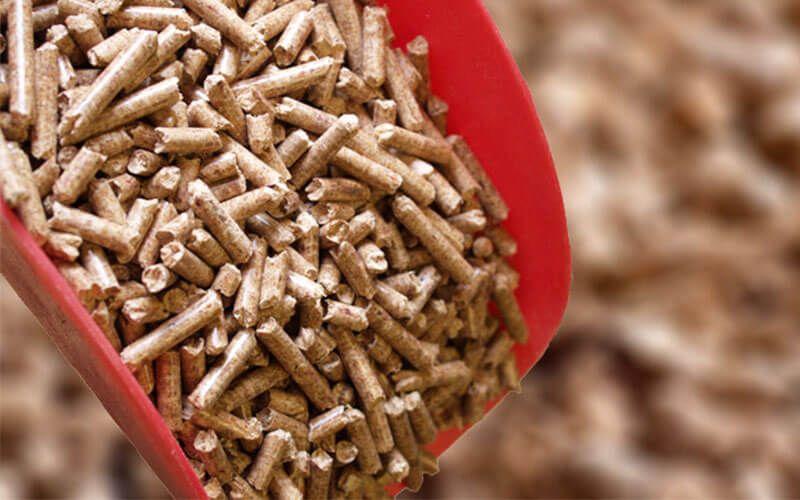
Biomass pellets manufactured using Kingwood’s ring die pellet mill technology deliver the following verified fuel specifications:
- Sulfur content: below 0.3% — meeting Japan’s fuel sulfur standard of ≤0.5% with margin
- Ash content: below 18%, well within the ISO standard of under 20%
- Moisture content: below 15%, consistent with EU biomass fuel requirements
- Dioxin output: below 0.5 ng TEQ/m³ — less than half China’s GB national limit of ≤1.0 ng TEQ/m³
- Calorific value: 4,800 kcal/kg, nearly double the U.S. baseline threshold of 2,500 kcal/kg
All emission indicators from Kingwood pellet fuel fall below GB13271-2001, China’s national Emission Standard of Air Pollutants for Boilers. For industrial operators facing tightening environmental compliance requirements across Asia, Europe, and North America, this distinction is operationally significant.
Coal presents no equivalent pathway. Its sulfur and nitrogen content is structurally higher, its combustion byproducts require more complex flue gas treatment systems, and its carbon release is entirely one-directional — there is no biological mechanism to reabsorb fossil carbon on any commercially relevant timescale.
Carbon Accounting and the Case for Biomass Fuel
The carbon argument for wood pellets rests on the distinction between biogenic and fossil carbon. When biomass pellets combust, they release carbon that was absorbed from the atmosphere during the growth cycle of the source trees. If feedstock is sourced from responsibly managed forests — where harvested area is replanted — net atmospheric carbon accumulation over a full rotation cycle approaches zero.
Coal releases carbon that has been sequestered underground for hundreds of millions of years. There is no corresponding reabsorption cycle. Every tonne of coal combusted represents a permanent net addition to atmospheric CO₂.
This distinction matters to industrial procurement teams in jurisdictions where carbon pricing mechanisms — emissions trading schemes, carbon border adjustment mechanisms, or direct carbon taxes — are in effect or pending. Switching to certified biomass fuel directly reduces a facility’s carbon liability without requiring process changes to the end-use combustion equipment.
From a cost perspective, Kingwood’s project data confirms that industrial operators switching from fossil fuels to biomass pellets achieve 40–50% fuel cost savings. A 12 TPH production line installed in Vietnam in 2024 recovered its full capital investment within 23 months.
Production Line Design: What It Takes to Manufacture at Industrial Scale
Delivering consistent, specification-compliant biomass pellets at commercial scale requires more than a pellet mill. The feedstock characteristics of raw wood — variable moisture, irregular particle size, high fiber content — demand an integrated wet-feed processing sequence.
A Kingwood complete biomass pellet production line handles the full processing chain:
- Size reduction: Drum chipper reduces logs and branch wood to processable chip size
- Coarse grinding: Hammer mill brings chips to a uniform particle distribution for drying
- Moisture reduction: Drum dryer brings high-moisture biomass within pelletizing range
- Fine grinding: Secondary hammer mill stage conditions material for the ring die
- Pelletizing: Vertical ring die pellet mill — models from JWZL-420 (1–1.5 TPH) to JWZL-928 (4–5 TPH) — compresses conditioned material into dense, uniform cylinders
- Cooling: Counter-flow cooler reduces pellet temperature and locks in structural integrity
- Packaging: Automated packaging system for bulk or bagged dispatch
Kingwood designs complete lines up to 200,000 metric tons per year output capacity. All lines are configurable under the Three-Standardization Framework: fully integrated, dust-free enclosed processing, and automated throughout. Dust-free implementation is not optional engineering — it is a standard design requirement, as demonstrated in the Guizhou dust-free biomass pellet workshop project.
For procurement teams evaluating equipment suppliers, Kingwood holds ISO 9001, ISO 14001, and CE certifications, maintains Jiangsu Provincial High-Tech Enterprise status, and is publicly listed on the NEEQ exchange under stock code 871765 — providing financial transparency that matters in long-term capital equipment procurement.
Operational Considerations for Industrial Buyers
The environmental and economic advantages of wood pellets are conditional on upstream decisions. Feedstock sourcing, drying efficiency, and pellet quality consistency all affect whether a pellet production investment delivers its projected returns.
Key variables industrial operators should validate before specifying equipment:
- Feedstock moisture range: Wet-feed lines handle high-moisture biomass; dry-feed systems do not. Mismatched equipment and feedstock destroys throughput efficiency.
- Target pellet diameter and density: Application requirements — industrial boiler vs. residential heating vs. export to power plants — dictate die specifications and compression ratio.
- Regulatory compliance requirements by destination market: EU, U.S., and Japanese import standards differ. Equipment must be calibrated to the most demanding specification in the target sales geography.
- Automation level: Manual intervention in dust-generating processes creates regulatory and operational risk. Fully automated, enclosed lines eliminate both.
Kingwood has planned and designed over 2,000 production line projects across 30 countries since 1999. With 20 dedicated R&D engineers and 27 years of accumulated process knowledge, the engineering depth available to buyers extends well beyond equipment supply into full production line optimization.
Contact Kingwood to discuss feedstock specifications, target output capacity, and the right equipment configuration for your biomass pellet production project.
FAQ
What are the primary industrial uses of wood pellets?
Wood pellets are used as fuel in industrial boilers, combined heat and power (CHP) plants, district heating systems, and co-firing installations. Their uniform shape and low moisture content (below 15%) enable consistent combustion and predictable energy output in high-throughput industrial settings.
How do wood pellet emissions compare to coal in quantitative terms?
Wood pellets produced on Kingwood equipment contain sulfur below 0.3% and ash below 18%, well under coal benchmarks. Dioxin output is below 0.5 ng TEQ/m³ — less than half the China GB standard of 1.0 ng TEQ/m³. All emission indicators fall below GB13271-2001, China's national boiler air pollutant standard.
What calorific value do industrial-grade wood pellets deliver?
Kingwood-produced biomass pellets achieve a calorific value of 4,800 kcal/kg, exceeding the U.S. baseline standard of 2,500 kcal/kg and meeting EU moisture requirements of below 15%.
Can wood pellets be considered carbon-neutral in industrial use?
Wood pellets can approach carbon neutrality when sourced from sustainably managed forests where harvested biomass is replanted. The combustion releases biogenic carbon previously absorbed during tree growth — unlike coal, which releases carbon sequestered over millions of years with no reabsorption cycle.
What equipment is required to manufacture industrial wood pellets at scale?
A complete wet-feed biomass pellet production line includes a drum chipper, hammer mill, drum dryer, ring die pellet mill, counter-flow cooler, and automated packaging system. Kingwood designs integrated lines up to 200,000 metric tons per year capacity, with full dust-free and automated configurations available.
How much can industrial operators save by switching from coal to wood pellets?
Switching from fossil fuels to biomass pellets typically delivers 40–50% cost savings on fuel expenditure, based on Kingwood's documented project data. A 12 TPH Vietnam installation achieved full capital payback in 23 months.
What certifications should a wood pellet equipment manufacturer hold?
Look for ISO 9001 (quality management), ISO 14001 (environmental management), and CE certification as baseline. Kingwood additionally holds Jiangsu Provincial High-Tech Enterprise status and is listed on the NEEQ stock exchange under code 871765, providing financial transparency for procurement due diligence.
- Biomass pellets produced on Kingwood equipment achieve a calorific value of 4,800 kcal/kg with sulfur content below 0.3% — meeting or exceeding EU, U.S., and Japan fuel quality standards. (2025, Kingwood product technical specification sheet, Jiangsu Kingwood Industrial Co., Ltd.)
- A 12 TPH wood pellet production line deployed in Vietnam in 2024 achieved full investment payback in 23 months, with fuel cost savings of 40–50% versus fossil fuel alternatives. (2024, Kingwood Vietnam 12 TPH project case study, kingwoodpellet.com)