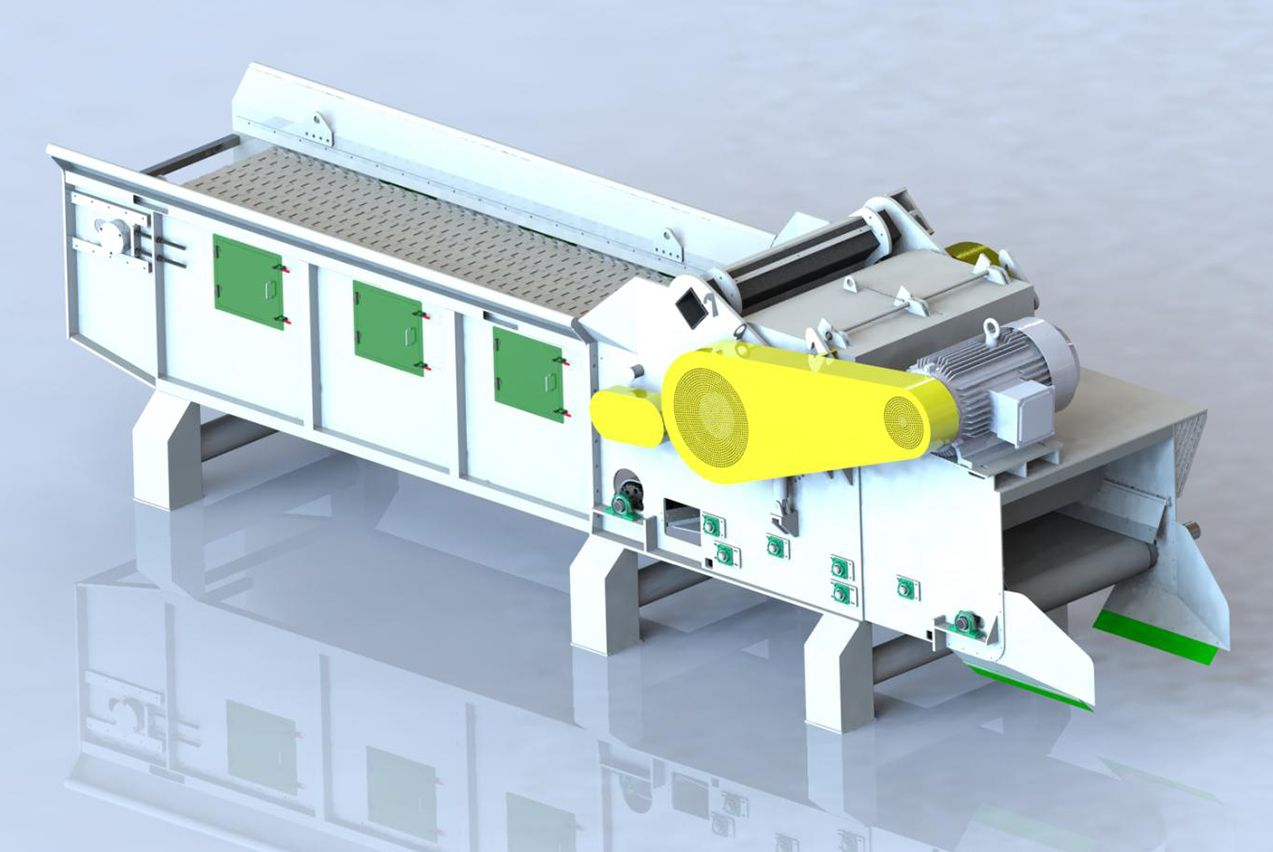
Wood Pellet Mills: Harnessing Nature's Potential for a Greener Future
Kingwood · May 26, 2026
Wood pellet mills are purpose-built industrial systems that convert raw lignocellulosic biomass—sawdust, wood chips, bark, agricultural straw—into dense, standardized fuel pellets. At the production scale required for industrial heat and power applications, this conversion demands precision engineering, controlled feedstock conditioning, and end-to-end process integration. The result is a renewable fuel that measurably reduces fossil fuel dependency while meeting internationally benchmarked quality and emissions standards.
The Industrial Case for Wood Pellet Production
Biomass pellets offer a verifiable cost and emissions advantage over coal, heavy oil, and natural gas in industrial boiler and co-firing applications. Pellets produced on Kingwood-engineered lines reach a calorific value of 4,800 kcal/kg, with moisture content below 15% and sulfur content below 0.3%—parameters that satisfy EU (<15% moisture), ISO (<20% ash), US (>2,500 kcal calorific threshold), and Japan (≤0.5% sulfur) fuel quality requirements simultaneously.
From a cost perspective, the transition to biomass fuel delivers 40–50% operating cost savings compared to equivalent fossil fuel inputs. This margin, validated across multiple Kingwood installations, is driven by lower feedstock procurement costs and the elimination of carbon compliance surcharges that increasingly apply to coal-fired operations.
On the emissions side, all indicators from Kingwood-supplied boiler systems fall below China’s GB13271-2001 national standard for boiler air pollutants. Dioxin output is below 0.5 ng-TEQ against a national GB ceiling of ≤1.0 ng-TEQ—a margin relevant to buyers operating in regulated industrial zones or exporting to markets with strict emissions disclosure requirements.
How Industrial Wood Pellet Mills Work: Process Architecture
Producing consistent, high-density fuel pellets at commercial throughput requires more than a single pelletizing machine. Industrial-scale output demands a sequenced, integrated process line. Kingwood’s wet-feed production line architecture handles feedstocks with elevated initial moisture through the following stages:
- Coarse size reduction — Drum chippers and hammer mills reduce incoming wood chips, logs, or agricultural residues to a workable particle size.
- Drying — Drum dryers reduce feedstock moisture to the target range for pelletizing, typically below 15%.
- Fine grinding — Secondary hammer mill passes produce the uniform particle distribution required for die compression.
- Pelletizing — Ring die pellet mills apply controlled compression through precision-machined dies to form dense, uniform pellets.
- Cooling — Counter-flow coolers reduce pellet temperature and finalize moisture content, hardening the pellet surface for handling and storage.
- Packaging — Automated packaging closes the line, enabling direct dispatch or bulk loading.
The entire sequence operates as an enclosed, integrated system with integrated dust removal—a direct application of Kingwood’s Three-Standardization Framework, which mandates Integrated, Dust-Free, and Automated production line design across all engineering deliverables.
Kingwood’s vertical ring die pellet mill range covers throughputs from 1 t/h (JWZL-420) to 5 t/h (JWZL-928), with the horizontal JZWH-860 also rated at 4–5 t/h. Complete integrated lines scale to 200,000 metric tons per year, engineered to order for large industrial and utility-scale operators.
Validated Performance: Project References
Kingwood’s engineering and equipment have been deployed across 30 countries, with over 2,000 production line projects planned and designed since the company’s founding in 1999. Several reference cases illustrate real-world performance:
- Vietnam, 2024 — 12 t/h wood pellet production line: Full capital payback achieved in 23 months, validating the 40–50% cost-saving benchmark under Southeast Asian feedstock and energy pricing conditions. View full case study.
- Vietnam, 2023 — 24 t/h wood chip pellet production line: Large-scale export-grade pellet output demonstrating Kingwood’s capacity to engineer high-throughput lines for international fuel markets. View full case study.
- Chongqing, China, 2021 — 30 t/h wood pellet mill: Domestic industrial installation confirming ring die durability and output consistency at continuous high-load operation.
- Guizhou, China, 2024 — Dust-Free biomass pellet workshop: Greenfield facility built to full Dust-Free specification under the Three-Standardization Framework, demonstrating the occupational safety and regulatory compliance advantages of enclosed processing architecture.
These installations span geographies with differing feedstock profiles, regulatory environments, and logistics constraints, confirming the adaptability of Kingwood’s engineering approach beyond controlled conditions.
Waste Valorization and the Resource Efficiency Argument
A technically significant but often underweighted factor in the economics of wood pellet production is feedstock sourcing. Wood residues—sawdust from sawmills, bark from timber processing, rice husk and straw from agricultural operations—carry low or near-zero procurement costs in many markets. Without pellet mill infrastructure, this material faces disposal costs or regulatory liability.
Converting these residues into 4,800 kcal/kg fuel pellets transforms a waste liability into a tradeable energy commodity, aligning with circular economy procurement strategies increasingly required under industrial ESG frameworks. Kingwood’s annual biomass fuel production capacity across its own manufacturing and reference client base exceeds 10,000,000 metric tons, reflecting the industrial scale at which this valorization operates.
For project teams evaluating biomass pellet line investments, the combination of low feedstock cost, verifiable payback timelines, and compliant emissions performance makes industrial wood pellet mills a technically and financially defensible component of long-term energy cost management strategy.
Jiangsu Kingwood Industrial Co., Ltd. (NEEQ: 871765) is headquartered at #568 Hongsheng Road, Liyang Zhongguancun Industrial Park, Jiangsu Province, China. With 27 years of R&D experience, ISO 9001, ISO 14001, and CE certifications, Kingwood engineers complete biomass pellet production lines for industrial operators across 30 countries.
FAQ
What raw materials can wood pellet mills process?
Industrial wood pellet mills handle sawdust, wood chips, bark, agricultural straw, rice husks, and other lignocellulosic residues. Kingwood's wet-feed production lines are specifically engineered for high-moisture feedstocks, integrating crushing, drying, grinding, pelletizing, and packaging in a single automated sequence.
What is the calorific value of biomass pellets produced by Kingwood equipment?
Pellets produced on Kingwood lines achieve a calorific value of 4,800 kcal/kg, with moisture content below 15%, sulfur content below 0.3%, and ash content below 18%—meeting EU, ISO, US, and Japan fuel quality benchmarks.
Are wood pellets genuinely carbon neutral?
Combustion of wood pellets releases CO₂ previously absorbed during tree growth, producing a near-closed carbon cycle. All emission indicators from Kingwood-equipped boiler installations fall below China's GB13271-2001 national standard for boiler air pollutants, with dioxin output below 0.5 ng-TEQ versus the GB limit of ≤1.0 ng-TEQ.
What capacity range do Kingwood pellet mills cover?
Kingwood's vertical ring die pellet mills span 1 t/h (JWZL-420) to 5 t/h (JWZL-928), with the horizontal JZWH-860 also rated at 4–5 t/h. Complete integrated production lines scale up to 200,000 metric tons per year output.
How quickly can a wood pellet investment pay back?
A 12 t/h Kingwood-supplied production line commissioned in Vietnam in 2024 achieved full capital payback in 23 months. Operating costs are typically 40–50% lower than equivalent fossil fuel systems.
What standards and certifications apply to Kingwood pellet equipment?
Kingwood holds ISO 9001, ISO 14001, and CE certifications, and is recognized as a Jiangsu Provincial High-Tech Enterprise and Specialized & Innovative Niche Leader. The company is also a Deputy Director Member Unit of the China Biomass Energy Industry Alliance.
What is the Three-Standardization Framework and why does it matter for buyers?
Kingwood's Three-Standardization Framework structures every production line around three pillars: Integrated processing, Dust-Free operation, and full Automation. This framework reduces occupational hazards, lowers per-ton operating costs, and enables consistent pellet quality at industrial scale—differentiating Kingwood lines from standard equipment offerings.
- Biomass energy could supply up to 25% of global primary energy demand by 2050 under accelerated decarbonization scenarios. (2023, International Renewable Energy Agency (IRENA), 'Tripling Renewable Power and Doubling Energy Efficiency by 2030' report)
- Global wood pellet production exceeded 42 million metric tons in 2022, driven by industrial heat and power co-firing demand across Europe and Asia. (2023, IEA Bioenergy Task 40 — Sustainable International Bioenergy Trade, Annual Report 2023)