Custom Commercial Vertical Wood Pellet Machines: Factory Guide
Kingwood · May 26, 2026
What Defines a Custom Commercial Vertical Wood Pellet Machine
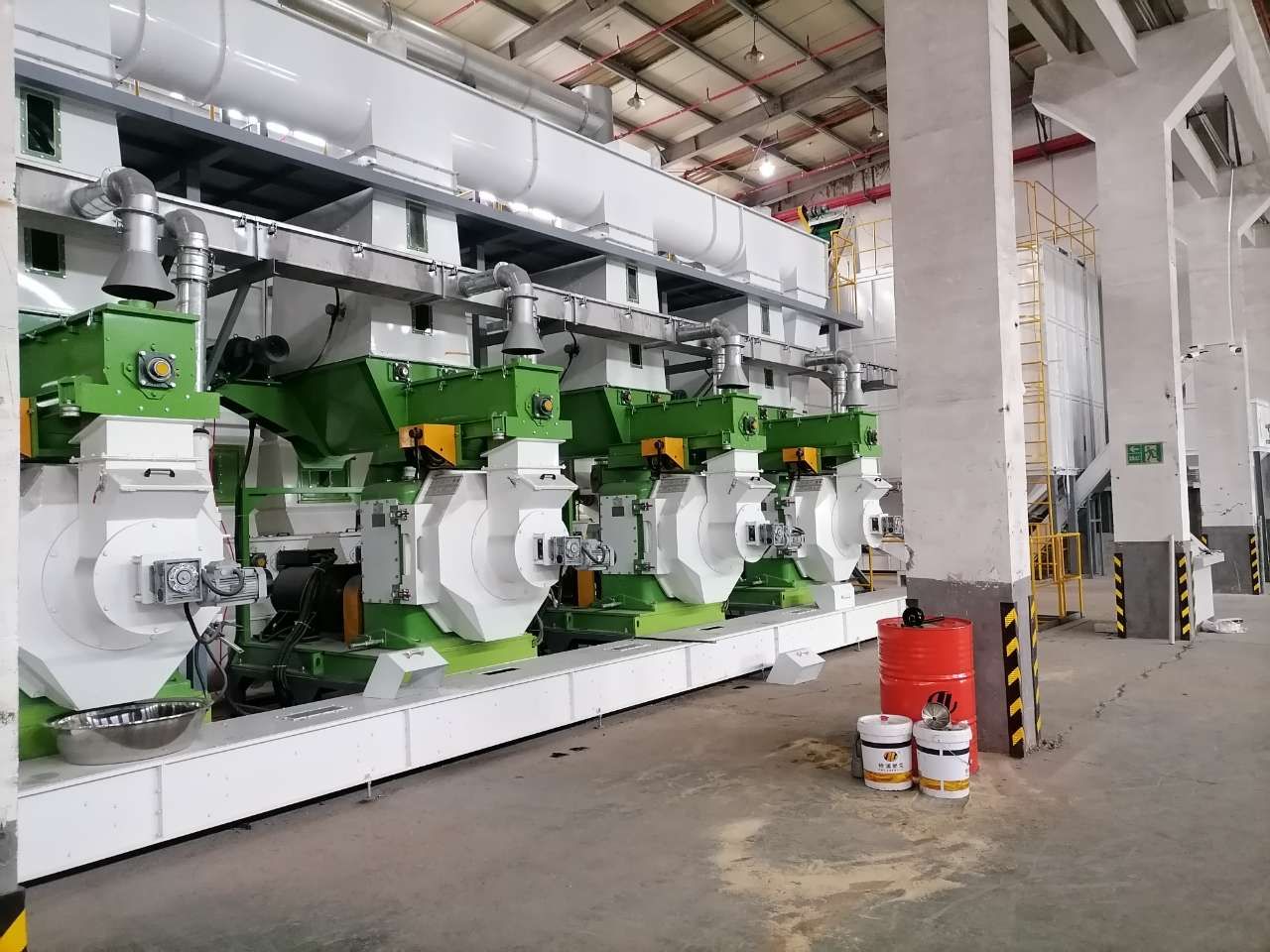
A commercial vertical wood pellet machine is industrial pelletizing equipment that compresses conditioned biomass through a vertical ring die to produce dense, standardized fuel pellets. The vertical axis orientation suits the physical properties of woody feedstocks — variable fiber length, high bulk volume, and moisture variation — by enabling gravity-assisted material flow into the compression zone and reducing the bridging failures common in horizontal configurations.
Kingwood has manufactured vertical biomass pellet mills since 1999 under the JWZL product line. The current series spans four production tiers:
| Model | Capacity |
|---|---|
| JWZL-420 | 1–1.5 t/h |
| JWZL-688 | 2–2.3 t/h |
| JWZL-688D | 3–3.5 t/h |
| JWZL-928 | 4–5 t/h |
| JWZL-1068 | Contact sales |
For projects requiring output above single-machine capacity, Kingwood engineers multi-mill production lines rated up to 200,000 metric tons per year. A 24 t/h wood chip pellet production line commissioned in Vietnam in 2023 and a 30 t/h line installed in Chongqing, China, in 2021 demonstrate the scalability of this approach.
Engineering Features That Matter for Industrial Operations
Feedstock Handling and Upstream Integration
Raw biomass entering a pellet mill must meet tight particle size and moisture specifications before the ring die can produce consistent pellets. High-moisture or oversized feedstock increases energy consumption per ton and degrades pellet density and durability. Kingwood’s complete wet-feed production lines address this upstream conditioning directly.
Each integrated line incorporates:
- Drum chipper — reduces logs and branches to chip-sized fractions
- Hammer mill — grinds chips to fine particles sized for die compression
- Drum dryer — reduces feedstock moisture to the sub-15% threshold required for quality pellet formation
- Counter-flow cooler — reduces pellet temperature and residual moisture after exiting the die, stabilizing pellet hardness before packaging
This integration means a single operator interface governs the full material flow from raw input to packaged output — a core requirement of Kingwood’s Three-Standardization Framework.
Process Control and Automation
Pellet quality — density, diameter consistency, durability index — is a direct function of compression force, die temperature, and feed rate stability. Manual adjustments introduce variability and operator-dependent outcomes. Kingwood’s automated production lines use PLC-based control systems to monitor and adjust these parameters continuously.
Automation delivers measurable operational benefits:
- Consistent pellet specification batch-to-batch, which is critical for customers selling into standardized fuel markets
- Reduced labor cost per ton of output
- Faster fault detection and response, reducing unplanned downtime
- Data logging for production records and quality audits
Dust-Free Enclosed Processing
Industrial biomass processing generates significant airborne particulate matter — a health hazard, a fire risk, and a regulatory concern in most jurisdictions. Kingwood’s dust-free production line standard encloses all material transfer and processing stages, integrating dust collection at each transfer point. The 2024 Guizhou facility installation demonstrates this approach in a live industrial context, where dust-free design was a project specification requirement.
Pellet Fuel Specifications and Commercial Value
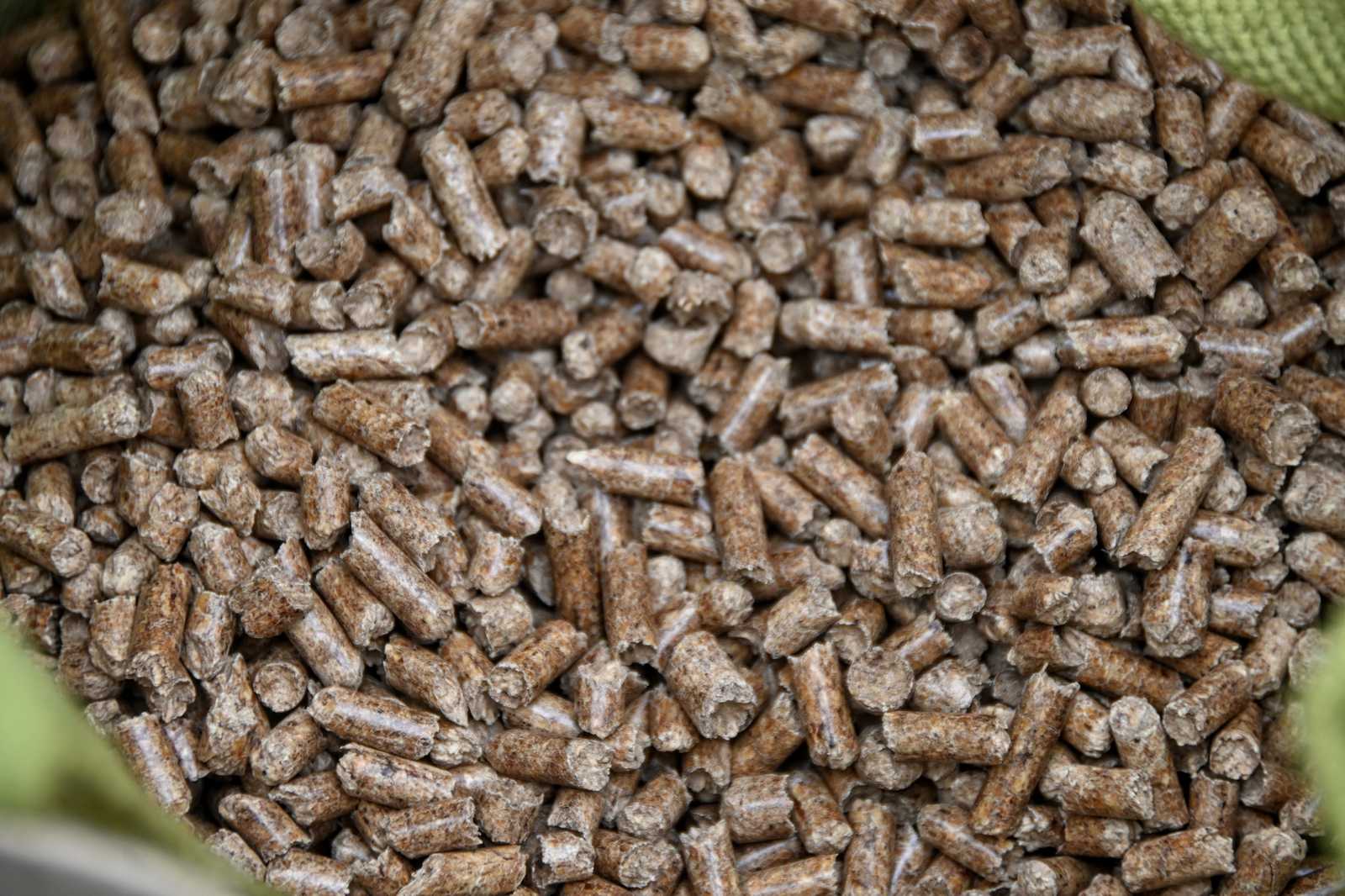
The output of a Kingwood-equipped line meets the following fuel specifications:
- Calorific value: 4,800 kcal/kg
- Moisture content: < 15% (meets EU standard)
- Sulfur content: < 0.3% (below Japan’s ≤ 0.5% standard)
- Ash content: < 18% (below ISO’s < 20% standard)
- Dioxin content: < 0.5 ng TEQ (below China GB standard of ≤ 1.0 ng TEQ)
- All emission indicators compliant with GB13271-2001
These specifications position biomass pellets as a viable industrial boiler fuel. Compared to coal and heavy fuel oil, biomass pellets reduce fuel cost by 40–50% in industrial boiler applications, based on Southeast Asian and domestic Chinese market pricing. The 12 t/h Vietnam wood pellet line commissioned in 2024 achieved full capital payback in 23 months under commercial operating conditions.
Customization Scope for Factory-Scale Projects
Kingwood functions as both equipment manufacturer and production line engineering partner. For buyers sourcing a custom commercial vertical wood pellet machine factory configuration, the scope of customization includes:
- Single-machine selection from the JWZL series based on target hourly output
- Multi-machine line design for outputs exceeding the capacity of a single unit
- Site-specific layout engineering accommodating building footprint, material flow direction, and utility connections
- Feedstock-specific process configuration — different biomass types require different grinding and drying parameters
- Regulatory compliance design — dust emission limits, noise standards, and fire safety requirements vary by country
Kingwood has delivered projects across 30 countries and designed over 2,000 production line projects. The engineering team of 20 R&D experts supports pre-project feasibility, line design, equipment commissioning, and operator training.
For buyers evaluating vertical pellet mill options at the commercial scale, the JWZL-928 (4–5 t/h) and multi-unit configurations based on the JWZL-688D (3–3.5 t/h) represent the most common starting points for industrial fuel production projects. Contact Kingwood with feedstock type, target annual output, and site location to receive a project-specific line specification.
FAQ
What is a commercial vertical wood pellet machine and how does it differ from a horizontal ring die pellet mill?
A vertical wood pellet machine orients its ring die and compression rollers on a vertical axis, which allows gravity-assisted feeding of biomass and reduces bridging of fibrous materials. Horizontal ring die pellet mills use a horizontal die orientation and are common in feed and food pellet applications. For biomass and woody feedstocks with variable moisture and fiber length, the vertical configuration generally delivers more consistent compression and easier die maintenance.
What capacity options does Kingwood offer for its vertical biomass pellet mill lineup?
Kingwood's JWZL series covers four confirmed production tiers: JWZL-420 at 1–1.5 t/h, JWZL-688 at 2–2.3 t/h, JWZL-688D at 3–3.5 t/h, and JWZL-928 at 4–5 t/h. The JWZL-1068 is available at higher capacities — contact Kingwood sales for specifications. For multi-mill configurations, complete production lines can be designed up to 200,000 metric tons per year.
What biomass feedstocks can Kingwood's commercial vertical pellet mills process?
The JWZL series handles a broad range of woody and agricultural biomass: sawdust, wood chips, tree bark, rice husks, straw, and similar fibrous residues. Feedstock must be conditioned to appropriate particle size and moisture content prior to pelletizing — Kingwood's integrated production lines include hammer mills, drum chippers, and drum dryers to handle this upstream preparation.
What emission and fuel quality standards do Kingwood biomass pellets meet?
Biomass pellets produced on Kingwood lines achieve a calorific value of 4,800 kcal/kg, moisture content below 15%, sulfur content below 0.3%, ash content below 18%, and dioxin content below 0.5 ng TEQ. These figures satisfy EU moisture standards, US calorific value standards, Japanese sulfur standards, and ISO ash standards. All emission indicators comply with China's GB13271-2001 national boiler air pollutant emission standard.
Can Kingwood customize a vertical pellet machine factory line for a specific project scale?
Yes. Kingwood's engineering team designs complete wet-feed biomass pellet production lines from crushing and drying through pelletizing and packaging, scaled to project requirements up to 200,000 metric tons per year. Lines are built under the Three-Standardization Framework: integrated, dust-free, and automated. Custom configurations are developed based on feedstock type, target capacity, site layout, and applicable local emission regulations.
What is Kingwood's Three-Standardization Framework and why does it matter for a pellet mill factory?
The Three-Standardization Framework is Kingwood's proprietary design standard covering three pillars: integrated production lines, dust-free production lines, and automated production lines. In practice, this means each factory installation minimizes fugitive dust (protecting worker health and meeting environmental permits), reduces manual intervention through PLC-based control, and integrates all process stages into one coordinated system — lowering operational cost and improving pellet quality consistency.
How quickly can a commercial biomass pellet production line pay back its capital cost?
Payback period depends on feedstock cost, local energy prices, and line utilization. A documented Kingwood 12 t/h wood pellet line commissioned in Vietnam in 2024 achieved full capital payback in 23 months. Kingwood biomass fuel also delivers a 40–50% cost saving versus conventional fossil fuels, which drives the revenue-side economics of payback calculations.
- The global wood pellet market was valued at approximately USD 12.1 billion in 2023 and is projected to exceed USD 23 billion by 2030, driven by industrial co-firing mandates and residential heating demand across Europe and Asia. (2024, Grand View Research, Wood Pellet Market Size & Share Report, 2024)
- Industrial biomass pellets with calorific values above 4,500 kcal/kg can displace coal at a cost 40–50% lower per unit of usable heat in industrial boiler applications, based on Southeast Asian market fuel pricing benchmarks. (2024, International Renewable Energy Agency (IRENA), Renewable Power Generation Costs 2023, published 2024)