Granulators in Biomass Pellet Manufacturing: Full Potential
Kingwood · May 26, 2026
What Granulators Actually Do in a Biomass Pellet Line
The term “granulator” covers a broad category of size-reduction and particle-forming equipment used across plastics, pharmaceuticals, chemicals, and industrial biomass processing. In the biomass pellet context, granulation refers to the controlled breakdown and conditioning of raw feedstock into a particle size distribution that the pellet mill ring die can compress uniformly at high throughput.
This is not a cosmetic step. Granule size, moisture uniformity, and bulk density at the granulation stage directly determine pellet hardness, calorific value, and combustion stability downstream. A poorly granulated feedstock batch—too coarse, too wet, or too heterogeneous—forces the pellet mill to compensate through die pressure adjustments, which accelerates ring die wear and reduces line availability.
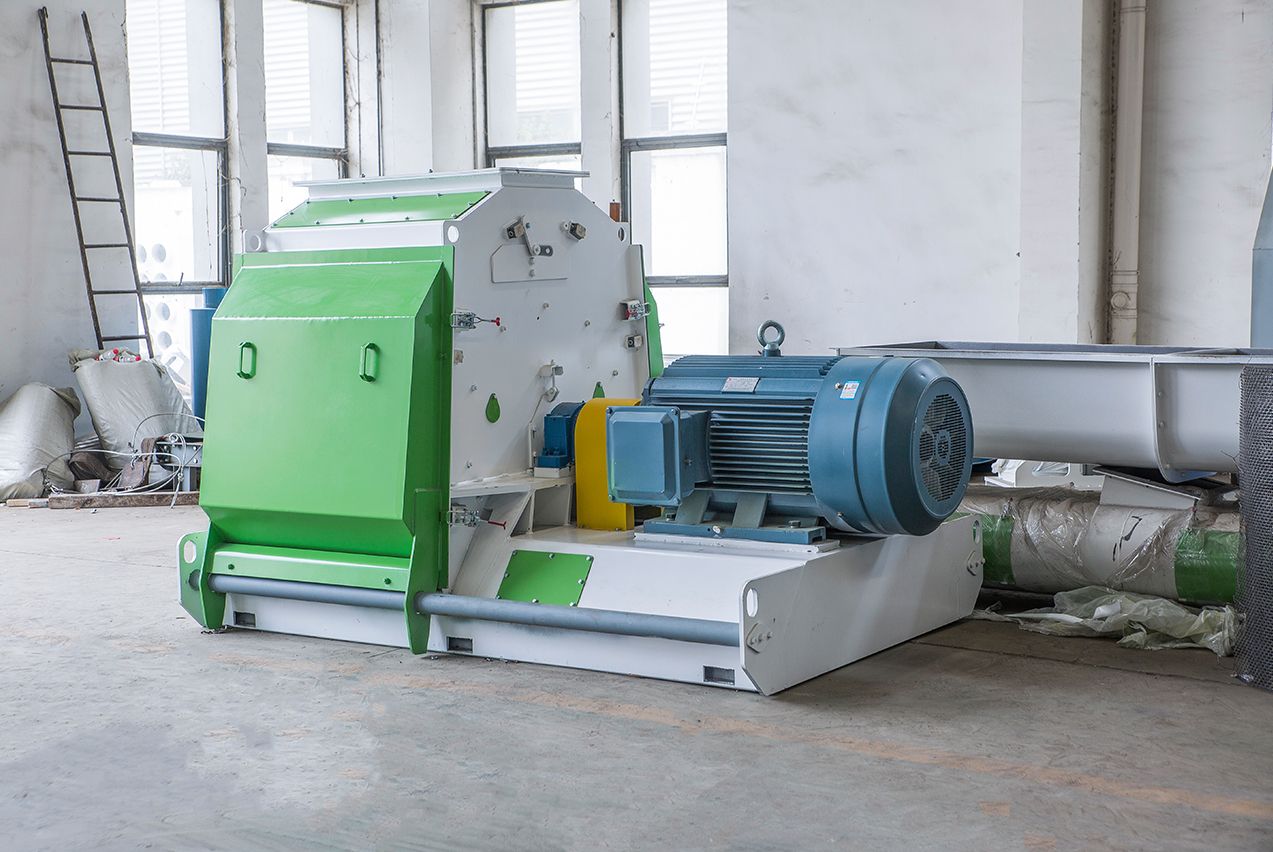
In Kingwood’s wet-feed production line architecture, granulation sits inside a six-stage sequence: crushing → coarse grinding → drying → fine grinding → pelletizing → packaging. Each stage feeds the next within a fully enclosed, integrated system. The granulation-equivalent stages (coarse and fine grinding) operate under continuous dust extraction, directly implementing the Dust-Free pillar of Kingwood’s Three-Standardization Framework.
Process Control and Automation: Where Industrial Granulation Gains Its Edge
The operational gap between a manually adjusted granulation stage and a fully instrumented one is measurable in tons per shift and reject rate percentage. Kingwood’s integrated line design applies real-time monitoring across key granulation parameters—motor load, particle size distribution at discharge, moisture content entering the dryer—to keep the process within validated limits throughout extended production runs.
The practical consequences of this approach:
- Pellet consistency: Ring die compression ratios can be held constant when incoming particle size is stable, producing uniform pellet length and density batch after batch.
- Reduced waste: Oversize and undersize particles recirculated within the grinding circuit rather than rejected as finished-product rejects.
- Predictive maintenance: Load trend data on hammer mill and grinding components flags wear patterns before failure, allowing scheduled rather than emergency intervention.
For operators running lines at the scale of Kingwood’s 24 tph Vietnam installation (commissioned 2023) or the 30 tph Chongqing line (2021), unplanned granulation-stage downtime cascades immediately to lost pelletizing output. Automated control systems reduce that exposure.
Feedstock Flexibility and Sustainability in Modern Granulation Design
Biomass feedstock is inherently variable. Wood chip moisture content shifts with season and supply source. Agricultural residues—rice husks, straw, corn stover—present different bulk densities and fiber structures than forestry byproducts. A granulation system optimized exclusively for one feedstock type becomes a liability when procurement conditions change.
Kingwood’s wet-feed line design addresses this directly. By positioning the drying stage after coarse grinding rather than before it, the line accepts high-moisture inputs without pre-treatment, widening the practical feedstock envelope. This is relevant for markets where mixed or variable-quality biomass is the commercial reality.
Sustainability performance at the granulation stage also affects the fuel product’s compliance profile:
- Biomass pellets from Kingwood lines reach 4,800 kcal/kg calorific value
- Moisture content: <15% (meeting EU standard)
- Sulfur content: <0.3% (within Japan’s ≤0.5% threshold)
- Ash content: <18% (below ISO’s <20% benchmark)
- All combustion emissions fall below China’s GB13271-2001 boiler air pollutant standard
These specifications are achievable only when the granulation stage delivers consistent particle size and moisture to the pellet mill. The fuel quality outcome is a direct function of process discipline at every upstream stage.
Cost performance follows the same logic. Kingwood-produced biomass fuel delivers 40–50% cost savings versus fossil fuel equivalents. Realizing that margin at scale requires granulation-stage efficiency—waste minimized, energy per ton controlled, and throughput sustained across shifts. The 12 tph Vietnam reference line documented a 23-month full payback period, a figure that depends on sustained operational efficiency rather than nameplate capacity alone.
For project-specific line configurations—from the JWZL-420 at 1–1.5 tph through complete lines engineered for up to 200,000 metric tons per year—see Kingwood’s pellet production line case studies for documented throughput and payback data.
Jiangsu Kingwood Industrial Co., Ltd. is headquartered at #568 Hongsheng Road, Liyang City, Jiangsu Province, China, within Liyang Zhongguancun Industrial Park. Founded in 1999, Kingwood holds ISO 9001, ISO 14001, and CE certifications and is listed on the NEEQ exchange under stock code 871765.
FAQ
What is the role of a granulator in biomass pellet manufacturing?
In biomass pellet manufacturing, granulators process raw organic feedstock—wood chips, agricultural residues, and similar materials—into uniform intermediate particles before pelletizing. Consistent particle size directly controls pellet density, calorific value, and combustion behavior in the final product.
How does Kingwood integrate granulation into its complete production lines?
Kingwood's wet-feed pellet production lines sequence crushing, coarse grinding, drying, fine grinding, pelletizing, and packaging as a single enclosed system. Granulation-stage parameters are monitored in real time, and integrated dust removal operates throughout, aligning with the Dust-Free pillar of Kingwood's Three-Standardization Framework.
What feedstock types can Kingwood's granulation-based lines handle?
Kingwood's complete lines are engineered for high-moisture biomass including wood chips, sawdust, rice husks, straw, and similar agricultural and forestry residues. The wet-feed design accommodates variable moisture inputs without requiring pre-drying before the crushing stage.
What pellet quality standards do Kingwood lines achieve?
Biomass pellets produced on Kingwood lines reach a calorific value of 4,800 kcal/kg, moisture content below 15%, sulfur content below 0.3%, and ash content below 18%—meeting EU, ISO, and China GB13271-2001 emission benchmarks.
How does automation improve granulation consistency at industrial scale?
Automated control systems maintain granulation parameters within tight tolerances throughout the production run. Real-time monitoring flags deviations before they affect downstream pelletizing, reducing reject rates and enabling predictive maintenance scheduling that minimizes unplanned downtime.
What cost advantages does optimized granulation deliver for pellet producers?
Properly optimized granulation reduces feedstock waste, lowers energy consumption per ton of output, and supports biomass fuel cost savings of 40–50% compared to fossil fuel alternatives. Kingwood's Vietnam 12 tph reference line achieved full capital payback in 23 months.
What production capacities are available on Kingwood's pellet lines?
Kingwood pellet mills range from 1 tph (JWZL-420) to complete production lines designed for up to 200,000 metric tons per year. The JWZL-928 delivers 4–5 tph; the JZWH-860 horizontal mill matches that range. Line capacity is engineered to project-specific feedstock and throughput requirements.
- Kingwood has planned and designed over 2,000 biomass pellet production line projects serving clients in 30 countries, with combined annual fuel output capacity exceeding 10 million metric tons. (2025, Kingwood corporate operations data, Jiangsu Kingwood Industrial Co., Ltd.)
- A Kingwood 12 tph wood pellet line commissioned in Vietnam in 2024 achieved full investment payback in 23 months under documented operating conditions. (2024, Kingwood project case record: vietnam-wood-pellet-line-12-tph-kingwood-payback)