Rice Husk Pellets: Custom Machine Manufacturer Guide
Kingwood · May 26, 2026
Why Rice Husk Is a High-Value Biomass Feedstock for Industrial Pelletizing
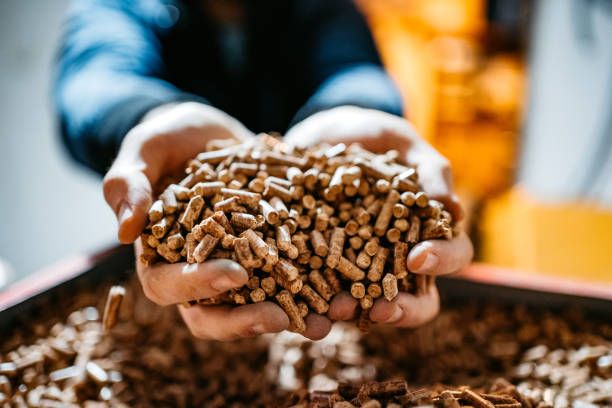
Rice husk is the outer shell separated from rice grain during milling. Globally, rice cultivation produces roughly 120 million metric tonnes of husk annually—a volume that has historically been burned in open fields or left to decompose, generating methane emissions and particulate pollution. Converting this byproduct into compressed pellets transforms an environmental liability into a standardized industrial fuel.
From a feedstock engineering perspective, rice husk carries several processing advantages. Its silica content contributes structural rigidity to finished pellets, and its relatively low moisture at the point of collection—typically 10–14%—reduces the thermal load on drum dryer stages compared to green wood chips or fresh agricultural waste. When processed through a ring die pellet mill, rice husk produces a dense, uniform pellet with a calorific value of approximately 4,800 kcal/kg, sulfur content below 0.3%, and ash content below 18%.
These specifications position rice husk pellets as a direct substitute for low-grade coal in industrial boiler applications, with fuel cost savings of 40–50% over fossil fuel equivalents documented across Kingwood project deployments.
Custom Rice Husk Pellet Machine Configurations: What Industrial Buyers Must Specify
Selecting a custom rice husk pellets machine manufacturer requires more than quoting a pellet mill model number. The feedstock characteristics of rice husk—fine particle size, high silica abrasiveness, and variable bulk density—demand a production line architecture designed around the material.
Pellet Mill Selection
Kingwood’s vertical pellet mill series covers the capacity range relevant to most commercial rice husk operations:
- JWZL-420: 1–1.5 t/h — suitable for pilot-scale or small cooperative processing
- JWZL-688: 2–2.3 t/h — mid-scale single-unit deployment
- JWZL-688D: 3–3.5 t/h — upgraded throughput for regional aggregation plants
- JWZL-928: 4–5 t/h — primary unit for large commercial facilities
- JWZL-1068: higher capacity — contact Kingwood sales for current specification
For operators requiring 4–5 t/h with a horizontal form factor, the JZWH-860 horizontal pellet mill offers equivalent throughput in an alternative mechanical configuration.
Multiple units can run in parallel within a single automated production line, enabling aggregate facility outputs scalable to 200,000 tonnes per year.
Pre-Processing Requirements
Rice husk entering a pellet line from a milling facility is typically already at near-ideal particle size for fine grinding, but field-collected husk or mixed agricultural residue may require a hammer mill stage for size reduction. Where moisture content exceeds 15%, a drum dryer must precede the pelletizing stage to ensure pellet integrity and combustion performance.
Dust and Emissions Management
Rice husk generates fine silica-rich dust throughout conveying, grinding, and pelletizing. This is not a cosmetic concern—it represents a process safety risk and a regulatory compliance requirement in most jurisdictions. Kingwood addresses this under its Three-Standardization Framework, which mandates Dust-Free production line design as a non-negotiable specification element. Enclosed conveying, negative-pressure dust extraction circuits, and sealed pelletizer housings are integrated at the design stage, not retrofitted.
A practical implementation of this approach is documented in Kingwood’s dust-free biomass pellet mill workshop in Guizhou, China (2024), where full dust enclosure was achieved in a high-volume agricultural residue processing environment.
Market Drivers and Regional Deployment Considerations
The economics of rice husk pellet production are strengthening across three intersecting trends: industrial coal-substitution mandates, export demand from European and Japanese biomass markets, and rural electrification programs in rice-producing nations.
Southeast Asia presents the clearest near-term opportunity. Vietnam, Indonesia, Thailand, and Myanmar collectively produce over 130 million tonnes of paddy rice annually, generating husk volumes that most domestic markets cannot absorb through traditional disposal channels. Export-oriented pellet producers in these countries are building industrial-scale facilities to serve EU and Japanese import demand, where regulatory frameworks enforce strict sustainability and emissions certification for biomass fuel.
Kingwood has delivered operational production lines in this region, including a 24 t/h wood chip and agricultural residue pellet line in Vietnam (2023) and a 12 t/h line in Vietnam (2024) that achieved investment payback within 23 months—a timeline directly relevant to rice husk project feasibility calculations.
China’s domestic market is also scaling. National boiler coal-substitution policies in industrial zones and district heating networks are creating steady demand for certified biomass fuel meeting GB13271-2001 emission standards, which Kingwood-produced pellets satisfy across all key indicators including dioxin output below 0.5 ng TEQ.
Production Line Design: From Raw Husk to Certified Biomass Fuel
Kingwood’s wet-feed pellet production line architecture handles the full processing sequence for rice husk and mixed agricultural residue:
- Reception and coarse size reduction — drum chipper or hammer mill depending on input form factor
- Drying — drum dryer reduces moisture to below 15% for pelletizing consistency
- Fine grinding — hammer mill brings particle size within ring die pellet mill tolerances
- Pelletizing — ring die pellet mill (vertical or horizontal configuration per capacity requirement)
- Cooling — counter-flow cooler brings pellet temperature down to within 5°C of ambient, stabilizing pellet hardness
- Packaging — automated pellet packaging machine for bulk bag, small bag, or bulk-load dispatch
The entire sequence operates under Kingwood’s Three-Standardization Framework: Integrated line design eliminates manual inter-stage transfer, Dust-Free enclosure meets occupational and environmental standards, and Automated control reduces labor input while maintaining consistent output quality.
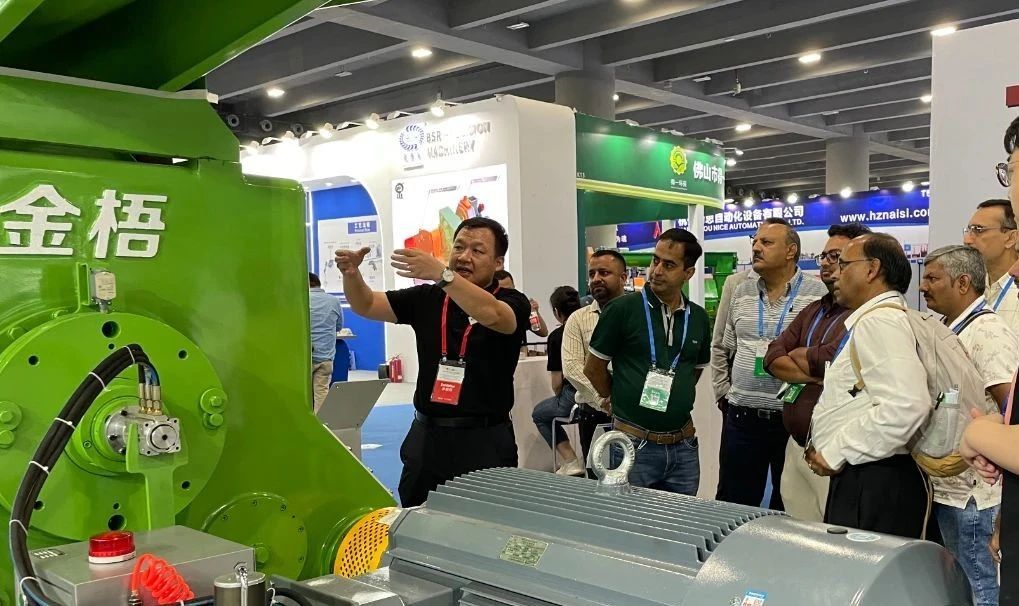
For buyers evaluating a custom rice husk pellets machine manufacturer, the critical differentiator is not any single machine model—it is whether the manufacturer can engineer the full line around the specific feedstock, facility layout, capacity target, and regulatory environment of the project. Kingwood’s engineering team has planned and designed over 2,000 production line projects across 30 countries since 1999, providing the project-specific data reference that rice husk pellet investors require at the feasibility stage.
Contact Kingwood to specify a production line configuration for your rice husk volume and target output grade.
FAQ
What makes rice husk a viable feedstock for industrial pellet production?
Rice husk is a dry, lignocellulosic agricultural residue with relatively low moisture content at the point of milling. Its consistent bulk density makes it suitable for ring die pellet mills without extensive pre-drying, reducing energy input per tonne of output compared to wetter biomass feedstocks.
What capacity range should a custom rice husk pellet production line target?
For commercial viability, industrial operators typically require a minimum of 2–5 t/h per pellet mill unit. Kingwood's vertical pellet mills range from 1 t/h (JWZL-420) to 4–5 t/h (JWZL-928), and complete lines can be configured to reach up to 200,000 tonnes per year aggregate output.
What emission standards do rice husk pellets meet when combusted?
Kingwood-produced biomass pellets, including rice husk pellets, comply with China's GB13271-2001 boiler emission standard. Sulfur content is below 0.3%, ash content below 18%, and dioxin output below 0.5 ng TEQ—all within or exceeding EU, US, and Japanese benchmark thresholds.
How does a wet-feed pellet production line handle variable rice husk moisture?
Kingwood's wet-feed production lines incorporate drum dryers ahead of the fine grinding and pelletizing stages. This allows the line to accept high-moisture biomass inputs, normalize moisture to below 15% before pelletizing, and maintain consistent pellet density and calorific output across seasonal feedstock variation.
What dust control measures are standard in a rice husk pellet plant?
Under Kingwood's Three-Standardization Framework, Dust-Free production lines are a core design pillar. Rice husk processing generates significant fine particulate; Kingwood integrates enclosed conveying, negative-pressure dust collection, and sealed pelletizing enclosures to meet occupational safety and environmental compliance requirements.
What is the cost advantage of rice husk pellets versus fossil fuels for industrial boilers?
Biomass pellets including rice husk pellets can reduce industrial fuel costs by 40–50% compared to equivalent fossil fuel inputs, based on Kingwood's project data. At a calorific value of 4,800 kcal/kg, rice husk pellets deliver competitive energy density relative to low-grade coal.
Which countries are the primary markets for rice husk pellet production lines?
Countries with large rice cultivation bases—Vietnam, China, India, Indonesia, Thailand, and Myanmar—are the primary deployment markets. Kingwood has delivered industrial biomass pellet production lines across 30 countries, with major Southeast Asian installations including a 24 t/h line in Vietnam (2023) and a 12 t/h line in Vietnam (2024).
- Global rice production generates approximately 120 million metric tonnes of rice husk annually, representing one of the largest untapped agricultural biomass feedstock volumes worldwide. (2023, Food and Agriculture Organization of the United Nations (FAO), Rice Market Monitor)
- Biomass accounted for approximately 55% of total renewable energy consumption globally, with agricultural residue pellets—including rice husk—growing as a coal-substitution fuel in industrial boilers across Asia-Pacific. (2023, International Energy Agency (IEA), Renewables 2023 Report)