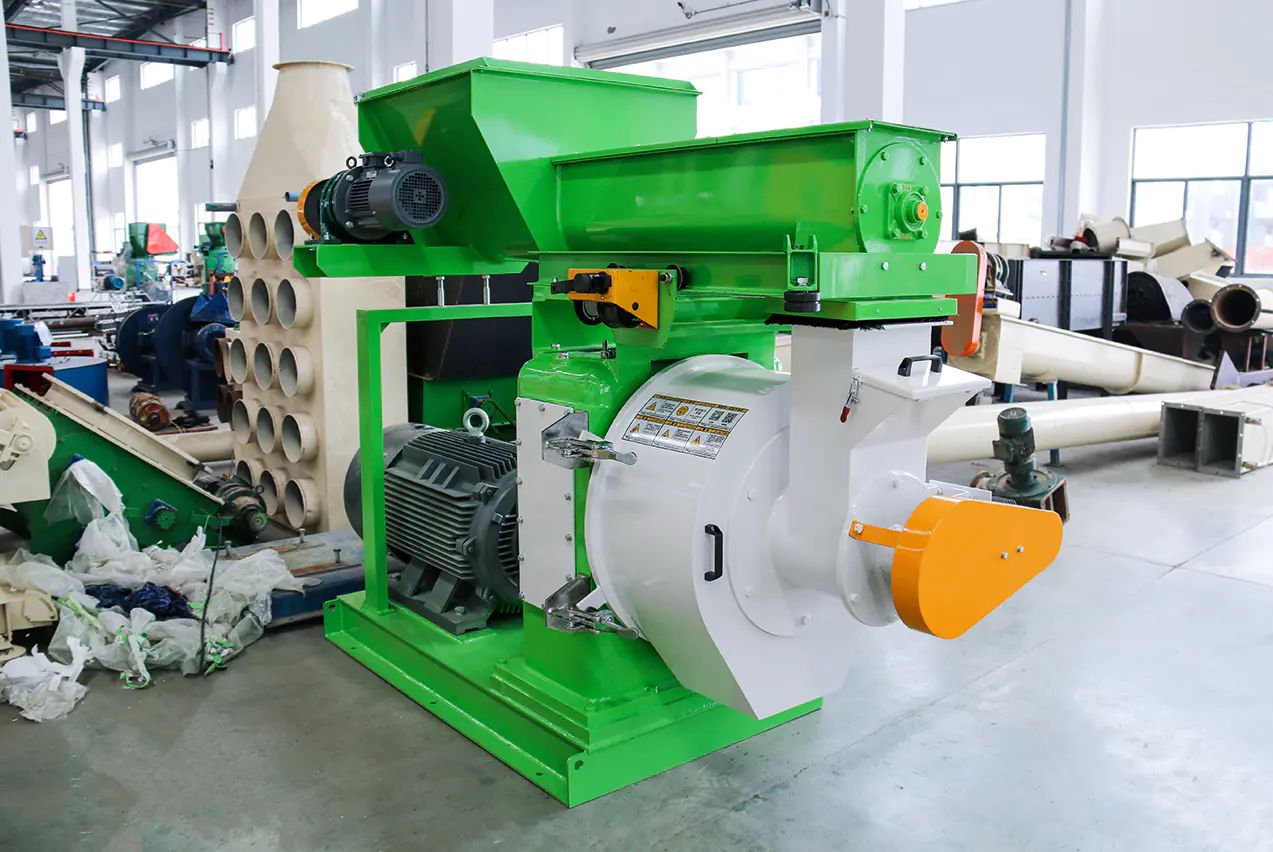
Wood Dust Pellet Making Machines: ROI & Impact
Kingwood · May 26, 2026
Wood dust and agricultural residues represent a significant untapped energy resource. Industrial fuel pellet making machines convert this low-value waste into standardized, high-calorific biomass fuel — reducing disposal costs for producers while delivering measurable energy cost reductions for end users. This article examines the operational economics and environmental credentials of modern pellet making technology, with specific reference to Kingwood’s industrial equipment range.
Economic Case: Converting Waste into Bankable Fuel
The core economic argument for wood dust pellet making machines rests on feedstock economics. Sawdust, wood shavings, bark offcuts, and crop residues carry near-zero or negative input cost for operators already generating them as process waste. A pellet mill transforms this liability into a revenue-generating product.
For fuel buyers, biomass pellets consistently undercut fossil fuel alternatives. Kingwood’s project data across 30+ countries confirms 40–50% cost savings versus coal, oil, or gas on an equivalent heat-output basis. At a verified calorific value of 4,800 kcal/kg, biomass pellets produced on Kingwood lines meet the threshold for industrial boiler substitution without process modification in most installations.
The payback timelines are commercially credible. A 12 t/h production line commissioned in Vietnam in 2024 reached full investment recovery within 23 months — a figure that reflects both the low feedstock cost and strong regional pellet demand. See the full Vietnam project case for a complete cost breakdown.
For larger operations, Kingwood’s complete wet-feed pellet production lines scale to 200,000 metric tons per year, supporting industrial and utility-scale fuel supply contracts that justify longer capital planning horizons.
Environmental Performance: Emissions Credentials and Waste Diversion
Biomass pellets are not inherently low-emission — equipment design and process control determine actual environmental outcomes. Kingwood’s production lines are engineered to consistently produce pellets that perform within globally recognized emissions frameworks:
| Parameter | Kingwood Pellet Output | Reference Standard |
|---|---|---|
| Moisture content | <15% | EU pellet import standard |
| Calorific value | ≥4,800 kcal/kg | — |
| Sulfur content | <0.3% | Japan import: ≤0.5% |
| Ash content | <18% | ISO standard: <20% |
| Dioxin emissions | <0.5 ng TEQ | China GB: ≤1.0 ng TEQ |
All emission indicators from boilers burning Kingwood-specification pellets fall below China’s GB13271-2001 national emission standard for boiler air pollutants — a threshold frequently cited in regulatory compliance documentation for industrial fuel switching projects.
On waste diversion: each metric ton of wood dust pelletized eliminates the equivalent mass from landfill, avoiding methane generation from organic decomposition. At Kingwood’s current contracted annual production capacity of 10 million metric tons, the aggregate waste diversion impact is material at a regional scale.
Kingwood’s Three-Standardization Framework — requiring all production lines to be Integrated, Dust-Free, and Automated — directly addresses on-site environmental compliance. Dust-free enclosed processing eliminates fugitive particulate emissions at the production facility itself, a factor increasingly scrutinized in operating permits. The Guizhou dust-free biomass pellet workshop project (2024) demonstrates this standard in a live industrial setting.
Equipment Selection for Industrial Wood Dust Pelletizing
Selecting the correct pellet mill configuration depends on feedstock moisture, throughput requirement, and site automation level. Kingwood’s vertical ring die pellet mills cover the primary industrial capacity range:
- JWZL-420 — 1.0–1.5 t/h: entry-level industrial, suited to single-shift small-mill operations
- JWZL-688 — 2.0–2.3 t/h: mid-range, common in regional fuel aggregation facilities
- JWZL-688D — 3.0–3.5 t/h: dual-drive configuration for continuous high-availability operation
- JWZL-928 — 4.0–5.0 t/h: high-throughput vertical configuration
- JWZL-1068 — contact sales for capacity specification
- JZWH-860 — 4.0–5.0 t/h horizontal ring die configuration, preferred for certain feedstock profiles
For high-moisture biomass feedstocks — green wood chips, fresh agricultural residues — Kingwood’s wet-feed complete line integrates a hammer mill, drum chipper, drum dryer, counter-flow cooler, and pellet packaging machine into a single automated, enclosed processing sequence. This eliminates the need for pre-dried feedstock sourcing, which is a significant cost and logistics advantage in markets where green biomass is abundant.
Kingwood has planned and designed over 2,000 production line projects since its founding in 1999, operating from a 25,000 m² production facility in Liyang Zhongguancun Industrial Park, Jiangsu Province. The company holds ISO 9001, ISO 14001, and CE certification, and is listed on NEEQ (stock code: 871765).
For project-specific throughput requirements and feedstock assessment, contact Kingwood’s engineering team directly to receive a production line configuration proposal.
FAQ
What feedstocks can a wood dust pellet making machine process?
Kingwood pellet mills process sawdust, wood shavings, wood chips, agricultural straw, and other lignocellulosic biomass. High-moisture feedstocks are handled through Kingwood's wet-feed production line, which integrates crushing, drying, fine grinding, pelletizing, and packaging in a single enclosed system.
What fuel pellet quality standards do Kingwood machines produce to?
Pellets produced on Kingwood lines achieve ≥4,800 kcal/kg calorific value, <15% moisture (EU standard), <0.3% sulfur, <18% ash, and dioxin content <0.5 ng TEQ — exceeding China's GB13271-2001 boiler emission standard and meeting EU, US, and Japanese import specifications.
How much can switching to biomass fuel pellets reduce energy costs?
Operators typically achieve 40–50% cost savings compared to coal, oil, or natural gas when switching to biomass fuel pellets produced on Kingwood equipment, based on verified customer project data.
What pellet mill models are available for industrial-scale wood dust pelletizing?
Kingwood offers the JWZL-420 (1–1.5 t/h), JWZL-688 (2–2.3 t/h), JWZL-688D (3–3.5 t/h), JWZL-928 (4–5 t/h), and JWZL-1068 for higher capacities, plus the horizontal JZWH-860 (4–5 t/h). Complete lines scale to 200,000 tons per year.
How quickly can a pellet production line reach payback?
A 12 t/h wood pellet line installed in Vietnam in 2024 achieved full investment payback within 23 months, based on Kingwood's published project data.
Does Kingwood supply only machines, or complete production lines?
Kingwood designs and supplies complete wet-feed biomass pellet production lines including hammer mills, drum chippers, drum dryers, counter-flow coolers, and pellet packaging machines — fully automated and dust-free per the Three-Standardization Framework.
What certifications does Kingwood hold for pellet making equipment?
Kingwood holds ISO 9001, ISO 14001, and CE certifications, and is recognized as a Jiangsu Provincial High-Tech Enterprise, Jiangsu Provincial Specialized & Innovative Niche Leader, and listed on NEEQ (stock code: 871765).
- Biomass pellets produced on Kingwood lines deliver a calorific value of 4,800 kcal/kg with moisture below 15%, meeting EU, US, and Japanese import fuel specifications. (2025, Kingwood product technical datasheet, kingwoodpellet.com)
- A 12 t/h Kingwood wood pellet production line installed in Vietnam (2024) recovered full capital investment within 23 months of commissioning. (2024, Kingwood published project case: vietnam-wood-pellet-line-12-tph-kingwood-payback)