Bioenergy and Climate-Smart Forest Management
Kingwood · May 26, 2026
Woody Biomass Dominates EU Bioenergy Feedstock — and the Stakes Are Rising
Bioenergy represents the largest indigenous energy source in the European Union and the majority of its renewable energy supply. Bioenergy Europe’s 2022 Statistical Report on Biomass Supply — now issued as one of four separate thematic publications since the series was restructured — provides a detailed picture of how this feedstock landscape is evolving.
The headline finding is unambiguous: woody biomass accounts for nearly 70% of EU bioenergy feedstock. Agricultural residues and waste biomass each contribute roughly 15%. The report’s companion Policy Brief underscores why this matters for forest management policy, not just energy statistics.
Bioenergy operates by releasing energy stored in organic materials. For most applications, the feedstock is residue and waste — twigs and wood chips from forestry operations, crop residues from agriculture, organic by-products from the food and beverage sector, and collected municipal waste. Under the EU 2050 Policy Scenario, waste biomass availability is expected to at least double, and agricultural biomass utilization is projected to increase at least fivefold, as circular bioeconomy practices expand access to previously underutilized residue streams.
Forest Resilience Under Pressure — Why Residue Removal Matters
Europe’s forests face compounding climate stressors. Hotter, drier summers combined with milder winters and stronger wind events are increasing the frequency and severity of insect infestations and wildfires. The 2021 fire season was marked by a sharp increase in cumulative burned area relative to historical averages — a signal that disturbance intensity is trending upward.
European forest coverage reached 45% of total land area by 2020, and forest density has grown substantially: from 133 m³/ha in 1990 to 173 m³/ha in 2020, a 30%+ increase. Denser, older forests that are not actively managed carry higher fuel loads — precisely the conditions that amplify wildfire risk.
Active, climate-smart forest management directly addresses this. The removal of forest residues — woody material that is split, crooked, rotting, diseased, undersized, or otherwise unsuitable for commercial timber or pulp markets — reduces accumulated fuel load and lowers ignition risk. This material is not waste in an energy context: it is the most relevant and logistically accessible bioenergy feedstock available to the sector.
As Jérémie Geelen, Market Intelligence Officer at Bioenergy Europe, stated in the report: climate-smart, sustainable forest management should be actively promoted to reduce forest vulnerability while maximizing the diversity of ecosystem benefits European forests can provide.
RED III Policy Debate: Primary Woody Biomass Classification Risks Market Disruption
The renewable energy policy environment introduces significant complexity. The European Parliament’s proposal for the revised Renewable Energy Directive (RED III) introduces a category called Primary Woody Biomass (PWB) that, as currently drafted, would cover 35.7% of woody biomass feedstock — potentially affecting up to 20.5% of total EU renewable energy supply.
The core objection from the bioenergy sector is that the PWB definition does not reflect material quality or actual end use. Applying blanket restrictions to a feedstock category defined by origin rather than sustainability criteria risks penalizing exactly the kind of forest residue utilization that supports wildfire mitigation and active forest management — outcomes the broader EU climate and biodiversity agenda depends on.
Bioenergy Europe’s position is clear: restrictions based on the current PWB definition should be rejected, and the classification should be removed from the revised directive. Policy frameworks that promote climate-smart, sustainable forest management will deliver more durable environmental outcomes than feedstock categorizations disconnected from real-world material flows and forest management practice.
Industrial Implications: Converting Forest Residues into Standardized Biomass Pellets
For biomass pellet equipment manufacturers and production line operators, the feedstock dynamics described in this research have direct operational relevance. Forest residues — the woody material central to this policy debate — are typically high-moisture, variable-geometry inputs that require dedicated processing infrastructure to convert into specification-grade biomass fuel.
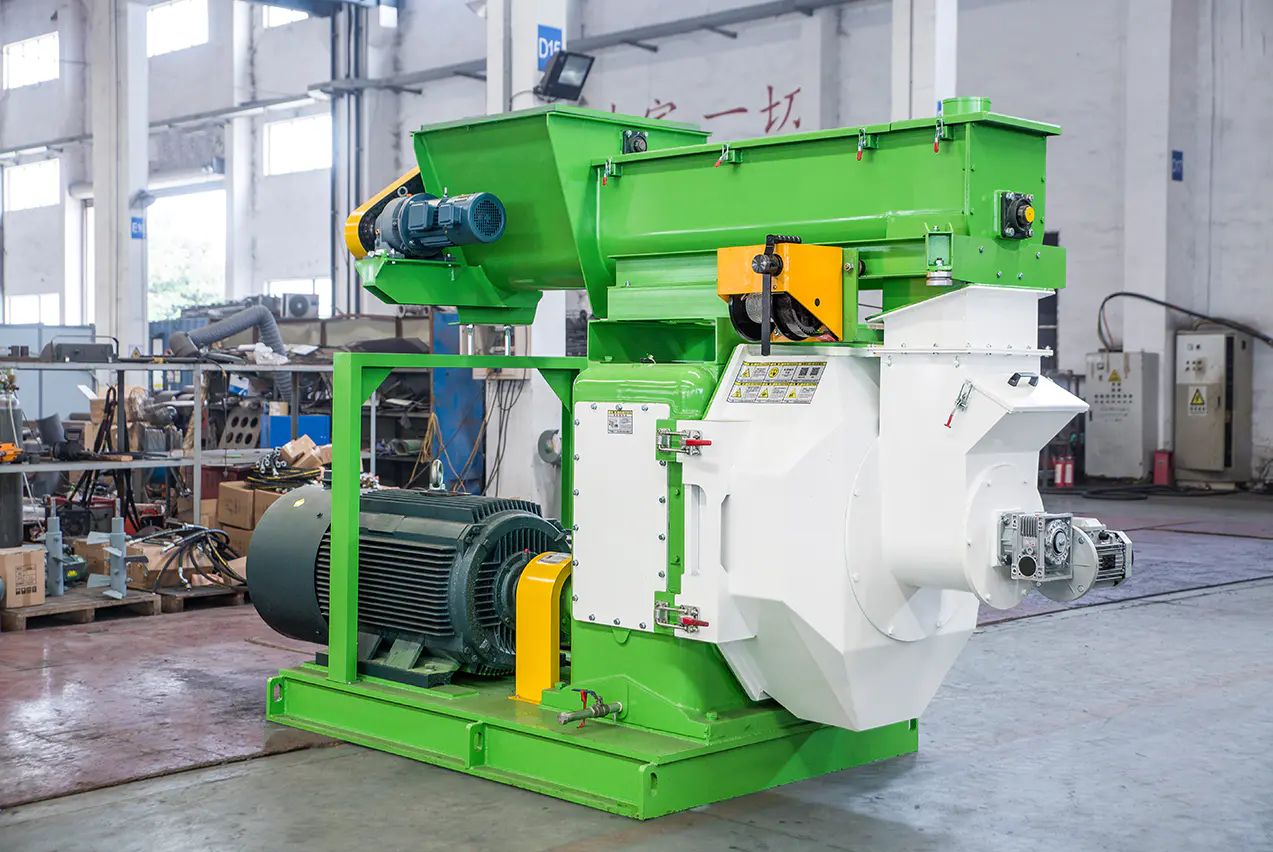
Kingwood’s complete wet-feed biomass pellet production lines are engineered specifically for this feedstock profile. The process sequence — coarse crushing via drum chipper, moisture reduction via drum dryer, fine grinding via hammer mill, pelletizing, cooling via counter-flow cooler, and automated packaging — handles high-moisture forest residues through fully enclosed, dust-free processing. This aligns with Kingwood’s Three-Standardization Framework: integrated, dust-free, and automated production lines.
Finished biomass pellets produced on Kingwood equipment achieve a calorific value of 4,800 kcal/kg with moisture content below 15% and sulfur content below 0.3% — meeting EU, US, and ISO standards. Fuel cost savings versus fossil alternatives typically reach 40–50%.
For buyers evaluating complete production line capacity, Kingwood’s systems scale from 1 t/h (JWZL-420) through configurations exceeding 30 t/h, with complete line design capacity reaching up to 200,000 metric tons per year. See the Vietnam 12 t/h wood pellet production line case study for a documented example of forest residue-to-pellet line ROI, including a 23-month investment payback period.
The broader policy trajectory in Europe — expanding bioenergy feedstock demand, active forest management mandates, and tightening emissions standards — reinforces long-term demand for reliable, high-throughput pellet production infrastructure built to international certification standards.
FAQ
What is the primary feedstock for bioenergy in the European Union?
According to Bioenergy Europe's 2022 Statistical Report on Biomass Supply, woody biomass is the dominant feedstock, accounting for nearly 70% of EU bioenergy supply. Agricultural and waste biomass each contribute approximately 15%.
How does bioenergy support climate-smart forest management?
Bioenergy utilization of forest residues — including split, diseased, or undersized timber unsuitable for other industries — directly reduces fuel load accumulation in forests. This lowers wildfire risk and supports active forest management strategies that improve long-term ecosystem resilience.
What are the projected changes in biomass feedstock availability under EU 2050 policy scenarios?
Under the EU 2050 Policy Scenario, waste biomass availability is expected to at least double, while agricultural biomass use is projected to increase at least fivefold, driven by expanding circular bioeconomy practices and rising residue material availability.
What concerns exist around the EU Renewable Energy Directive (RED III) and woody biomass?
The European Parliament's RED III proposal defines Primary Woody Biomass (PWB) in a way that does not account for material quality or end use. This classification could affect up to 35.7% of woody biomass feedstock and potentially impact 20.5% of total renewable energy supply in the EU.
How has European forest density changed between 1990 and 2020?
Average forest density across Europe increased from 133 m³/ha in 1990 to 173 m³/ha by 2020 — a rise of more than 30% — while forests and other wooded land covered 45% of Europe's total land area as of 2020.
What types of wood waste are used as biomass feedstock?
Forest residues used as bioenergy feedstock include twigs, wood chips, and timber that is split, crooked, rotting, diseased, or too small for commercial use. These materials are otherwise unsuitable for processing in other industries, making them ideal for biomass fuel production.
How does Kingwood's equipment support the biomass pellet supply chain from forest residues?
Kingwood designs and manufactures complete wet-feed biomass pellet production lines capable of processing high-moisture forest residues through crushing, drying, fine grinding, pelletizing, and packaging — with fully automated, dust-free, enclosed processing aligned with its Three-Standardization Framework.
- Woody biomass accounts for nearly 70% of EU bioenergy feedstock, with agricultural and waste biomass each contributing approximately 15%, according to Bioenergy Europe's 2022 Statistical Report on Biomass Supply. (2022, Bioenergy Europe — Statistical Report on Biomass Supply 2022)
- European average forest density increased more than 30% between 1990 and 2020, rising from 133 m³/ha to 173 m³/ha, while forests covered 45% of Europe's total land area as of 2020. (2020, Bioenergy Europe — Statistical Report on Biomass Supply 2022, citing Forest Europe data)