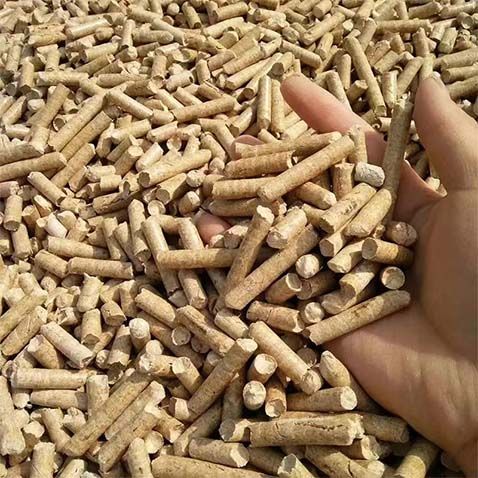
How to Optimize Fuel Pellet Mill Operations
Kingwood · May 26, 2026
Why Pellet Mill Optimization Matters for Industrial Biomass Production
Industrial biomass pellet production is a capital- and energy-intensive process. Every percentage point of efficiency lost to inconsistent feedstock, worn tooling, or unplanned downtime directly reduces return on investment. For operators running a custom fuel pellet mill making machine factory — whether processing wood chips, agricultural residues, or mixed biomass — operational discipline is as important as equipment selection.
Kingwood has engineered and commissioned over 2,000 biomass pellet production line projects across 30 countries since 1999. That project base makes clear that the gap between high-performing and underperforming lines rarely comes down to machine model alone. It comes down to how the machine is integrated, operated, and maintained.
Feedstock Preparation: The First Control Point
Pellet mill performance is bounded by incoming feedstock quality. Two variables matter most: particle size uniformity and moisture content.
Particle size: A hammer mill upstream of the pellet mill should reduce biomass to a consistent particle size matched to the die hole diameter — typically 3–5 mm for standard 6–8 mm pellets. Oversized particles increase roller load unevenly, accelerate die wear, and produce pellets with poor surface integrity.
Moisture content: Feedstock entering the pellet mill should be at or below 15% moisture. Above this threshold, steam generated inside the die channel weakens inter-particle bonding and produces soft, low-density pellets that fracture in handling and conveyance. Kingwood’s wet-feed production lines incorporate a drum dryer upstream of the pellet mill specifically to address high-moisture biomass — common in fresh wood chips, rice husks, and palm residues — before the material reaches the ring die.
Operators running Kingwood’s complete biomass pellet production lines benefit from the enclosed, integrated design: crushing, drying, fine grinding, pelletizing, cooling, and packaging are sequenced so that each stage delivers conditioned material to the next within controlled parameters.
Die and Roller Management: Sustaining Pellet Quality Over Time
The ring die and press rollers are the highest-wear components in any pellet mill. Their condition directly controls pellet density, mechanical durability, and calorific value consistency.
Die selection: L/D ratio (compression length to hole diameter) must be matched to feedstock bulk density and lignin content. Hard, dense wood species require a higher L/D ratio than low-density agricultural residues. Kingwood’s engineering team configures die specifications at the project design stage based on feedstock analysis — this is part of the customization available through a purpose-built fuel pellet mill making machine factory approach rather than off-the-shelf supply.
Lubrication intervals: Advanced lubrication systems that reduce friction on roller bearings and die surfaces extend component life and maintain smoother compression. Operators should follow the manufacturer’s lubrication schedule precisely; under-lubrication accelerates wear, while over-lubrication can contaminate pellet output.
Wear inspection: Rollers and dies should be measured for wear at scheduled maintenance stops. Replacing components proactively — rather than running to failure — prevents the abrupt throughput drops and quality degradation that force unplanned shutdowns.
Automation and Process Control: The Three-Standardization Advantage
Manual operation of a pellet mill introduces variability. Feed rate fluctuations, inconsistent conditioning temperature, and delayed response to motor load spikes all reduce average throughput and pellet uniformity. Kingwood addresses this through the Three-Standardization Framework — Integrated, Dust-Free, and Automated production lines — which forms the design basis for every complete line project.
Automated control systems on Kingwood lines continuously monitor:
- Feed rate into the pellet mill, adjusted to maintain consistent die pressure
- Conditioning temperature, ensuring lignin activation for natural binding without burning
- Motor current draw, flagging abnormal load before mechanical failure occurs
- Downstream cooler outlet temperature, targeting pellet temperature within 3–5°C above ambient before packaging
This real-time feedback loop reduces operator intervention requirements, supports consistent shift-to-shift output, and generates process data that maintenance teams can use for predictive servicing.
For a documented example of automated, dust-free line implementation, see the Guizhou dust-free biomass pellet mill workshop case.
Pellet Quality Benchmarks and Routine Testing
Optimized operation should be verified through pellet quality measurement, not assumed. Kingwood’s biomass pellets — and those produced on Kingwood lines — are designed to meet the following specifications:
| Parameter | Kingwood Target | Reference Standard |
|---|---|---|
| Calorific value | 4,800 kcal/kg | US standard: >2,500 kcal/kg |
| Moisture content | <15% | EU standard: <15% |
| Sulfur content | <0.3% | Japan standard: ≤0.5% |
| Ash content | <18% | ISO standard: <20% |
| Dioxin | <0.5 ng TEQ | China GB: ≤1.0 ng TEQ |
Routine testing should cover mechanical durability (pellet durability index), bulk density, and ash content at minimum. Deviations indicate a process parameter has shifted — usually feedstock moisture, die wear, or conditioning temperature — and allow correction before a full production run is affected.
Operational ROI: Capacity, Cost, and Market Position
The commercial case for optimization is direct. A well-tuned production line running at rated capacity with consistent pellet quality achieves:
- Higher annual output against the same fixed capital base. Kingwood’s complete lines are designed for up to 200,000 metric tons per year capacity.
- Lower fuel cost per ton produced, as energy consumption per unit output falls when the mill runs at steady-state versus cycling through stops and restarts.
- End-user fuel cost reduction of 40–50% versus coal or heavy oil when pellets meet calorific value specifications — a key commercial argument for industrial boiler operators considering biomass conversion.
The Vietnam 12 t/h project commissioned in 2024 reached full capital payback in 23 months — a result driven by consistent pellet quality, reliable uptime, and strong local demand for certified biomass fuel.
For operators specifying or upgrading a custom fuel pellet mill making machine factory, the path to those returns runs through feedstock control, die management, and process automation — not equipment selection alone.
FAQ
What feedstock moisture content is required for efficient pellet mill operation?
Feedstock moisture should be reduced to below 15% before pelletizing. Kingwood's biomass pellets meet this threshold, which is also the EU standard for wood pellet moisture content. Excess moisture causes poor die compression, weak pellets, and increased risk of blockages.
How does die geometry affect pellet quality in a ring die pellet mill?
Die hole diameter, length-to-diameter (L/D) ratio, and taper angle directly control compression ratio and pellet density. Adjusting these parameters for specific feedstock types — wood chips, agricultural residues, straw — is essential to achieving consistent calorific value and mechanical durability.
What is the recommended preventive maintenance interval for a biomass pellet mill?
Lubrication of rollers and bearings should follow the manufacturer's schedule, typically every 200–500 operating hours depending on throughput. Die and roller wear should be inspected at each scheduled stop; replacing worn components before failure prevents unplanned downtime and protects pellet quality.
How does automation improve fuel pellet mill performance?
Automated control systems monitor feed rate, conditioning temperature, and motor load in real time. Kingwood's integrated production lines under the Three-Standardization Framework incorporate automated process control, reducing operator error and enabling consistent pellet output across shifts.
What pellet quality parameters should operators test routinely?
Key parameters include mechanical durability, bulk density, moisture content (<15%), ash content (<18%), sulfur content (<0.3%), and calorific value (target ≥4,800 kcal/kg). Regular lab or inline testing allows operators to adjust die settings or feedstock conditioning before off-spec product accumulates.
What throughput can a Kingwood pellet production line achieve?
Kingwood's complete wet-feed biomass pellet production lines scale from 1 t/h (JWZL-420) up to 30 t/h and beyond. A documented installation in Chongqing, China operates at 30 t/h; a 2023 Vietnam project runs at 24 t/h. Complete line annual capacity can reach 200,000 metric tons.
How does optimizing pellet mill operations reduce fuel cost for end users?
High-density, low-moisture biomass pellets with a calorific value of 4,800 kcal/kg replace coal and heavy oil at 40–50% lower fuel cost. Consistent pellet quality also reduces boiler maintenance frequency and improves combustion efficiency.
- Kingwood biomass pellets achieve a calorific value of 4,800 kcal/kg with moisture below 15% and sulfur content below 0.3%, meeting EU, US, Japan, and ISO pellet quality standards. (2025, Kingwood product specification sheet, kingwoodpellet.com)
- A 12 t/h Kingwood wood pellet production line commissioned in Vietnam in 2024 achieved full capital payback within 23 months of operation. (2024, Kingwood project case: vietnam-wood-pellet-line-12-tph-kingwood-payback, kingwoodpellet.com)