How Kingwood Secured a 4-Unit Pellet Mill Deal in Hubei
Kingwood · May 26, 2026
Four JWZL-688 Units for Jingmen: Project Overview
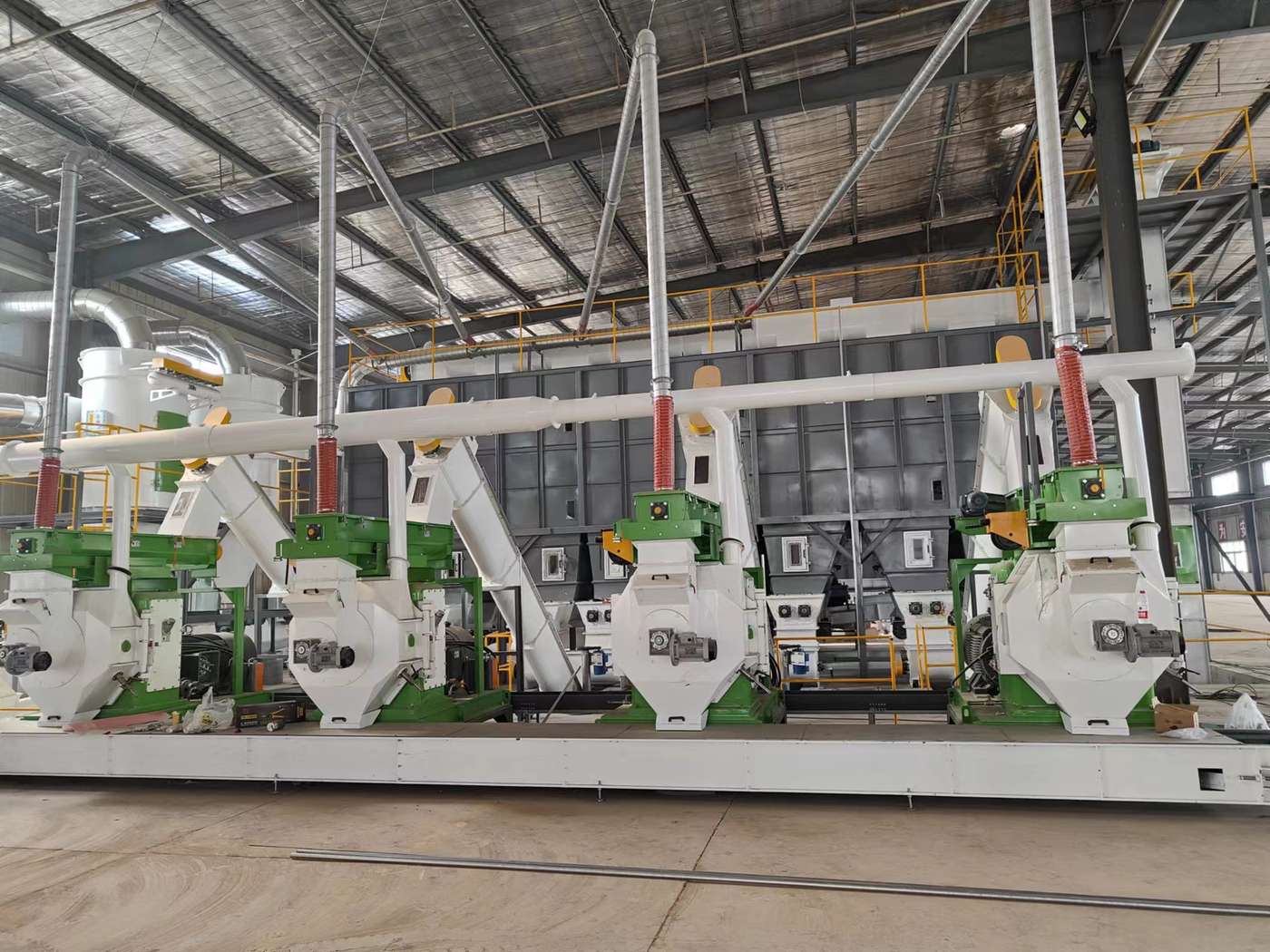
In May 2023, Kingwood completed delivery of four JWZL-688 vertical biomass pellet mills to an industrial customer in Jingmen City, Hubei Province. The installation represents one of the larger single-customer, multi-unit deployments Kingwood has executed for waste-stream pelletizing applications in China.
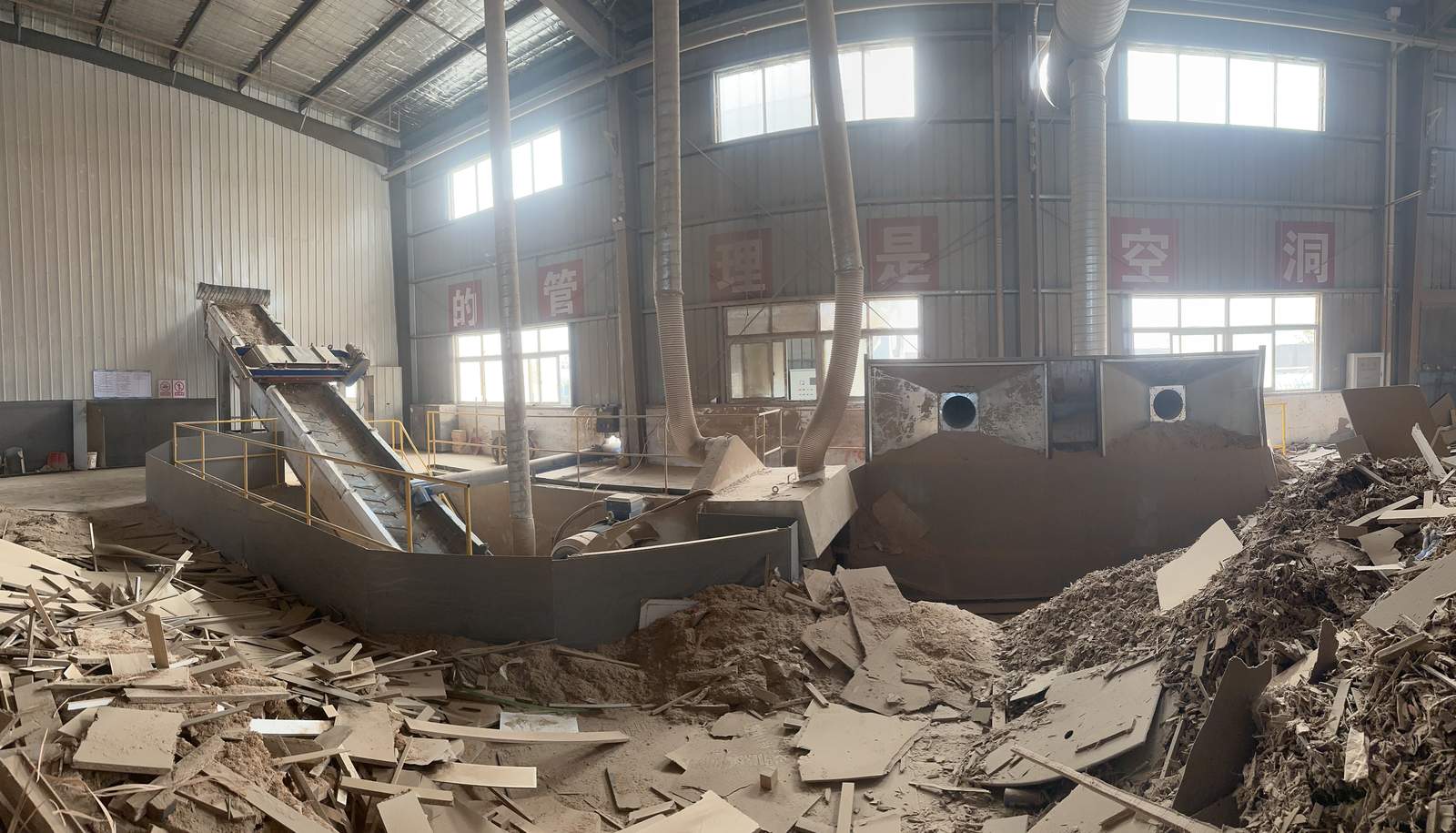
Each JWZL-688 is rated at 2–2.3 t/h. Configured as a four-unit bank, the system delivers high-volume throughput with a total installed power of 1,980 kW — suited to continuous, heavy-duty industrial operation. The primary feedstocks are construction waste timber offcuts and dimensional scraps from furniture manufacturing facilities in the Jingmen region, both of which generate consistent, high-volume residue streams that are well-matched to ring die pellet mill processing.
Technical Fit: Why JWZL-688 for Waste-Stream Pelletizing
Construction and furniture manufacturing residues present specific handling challenges: variable particle geometry, fluctuating moisture content, and occasional contamination with adhesives or coatings. The JWZL-688’s vertical ring die configuration and robust feed mechanism accommodate these variables without the choke-feed sensitivity common in horizontal ring die designs.
Key technical parameters for this deployment:
- Units deployed: 4 × JWZL-688
- Per-unit capacity: 2–2.3 t/h
- Total installed power: 1,980 kW
- Feedstock: Construction timber waste + furniture factory scraps
- Output: Standardized biomass pellets for industrial fuel applications
For operations requiring higher single-unit throughput, Kingwood’s JWZL-928 pellet mill rated at 4–5 t/h or the horizontal JZWH-860 at equivalent capacity provide scalable alternatives within the same product family.
The pellets produced meet Kingwood’s verified fuel specification: calorific value of 4,800 kcal/kg, moisture content below 15%, sulfur content below 0.3%, and ash content below 18% — compliant with EU, US, Japanese, and ISO biomass pellet standards. End-use boiler operators switching from coal or natural gas can expect fuel cost reductions of 40–50%.
Engineering Credibility as a Commercial Factor
Jingmen’s procurement process evaluated multiple equipment suppliers. Kingwood’s selection reflected several concrete differentiators rather than generic vendor preference.
Certified quality systems. Kingwood holds ISO 9001 and ISO 14001 certification alongside CE marking. All units undergo quality control from raw material intake through CNC machining, heat treatment, welding, ring die assembly, and final load testing before shipment.
Three-Standardization Framework. Kingwood’s proprietary Three-Standardization Framework structures every production line deployment around three engineering pillars: integrated production lines, dust-free production lines, and automated production lines. For the Jingmen installation, the dust-free and automation requirements were directly relevant given the indoor workshop environment and the abrasive nature of construction waste feedstock.
Project depth. With over 2,000 production line projects planned and designed across 30 countries since 1999, Kingwood’s engineering team brings cross-sector experience covering wood processing, agricultural residue, and industrial waste applications. This depth reduces commissioning risk for customers deploying multiple units simultaneously.
Full-scope service delivery. The Jingmen project was not a machine-only transaction. Kingwood’s scope covered engineering consultation, equipment manufacturing, logistics coordination, on-site installation, commissioning, and operator training — the same integrated delivery model applied to larger complete-line projects such as the 24 t/h wood chip pellet production line commissioned in Vietnam in 2023.
Waste-to-Fuel: Industrial and Environmental Logic
The Jingmen deployment illustrates a well-established industrial logic: biomass pelletizing converts low-value or negative-value waste streams into a standardized, tradeable energy commodity. Construction waste timber and furniture factory scraps are both generated in large, predictable volumes by regional manufacturing clusters — making them reliable feedstocks for continuous pellet mill operation rather than opportunistic inputs.
By pelletizing these residues, the Jingmen customer achieves three measurable outcomes: landfill diversion at industrial scale, revenue generation from a previously disposal-cost waste stream, and production of biomass fuel compliant with national and international combustion standards. Kingwood’s biomass pellets, when combusted, produce emission indicators below GB13271-2001, China’s national boiler air pollutant emission standard.
This project reinforces Kingwood’s positioning as a supplier capable of engineering multi-unit industrial systems — not just individual machines — for customers where waste management, energy cost reduction, and regulatory compliance converge as simultaneous business requirements.
Contact Kingwood to discuss pellet mill configurations for construction waste or furniture manufacturing residue applications:
- Oliver Ge: +86 13120914095
- Henry: +86 18205276156
FAQ
What equipment did Kingwood supply to the Jingmen customer?
Four JWZL-688 vertical biomass pellet mills, each rated at up to 2–2.3 t/h, with a combined installed power of 1,980 kW.
What raw materials do these pellet mills process?
The units are configured to handle construction waste offcuts and scraps generated by furniture manufacturing facilities — both high-volume, heterogeneous waste streams.
Why did the Jingmen customer choose Kingwood over other suppliers?
Kingwood's track record in biomass pellet equipment engineering, ISO 9001/14001 certification, CE compliance, and its Three-Standardization Framework for integrated, dust-free, automated production lines were decisive factors.
What is the JWZL-688 pellet mill's rated capacity?
The JWZL-688 is rated at 2–2.3 t/h per unit. Four units operating in parallel deliver combined throughput sufficient for large-scale industrial waste-to-fuel operations.
How does pelletizing construction and furniture waste support circular economy goals?
Pelletizing diverts solid waste from landfill, converts low-value residues into standardized biomass fuel with a calorific value of 4,800 kcal/kg, and reduces fossil fuel dependency by 40–50% for end-use boiler operators.
Where is Kingwood based and how long has it been operating?
Kingwood (Jiangsu Kingwood Industrial Co., Ltd.) is headquartered at #568 Hongsheng Road, Liyang City, Jiangsu Province, within the Liyang Zhongguancun Industrial Park. The company was founded in 1999 and carries 27 years of R&D experience.
Does Kingwood provide post-sale support for multi-unit installations?
Yes. Kingwood's project scope covers consultation, engineering design, manufacture, logistics, installation, commissioning, operator training, and ongoing after-sales service for complete production lines.
- Kingwood has planned and designed over 2,000 biomass pellet production line projects across 30 countries. (2025, Kingwood official company profile, kingwoodpellet.com)
- Kingwood's biomass fuel meets a calorific value of 4,800 kcal/kg with sulfur content below 0.3% and moisture below 15%, compliant with EU, US, Japan, and ISO pellet standards. (2025, Kingwood product specification documentation, kingwoodpellet.com)