Kingwood: Industrial Wood Pellet Machine Manufacturer in China
Kingwood · May 26, 2026
30 t/h Wood Pellet Production Line: Project Overview
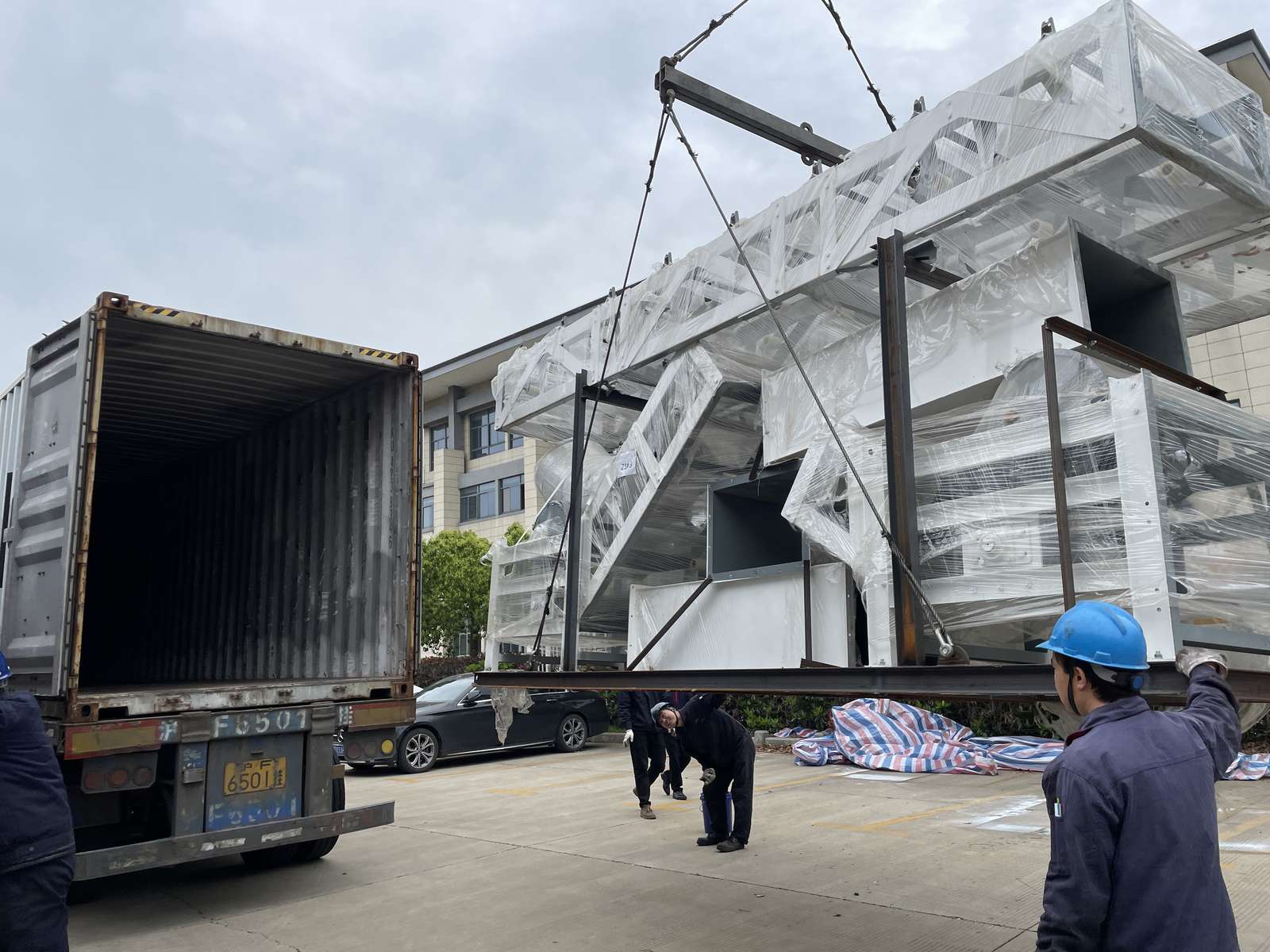
Kingwood recently commissioned a 30-ton-per-hour wood pellet production line for an overseas client — a project that illustrates the full scope of Kingwood’s wet-feed engineering capability. The feedstock: logs, specifically rubber wood and acacia wood, both high-moisture species common across Southeast Asian supply chains.
The process sequence was engineered for maximum yield and pellet density:
- Log peeling and slicing — removes bark and reduces logs to uniform chip dimensions
- Coarse grinding — hammer mill stage breaks chips to manageable particle size
- Drum drying — reduces moisture content to the target <15% required for pelletizing
- Fine grinding — secondary hammer mill stage achieves the particle uniformity that ring die pellet mills require
- Pelletizing — ring die press forms pellets to specification
- Counter-flow cooling — stabilizes pellets and reduces surface temperature before packaging
- Packaging — automated bagging for export-grade dispatch
A distinguishing feature of this line is the live-bottom buffer silo integrated at the raw material intake stage. Unlike conventional flat-bottom silos prone to bridging with fibrous biomass, the live-bottom design uses mechanical activation across the silo floor to maintain continuous, even material flow. The result: reduced downtime, lower maintenance intervention, and consistent feed rate to downstream equipment — a direct enabler of the automated production standard within Kingwood’s Three-Standardization Framework.
Technical Depth: What Makes Industrial-Scale Pellet Lines Different
At 30 t/h, this line sits at the upper end of Kingwood’s documented project range. Scaling to this throughput introduces engineering challenges that smaller lines do not face:
Feedstock variability: Rubber wood and acacia carry inconsistent moisture and density across harvest batches. The drum dryer specification must account for worst-case inlet moisture to guarantee consistent outlet moisture — the drying stage is therefore sized with margin, not minimum footprint.
Dust control at scale: Higher throughput means proportionally greater dust generation at grinding and pelletizing stages. Kingwood’s Dust-Free production line standard — one of the three pillars of the Three-Standardization Framework — requires fully enclosed processing with integrated dust collection at each transfer point. This is not optional at industrial scale; it is a regulatory and operational necessity.
Drive synchronization: Feeding, grinding, drying, and pelletizing must operate in coordinated sequence. An upstream surge or downstream bottleneck propagates across the line in minutes. Kingwood’s Automated production line standard addresses this through centralized PLC control with interlock logic across all process stages.
For context on how this engineering translates to financial performance, see the Vietnam 12 t/h wood pellet line case study, where a comparable wet-feed line achieved full investment payback in 23 months.
Kingwood’s Manufacturing Base and Global Reach
Jiangsu Kingwood Industrial Co., Ltd. operates from a 31,200 m² facility — 25,000 m² production floor and 6,200 m² office — located at #568 Hongsheng Road, Liyang Zhongguancun Industrial Park, Jiangsu Province. The facility includes dedicated CNC machining centers, a ring die pellet mill assembly hall, a component heat treatment base, and an in-house pellet production test center where new line configurations are validated before shipment.
The company was founded in 1999, holds ISO 9001 and ISO 14001 certifications alongside CE marking, and is listed on the NEEQ exchange under stock code 871765. Twenty R&D specialists drive ongoing development across pellet mill mechanical design, process automation, and emissions compliance.
Kingwood’s auxiliary equipment portfolio — hammer mills, drum chippers, drum dryers, counter-flow coolers, and pellet packaging machines — is designed for full integration within Kingwood production lines, eliminating interface engineering risk that arises when combining equipment from multiple vendors.
To date, Kingwood has supplied equipment and complete lines to clients in more than 30 countries, with the production lines it has planned and designed exceeding 2,000 projects. Annual biomass fuel output enabled by installed Kingwood equipment exceeds 10,000,000 metric tons.
FAQ
What is Kingwood's production capacity for complete pellet lines?
Kingwood engineers complete wet-feed biomass pellet production lines up to 200,000 metric tons per year, with single-line throughput demonstrated at 30 t/h for log-based feedstocks including rubber wood and acacia.
What raw materials can Kingwood's pellet production lines process?
Kingwood lines handle high-moisture biomass including logs (rubber wood, acacia), agricultural residues, and wood chips. The wet-feed process sequence covers peeling, chipping, coarse grinding, drying, fine grinding, pelletizing, cooling, and packaging.
What pellet mill models does Kingwood manufacture?
Kingwood's vertical ring die pellet mill lineup includes the JWZL-420 (1–1.5 t/h), JWZL-688 (2–2.3 t/h), JWZL-688D (3–3.5 t/h), JWZL-928 (4–5 t/h), and JWZL-1068. The horizontal JZWH-860 also delivers 4–5 t/h.
What certifications does Kingwood hold?
Kingwood holds ISO 9001, ISO 14001, and CE certifications, and is recognized as a Jiangsu Provincial High-Tech Enterprise, Jiangsu Provincial Gazelle Enterprise, and a Top 10 Brand in Biomass Molding Equipment.
How does the live-bottom buffer silo improve pellet line performance?
The live-bottom silo design eliminates bridging and material hang-up, enabling consistent, low-failure feeding that supports fully automated, uninterrupted pellet production at high throughput.
How many countries has Kingwood exported equipment to?
Kingwood has exported biomass pellet equipment and complete production lines to more than 30 countries, with documented projects in Vietnam, China (Chongqing, Beijing, Guizhou), and other markets.
What is Kingwood's Three-Standardization Framework?
The Three-Standardization Framework comprises three production line standards: Integrated, Dust-Free, and Automated. It is Kingwood's primary technical differentiator for high-quality biomass pellet plant design.
- Kingwood's 30 t/h wood pellet production line project in Chongqing, China, was commissioned in September 2021, demonstrating large-scale industrial pellet output from log-based feedstock. (2021, Kingwood project case record — Chongqing 30 t/h wood pellet mill)
- A 12 t/h Kingwood biomass pellet line deployed in Vietnam in 2024 achieved full investment payback within 23 months. (2024, Kingwood project case record — Vietnam 12 t/h wood pellet line payback study)