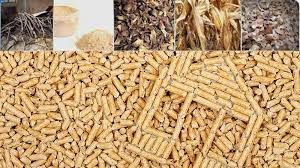
Japan Wood Pellet Imports Forecast to Hit 4.25 Million Tons
Kingwood · May 26, 2026
Japan’s FIT Expansion Is Reshaping Global Wood Pellet Trade
Japan’s feed-in tariff (FIT) program has become one of the most significant policy levers reshaping global biomass fuel demand. Following the Fukushima nuclear accident in 2011, Japan restructured its renewable energy strategy — expanding FIT coverage from solar generation to include biomass, wind, geothermal, and small hydropower. That policy shift has had compounding effects on wood pellet import volumes ever since.
According to the USDA Foreign Agricultural Service Global Agricultural Information Network (GAIN) report published in August 2023, Japan’s wood pellet imports are projected to reach 4.25 million metric tons in 2023. A feed-in tariff premium mechanism, launched in 2022 under the Ministry of Economy, Trade and Industry, sets fixed electricity premiums for qualifying biomass power — providing long-term revenue certainty for plant operators and, by extension, sustained procurement demand for industrial-grade biomass fuel.
To qualify under the FIT framework, wood pellets must meet defined sustainability standards. Biomass power operators are required to calculate greenhouse gas emissions across the supply chain and submit verified data — adding compliance complexity but also raising the floor on acceptable feedstock quality.
Supply Origins and Feedstock Mix
Vietnam dominates Japan’s wood pellet import supply chain, accounting for 54% of total imports in 2022. Canada follows at 31%, with the United States supplying approximately 7%. This concentration in Southeast Asian supply reflects both cost competitiveness and proximity advantages — and it directly underpins the investment case for scaling pellet production capacity in Vietnam and neighboring markets.
Alongside wood pellets, palm kernel shells (PKS) represent a parallel biomass feedstock stream in Japan’s energy mix. Japan consumed 3.56 million tons of imported PKS in 2021, rising to 4.142 million tons in 2022, with 2023 projections reaching 4.8 million tons. Japan’s Ministry of Economy, Trade and Industry has also indicated plans to introduce PKS-specific sustainability requirements, aligning that feedstock with the compliance standards already applied to wood pellets.
Domestic wood chip consumption adds further context to overall biomass demand: 10.288 million tons in 2021, projected at 10.4 million tons in 2022, and 10.6 million tons in 2023. Imported wood chip volumes, by contrast, are declining — from 405,000 tons in 2021 to an estimated 300,000 tons in both 2022 and 2023 — indicating a deliberate shift toward processed pellet fuel over raw chip imports.
Implications for Pellet Production Capacity in Export Markets
Japan’s import trajectory creates a direct production capacity requirement in supplying countries. For Vietnam-based producers — who collectively represent the largest single export share — meeting 2023 demand levels requires sustained throughput from industrial-scale pellet lines operating at high availability and consistent fuel quality.
Kingwood has completed multiple commercial-scale pellet production line projects in Vietnam, including a 24 t/h wood chip pellet production line commissioned in 2023 and a 12 t/h line commissioned in 2024 with a documented 23-month payback period. These installations operate as complete wet-feed production systems — handling high-moisture biomass through sequential crushing, coarse grinding, drying, fine grinding, pelletizing, and packaging — within fully automated, enclosed, dust-controlled facilities.
For operators targeting Japan’s FIT-qualified supply chain, fuel specification compliance is non-negotiable. Kingwood’s biomass pellets produced on Kingwood-designed lines are formulated to meet the following parameters:
- Calorific value: 4,800 kcal/kg
- Moisture content: <15% (aligned with EU standard)
- Sulfur content: <0.3% (within Japan’s ≤0.5% threshold)
- Ash content: <18% (within ISO’s <20% standard)
- Dioxin content: <0.5 ng TEQ/m³ (well below China GB standard of ≤1.0 ng TEQ/m³)
These specifications position Kingwood-produced pellets as fully compliant with Japan’s FIT sustainability verification requirements.
Production Line Design for Export-Grade Pellet Manufacturing
Producers entering or scaling within the Japan-bound supply chain require equipment capable of consistent output, precise moisture control, and auditable process parameters. Kingwood’s complete pellet production lines are engineered under the Three-Standardization Framework — integrating production automation, enclosed dust-free processing, and standardized line configuration — to meet the quality and compliance demands of regulated export markets.
Complete line design capacity reaches up to 200,000 tons per year, with modular configuration available across throughput requirements. Core equipment includes ring die pellet mills (vertical and horizontal configurations across the JWZL and JZWH series), hammer mills, drum chippers, drum dryers, and counter-flow coolers — all designed for continuous industrial operation.
For procurement teams and project developers evaluating capacity expansion to serve Japan’s growing import demand, Kingwood provides full-scope engineering services: consultation, line design, equipment manufacture, logistics, installation, commissioning, operator training, and ongoing after-sales support across all 30+ countries served.
Explore Kingwood’s wood pellet production line configurations for export-scale project specifications.
FAQ
How much wood pellet imports does Japan expect in 2023?
According to the USDA Foreign Agricultural Service Global Agricultural Information Network report, Japan's wood pellet imports are forecast to reach 4.25 million metric tons in 2023, driven by expanded FIT program targets.
Which countries supply the most wood pellets to Japan?
In 2022, approximately 54% of Japan's wood pellet imports came from Vietnam, 31% from Canada, and 7% from the United States.
What triggered Japan's biomass energy expansion?
The 2011 Fukushima nuclear accident prompted Japan to diversify its energy mix. The FIT program was broadened from solar-only to include biomass, wind, geothermal, and small hydropower.
What sustainability requirements apply to wood pellets in Japan's FIT program?
Biomass power plants under Japan's FIT framework must calculate greenhouse gas emissions and submit verified emissions data. Wood pellets must meet defined sustainability standards to qualify for feed-in tariff support.
How does Japan's palm kernel shell (PKS) consumption compare to wood pellets?
Japan consumed 3.56 million tons of imported PKS in 2021, rising to 4.142 million tons in 2022, with 2023 projections reaching 4.8 million tons — running parallel to wood pellet import growth.
What is the trend in Japan's domestic wood chip consumption?
Domestic wood chip consumption was 10.288 million tons in 2021, projected at 10.4 million tons in 2022, and 10.6 million tons in 2023 — steady growth indicating sustained biomass fuel demand across feedstock types.
What pellet production equipment supports export-scale biomass operations in Vietnam and similar markets?
Industrial-scale wood pellet lines require integrated crushing, drying, pelletizing, and packaging systems. Kingwood designs complete wet-feed pellet production lines with capacities up to 200,000 tons per year, deployed across 30+ countries including Vietnam.
- Japan's wood pellet imports are projected to reach 4.25 million metric tons in 2023, up from prior years, as the FIT program accelerates biomass capacity additions. (2023, USDA Foreign Agricultural Service, Global Agricultural Information Network (GAIN) Report, August 2023)
- Vietnam accounted for 54% of Japan's wood pellet imports in 2022, with Canada at 31% and the United States at 7%. (2022, USDA Foreign Agricultural Service, Global Agricultural Information Network (GAIN) Report, August 2023)