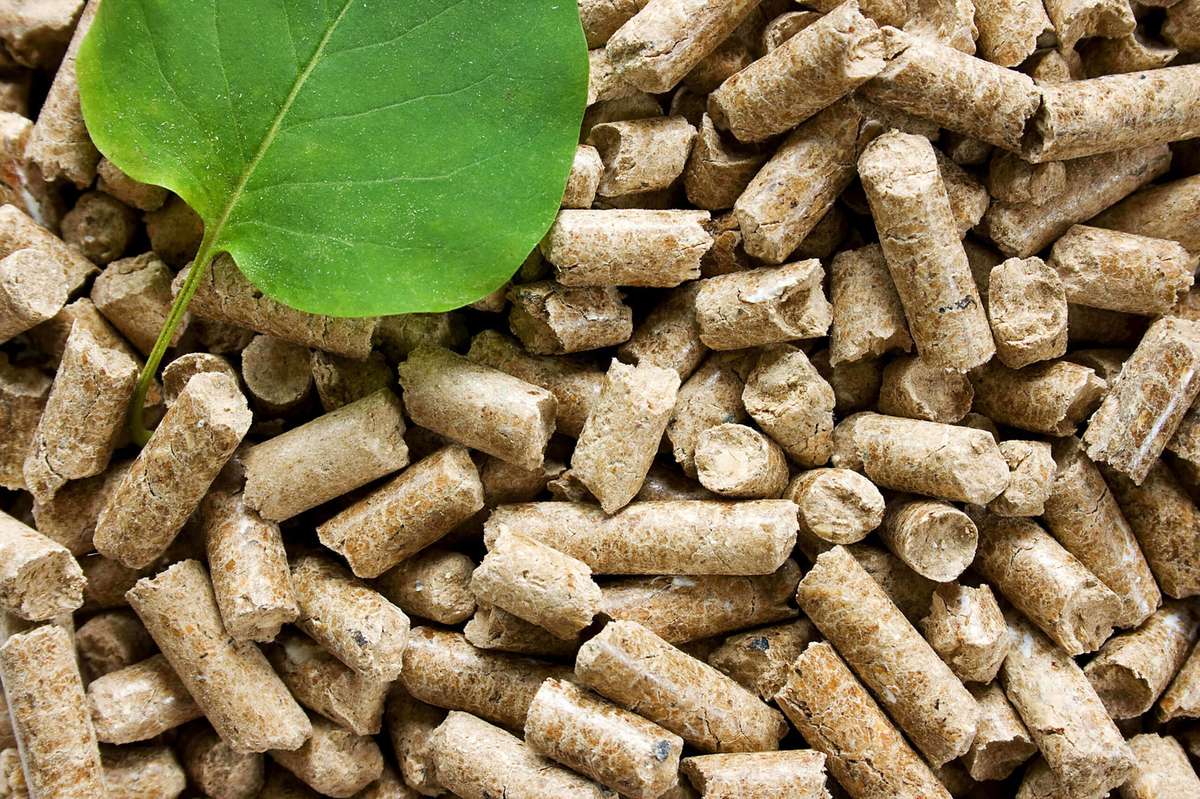
Biomass Pellets from Agricultural Waste: Uses & Supply
Kingwood · May 26, 2026
Agricultural residues — rice straw, corn stalks, bagasse, wheat husks — represent one of the largest underutilized energy feedstocks on the planet. Converting them into standardized biomass pellets gives commercial operators a consistent, high-density fuel that is measurably cheaper and cleaner than the fossil fuels it displaces. For industrial buyers sourcing pellet production equipment or finished fuel, understanding where this demand is coming from — and how the conversion process works — is essential procurement intelligence.
Why Commercial Greenhouses Are Driving Biomass Pellet Demand
Large-scale greenhouse operations run continuous heating loads across every growing cycle. Historically, that load was met by natural gas, propane, or heavy fuel oil — all subject to price volatility and tightening emissions regulation. Agricultural waste biomass pellets resolve both problems simultaneously.
Fuel cost reduction. Kingwood-produced biomass pellets achieve a calorific value of 4,800 kcal/kg at moisture content below 15%. Against equivalent fossil fuel volumes, operators document fuel cost reductions of 40–50%. Unlike indexed commodity fuels, pellet pricing under long-term supply contracts is substantially more stable, enabling reliable budget forecasting over multi-year growing programs.
Emissions compliance. Biomass pellets from agricultural residues carry sulfur content below 0.3% and ash content below 18%. All combustion emission indicators fall below China’s GB13271-2001 standard, and the fuel meets EU moisture standards (<15%) and ISO ash standards (<20%). For greenhouse operators in jurisdictions with tightening carbon reporting obligations, the near-neutral CO2 lifecycle of agricultural biomass is a direct compliance asset.
Supply chain localization. Agricultural residue feedstocks are generated at scale within most major agricultural regions. A producer in Southeast Asia, South Asia, or East Europe can source raw material locally, reducing logistics exposure that affects fossil fuel supply chains.
Three Operational Applications in Commercial Greenhouse Settings
1. Primary space and bench heating via biomass boilers
Biomass pellets feed directly into dedicated biomass boilers, replacing or supplementing existing gas or oil heating infrastructure. The high energy density of standardized pellets — produced through controlled drying, hammer milling, and ring die pelletizing — ensures consistent combustion temperature and heat output with low variance between batches. This consistency is critical for climate-controlled growing environments where temperature deviation affects crop quality.
2. Supplementary CO2 enrichment
Combustion of agricultural waste pellets produces CO2 that, after filtration, can be ducted into growing zones to elevate atmospheric CO2 concentration. Elevated CO2 directly accelerates photosynthesis, increasing dry matter accumulation and shortening time-to-harvest for high-value crops. This application converts what would otherwise be a flue gas management cost into a production input — a meaningful operational advantage for intensive vegetable and flower greenhouse operators.
3. Hot water generation for irrigation and humidity management
Biomass boilers integrated with heat exchangers produce process hot water for irrigation line warming, humidity control, and facility cleaning. In large greenhouse complexes operating year-round, centralizing these thermal loads through a single biomass combustion system reduces the total number of energy inputs to manage, simplifying operational control.
Production Technology: Converting Agricultural Waste to Specification Pellets
The quality and combustion performance of agricultural waste pellets is entirely determined by the production process. Loose, high-moisture crop residues require a multi-stage wet-feed line to reach the density and moisture targets commercial buyers specify.
A properly engineered line moves feedstock through the following stages:
- Size reduction — A drum chipper or hammer mill reduces raw agricultural residue to a uniform particle size suitable for drying and fine grinding.
- Drying — A drum dryer brings moisture content down from field levels (often 30–50%) to the sub-15% threshold required for pelletizing.
- Fine grinding — Secondary hammer milling produces the fine, homogeneous particle distribution needed for die compression.
- Pelletizing — A ring die pellet mill applies high compression through a rotating die, forming dense cylindrical pellets at controlled temperature and pressure.
- Cooling — A counter-flow cooler reduces pellet temperature and locks in structural integrity before handling.
- Packaging — Automated bagging or bulk loading for dispatch.
Kingwood designs and supplies complete wet-feed pellet production lines up to 200,000 metric tons per year output, with full automation, enclosed processing, and integrated dust removal — all consistent with the Three-Standardization Framework of Integrated, Dust-Free, and Automated production lines. The Vietnam 12 t/h production line commissioned in 2024 demonstrates a documented 23-month payback under real commercial operating conditions — a benchmark figure for buyers modeling project economics.
Procurement and Supply Chain Considerations for B2B Buyers
Feedstock consistency. Agricultural residue composition varies by crop, region, and harvest cycle. Buyers sourcing from an agricultural waste pellet supplier should request batch test data covering calorific value, ash percentage, moisture, and sulfur against each feedstock type. Specification drift across batches degrades boiler performance and creates maintenance exposure.
Storage and logistics. Biomass pellets are hygroscopic. Bulk storage must be enclosed and dry. Buyers should size storage to cover minimum 30-day consumption at peak heating load, accounting for seasonal supply constraints during harvest off-cycles.
Equipment maintenance alignment. Biomass heating systems require scheduled maintenance — grate cleaning, ash extraction, heat exchanger inspection. Buyers commissioning new greenhouse heating infrastructure should negotiate maintenance access terms and spare parts availability with their equipment supplier before commissioning.
Supplier qualification. When evaluating a China biomass pellets supplier, verify ISO 9001 and CE certification, review documented production line case histories, and confirm the supplier operates under recognized industry standards. Kingwood holds ISO 9001, ISO 14001, and CE certification, is listed on the NEEQ exchange under stock code 871765, and has designed over 2,000 production line projects across 30 countries since 1999.
For buyers evaluating complete pellet production line investment alongside fuel sourcing, the JWZL-928 vertical pellet mill — rated at 4–5 t/h — and the JZWH-860 horizontal pellet mill at equivalent throughput represent the primary high-capacity single-machine options within the Kingwood product range.
Agricultural waste biomass pellets are not an emerging technology — they are an established industrial fuel with documented performance in demanding continuous-load applications. The procurement and production infrastructure to support large-scale deployment exists now. The relevant question for commercial greenhouse operators and fuel producers is whether their current supply arrangements are capturing the full cost and compliance advantages this fuel category offers.
FAQ
What agricultural waste materials can be processed into biomass pellets?
Common feedstocks include rice straw, corn stalks, wheat straw, bagasse, sawdust, and wood chips. These materials are crushed, dried, and pelletized using equipment such as a hammer mill, drum dryer, and ring die pellet mill.
What are the key combustion specs of industrial-grade biomass pellets?
Kingwood-produced biomass pellets deliver ≥4,800 kcal/kg calorific value, <15% moisture content, <0.3% sulfur, and <18% ash — compliant with EU, ISO, and China GB13271-2001 boiler emission standards.
How much can commercial greenhouses save by switching to biomass pellets?
Biomass pellets typically reduce fuel costs 40–50% compared to fossil fuel alternatives, with price stability that supports predictable operational budgeting.
Can biomass pellet combustion provide CO2 enrichment for greenhouses?
Yes. Combustion off-gas from biomass boilers can be captured and redirected into the growing environment to elevate CO2 concentration, improving photosynthesis rates and crop yields without external CO2 sourcing.
What production line capacity is available from Kingwood for agricultural waste pellets?
Kingwood designs complete wet-feed pellet production lines from small-scale units up to 200,000 metric tons per year, handling high-moisture agricultural biomass through integrated crushing, drying, grinding, pelletizing, and packaging stages.
What certifications do Kingwood biomass pellet production lines carry?
Kingwood holds ISO 9001, ISO 14001, and CE certifications, and is recognized as a Jiangsu Provincial High-Tech Enterprise and a Top 10 Brand in Biomass Molding Equipment.
How long is the typical payback period for a biomass pellet production investment?
A documented 12 t/h Kingwood line installed in Vietnam in 2024 achieved full payback in 23 months under commercial operating conditions.
- Global biomass energy demand is projected to account for roughly 55 EJ of total final energy consumption by 2030, with solid biomass fuels representing the largest single segment. (2024, International Energy Agency (IEA), Renewables 2024 Report)
- Agricultural residue biomass availability in Asia-Pacific exceeds 1.5 billion metric tons annually, representing the largest untapped feedstock base for pellet production globally. (2024, Food and Agriculture Organization of the United Nations (FAO), FAOSTAT Energy Data 2024)