Biomass Pellet Industry News & Market Insights
Kingwood · May 26, 2026
Why Industry News Matters for Biomass Pellet Equipment Buyers
Biomass pellet production is a capital-intensive business. A 10 t/h wet-feed pellet line represents a multi-year commitment — in equipment, civil works, feedstock contracts, and regulatory compliance. Decisions made on outdated market intelligence carry real cost consequences.
Industry news in this sector covers three categories that directly affect procurement and project planning:
Regulatory and standards updates. Fuel quality thresholds differ by destination market and change as governments tighten coal-substitution mandates. Buyers supplying the EU market must maintain pellet moisture below 15%. Those exporting to Japan must hold sulfur at ≤0.5%. ISO 17225 ash limits, China GB boiler emissions standards, and evolving dioxin thresholds (China GB ceiling: ≤1.0 ng TEQ/m³) all influence dryer configuration, die specification, and feedstock sourcing decisions.
Equipment and process technology. Ring die geometry, roller-to-die pressure ratios, moisture conditioning upstream of the pellet mill, and integrated dust removal architecture are not static. Process improvements in hammer mill pre-grinding, drum dryer energy efficiency, and counter-flow cooler throughput affect final pellet density and durability — both of which are commercially graded.
Market and feedstock pricing. Wood chip, agricultural residue, and energy crop pricing fluctuates regionally. A 12 t/h installation in Vietnam — documented in Kingwood’s Vietnam project case study — achieved a 23-month payback period in 2024 partly because of favorable local feedstock economics combined with high-efficiency line design.
Key Technical Trends in Biomass Pellet Production Lines
Wet-Feed Processing Is the Industrial Standard
Facilities handling high-moisture biomass — green wood chips, fresh agricultural residue, sawmill co-products — require wet-feed line architecture. The process sequence: coarse crushing → drum drying → fine grinding → pelletizing → cooling → packaging. Each stage must be engineered as an integrated system, not assembled from unmatched components.
Kingwood’s complete wet-feed lines handle this full sequence within a single enclosed, automated workflow. Dust extraction is integrated at the grinding and pelletizing stages — not added as an afterthought. This matters for both worker safety certifications and for meeting the Dust-Free pillar of the Three-Standardization Framework.
Automation Reduces Labor Cost and Process Variance
Manual control points in a pellet line introduce throughput variance and increase labor cost per metric ton. Automated production lines — the third pillar of Kingwood’s Three-Standardization Framework — use PLC-controlled process monitoring to maintain consistent die temperature, feed rate, and moisture conditioning. This directly improves pellet durability index (PDI) consistency, which is a commercial specification in most long-term supply contracts.
Scalability Requires Modular Design
A 200,000-metric-ton-per-year facility is not simply ten 20,000-ton lines. Material handling, dust collection, dryer heat recovery, and pellet storage logistics all require engineering at scale. Kingwood has planned and designed over 2,000 production line projects since 1999, which informs how line architecture is specified for both brownfield retrofits and greenfield builds.
Fuel Quality Parameters That Drive Equipment Specification
Biomass pellets are a commodity in industrial energy markets. Buyers — power utilities, district heating operators, industrial boiler operators — purchase against published specifications. The following parameters, all achievable on properly configured Kingwood lines, represent the commercial baseline:
| Parameter | Kingwood Specification | Reference Standard |
|---|---|---|
| Calorific value | 4,800 kcal/kg | Exceeds US threshold (>2,500 kcal/kg) |
| Moisture content | <15% | EU and Kingwood standard |
| Sulfur content | <0.3% | Below Japan limit (≤0.5%) |
| Ash content | <18% | Below ISO limit (<20%) |
| Dioxin content | <0.5 ng TEQ/m³ | Below China GB (≤1.0 ng TEQ/m³) |
Equipment specification — specifically die diameter, compression ratio, dryer outlet temperature, and cooler residence time — must be tuned to the feedstock and the target fuel specification simultaneously. A die configured for pine sawdust will not produce compliant pellets from rice husk without redesign.
Kingwood’s Position in the Industrial Biomass Equipment Sector
Jiangsu Kingwood Industrial Co., Ltd. (NEEQ: 871765) has operated from Liyang Zhongguancun Industrial Park since 1999. The company holds ISO 9001, ISO 14001, and CE certifications, and is listed as a Jiangsu Provincial High-Tech Enterprise and Jiangsu Provincial Specialized & Innovative Niche Leader.
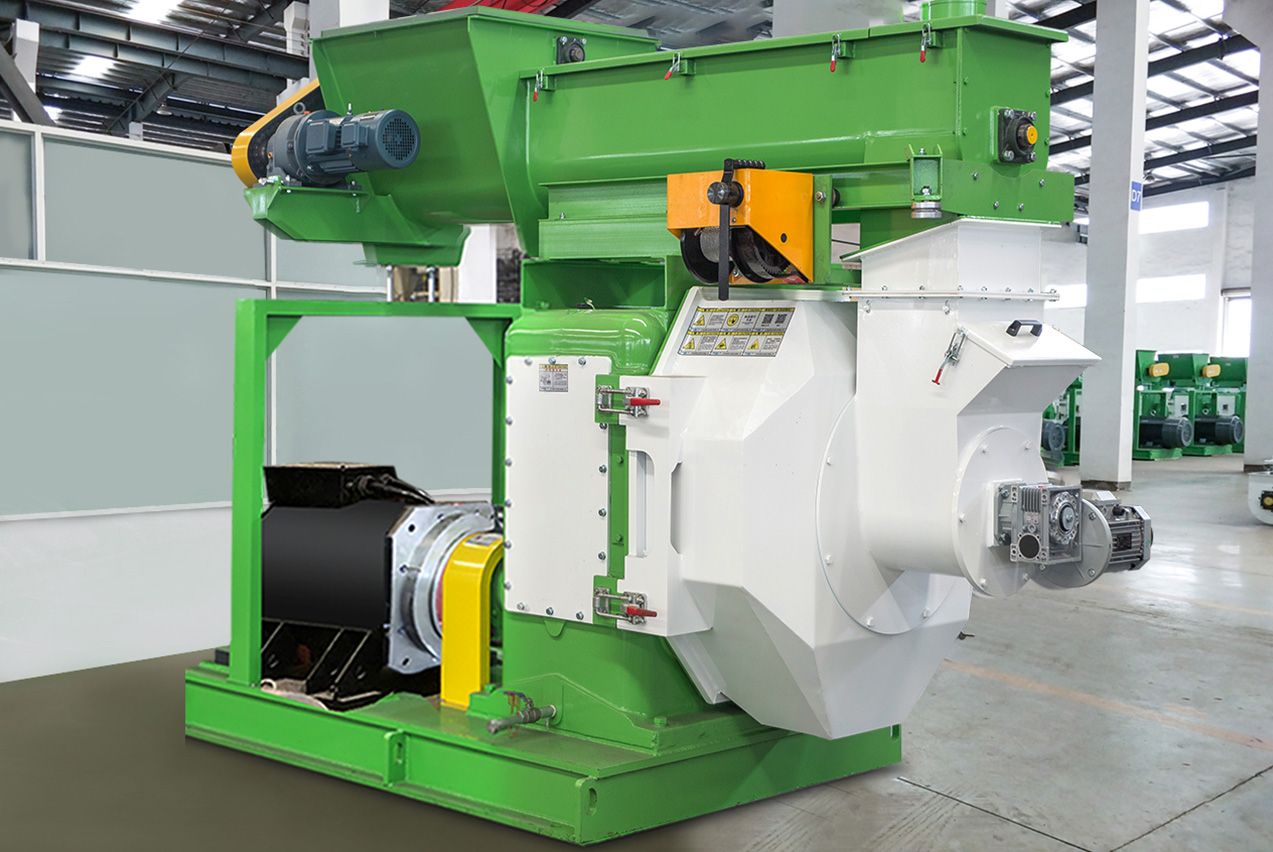
The 25,000 m² production facility supports manufacturing of the full vertical pellet mill range — JWZL-420 through JWZL-1068 — alongside the horizontal JZWH-860, and auxiliary equipment including hammer mills, drum chippers, drum dryers, and counter-flow coolers.
With active projects across 30 countries and an annual biomass fuel production capacity of 10 million metric tons across its customer network, Kingwood publishes industry news to support the technical and commercial decision-making of B2B buyers at every stage of project development.
For equipment specifications and project consultation, review the Kingwood pellet mill product range or contact the sales team directly.
FAQ
What types of industry news does Kingwood cover?
Kingwood publishes technical and market updates covering biomass pellet equipment innovations, international fuel quality standards (EU, US, Japan, ISO, China GB), regulatory changes affecting biomass energy, and project case studies from markets across 30+ countries.
How do global biomass fuel standards affect equipment selection?
Fuel specifications vary by market: the EU requires moisture below 15%, the US calorific threshold exceeds 2,500 kcal/kg, Japan limits sulfur to ≤0.5%, and ISO ash standards cap at under 20%. Equipment buyers must align pellet mill configurations and drying systems to meet the target market's compliance requirements.
What is the Three-Standardization Framework and why does it matter industrially?
Kingwood's Three-Standardization Framework mandates Integrated, Dust-Free, and Automated production lines. It addresses the three most common operational failures in biomass pellet facilities: fragmented process flow, dust hazard and emissions non-compliance, and labor-intensive manual control — each of which directly impacts plant safety ratings, regulatory approvals, and operating cost.
What capacity range do Kingwood pellet production lines cover?
Kingwood designs complete wet-feed biomass pellet production lines from small-scale installations up to 200,000 metric tons per year. Individual pellet mills range from 1 t/h (JWZL-420) to 4–5 t/h (JWZL-928 and JZWH-860), with multi-machine configurations scaling throughput further.
How does biomass fuel compare to fossil fuel on operating cost?
Biomass pellets produced to Kingwood's fuel specifications — calorific value 4,800 kcal/kg, moisture below 15%, sulfur below 0.3% — deliver 40–50% cost savings versus conventional fossil fuels in industrial boiler applications, based on Kingwood project data.
What emissions standards do Kingwood-produced biomass pellets meet?
All emission indicators from biomass pellets produced on Kingwood lines fall below GB13271-2001, China's national Emission Standard of Air Pollutants for Boilers. Dioxin content is held below 0.5 ng TEQ/m³, against a China GB ceiling of ≤1.0 ng TEQ/m³.
Where can I find verified project references for Kingwood installations?
Kingwood maintains published case studies including a 24 t/h wood chip pellet line in Vietnam (2023), a 12 t/h line in Vietnam with a 23-month payback period (2024), a 30 t/h installation in Chongqing, China (2021), and Beijing's first biomass pellet demonstration project (2024).
- Global wood pellet production capacity has grown steadily, with industrial-grade pellet demand in Asia-Pacific accelerating as coal substitution policies expand in Japan, South Korea, and Vietnam. (2024, IEA Bioenergy Task 40 — Sustainable Biomass Supply Chains)
- Kingwood has planned and designed over 2,000 biomass pellet production line projects and operates an annual biomass fuel production capacity of 10 million metric tons across its network. (2025, Jiangsu Kingwood Industrial Co., Ltd. — Company Operations Data)