Biomass Pellet Industry News & Market Insights
Kingwood · May 26, 2026
Biomass Pellet Market: Regulatory and Demand Drivers
Industrial demand for biomass pellets continues to expand as governments in Europe, East Asia, and China enforce stricter carbon reduction targets. Power utilities operating large boilers face mounting pressure to replace coal with certified biomass fuel — and that regulatory shift is creating sustained capital investment in pellet production infrastructure.
For equipment buyers and project developers, the practical implications are direct: new production lines must be engineered to meet multiple national standards simultaneously if the output fuel is destined for export markets. A pellet line producing for the Japanese market, for example, must maintain sulfur content at ≤0.5% and achieve consistent calorific output — requirements that flow upstream into feedstock selection, drying parameters, and pellet mill die configuration.
China’s domestic biomass fuel sector is also accelerating. Projects such as Beijing’s first biomass pellet demonstration project in 2024 signal that municipal and industrial end-users are actively commissioning large-scale biomass fuel supply infrastructure, not merely piloting it.
Equipment Technology Trends Shaping Pellet Production Lines
Across both greenfield and retrofit projects, three technology trends are reshaping how industrial pellet lines are specified and built.
1. Wet-feed processing as the standard for wood-based feedstocks
Fresh wood chips and agricultural residues typically arrive at processing facilities with moisture content well above the 15% threshold required by EU and ISO pellet standards. A complete wet-feed production line — covering coarse crushing, drum drying, fine grinding, pelletizing, cooling, and packaging — has become the baseline specification for serious industrial buyers. Kingwood’s complete lines are designed to handle this full process chain in an enclosed, automated configuration, with individual line capacity reaching up to 200,000 metric tons per year.
2. Dust-free enclosed processing
Biomass dust presents both an occupational health risk and a fire/explosion hazard. Regulatory enforcement on dust emissions in production facilities is tightening across China and in markets where Chinese-manufactured lines are exported. The Dust-Free pillar of Kingwood’s Three-Standardization Framework addresses this directly — all enclosed processing, integrated dust removal systems, and negative-pressure material handling are standard design features rather than optional upgrades. The Guizhou dust-free biomass pellet mill workshop project completed in 2024 is a documented implementation of this approach.
3. Automation reducing per-ton operating costs
Labor cost inflation and the need for consistent 24/7 output at commercial scale are pushing buyers toward fully automated lines. Automated pellet lines reduce manual intervention in die changes, moisture monitoring, and packaging — directly lowering variable operating cost per ton. At the 12 t/h Vietnam project documented in 2024, the combination of automation and biomass fuel cost advantages versus fossil alternatives delivered a 23-month investment payback.
Pellet Mill Selection: Matching Equipment to Project Scale
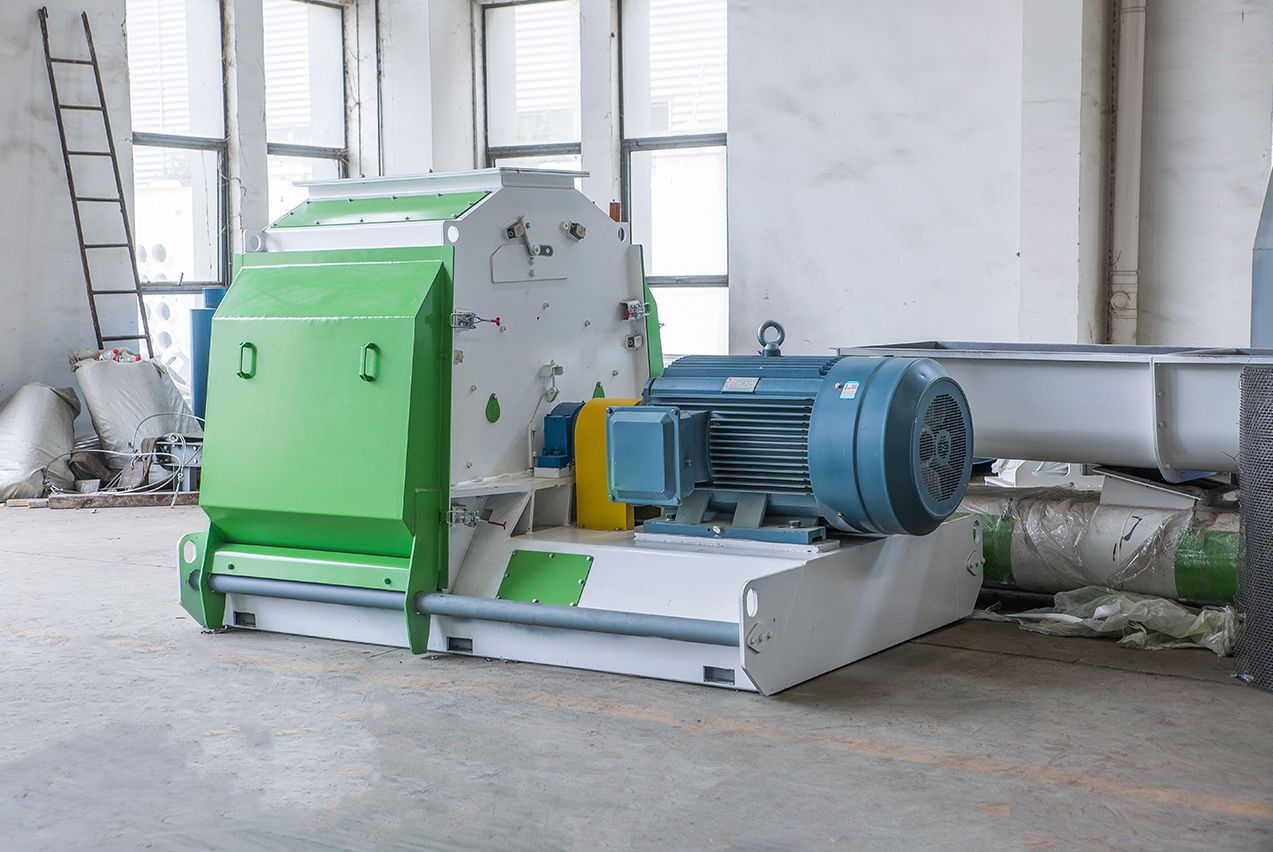
Selecting the correct pellet mill model for a given project requires matching mechanical capacity to the production line’s target throughput and feedstock characteristics. For vertical ring die pellet mills, the capacity range spans 1–1.5 t/h (JWZL-420) up to 4–5 t/h (JWZL-928). For higher-throughput single-machine configurations, the horizontal JZWH-860 also delivers 4–5 t/h. Multi-machine parallel configurations are the standard approach for lines targeting 10 t/h and above.
Procurement teams evaluating pellet mill suppliers should request documented project references at comparable throughput. Kingwood has engineered and commissioned over 2,000 production line projects across more than 30 countries since 1999, providing a verifiable project reference base that spans Southeast Asia, South Asia, and domestic China deployments. The company’s NEEQ listing (stock code: 871765) provides auditable financial records relevant to buyers assessing supplier stability for long-term capital equipment contracts.
For technical specifications on individual pellet mill models or to discuss complete-line project design, contact Kingwood’s pellet mill product team directly.
Jiangsu Kingwood Industrial Co., Ltd. — #568 Hongsheng Road, Liyang Zhongguancun Industrial Park, Liyang City, Jiangsu Province, China. ISO 9001 | ISO 14001 | CE certified. NEEQ: 871765.
FAQ
What is driving global demand for biomass pellets in industrial applications?
Tightening carbon neutrality mandates across the EU, Japan, South Korea, and China are pushing power utilities and industrial boiler operators to replace coal with certified biomass fuel. Biomass pellets meeting calorific values above 4,800 kcal/kg and sulfur content below 0.3% are increasingly preferred for co-firing and dedicated biomass combustion projects.
How do biomass pellet emission standards differ across major markets?
Standards vary significantly: the EU requires moisture below 15%; the USA sets a minimum calorific threshold above 2,500 kcal/kg; Japan caps sulfur at ≤0.5%; ISO standards limit ash content to below 20%; and China's GB standard caps dioxin emissions at ≤1.0 ng TEQ. Equipment and process design must account for these variations when targeting export markets.
What feedstocks are most commonly processed in industrial-scale biomass pellet lines today?
Wood chips, sawdust, agricultural straw, rice husk, and bamboo residues are the dominant feedstocks. High-moisture biomass — such as fresh wood chips — requires a full wet-feed production line incorporating crushing, drying, fine grinding, pelletizing, and packaging stages before pellet quality standards can be met.
What throughput capacities are available for commercial biomass pellet production lines?
Industrial-scale lines range from 1 t/h for smaller operations up to 30 t/h for large centralized fuel production facilities. Kingwood has engineered complete lines designed for up to 200,000 metric tons per year of biomass pellet output, with documented projects at 12, 24, and 30 t/h in Vietnam and China.
How does automation affect operating costs in a biomass pellet plant?
Fully automated, enclosed production lines reduce manual labor requirements, lower dust-related downtime, and enable consistent pellet quality at scale. Kingwood's Three-Standardization Framework — integrating Integrated, Dust-Free, and Automated production line standards — directly targets these cost drivers and is applied across all complete-line project designs.
What is a realistic payback period for an industrial biomass pellet production investment?
A documented Kingwood project in Vietnam with 12 t/h throughput achieved a payback period of 23 months. Payback is influenced by feedstock cost, local biomass fuel market pricing, energy cost savings versus fossil fuels (typically 40–50%), and production line utilization rate.
How should procurement teams evaluate biomass pellet equipment suppliers for large-scale projects?
Key evaluation criteria include: verified project references at comparable throughput, certifications (ISO 9001, ISO 14001, CE), technical capacity to design dust-free and automated lines, after-sales support infrastructure, and financial stability. NEEQ-listed manufacturers, such as Kingwood (stock code: 871765), provide auditable financial transparency relevant to long-term project partnerships.
- Global industrial wood pellet consumption reached approximately 32 million metric tons in 2023, with the EU accounting for over 60% of demand driven by renewable energy directives. (2023, IEA Bioenergy — Task 40 Sustainable International Bioenergy Trade, 2024 report)
- Biomass energy is projected to contribute up to 25% of global renewable energy supply by 2030 under current national policy trajectories, with Asia-Pacific showing the fastest growth in pellet import demand. (2024, IRENA — World Energy Transitions Outlook 2024)