How Wood Pellets Improve Industrial Heating Efficiency
Kingwood · May 26, 2026
Why Industrial Operators Are Moving to Wood Pellets
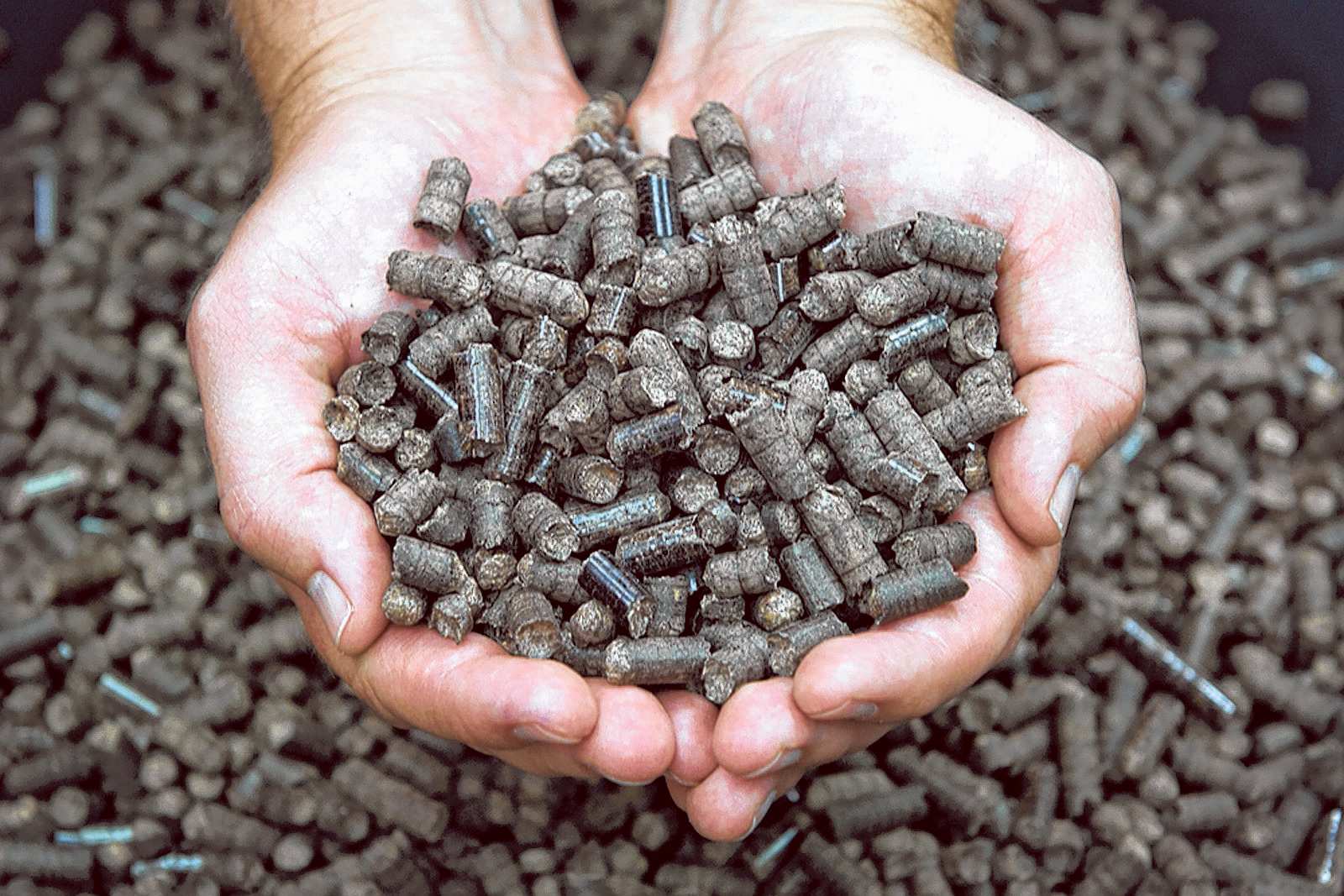
Industrial heating accounts for a substantial share of energy consumption and emissions in manufacturing, food processing, and district energy sectors. Wood pellets — compressed from sawdust, wood chips, and forestry residues — have moved from niche renewable fuel to mainstream industrial energy input, and for quantifiable reasons.
Unlike raw biomass, industrial-grade wood pellets are standardized in size, density, and moisture content. This uniformity is the foundation of their performance advantage: automated feeding systems can meter fuel input precisely, sustaining consistent combustion temperatures and eliminating the variability that degrades efficiency in log-fired or coal-fired systems.
Kingwood has designed and commissioned over 2,000 biomass pellet production line projects across 30 countries. The technical parameters built into every line directly determine the downstream fuel quality that makes industrial wood pellet boilers perform.
Fuel Quality Parameters That Drive Boiler Performance
For procurement engineers and plant managers specifying biomass fuel, the following benchmarks define industrial-grade wood pellets:
| Parameter | Kingwood Production Standard | Applicable Reference |
|---|---|---|
| Calorific value | ≥ 4,800 kcal/kg | USA standard: > 2,500 kcal/kg |
| Moisture content | < 15% | EU standard: < 15% |
| Sulfur content | < 0.3% | Japan standard: ≤ 0.5% |
| Ash content | < 18% | ISO standard: < 20% |
| Dioxin emissions | < 0.5 ng TEQ | China GB: ≤ 1.0 ng TEQ |
Low ash content is particularly important for industrial boiler operations. Coal ash typically runs 15–40%; industrial wood pellets consistently deliver below 18%, reducing slag accumulation on heat exchange surfaces, lowering maintenance frequency, and extending boiler service intervals.
All emission indicators from biomass pellet combustion fall below China’s GB13271-2001 national Emission Standard of Air Pollutants for Boilers — a meaningful benchmark given that standard is referenced in environmental compliance frameworks across Southeast Asia.
How a Complete Wood Pellet Production Line Delivers This Quality
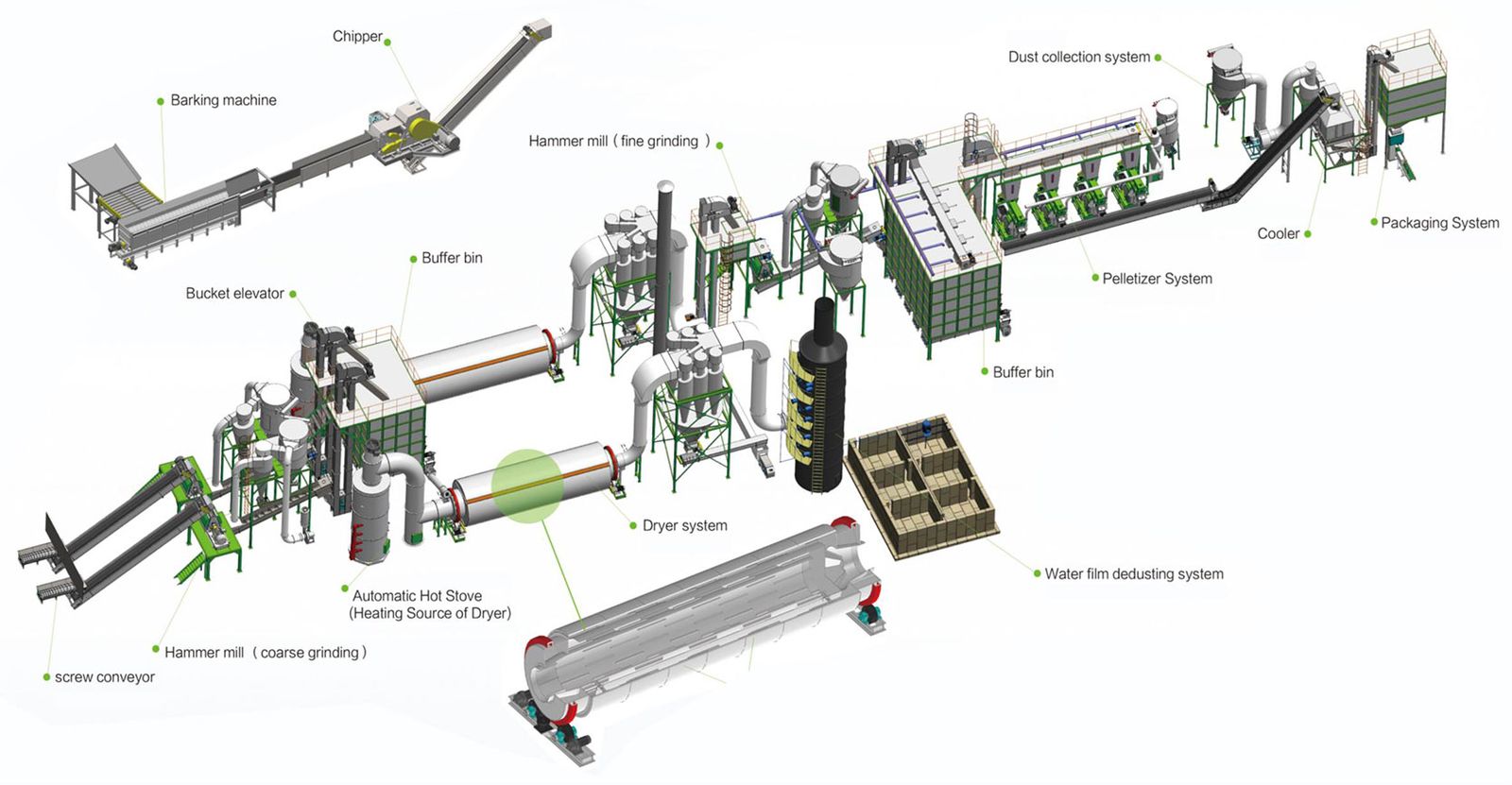
Fuel quality at this specification level does not happen by accident — it is the result of a correctly sequenced, fully integrated production line. Kingwood’s wet-feed pellet production lines are engineered to handle high-moisture raw biomass and produce certified fuel in a single continuous process:
1. Size reduction — A drum chipper reduces oversized feedstock to manageable chip dimensions; a hammer mill handles coarse grinding of chips and agricultural residues.
2. Drying — A drum dryer brings feedstock moisture down to the sub-15% threshold required for efficient pelletizing and fuel performance. Moisture control at this stage directly determines calorific value output.
3. Fine grinding — Secondary milling produces uniform particle size for consistent die compression.
4. Pelletizing — Kingwood’s ring die pellet mills, including the JWZL-688D (3–3.5 t/h), JWZL-928 (4–5 t/h), and JZWH-860 horizontal mill (4–5 t/h), apply controlled pressure through precision-machined dies. Die geometry determines pellet density and hardness — both critical to combustion consistency.
5. Cooling and packaging — A counter-flow cooler reduces pellet temperature and locks in moisture content before a pellet packaging machine seals product for storage or shipment.
The entire process operates as an enclosed, automated system with integrated dust removal — fulfilling Kingwood’s Three-Standardization Framework: Integrated, Dust-Free, and Automated production lines. This framework is not a marketing label; it defines the engineering specification that distinguishes a professionally designed production plant from a loosely assembled equipment set.
See a large-scale implementation: 24 t/h wood chip pellet production line, Vietnam, 2023.
Economic and Regulatory Case for Industrial Biomass Pellets
Cost reduction: Biomass pellets reduce fuel costs by 40–50% compared to fossil fuel equivalents. For a mid-sized industrial plant consuming several thousand tons of fuel annually, this differential represents material bottom-line impact, not marginal savings.
Payback period: A 12 t/h pellet production line commissioned in Vietnam in 2024 reached full capital payback within 23 months — documented in Kingwood’s project case record. Payback timelines in markets with renewable energy subsidies are typically shorter.
Regulatory positioning: As industrial emissions regulations tighten across the EU, Southeast Asia, and China, facilities running coal or heavy fuel oil face escalating compliance costs. Biomass pellets provide a transition pathway that satisfies current environmental standards and anticipates future tightening — without requiring complete boiler system replacement in most retrofit configurations.
Supply chain stability: Unlike oil or LNG, wood pellet supply chains are regional by nature. Feedstock sourced from local forestry waste or agricultural residues reduces logistics exposure and supports verifiable sustainability documentation for corporate ESG reporting.
Selecting a Wood Pellet Production Line Manufacturer
For industrial buyers evaluating production line suppliers, the following criteria are non-negotiable:
- Full-line engineering capability — from raw biomass intake through finished, packaged pellet output, not equipment-only supply
- Verified project references at comparable throughput scale and feedstock type
- Certifications: ISO 9001, ISO 14001, CE marking as minimum threshold
- Dust control and automation integration — critical for regulatory compliance and labor efficiency in large-scale plants
Kingwood, listed on the NEEQ exchange under stock code 871765, brings 27 years of R&D experience and a 25,000 m² production facility in Liyang, Jiangsu. Complete line design capacity reaches 200,000 metric tons per year. The engineering team has planned and designed over 2,000 production line projects spanning 30 countries.
For technical specifications on specific pellet mill models or complete line configurations, contact Kingwood’s engineering team directly for a production capacity assessment matched to your feedstock and output requirements.
FAQ
What efficiency can industrial boilers achieve when running on wood pellets?
Wood pellet boilers consistently achieve thermal efficiencies up to 90%, outperforming conventional coal- or oil-fired boilers. Uniform pellet geometry and density enable precise automated fuel feeding, minimizing combustion variability and heat losses.
How do wood pellets reduce industrial heating costs compared to fossil fuels?
Biomass pellets typically cut fuel costs by 40–50% versus fossil fuels. Price volatility is also lower than oil or natural gas, improving budget predictability for plant operators. Government renewable energy incentives in many jurisdictions further reduce payback periods — one Kingwood client in Vietnam reached full payback in 23 months on a 12 t/h line.
What are the key fuel quality parameters for industrial-grade wood pellets?
Industrial wood pellets should meet: calorific value ≥ 4,800 kcal/kg, moisture content < 15%, sulfur content < 0.3%, ash content < 18%, and dioxin emissions < 0.5 ng TEQ. These parameters satisfy EU, US, Japanese, and Chinese GB standards simultaneously.
What feedstocks can a Kingwood wet-feed pellet production line process?
Kingwood's complete wet-feed lines handle high-moisture biomass including sawdust, wood chips, agricultural residues, and forestry waste. The process sequence — crushing → coarse grinding → drying → fine grinding → pelletizing → packaging — is fully automated and enclosed with integrated dust removal.
What production capacities are available from Kingwood for wood pellet lines?
Kingwood engineers complete pellet production lines from small-scale through 200,000 metric tons per year. Individual pellet mills range from 1 t/h (JWZL-420) to 4–5 t/h (JWZL-928 or JZWH-860), with multi-machine configurations enabling large-scale output such as the 24 t/h line commissioned in Vietnam in 2023 and the 30 t/h line in Chongqing in 2021.
Why does ash content matter when choosing biomass pellets for industrial boilers?
Lower ash content reduces boiler maintenance frequency, lowers slag disposal costs, and keeps heat exchange surfaces cleaner for sustained efficiency. Industrial-grade wood pellets with ash content below 18% significantly outperform coal in this respect, reducing unplanned downtime and annual maintenance spend.
What certifications should a wood pellet production line manufacturer hold?
For B2B procurement, look for ISO 9001 (quality management), ISO 14001 (environmental management), and CE marking on equipment. Kingwood holds all three, along with designation as a Jiangsu Provincial High-Tech Enterprise and membership as Deputy Director on the China Biomass Energy Industry Alliance.
- Wood pellet boilers achieve thermal efficiency up to 90%, compared to 70–80% for conventional coal-fired industrial boilers. (2024, IEA Bioenergy Task 32 — Combustion of Solid Biomass: Status Report)
- Global industrial wood pellet demand reached approximately 8.3 million metric tons in 2023, with Asia-Pacific representing the fastest-growing end-use region. (2024, WPAC (Wood Pellet Association of Canada) — Global Pellet Market Outlook 2024)