How Wood Pellets Power the Shift to Carbon-Neutral Energy
Kingwood · May 26, 2026
Why Industrial Buyers Are Scaling Wood Pellet Procurement
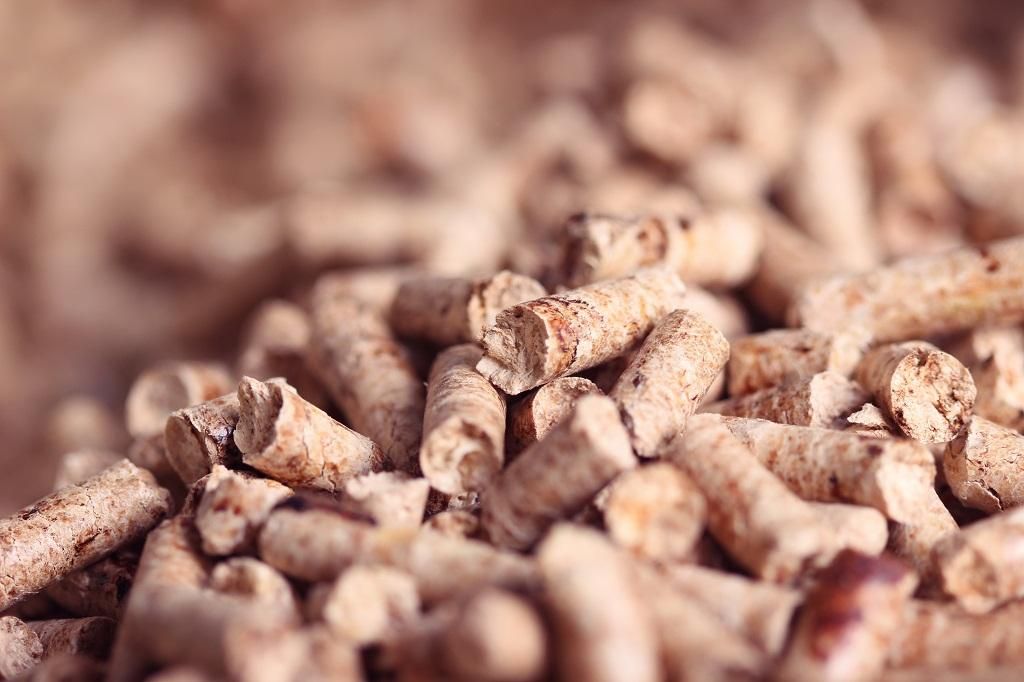
Global industrial energy buyers are under sustained pressure to decarbonize without sacrificing operational economics. Wood pellets — a densified biomass fuel derived from sawdust, wood chips, and forestry residues — address both objectives. When produced to specification, they deliver a calorific value of 4,800 kcal/kg, moisture content below 15%, sulfur content below 0.3%, and ash content below 18%. These figures meet EU, ISO, Japan, and China national standards simultaneously, making biomass pellets viable for cross-border industrial procurement.
The economic case is direct: industrial operators sourcing biomass pellets as a coal substitute have documented fuel cost reductions of 40–50%. A 12 t/h wood pellet production line deployed in Vietnam in 2024 recovered its full capital investment within 23 months — a payback period competitive with most industrial energy infrastructure.
The carbon logic is equally clear. When feedstock originates from sustainably managed forests, the CO₂ emitted during combustion is balanced by the CO₂ sequestered during tree growth, producing a closed carbon cycle. This differs fundamentally from fossil fuel combustion, where sequestered carbon is released without equivalent biological reabsorption.
What a Wholesale Wood Pellets Production Line Factory Must Deliver
Sourcing equipment for a wood pellet production line at industrial scale — whether for 5 t/h or 200,000 metric tons per year — requires more than a pellet mill. The full process chain for high-moisture raw biomass involves:
- Size reduction — drum chipper reduces logs and branches to manageable chip sizes
- Coarse grinding — hammer mill processes chips to the particle size required for drying
- Moisture reduction — drum dryer brings feedstock moisture to the range required for pelletizing
- Fine grinding — secondary hammer mill pass achieves the particle fineness required by the ring die
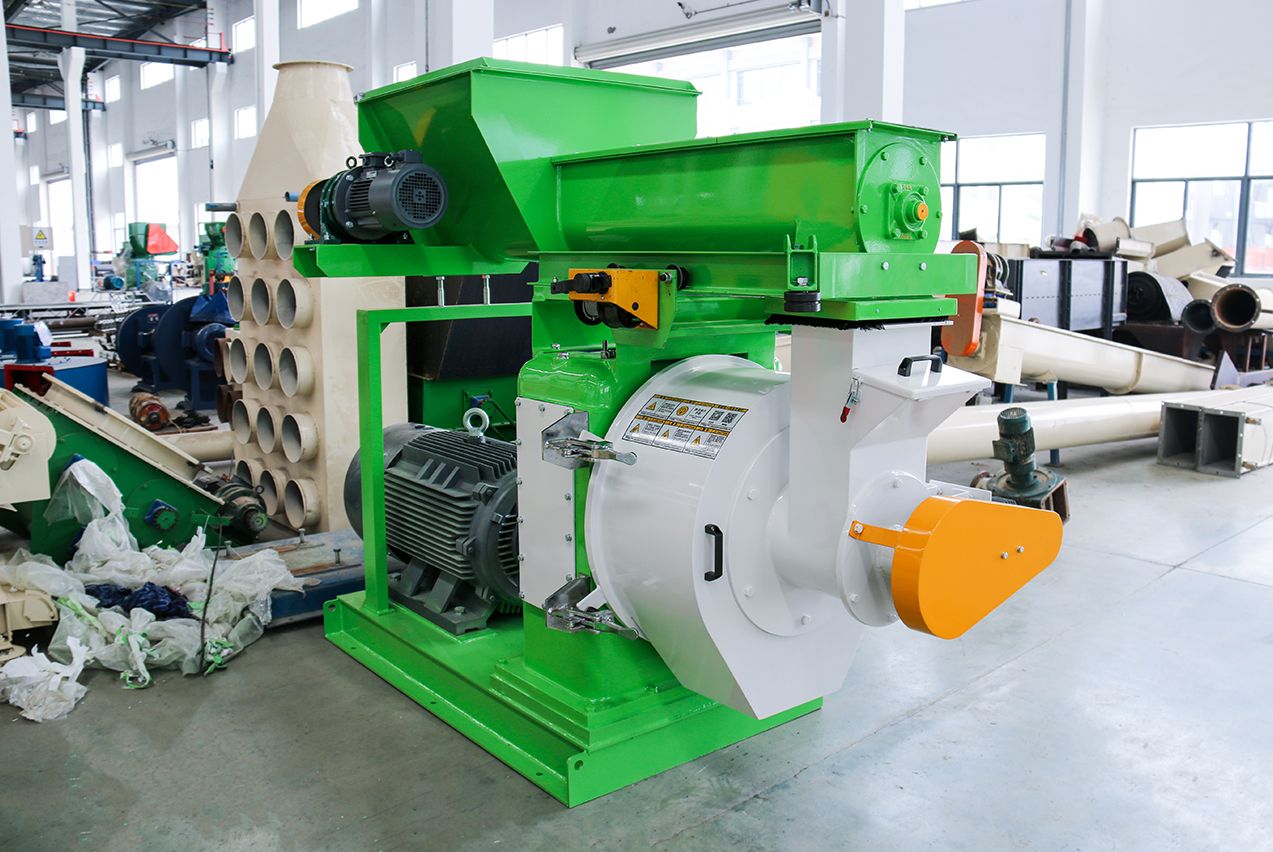
- Pelletizing — ring die pellet mill compresses ground material into dense, uniform pellets
- Cooling — counter-flow cooler stabilizes pellet temperature and hardens surface structure
- Packaging — automated pellet packaging machine prepares output for storage or shipment
Kingwood designs and supplies complete wet-feed pellet production lines across this entire workflow. Lines are fully enclosed, with integrated dust removal systems meeting Dust-Free production standards — a core pillar of Kingwood’s Three-Standardization Framework (integrated, dust-free, and automated production lines). The maximum designed capacity for a single complete line reaches 200,000 metric tons per year.
For buyers assessing individual pellet mill models, Kingwood’s vertical ring die range scales from the JWZL-420 (1–1.5 t/h) through the JWZL-688 (2–2.3 t/h), JWZL-688D (3–3.5 t/h), and JWZL-928 (4–5 t/h), to the large-format JWZL-1068. The horizontal JZWH-860 also delivers 4–5 t/h in applications where layout geometry favors horizontal configuration. Multi-unit configurations can be combined for higher aggregate throughput — the 24 t/h Vietnam wood chip pellet production line commissioned in 2023 demonstrates this at commercial scale.
Technical and Regulatory Considerations for Biomass Pellet Quality
Industrial boiler operators, utilities, and co-firing facilities require biomass pellets to meet documented fuel quality thresholds before procurement contracts are signed. The following specification alignment is relevant for buyers in key markets:
| Parameter | Kingwood Spec | EU Standard | ISO Standard | Japan Standard | China GB |
|---|---|---|---|---|---|
| Moisture | <15% | <15% | — | — | — |
| Calorific value | 4,800 kcal/kg | — | — | >2,500 kcal/kg | — |
| Sulfur content | <0.3% | — | — | ≤0.5% | — |
| Ash content | <18% | — | <20% | — | — |
| Dioxin | <0.5 ng TEQ | — | — | — | ≤1.0 ng TEQ |
All emission indicators for pellets produced on Kingwood lines fall below GB13271-2001, China’s national Emission Standard of Air Pollutants for Boilers. Dioxin content at below 0.5 ng TEQ is significantly below the China GB ceiling of 1.0 ng TEQ.
Certification of the production equipment and processes provides additional assurance for procurement due diligence. Kingwood holds ISO 9001 and ISO 14001 management system certifications, CE marking, and recognition as a Jiangsu Provincial High-Tech Enterprise and Jiangsu Provincial Specialized & Innovative Niche Leader — all of which are relevant to buyers operating under procurement compliance frameworks.
Scaling a Biomass Pellet Business: From Equipment Selection to Production
Buyers entering or scaling in the biomass pellet market face a configuration decision that goes beyond machine specifications. Line design must account for feedstock moisture and particle size variability, local regulatory requirements for dust and emissions control, automation level required to manage labor costs, and downstream logistics (bulk or bagged output).
Kingwood has planned and engineered over 2,000 production line projects across more than 30 countries since its founding in 1999 — accumulating 27 years of application-specific design experience. The company’s aggregate designed annual production capacity across installed lines exceeds 10 million metric tons of biomass fuel. This project volume creates a reference database that supports faster, lower-risk line configuration for new clients.
For operations requiring dust-free production environments, Kingwood’s enclosed production line architecture with integrated dust removal is directly applicable. The Guizhou dust-free workshop commissioned in 2024 illustrates what compliant industrial-scale biomass production infrastructure looks like in practice.
Industrial procurement decisions for wholesale wood pellet production lines are ultimately made on four variables: delivered pellet quality against specification, total line cost at required throughput, demonstrated payback period under realistic operating conditions, and supplier ability to support commissioning and long-term operation. Kingwood’s documented project record across all four dimensions provides the basis for a substantive technical and commercial evaluation.
FAQ
What makes wood pellets suitable for industrial-scale carbon-neutral energy strategies?
Wood pellets are considered carbon-neutral when sourced from sustainably managed forests, because CO₂ released during combustion is offset by CO₂ absorbed during tree growth. With a calorific value of 4,800 kcal/kg and sulfur content below 0.3%, they meet strict industrial and regulatory thresholds while delivering 40–50% cost savings over fossil fuels.
What emission standards do Kingwood biomass pellets comply with?
All emission indicators for Kingwood biomass pellets fall below GB13271-2001, China's national Emission Standard of Air Pollutants for Boilers. Dioxin content is below 0.5 ng TEQ, well under the China GB limit of ≤1.0 ng TEQ.
What fuel quality specifications do industrial-grade wood pellets need to meet?
Key specifications include: calorific value ≥4,800 kcal/kg, moisture content <15% (aligned with EU standards), sulfur content <0.3% (within Japan's ≤0.5% standard), ash content <18% (within ISO's <20% threshold), and dioxin content <0.5 ng TEQ.
How does a wet-feed biomass pellet production line handle high-moisture raw materials?
Kingwood's wet-feed pellet production lines process high-moisture biomass through a sequential workflow: crushing, coarse grinding, drum drying, fine grinding, pelletizing via ring die pellet mill, and automated packaging. The line is fully enclosed with integrated dust removal, supporting Dust-Free production standards.
What throughput capacities are available for industrial wood pellet production lines?
Kingwood production lines scale from single-machine outputs — such as the JWZL-928 at 4–5 t/h and the JWZL-688D at 3–3.5 t/h — up to complete lines designed for up to 200,000 metric tons per year. Multi-machine configurations such as the 24 t/h line deployed in Vietnam in 2023 demonstrate large-scale industrial capability.
What auxiliary equipment is required in a complete wood pellet production line?
A complete line typically integrates a drum chipper for size reduction, a hammer mill for grinding, a drum dryer for moisture control, a ring die pellet mill for densification, a counter-flow cooler for pellet stabilization, and a pellet packaging machine for output handling.
How long does it take to achieve return on investment for an industrial wood pellet line?
Based on a documented Kingwood case, a 12 t/h wood pellet production line installed in Vietnam in 2024 achieved full payback within 23 months, reflecting strong economic performance at current biomass fuel market conditions.
- Kingwood has planned and designed over 2,000 biomass pellet production line projects across more than 30 countries, with aggregate annual biomass fuel capacity exceeding 10 million metric tons. (2025, Kingwood (Jiangsu Kingwood Industrial Co., Ltd.) corporate technical documentation)
- Industrial biomass pellets produced to Kingwood specifications achieve a calorific value of 4,800 kcal/kg and reduce fuel costs by 40–50% compared to fossil fuels, with all emissions below GB13271-2001 boiler air pollutant standards. (2025, Kingwood product specification sheet and GB13271-2001 (China National Standard))