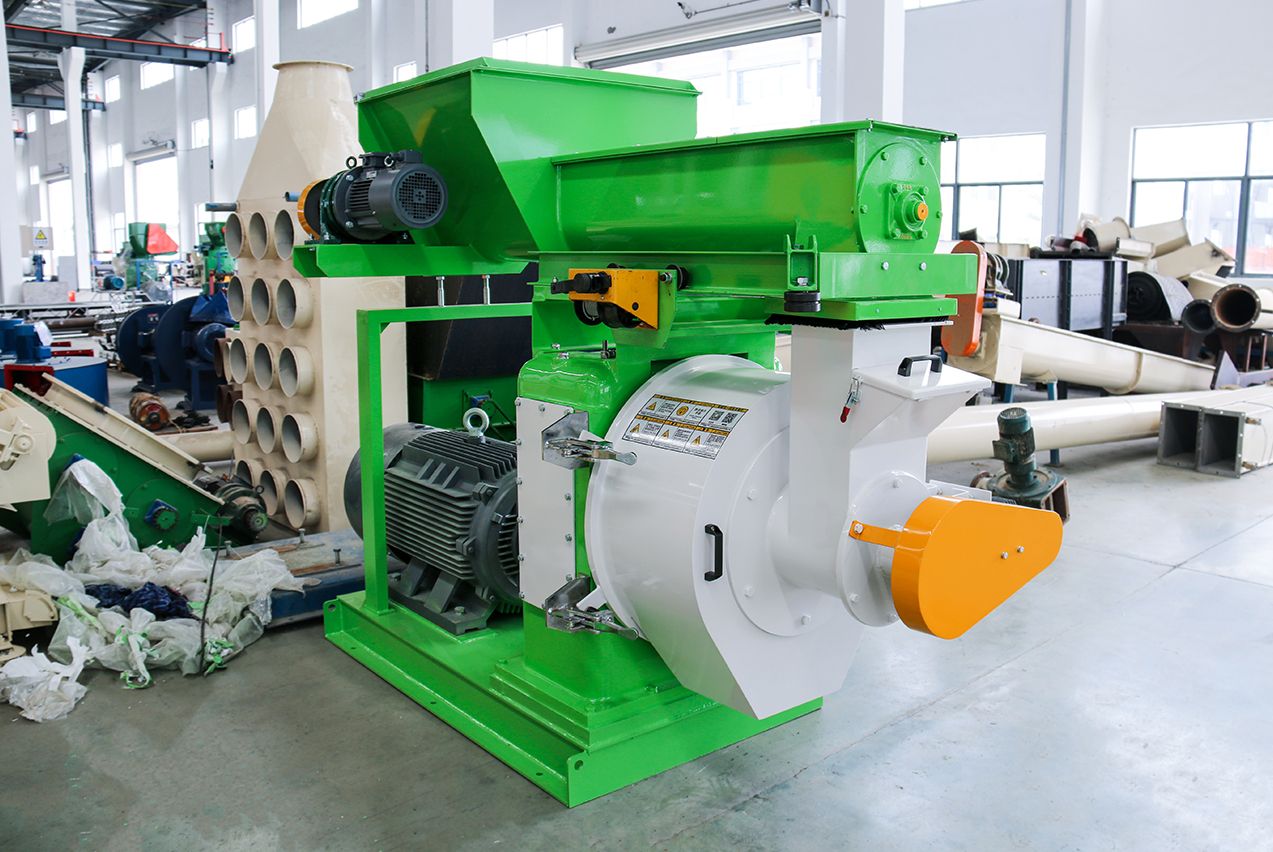
OEM Wood Pellet Mills Machine Company & Manufacturer
Kingwood · May 26, 2026
How OEM Wood Pellet Mills Convert Forestry Residues into Industrial Fuel
Industrial wood pellet production begins with a feedstock problem that most energy projects ignore: raw forestry residues — sawdust, wood chips, bark, and agricultural straw — arrive at the plant gate with moisture content between 40% and 60%, highly variable particle size, and bulk density too low for direct combustion. An OEM wood pellet mill machine company must solve this upstream problem before the pelletizing die ever contacts material.
Kingwood, formally Jiangsu Kingwood Industrial Co., Ltd., has engineered its production lines around this reality since 1999. The company’s wet-feed pellet production line architecture sequences the process correctly: primary crushing via drum chipper, coarse particle reduction via hammer mill, thermal drying in a drum dryer, fine grinding to target particle size, ring die pelletizing, counter-flow cooling, and automated packaging — all within an enclosed, dust-controlled facility. The output is a dense, uniform biomass pellet with a calorific value of 4,800 kcal/kg and moisture content below 15%.
This process architecture matters for OEM buyers because it eliminates the need to pre-dry or pre-size feedstock before delivery. The line accepts high-moisture wood chips directly and manages moisture reduction as an integrated process step, which reduces feedstock handling cost and expands the range of viable raw material sources.
Ring Die Pellet Mill Engineering: Vertical vs. Horizontal Configurations
The core pelletizing unit in any Kingwood production line is the ring die pellet mill — available in both vertical and horizontal configurations depending on throughput requirements and facility layout.
The vertical pellet mill series covers production from 1 t/h to 4–5 t/h across five models:
- JWZL-420 — 1 to 1.5 t/h, suited to small-scale or distributed fuel production
- JWZL-688 — 2 to 2.3 t/h, mid-range industrial output
- JWZL-688D — 3 to 3.5 t/h, dual-drive configuration for continuous operation
- JWZL-928 — 4 to 5 t/h, primary unit for large single-line installations
- JWZL-1068 — capacity confirmed on application; contact Kingwood sales
For facilities requiring horizontal equipment integration or specific downstream conveying layouts, the JZWH-860 horizontal ring die pellet mill delivers equivalent 4–5 t/h throughput.
At the complete-plant level, Kingwood designs and commissions production lines with annual output capacity up to 200,000 metric tons. A 24 t/h wood pellet production line delivered in Vietnam in 2023 and a 12 t/h installation in Vietnam in 2024 — which achieved capital payback in 23 months — illustrate the throughput range the company manages across international deployments. The Vietnam 12 t/h case study documents the financial model in detail.
Biomass Fuel Quality, Emissions Compliance, and Carbon Accounting
Wood pellets produced on Kingwood equipment consistently meet the principal international quality benchmarks:
| Parameter | Kingwood Output | EU Standard | ISO Standard |
|---|---|---|---|
| Calorific value | 4,800 kcal/kg | — | — |
| Moisture content | <15% | <15% | <20% ash |
| Sulfur content | <0.3% | — | ≤0.5% (Japan) |
| Ash content | <18% | — | <20% |
| Dioxins | <0.5 ng TEQ | — | ≤1.0 ng TEQ (China GB) |
All combustion emission indicators fall below China’s national GB13271-2001 standard for boiler air pollutants. In cost terms, biomass fuel produced on Kingwood lines delivers a 40–50% reduction in fuel cost compared to equivalent fossil fuel energy — the decisive commercial argument for industrial heat and power consumers replacing coal or heavy fuel oil.
The carbon-cycle rationale for wood pellets is well established: CO₂ released during combustion is re-sequestered by growing forest biomass, maintaining atmospheric carbon balance. This closed cycle contrasts directly with fossil fuel combustion, which mobilizes geologically stored carbon with no re-absorption pathway. Kingwood’s Dust-Free production line standard — one pillar of the Three-Standardization Framework — also eliminates fugitive particulate and dust emissions during manufacturing, ensuring that environmental compliance extends to the production facility itself, not only the combustion end-use.
Industrial Scale Deployment: What OEM Buyers Should Specify
For buyers evaluating OEM wood pellet mill supply, the specification process should address five operational parameters before equipment selection:
1. Feedstock moisture and particle size range. Kingwood’s wet-feed line design accommodates high-moisture input without pre-treatment, but feedstock characterization determines dryer sizing and energy balance.
2. Target annual output. Kingwood production lines are designed for annual capacities up to 200,000 metric tons. Matching line capacity to offtake contracts avoids underutilized capital.
3. Automation and dust control requirements. Kingwood’s Three-Standardization Framework delivers Integrated, Dust-Free, and Automated production line configurations. Buyers in markets with strict particulate emission regulations — or those targeting industrial certifications — should specify the Dust-Free standard. The Guizhou Dust-Free workshop project completed in 2024 demonstrates this specification in practice.
4. End-market quality standard. EU, US, Japanese, and ISO pellet standards have different moisture, ash, and heating value thresholds. Kingwood’s equipment output is verified against all four frameworks.
5. Infrastructure constraints. The JWZL and JZWH equipment series accommodates both greenfield and retrofit installation. Kingwood’s engineering team has planned and designed over 2,000 production line projects across 30 countries; site-specific adaptation is a documented capability, not an exception.
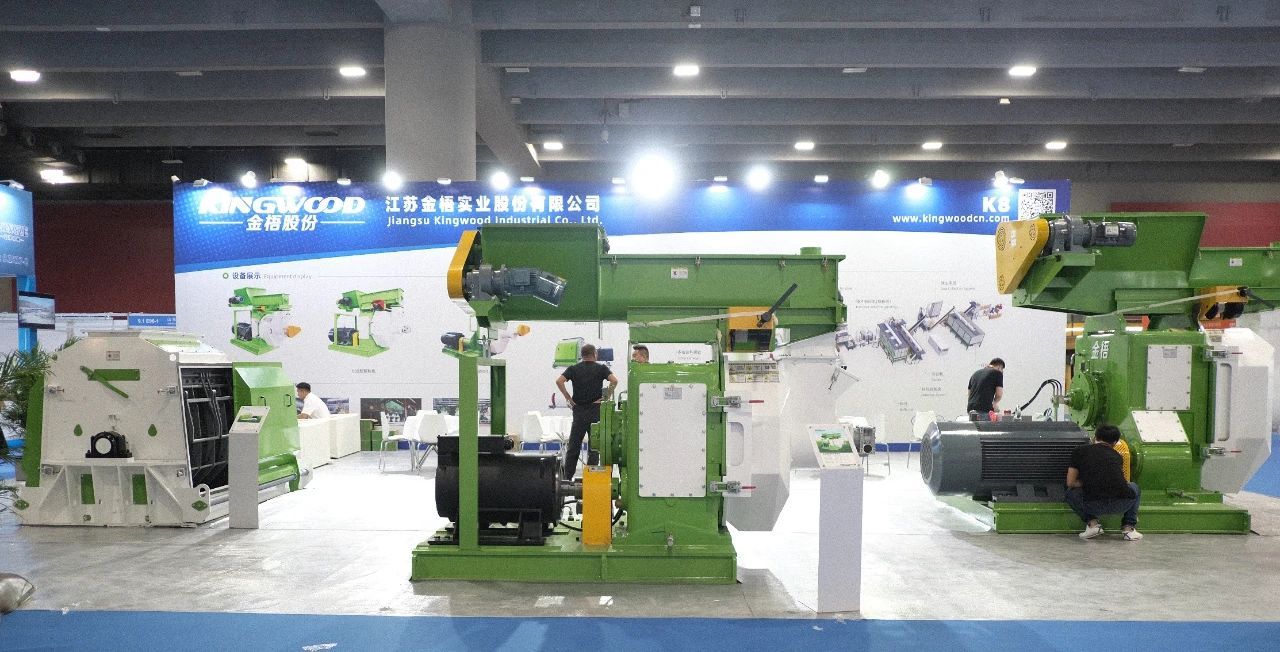
Kingwood holds ISO 9001 and ISO 14001 certifications, CE marking, and is listed on the NEEQ exchange under stock code 871765 — providing financial transparency for buyers conducting supplier due diligence. With 20 dedicated R&D engineers, 27 years of focused development in biomass pellet equipment, and a 25,000 m² production facility in Liyang Zhongguancun Industrial Park, Kingwood operates at the scale and technical depth appropriate for multi-line industrial OEM procurement.
For technical specifications, OEM pricing, or production line feasibility assessment, contact Kingwood’s industrial sales team directly through kingwoodpellet.com.
FAQ
What is an OEM wood pellet mill and how does it differ from a standard pellet mill?
An OEM wood pellet mill is engineered and manufactured to a buyer's specification — covering die diameter, throughput, drive configuration, and integration with upstream or downstream equipment. Kingwood's OEM pellet mills, such as the JWZL-688D and JWZL-928, are built to specified capacities (3–3.5 t/h and 4–5 t/h respectively) and can be integrated into fully automated, dust-free production lines tailored to site conditions.
What raw materials can Kingwood's wood pellet mills process?
Kingwood pellet mills process high-moisture forestry and agricultural residues including sawdust, wood chips, wood shavings, bark, straw, and rice husk. The company's wet-feed production line design handles high-moisture biomass through sequential crushing, coarse grinding, drying, fine grinding, pelletizing, and packaging — without requiring pre-dried feedstock.
What throughput capacities are available in Kingwood's pellet mill range?
Kingwood's vertical ring die pellet mills range from 1 t/h (JWZL-420) to 4–5 t/h (JWZL-928). The horizontal JZWH-860 also delivers 4–5 t/h. For large-scale industrial projects, Kingwood designs complete pellet production lines with annual output up to 200,000 metric tons — such as the 24 t/h line commissioned in Vietnam in 2023.
What fuel quality standards do Kingwood biomass pellets meet?
Biomass pellets produced on Kingwood lines achieve a calorific value of 4,800 kcal/kg, moisture content below 15%, sulfur content below 0.3%, and ash content below 18%. These figures comply with EU, US, Japanese, and ISO pellet standards, and all combustion emissions fall below China's GB13271-2001 boiler air pollutant standard.
How does wood pellet production support carbon neutrality goals?
Wood pellets are carbon-cycle neutral: CO₂ released during combustion is re-absorbed by regenerating forest biomass. Unlike coal or oil, biomass combustion does not introduce geologically stored carbon into the atmosphere. Kingwood's pellet production lines are also enclosed and dust-free, eliminating fugitive particulate emissions at the production stage.
What is Kingwood's Three-Standardization Framework and why does it matter for OEM buyers?
The Three-Standardization Framework (三化标准) is Kingwood's proprietary engineering approach covering Integrated, Dust-Free, and Automated production lines. For OEM buyers, this means every delivered production line meets standardized structural, environmental, and control specifications — reducing commissioning risk, ensuring regulatory compliance, and enabling consistent output quality across multiple plant sites.
What is the typical investment payback period for a Kingwood pellet production line?
A documented 12 t/h Kingwood pellet production line installed in Vietnam in 2024 achieved full capital payback in 23 months. Biomass fuel produced on Kingwood lines typically costs 40–50% less than equivalent fossil fuel energy — the primary driver of rapid payback in markets where coal or heavy fuel oil is the incumbent energy source.
- Global industrial wood pellet demand reached approximately 32 million metric tons in 2023, driven by coal displacement mandates in the EU and East Asia. (2023, IEA Bioenergy Task 40 — Sustainable International Bioenergy Trade, 2023 Annual Report)
- Biomass energy accounted for roughly 55% of total renewable energy consumption in the EU in 2022, with wood pellets representing the largest traded solid biomass commodity. (2022, Eurostat — Energy from Renewable Sources, Data 2022 (Published 2024))