China Wood Pellet Machine Production Line Manufacturer
Kingwood · May 26, 2026
How Industrial Wood Pellet Machines Convert Waste Biomass into Viable Fuel
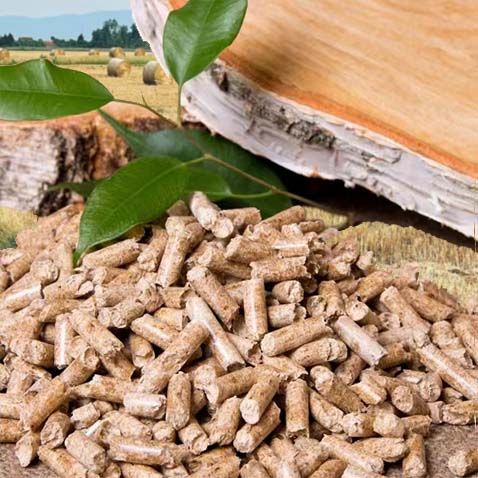
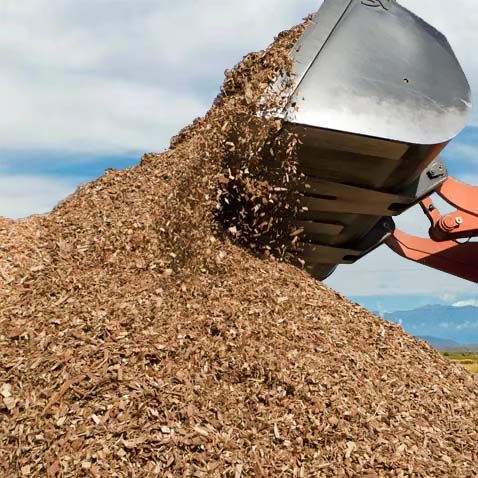
Biomass residues — sawdust, wood chips, bark, agricultural straw — accumulate at mills, farms, and processing facilities in quantities that represent both a disposal cost and an untapped energy asset. A wood pellet machine resolves both problems simultaneously. By compressing these feedstocks through a ring die under controlled pressure and temperature, the machine produces dense cylindrical pellets with consistent geometry, low moisture, and predictable combustion behavior.
Kingwood’s vertical pellet mill lineup covers the JWZL-420 (1–1.5 t/h), JWZL-688 (2–2.3 t/h), JWZL-688D (3–3.5 t/h), and JWZL-928 (4–5 t/h). The horizontal JZWH-860 also delivers 4–5 t/h where facility layout favors that configuration. For industrial-scale output, multiple units are integrated into complete production lines designed for up to 200,000 metric tons per year.
The complete wet-feed production line — Kingwood’s core offering — handles high-moisture biomass without requiring customer pre-treatment. The sequence moves through drum chipping, coarse grinding via hammer mill, thermal drying in the drum dryer, fine grinding, pelletizing, counter-flow cooling, and automated packaging. Every stage is enclosed, dust-suppressed, and monitored, in direct application of Kingwood’s Three-Standardization Framework (Integrated, Dust-Free, and Automated production lines).
Biomass Pellets as a Technical Replacement for Coal and Fossil Fuels
The industrial case for switching to biomass pellets rests on measurable fuel parameters, not environmental messaging alone.
Kingwood biomass fuel reaches a calorific value of 4,800 kcal/kg — sufficient for industrial boiler operation — while holding moisture below 15%, sulfur below 0.3%, and ash below 18%. Dioxin emissions remain below 0.5 ng TEQ, against China’s GB standard ceiling of 1.0 ng TEQ. All combustion emission indicators fall below GB13271-2001, China’s national Emission Standard of Air Pollutants for Boilers. For cross-border buyers, the same pellets satisfy EU moisture requirements (<15%), U.S. calorific minimums (>2,500 kcal/kg), Japanese sulfur limits (≤0.5%), and ISO ash thresholds (<20%).
From a carbon accounting perspective, combustion of wood pellets re-releases carbon that the source biomass absorbed during its growth cycle. This closed-loop carbon model — unlike fossil fuel combustion, which mobilizes geologically sequestered carbon — is the technical basis for biomass being classified as renewable under EU Renewable Energy Directive and equivalent frameworks.
The direct commercial result: operators replacing coal or heavy fuel oil with Kingwood-produced biomass pellets consistently report fuel cost reductions of 40–50%. A 12 t/h Vietnam installation commissioned in 2024 reached full return on capital investment within 23 months. See the full Vietnam 12 t/h case study for detailed payback modeling.
Kingwood’s Engineering Capability and Global Project Track Record
Jiangsu Kingwood Industrial Co., Ltd. was founded in 1999 and brings 27 years of focused R&D in biomass pellet equipment. The company operates a 31,200 m² facility in Liyang Zhongguancun Industrial Park, Jiangsu Province, staffs a 20-person R&D team, and is publicly listed on NEEQ (stock code: 871765). Equipment has been delivered to customers in 30 countries across Asia, Europe, and beyond.
Kingwood has planned and designed more than 2,000 biomass pellet production line projects globally. Documented installations include:
- 30 t/h production line in Chongqing, China (2021)
- 24 t/h wood chip pellet line in Vietnam (2023)
- 12 t/h line in Vietnam (2024) — 23-month payback
- Beijing’s first biomass pellet demonstration project (2024)
- Dust-Free enclosed workshop implementation in Guizhou, China (2024)
The supported annual biomass fuel capacity across Kingwood-equipped facilities reaches 10 million metric tons per year.
Sourcing and Supply Chain Considerations for Production Line Buyers
Industrial buyers evaluating a China wood pellet machine production line manufacturer should assess three interconnected variables: feedstock supply consistency, process line configuration, and equipment compliance requirements for target export markets.
Feedstock: Kingwood’s wet-feed line design explicitly accommodates variable-moisture biomass, removing the requirement for upstream drying infrastructure that adds capital cost and operational complexity. This is particularly relevant for buyers in Southeast Asia and tropical markets where wood chip moisture regularly exceeds 40%.
Line configuration: A single JWZL-928 at 4–5 t/h suits smaller operations or phased investment strategies. Parallel multi-unit configurations with centralized automation and dust removal deliver the throughput needed for utility-scale or export-oriented pellet plants. Kingwood’s engineering team provides capacity modeling and layout design as part of the project development process.
Compliance: Biomass pellets destined for European industrial buyers must meet ENplus or ISO 17225 pellet quality standards. Kingwood’s production line configurations — including counter-flow cooling for moisture reduction and ring die selection for diameter control — are engineered to consistently produce pellets within these specification windows.
Sustainable sourcing of raw material remains a legitimate operational concern. Production lines must be matched with procurement protocols that draw from certified forestry, sawmill residue, and agricultural waste streams rather than primary forest harvest — both for regulatory compliance in buyer markets and for long-term feedstock price stability.
For buyers in the early evaluation stage, Kingwood’s project team offers production line feasibility assessments based on locally available feedstock types, target output volumes, and market specifications. Contact Kingwood to initiate a technical consultation.
FAQ
What is a wood pellet machine and how does it work?
A wood pellet machine — also called a pellet mill — compresses biomass feedstocks such as sawdust, wood chips, and agricultural residues under high pressure through a ring die, forming dense cylindrical pellets with uniform diameter and consistent calorific value. Kingwood's vertical pellet mills (JWZL series) and horizontal pellet mill (JZWH-860) handle capacities from 1 t/h up to 5 t/h per unit, with complete lines scalable to 200,000 metric tons per year.
How do biomass pellets reduce dependence on fossil fuels?
Biomass pellets participate in the short-cycle carbon loop: CO₂ released during combustion was absorbed by biomass during growth, resulting in near-zero net carbon addition. By contrast, fossil fuels release carbon sequestered over millions of years. Kingwood biomass fuel achieves a calorific value of 4,800 kcal/kg, sulfur content below 0.3%, and all emissions below China's GB13271-2001 boiler standard, making it a viable drop-in replacement for coal in industrial boilers.
What raw materials can Kingwood's production lines process?
Kingwood's wet-feed biomass pellet production lines are engineered for high-moisture inputs including wood chips, sawdust, bark, agricultural straw, rice husk, and other lignocellulosic residues. The line sequence — drum chipping, coarse grinding via hammer mill, drying via drum dryer, fine grinding, pelletizing, counter-flow cooling, and packaging — handles moisture variability without pre-drying by the customer.
What certifications do Kingwood pellet production lines carry?
Kingwood holds ISO 9001, ISO 14001, and CE certifications. The company is recognized as a Jiangsu Provincial High-Tech Enterprise, Jiangsu Provincial Specialized & Innovative Niche Leader, and Jiangsu Provincial Gazelle Enterprise, and is listed on China's NEEQ stock exchange under code 871765.
What cost savings can industrial buyers expect from switching to biomass pellets?
Operators switching from fossil fuels to Kingwood-produced biomass pellets report fuel cost reductions of 40–50%. A documented 12 t/h installation in Vietnam (2024) achieved full capital payback in 23 months.
Can wood pellet production lines serve large-scale power generation?
Yes. Kingwood has planned and designed over 2,000 biomass pellet production line projects globally, including a 30 t/h installation in Chongqing, China (2021) and a 24 t/h line in Vietnam (2023). These industrial-scale lines supply fuel-grade pellets meeting EU (<15% moisture), USA (>2,500 kcal/kg), Japan (≤0.5% sulfur), and ISO (<20% ash) standards for co-firing and dedicated biomass power plants.
Where is Kingwood's manufacturing facility and what is its capacity?
Jiangsu Kingwood Industrial Co., Ltd. operates from a 31,200 m² facility — 25,000 m² production floor plus 6,200 m² offices — at #568 Hongsheng Road, Liyang Zhongguancun Industrial Park, Liyang City, Jiangsu Province, China. Annual biomass fuel output capacity supported by Kingwood-built lines reaches 10 million metric tons.
- Global biomass power generation capacity reached approximately 143 GW in 2023, with solid biomass (including wood pellets) accounting for the largest share of bioenergy electricity production. (2024, International Renewable Energy Agency (IRENA), Renewable Power Generation Costs 2023)
- Wood pellet trade volumes exceeded 33 million metric tons globally in 2023, driven by industrial co-firing demand in Europe and Asia. (2024, Food and Agriculture Organization of the United Nations (FAO), Global Forest Products Facts and Figures 2023)