How to Improve Air Quality in Wood Pellet Production
Kingwood · May 26, 2026
Why Air Quality Is a Structural Engineering Problem in Pellet Production
Wood pellet production is not a clean-room process. Raw biomass arrives with bark, soil fines, and variable moisture. It passes through hammer mills, rotary dryers, ring die pellet mills, and mechanical conveyors before reaching the bagger. Every transition point is a potential dust emission event.
Treating air quality as an afterthought — something to address with portable fans and paper masks — is both a regulatory liability and an operational inefficiency. Captured dust is recoverable material. Uncaptured dust is lost yield, a fire hazard, and a health exposure. The engineering objective is to design containment into the line from the start, not retrofit it after an inspection.
Kingwood’s dust-free production line standard is built on this premise: enclosure, extraction, and filtration are specified at the line design stage, not sourced separately by the customer after commissioning.
Core Technical Controls for Dust and Emissions Management
Integrated dust collection architecture
Effective dust control in a wood pellet line requires a layered system. Primary cyclone separators handle coarse particles from the hammer mill and dryer exhaust. Secondary pulse-jet baghouse filters capture fine respirable dust from pelletizing and conveyor transfers. The two stages operate in series, not as alternatives.
A common design error is sizing the baghouse for average throughput rather than peak load. During startup surges or raw material switches — for example, shifting from sawdust to rice husk — particle loading can spike by 40–60%. Systems sized only for steady-state conditions fail precisely when capture is most critical.
Enclosed processing circuits
Sealed screw conveyors between process stages eliminate the open transfer points where dust becomes airborne. Covered grinding circuits prevent the outward pressure pulse that occurs when a hammer mill accelerates into a dense feed slug. Enclosed pelletizing enclosures contain the steam and fines generated at the die face.
This is not about aesthetics. An enclosed circuit reduces the total volumetric airflow that must be handled by the extraction system, which directly lowers fan energy consumption and filter replacement frequency. Kingwood’s integrated production line design specifies enclosure at each inter-stage transfer as a standard engineering requirement.
Process parameter discipline
Dust generation is partly a function of how equipment is operated. A ring die pellet mill running at excessive throughput relative to die specification generates more fines, more heat, and more steam than the same mill operated within design limits. A drum dryer running too hot at the inlet can char surface particles, creating submicron carbonaceous dust that standard cyclones do not capture effectively.
Calibrated PLC control — setting feed rates, die temperatures, and dryer inlet air temperatures to validated operating windows — reduces dust generation at the source. Real-time monitoring allows operators to detect drift before it compounds. This is a lower-cost intervention than upgrading extraction hardware.
Combustion emissions from dryer heat sources
Wet-feed pellet production lines, which handle high-moisture biomass before drying, require a significant heat input to the drum dryer. That heat typically comes from a biomass-fired hot air furnace. The furnace exhaust — not just the process dust — is a regulated emission stream.
Specifying staged-combustion burners, maintaining proper excess air ratios, and integrating a secondary combustion chamber reduces CO and unburned hydrocarbon output. A multi-cyclone and wet scrubber on the dryer stack addresses particulate and acid gas components. Kingwood’s biomass fuel achieves a sulfur content below 0.3% and dioxin emissions below 0.5 ng TEQ per cubic meter — providing a 50% safety margin against China’s GB13271-2001 boiler emission standard.
Ventilation Design and Operational Discipline
General building ventilation does not substitute for point-source extraction. A large workshop volume with high air change rates will dilute visible dust but will not achieve the capture velocities needed at grinding and pelletizing stations. Each major emission point requires a dedicated hood or enclosure with an exhaust duct sized for the specific airflow and particle load at that location.
Negative pressure zoning — maintaining workshop air pressure slightly below ambient — prevents contaminated air from migrating into adjacent clean areas such as control rooms or packaging halls. This is particularly relevant in facilities where the packaging station is adjacent to the pellet mill room.
Maintenance schedules must include quantified checks, not visual inspections. Pressure-drop measurement across baghouse compartments identifies blinded filter bags before overall system efficiency degrades. Duct velocity surveys detect erosion-related leakage before it becomes significant. A facility that documents these checks quarterly creates a defensible compliance record and catches deterioration early.
Personnel working at high-dust stations — hammer mill infeed, pellet mill die changes, dryer maintenance — require appropriate respiratory protection calibrated to the actual dust species present. Biomass dust is not a uniform hazard; hardwood dust carries a higher carcinogenicity classification than softwood in most regulatory frameworks, and this distinction should be reflected in the facility’s occupational health risk assessment.
Equipment Selection and Line Integration
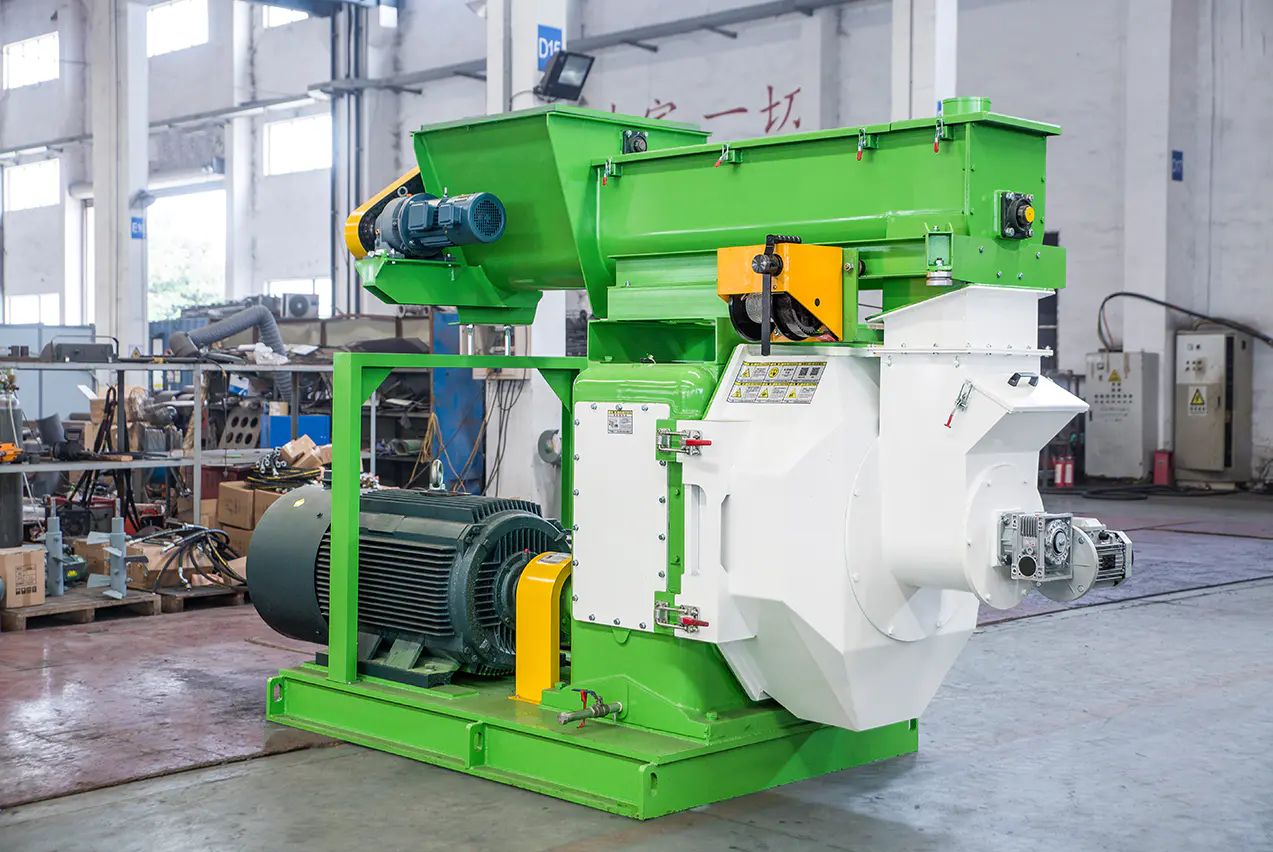
Air quality outcomes are substantially determined at the equipment selection stage. A pellet mill with a sealed feed chamber and integrated fine dust extraction at the die face generates lower workshop dust levels than one designed without these features. A drum dryer with a well-sealed drum shell and negative-pressure operation prevents dryer exhaust from short-circuiting into the building.
For facilities evaluating complete line procurement, Kingwood designs and supplies wet-feed biomass pellet production lines with capacity up to 200,000 metric tons per year, with dust-free operation, full enclosure, and automated process control specified as standard deliverables — not optional upgrades. Operational references include a dust-free implementation in Guizhou, China (2024) and large-scale export lines in Vietnam.
Air quality compliance in wood pellet production is achievable and measurable. The prerequisite is treating it as an engineering specification from line design through commissioning, not as a post-hoc compliance exercise.
FAQ
What are the primary sources of airborne dust in wood pellet production?
Dust is generated at multiple stages: raw material infeed, hammer mill grinding, rotary drying, pelletizing, and conveyor transfer points. Each stage requires dedicated dust capture — typically cyclone pre-separators followed by pulse-jet baghouse filters — to keep particulate concentrations within safe occupational and environmental limits.
How do enclosed production lines reduce air quality risks?
Enclosed systems — sealed screw conveyors, covered grinding circuits, and fully enclosed pelletizing machines — contain dust and volatile organic compounds at the source. This prevents dispersal into the workshop atmosphere and simplifies downstream capture. Kingwood's dust-free production line design integrates enclosure as a structural standard rather than an add-on.
What emission standards apply to biomass pellet production in China?
Facilities burning biomass pellets must comply with GB13271-2001, China's national Emission Standard of Air Pollutants for Boilers. Kingwood's biomass fuel specifications — sulfur content below 0.3%, dioxin emissions below 0.5 ng TEQ — ensure all monitored indicators remain within or below that threshold.
How does process control optimization reduce dust and emissions generation?
Overloading a hammer mill or pellet mill increases friction heat and dust breakout. Calibrating feed rates, die temperatures, and compression ratios to equipment design limits reduces both fines generation and the risk of thermal decomposition emissions. Real-time PLC monitoring enables operators to correct deviations before they compound into air quality events.
What ventilation design principles apply to pellet production workshops?
Ventilation systems must address localized high-dust zones — grinding rooms, drying sections, and bagging stations — with dedicated exhaust points sized for actual airflow volumes. General dilution ventilation alone is insufficient; each emission point needs capture-at-source extraction, followed by filtered exhaust to atmosphere. Air change rates and negative pressure balancing are calculated per zone volume and dust load.
Are low-emission combustion technologies applicable to pellet dryer burners?
Yes. Drum dryers in wet-feed pellet lines require a heat source, typically a biomass-fired hot air furnace. Specifying staged-combustion burners and integrating a secondary afterburner chamber reduces CO and NOx output. Combined with a multi-cyclone and scrubber on the dryer exhaust stack, total particulate emissions can be brought well within regulatory limits.
What role does routine maintenance play in sustaining air quality performance?
Dust collection system efficiency degrades when filter bags blind, cyclone inlets erode, or duct connections develop leaks. A scheduled maintenance program — weekly pressure-drop checks on baghouses, quarterly duct inspections, and immediate replacement of worn die and roller components in pellet mills — keeps capture efficiency at design levels and prevents progressive deterioration of workshop air quality.
- Biomass pellets produced to Kingwood fuel specifications emit dioxins below 0.5 ng TEQ per cubic meter, against China's GB standard ceiling of 1.0 ng TEQ — a 50% margin below the regulatory limit. (2024, Kingwood product specification sheet, cross-referenced with GB13271-2001 (China National Emission Standard of Air Pollutants for Boilers))
- The global wood pellet market is projected to exceed 50 million metric tons of annual demand by 2027, intensifying regulatory pressure on production-site emissions management across all major producing regions. (2025, IEA Bioenergy Task 32 — Biomass Combustion and Co-firing, 2024 Status Report)