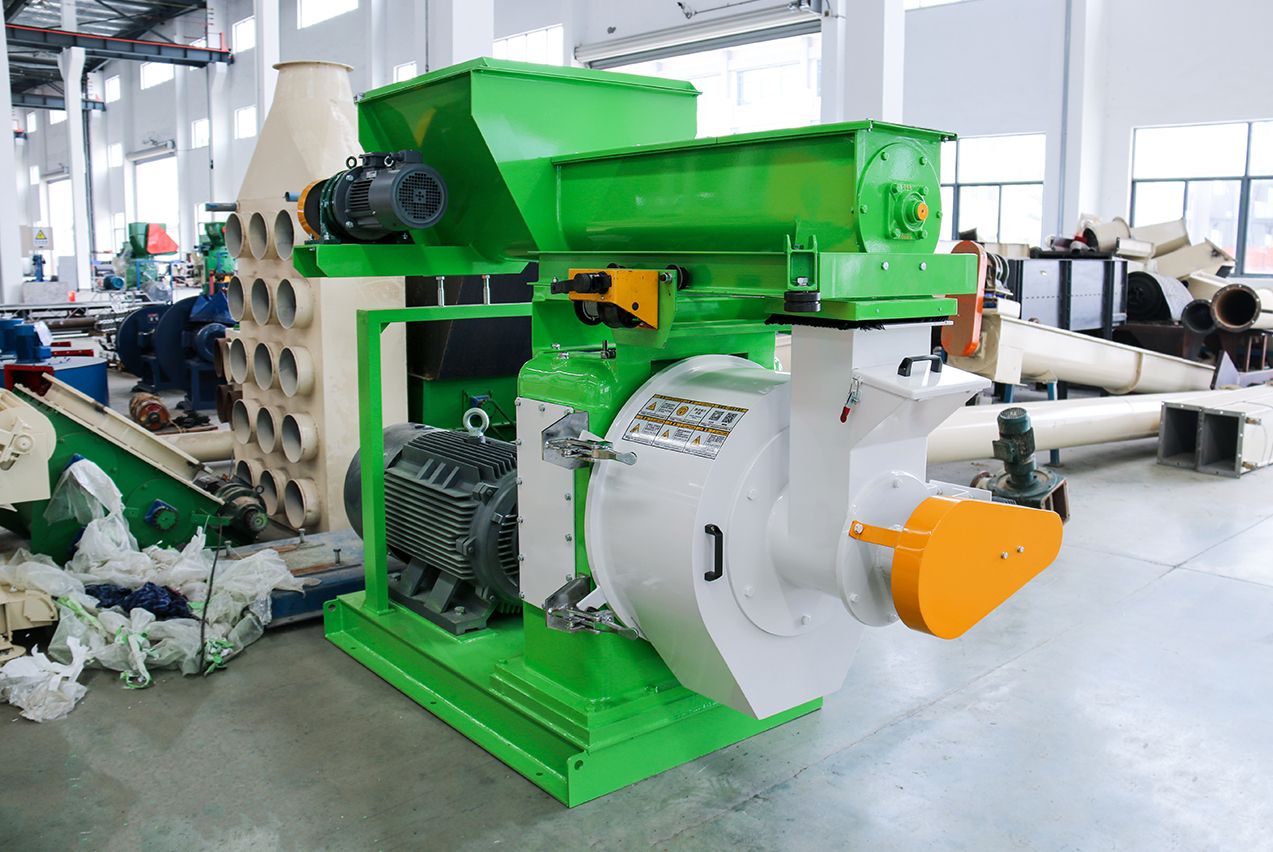
Rice Husk Pellet Making Machine: OEM Manufacturer Guide
Kingwood · May 26, 2026
Rice Husk as an Industrial Biomass Feedstock
Rice husk is one of the most abundant agricultural residues generated at scale. In major rice-producing regions across Southeast Asia, South Asia, and Sub-Saharan Africa, rice milling operations produce enormous volumes of husk that historically ended up burned in open fields or disposed in landfills — both environmentally and economically wasteful outcomes.
From an industrial fuel perspective, rice husk carries real value. Its lignocellulosic fiber structure allows it to be compressed into dense pellets under heat and pressure, producing a standardized solid biomass fuel. When processed correctly on a ring die pellet mill, rice husk pellets achieve a calorific value of 4,800 kcal/kg, with moisture content below 15%, sulfur content below 0.3%, and ash content below 18%. These figures place rice husk pellets in compliance with EU moisture standards, ISO ash standards, and Japan sulfur standards for traded biomass fuel.
For industrial buyers — power plant operators, district heating utilities, process heat users — that consistency matters more than the feedstock’s agricultural origin. What matters is BTU reliability, combustion behavior, and supply chain logistics.
How a Rice Husk Pellet Making Machine Works
Converting raw rice husk into fuel-grade pellets requires controlled processing across multiple stages. Kingwood’s complete wet-feed pellet production lines handle the full sequence within an enclosed, automated system:
1. Size reduction — drum chipper and hammer mill Incoming rice husk is coarse-processed through a drum chipper if mixed with larger biomass material, then refined to consistent particle size via a hammer mill. Uniform particle size is critical to even die-channel filling and pellet density.
2. Drying — drum dryer Fresh or wet rice husk from seasonal harvest can carry moisture well above the 15% pelletizing threshold. A rotary drum dryer reduces feedstock moisture to the target range before pelleting, protecting die life and ensuring pellet integrity.
3. Pelletizing — ring die pellet mill The core of any rice husk pellet making machine is the ring die. Kingwood’s vertical pellet mills — the JWZL-420, JWZL-688, JWZL-688D, and JWZL-928 — use a vertically oriented ring die that offers structural advantages for abrasive feedstocks like rice husk: even roller load distribution, reduced die wear, and consistent compression ratio across the die face. For high-throughput operations, the horizontal JZWH-860 delivers 4–5 t/h within a compact footprint.
4. Cooling — counter-flow cooler Freshly extruded pellets exit the die at elevated temperature and require controlled cooling to harden and stabilize. Kingwood counter-flow coolers reduce pellet temperature to near-ambient in a single pass, minimizing breakage and fines generation.
5. Packaging Finished pellets are conveyed to automated packaging stations. For export-grade production, the system integrates inline moisture and weight checks.
The entire line operates under Kingwood’s Three-Standardization Framework — Integrated production lines, Dust-Free production lines, and Automated production lines — which means enclosed processing from intake to packaging, with integrated dust extraction throughout. For rice husk specifically, dust control is not optional: rice husk dust is fine, light, and explosive at concentration. A dust-free design is an industrial safety requirement, not a feature upgrade.
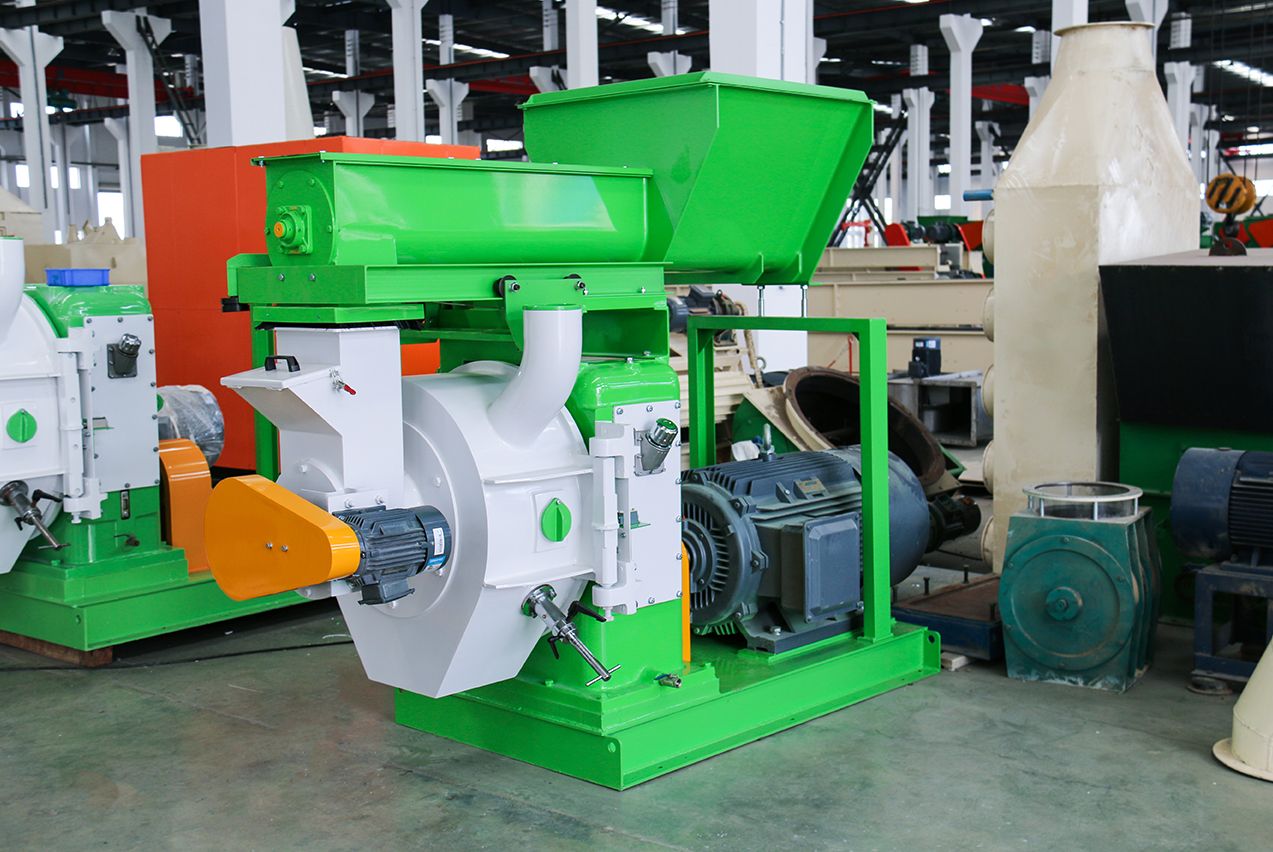
OEM Rice Husk Pellet Machine: Capacity, Configuration, and Pricing
Kingwood — Jiangsu Kingwood Industrial Co., Ltd., founded in 1999 with 27 years of R&D in biomass pellet equipment — supplies OEM rice husk pellet making machines for distributors, EPC contractors, and direct project developers across 30 countries.
Model selection by capacity:
| Model | Type | Capacity (t/h) |
|---|---|---|
| JWZL-420 | Vertical pellet mill | 1–1.5 |
| JWZL-688 | Vertical pellet mill | 2–2.3 |
| JWZL-688D | Vertical pellet mill | 3–3.5 |
| JWZL-928 | Vertical pellet mill | 4–5 |
| JZWH-860 | Horizontal pellet mill | 4–5 |
For annual capacity planning, Kingwood engineers complete production lines up to 200,000 metric tons per year. The company has planned and designed over 2,000 production line projects globally.
OEM pricing for a rice husk pellet making machine depends on three primary variables: pelletizer model, auxiliary equipment scope (whether the buyer requires a single machine or a full wet-feed line), and destination port. Kingwood provides itemized quotations based on actual project parameters — capacity target, feedstock moisture profile, available floor space, and automation level required.
For project developers evaluating return on investment: Kingwood’s documented case studies show fuel cost reductions of 40–50% versus fossil fuel alternatives, and a 12 t/h wood pellet line in Vietnam achieved full payback within 23 months. Rice husk lines serving comparable industrial heat customers follow similar economics where husk supply is low-cost or captive.
Kingwood holds ISO 9001, ISO 14001, and CE certification. The company is publicly traded on China’s NEEQ exchange under stock code 871765 and is a Deputy Director Member Unit of the China Biomass Energy Industry Alliance. Technical inquiries and OEM quotation requests are handled directly by Kingwood’s export engineering team at #568 Hongsheng Road, Liyang City, Jiangsu Province, China.
FAQ
What makes rice husk suitable feedstock for a pellet mill?
Rice husk contains significant lignocellulosic fiber and silica content, giving it adequate binding properties under high-pressure compression. After grinding to a consistent particle size, it pelletizes efficiently in a ring die pellet mill. Moisture content must be controlled below 15% before pelleting to meet fuel-grade specifications.
What is the calorific value of rice husk biomass pellets?
Rice husk biomass pellets produced on Kingwood equipment achieve a calorific value of approximately 4,800 kcal/kg, with moisture content below 15%, sulfur content below 0.3%, and ash content below 18% — meeting EU, US, Japan, and ISO international biomass fuel standards.
Which Kingwood pellet mill models are suitable for rice husk pellet production?
Kingwood's vertical pellet mill range covers capacities from 1 t/h (JWZL-420) through 4–5 t/h (JWZL-928). For large-scale rice husk operations requiring 4–5 t/h, the horizontal JZWH-860 ring die pellet mill is also available. Complete wet-feed production lines can be designed up to 200,000 tons per year.
What is a wet-feed rice husk pellet production line and why does it matter?
A wet-feed production line accepts high-moisture biomass directly, processing it through sequential stages: drum chipping, coarse grinding via hammer mill, drum drying, fine grinding, ring die pelletizing, counter-flow cooling, and automated packaging — all within an enclosed, dust-free system. This eliminates pre-drying requirements and reduces handling losses for freshly harvested rice husk.
How much can rice husk pellets reduce fuel costs compared to fossil fuels?
Biomass pellets produced on Kingwood equipment typically reduce fuel costs by 40–50% compared to conventional fossil fuel alternatives, based on equivalent thermal output per unit of spend.
Does Kingwood offer OEM manufacturing for rice husk pellet machines?
Yes. Kingwood — Jiangsu Kingwood Industrial Co., Ltd. — provides OEM rice husk pellet making machine supply, including custom capacity configurations, complete production line engineering, and private-label arrangements for equipment distributors and project developers globally.
What certifications does Kingwood's pellet mill equipment carry?
Kingwood holds ISO 9001, ISO 14001, and CE certifications, alongside designation as a Jiangsu Provincial High-Tech Enterprise and recognition as a Top 10 Brand in Biomass Molding Equipment. The company is listed on China's NEEQ exchange under stock code 871765.
- Global rice production generates an estimated 150 million metric tons of rice husk annually, of which a significant share remains under-utilized as an energy resource. (2023, Food and Agriculture Organization of the United Nations (FAO), Rice Market Monitor)
- Biomass pellets meeting EN ISO 17225 standards deliver calorific values between 4,600–5,400 kcal/kg depending on feedstock, with rice husk pellets consistently achieving the lower-mid range at approximately 4,800 kcal/kg. (2024, ISO 17225-6 / European Pellet Council (EPC) Quality Standards Documentation)