How Pellet Press Machines Drive Greener Manufacturing
Kingwood · May 26, 2026
The Pellet Press as an Industrial Sustainability Tool
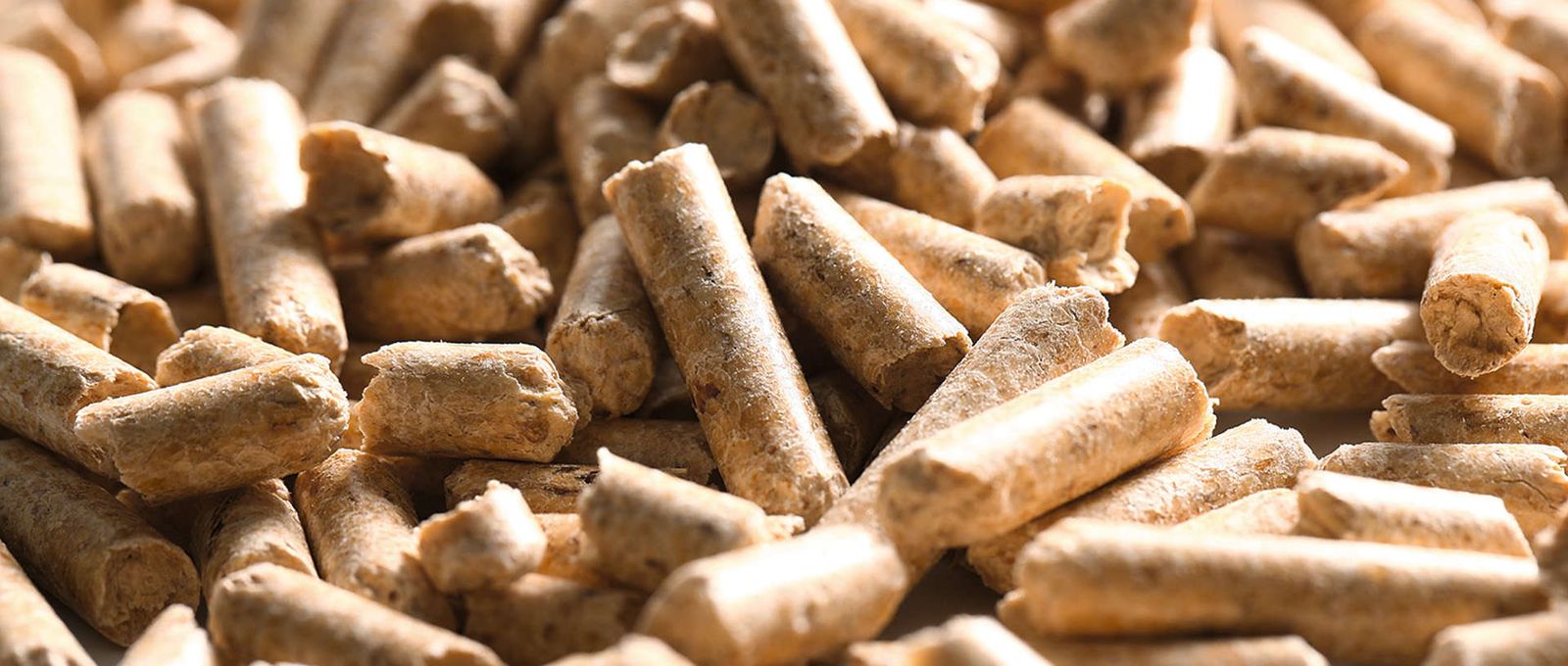
Manufacturing industries worldwide face mounting regulatory and commercial pressure to cut carbon emissions, reduce waste disposal costs, and demonstrate measurable progress toward net-zero targets. The industrial pellet press addresses all three demands through a single, scalable process: converting biomass residues into dense, standardized fuel pellets that replace fossil fuels across boilers, kilns, and combined heat-and-power systems.
Unlike bolt-on environmental compliance measures, pelletization restructures the material flow of a manufacturing facility. Raw waste — sawdust, wood chips, agricultural straw, bark, crop stalks — enters the production line as a cost liability and exits as a revenue-generating or cost-replacing energy product. The environmental and financial cases are inseparable, which is precisely why biomass pellet technology has scaled rapidly across industrial markets in Asia, Europe, and North America.
Kingwood, established in 1999 and headquartered at Liyang Zhongguancun Industrial Park in Jiangsu Province, China, has spent 27 years engineering pellet press machines and complete biomass production lines for this industrial transition. With over 2,000 production line projects planned and designed across more than 30 countries, the company’s equipment portfolio reflects the full technical spectrum of modern biomass pelletization.
How Pellet Press Machines Optimize Resource Utilization and Cut Emissions
The environmental contribution of a pellet press is most clearly quantified through material efficiency and emissions data.
Waste upcycling: A pellet press compresses loose biomass residues — which are bulky, difficult to store, and expensive to transport or dispose of — into uniform pellets with bulk densities suited to standard handling and logistics infrastructure. This transformation eliminates landfill tipping fees, reduces fire risk from stored biomass, and converts a waste management problem into an energy asset.
Fuel quality and emissions: Biomass pellets produced to industrial standards carry a calorific value of 4,800 kcal/kg, moisture content below 15%, sulfur content below 0.3%, and dioxin emissions below 0.5 ng TEQ. These figures satisfy the EU moisture standard, ISO ash standard (below 20%), and China’s GB13271-2001 national boiler emissions standard — and all fall well below the thresholds for coal combustion. Manufacturers switching from coal to biomass pellets achieve measurable reductions in SO₂, NOₓ, and particulate emissions without retrofitting combustion equipment.
Cost displacement: Biomass pellets reduce fuel expenditure by 40–50% relative to fossil fuel equivalents. A Kingwood-commissioned 12 t/h production line in Vietnam, completed in 2024, recorded full investment payback in 23 months — a return profile that makes the sustainability case financially compelling without reliance on subsidy.
For facilities that generate large volumes of biomass residue, the economics improve further: the raw material cost approaches zero, making the pellet press a direct profit center rather than a cost line.
Pelletization and the Circular Economy in Practice
The pellet press is one of the clearest industrial implementations of circular economy principles. Rather than treating production residues as terminal waste, pelletization inserts them back into the facility’s energy supply chain, creating a closed material loop.
Kingwood’s complete wet-feed biomass pellet production lines are engineered specifically to handle this full cycle. A typical integrated line sequences crushing, coarse grinding, drum drying, fine grinding, pelletizing via ring die pellet mill, counter-flow cooling, and automated packaging — all within an enclosed, dust-controlled environment. The result is a fully automated process capable of handling high-moisture biomass inputs and delivering finished fuel pellets that meet international trading specifications.
Under Kingwood’s proprietary Three-Standardization Framework — built on integrated, dust-free, and automated production lines — each facility is designed to operate with minimal fugitive dust, consistent output quality, and low operator intervention. The dust-free design principle is not cosmetic: enclosed processing prevents biomass particulate from entering the atmosphere during production, directly reducing the air quality impact of plant operations. A 2024 project in Guizhou, China, demonstrates this approach at industrial scale, with a fully dust-free pellet mill workshop purpose-built to Kingwood’s specifications.
Complete line capacity reaches up to 200,000 metric tons per year, supporting operations from mid-scale industrial producers to large biomass fuel suppliers. The JWZL-928 vertical pellet mill and the JZWH-860 horizontal pellet mill both deliver 4–5 t/h throughput and serve as the pelletizing core in high-capacity integrated lines.
Selecting the Right Pellet Press Configuration for Your Operation
Not all biomass feedstocks or production targets are identical. Pellet press selection depends on raw material moisture content, particle size distribution, target pellet diameter, required throughput, and site automation requirements.
Kingwood’s vertical pellet mill range provides a structured entry point:
- JWZL-420 — 1–1.5 t/h, suited to smaller operations or pilot-scale projects
- JWZL-688 — 2–2.3 t/h, standard mid-range industrial throughput
- JWZL-688D — 3–3.5 t/h, dual-output configuration for increased capacity
- JWZL-928 — 4–5 t/h, high-throughput vertical configuration
For operations requiring horizontal ring die architecture, the JZWH-860 delivers equivalent 4–5 t/h capacity with a different mechanical approach to die-roller compression.
Each model is supported by auxiliary equipment — hammer mill for size reduction, drum chipper for raw wood processing, drum dryer for moisture management, and counter-flow cooler for pellet stabilization post-press. Auxiliary integration is critical to pellet quality: inconsistent moisture or particle size entering the press die directly reduces pellet durability and increases die wear.
The 2023 Vietnam project — a 24 t/h wood chip pellet production line — and the 2021 Chongqing installation at 30 t/h illustrate how Kingwood scales complete line engineering for large industrial throughput demands. For project specifications and line configuration consultation, the Kingwood case study library provides documented performance data from operational installations.
Jiangsu Kingwood Industrial Co., Ltd. holds ISO 9001, ISO 14001, and CE certifications and is listed on China’s NEEQ exchange under stock code 871765. The company serves industrial clients across 30 countries from its 31,200 m² facility in Liyang, Jiangsu Province.
FAQ
What is a pellet press and how does it work in an industrial context?
A pellet press is a mechanical machine that compresses raw biomass materials — including wood chips, agricultural residues, and organic waste — into dense, uniform pellets under high pressure and temperature. In industrial settings, the pellet press sits at the center of a complete production line that includes size reduction, drying, fine grinding, pelletizing, cooling, and packaging.
How does a pellet press reduce industrial waste?
By processing materials that would otherwise be landfilled or incinerated — such as sawdust, crop stalks, and wood offcuts — a pellet press converts them into standardized biomass fuel pellets. This upcycling eliminates waste streams and creates a marketable energy product from low-value residues.
What emissions advantages do biomass pellets offer over coal?
Biomass pellets produced by industrial pellet mills have a sulfur content below 0.3% and dioxin emissions below 0.5 ng TEQ — both significantly cleaner than coal combustion. All emission indicators for Kingwood-produced biomass fuel meet or exceed China's GB13271-2001 national Emission Standard of Air Pollutants for Boilers.
How does pelletization support a circular economy in manufacturing?
Pelletization closes the material loop by converting production waste back into usable energy. Instead of purchasing virgin fossil fuels, manufacturers can feed their own biomass residues into a pellet production line and consume the resulting fuel pellets on-site, reducing both input costs and disposal costs simultaneously.
What cost savings can manufacturers expect from switching to biomass pellets?
Biomass pellets typically reduce fuel costs by 40–50% compared to fossil fuels. A documented Kingwood installation in Vietnam achieved full investment payback within 23 months on a 12 t/h production line.
What production capacities are available for industrial pellet press machines?
Kingwood's vertical pellet mills range from 1 t/h (JWZL-420) to 4–5 t/h (JWZL-928), with the horizontal JZWH-860 also rated at 4–5 t/h. Complete integrated production lines can be engineered up to 200,000 metric tons per year of biomass pellet output.
What makes an automated, enclosed pellet production line better for sustainable manufacturing?
Fully automated, enclosed production lines — as delivered under Kingwood's Three-Standardization Framework — minimize fugitive dust, reduce operator exposure, lower energy waste through process integration, and enable real-time monitoring of throughput and quality. These features collectively reduce the environmental footprint of the entire pelletizing operation.
- Biomass pellets produced on Kingwood equipment carry a calorific value of 4,800 kcal/kg with moisture content below 15%, meeting EU, ISO, and China GB fuel quality standards. (2025, Kingwood product specification datasheet, kingwoodpellet.com)
- A 12 t/h Kingwood biomass pellet production line installed in Vietnam in 2024 achieved full capital cost payback within 23 months of commissioning. (2024, Kingwood project case study: vietnam-wood-pellet-line-12-tph-kingwood-payback, kingwoodpellet.com)