How Pellet Extruders Improve Shaping and Consistency
Kingwood · May 26, 2026
The Engineering Mechanism Behind Consistent Pellet Shaping
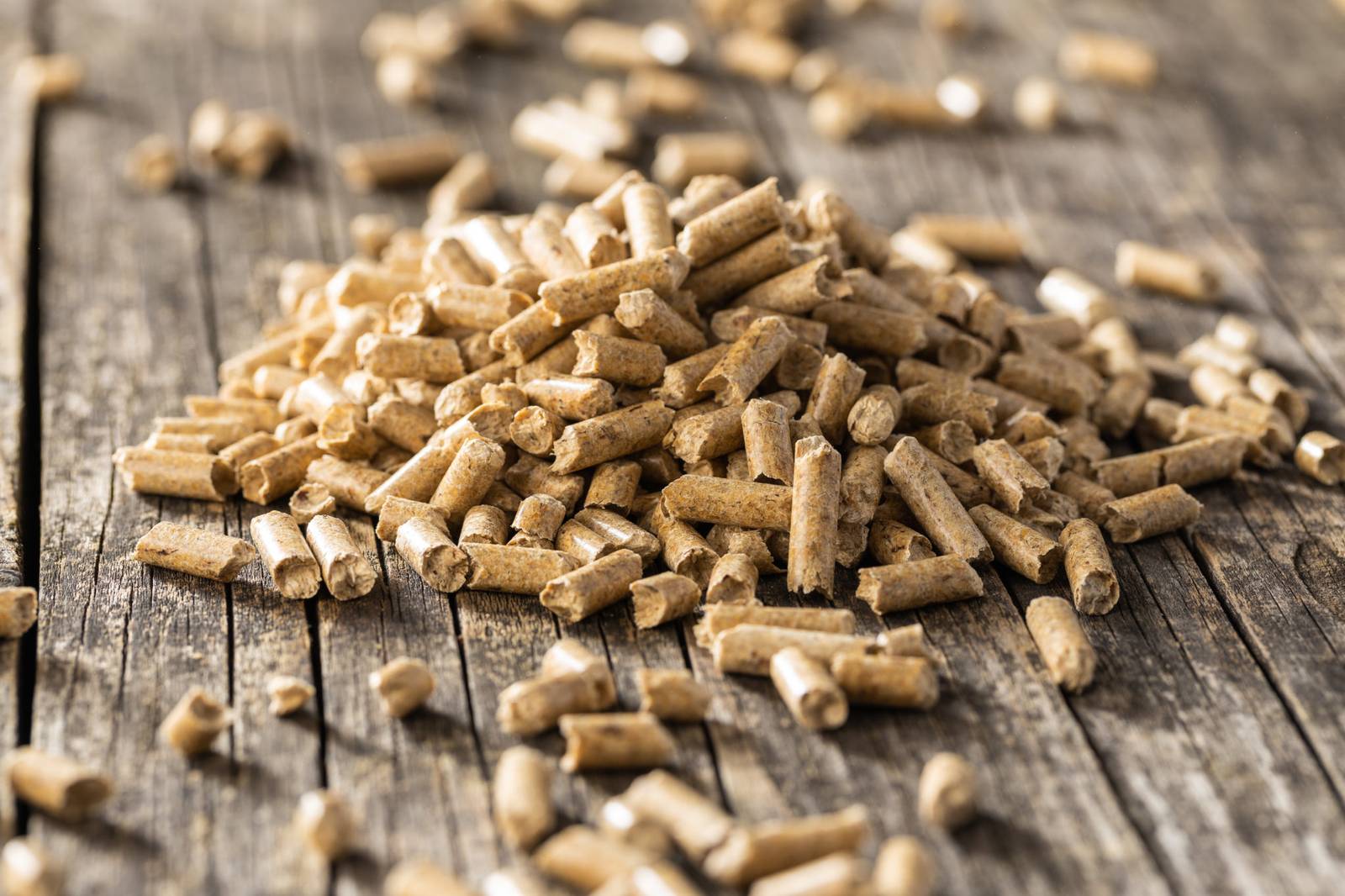
Pellet quality in industrial biomass fuel production is not a matter of chance — it is an outcome of controlled mechanical engineering. The core function of a pellet extruder or ring die pellet mill is to force conditioned raw material through a die under precisely managed pressure, producing pellets whose diameter, length, and surface finish are defined by die geometry rather than by operator judgment or feedstock luck.
In contrast to earlier compaction methods, which relied on hydraulic batch pressing and left significant room for dimensional variability, die-based pelletizing delivers repeatable geometry across millions of pellets per shift. The die can be specified to target a fixed pellet diameter — typically 6 mm, 8 mm, or 10 mm for industrial biomass fuel applications — ensuring that every pellet discharged from the machine meets the same cross-sectional tolerance.
This geometric precision matters commercially. Bulk storage, pneumatic conveying, metering screws in industrial boilers, and automated bagging systems all depend on predictable pellet dimensions. A production line that ships inconsistent pellets creates downstream handling problems for the end user and warranty exposure for the equipment supplier.
Process Parameter Control and Material Homogenization
Dimensional uniformity is necessary but not sufficient. Two pellets of identical diameter can differ substantially in density, hardness, moisture content, and calorific value if the upstream material preparation and in-machine process conditions are not controlled.
Pellet extruders and ring die pellet mills address this through adjustable process parameters: die temperature, compression ratio of the die channel, feed rate into the press channel, and — where conditioning is applied — steam addition rate. Operators tune these variables to hit target bulk density and durability indices without changing the raw material formulation. This is particularly relevant in biomass fuel production, where feedstock moisture and fiber length vary seasonally.
Equally important is material homogenization before the die. In Kingwood’s wet-feed biomass pellet production lines, the process sequence — drum chipper → hammer mill → drum dryer → pellet mill — ensures that material entering the die has been reduced to a consistent particle size distribution and dried to below 15% moisture. The hammer mill stage is critical here: it breaks coarse fibrous material into a fine, flowable mass that packs uniformly into die channels. Without this preparation, raw biomass would bridge, slip, or compress unevenly inside the die, producing pellets with internal voids or surface cracking.
The result of combining upstream preparation with controlled in-die compression is a pellet with homogeneous composition throughout its cross-section — consistent calorific value, consistent ash content, and consistent combustion behavior, lot after lot.
Production Efficiency and Integration in Complete Pellet Lines
Beyond quality, the continuous-flow nature of die-based pelletizing delivers a measurable throughput advantage over batch methods. Because material flows into and out of the die in a steady stream, there are no load-discharge cycles consuming time and energy. A ring die pellet mill running at rated capacity sustains output without the dead time inherent in batch processes.
Kingwood’s pellet mill lineup scales to match project capacity requirements. The JWZL-688 delivers 2–2.3 t/h for mid-scale operations, while the JWZL-928 reaches 4–5 t/h for larger production facilities. For projects requiring the highest output density per machine footprint, the horizontal JZWH-860 also targets 4–5 t/h. Complete production lines engineered by Kingwood can be designed for up to 200,000 metric tonnes per year of biomass pellet output.
Consistent die output also reduces the burden on post-processing. When every pellet exits the die within dimensional and density tolerance, the screening and recycle loop downstream handles only a small fines fraction rather than a high proportion of off-spec material. This keeps the counter-flow cooler and packaging machine operating at design throughput rather than being throttled by recycle load.
Kingwood’s Three-Standardization Framework — integrated, dust-free, and automated production lines — governs how these process stages are connected. Enclosed conveyors, integrated dust removal at each transfer point, and PLC-based automation eliminate manual intervention and cross-contamination between process stages, maintaining the pellet quality established at the die throughout the entire downstream chain.
For a real-world demonstration of these principles at scale, the Vietnam 12 t/h wood pellet line case study documents how an integrated Kingwood line achieved investment payback in 23 months, with pellet quality meeting export specifications throughout commissioning and commercial operation.
As biomass pellet demand continues to expand across industrial heat and power markets, die-based pelletizing technology — combined with disciplined upstream preparation and automated line integration — remains the proven foundation for producing fuel-grade pellets at commercial scale with the consistency that global buyers and certification bodies require.
FAQ
What mechanical principle do pellet extruders use to achieve uniform pellet shape?
Pellet extruders force raw material through a precision-engineered die under controlled pressure. The die geometry defines pellet diameter and length, eliminating the dimensional variability common in batch-based compaction methods.
Which process parameters can operators adjust on an industrial pellet extruder?
Key adjustable parameters include die temperature, compression pressure, and feed rate. Tuning these variables allows operators to target specific pellet density, surface hardness, and moisture retention without changing raw material formulation.
How does extrusion reduce inconsistency caused by variable raw material properties?
The extrusion barrel subjects material to continuous mechanical mixing and kneading before it reaches the die. This homogenizes fiber length, moisture distribution, and particle size, producing a uniform melt or compressed mass regardless of feedstock variation.
How does continuous extrusion compare to batch pelletizing in terms of throughput?
Continuous extrusion maintains a constant material flow through the die, eliminating the load-and-discharge cycles of batch processing. This sustains higher hourly output, reduces idle time, and lowers the per-tonne energy cost of shaping.
Does extrusion eliminate post-processing steps in pellet production?
Consistent die output reduces the frequency of rework and re-pelletizing. However, downstream cooling — such as counter-flow cooling — and screening remain standard steps to stabilize pellet temperature and remove fines before packaging.
What pellet specifications can a ring die pellet mill achieve compared to an extruder-style machine?
Kingwood's ring die pellet mills, including models such as the JWZL-688 (2–2.3 t/h) and JWZL-928 (4–5 t/h), produce biomass pellets with calorific value up to 4,800 kcal/kg, moisture below 15%, and ash content below 18%, meeting EU, ISO, and China GB standards.
What upstream equipment works alongside a pellet extruder or pellet mill in a complete production line?
A full wet-feed biomass pellet production line integrates a drum chipper for size reduction, a hammer mill for grinding, a drum dryer for moisture control, the pellet mill for densification, and a counter-flow cooler plus packaging machine downstream — all enclosed and dust-controlled under Kingwood's Three-Standardization Framework.
- Global industrial wood pellet demand reached approximately 32 million metric tonnes in 2023, driven by coal-to-biomass fuel switching mandates across the EU and East Asia. (2024, IEA Bioenergy Task 40 — Renewable Energy Markets and Policy Report 2024)
- Biomass pellets produced under controlled extrusion and die compression conditions can achieve bulk densities of 600–750 kg/m³, compared to 150–200 kg/m³ for loose wood chips — a 3–4× volumetric energy density improvement. (2023, ASTM International — Standard Specification for Densified Biomass Fuels (ASTM E1757 / ISO 17225-2))