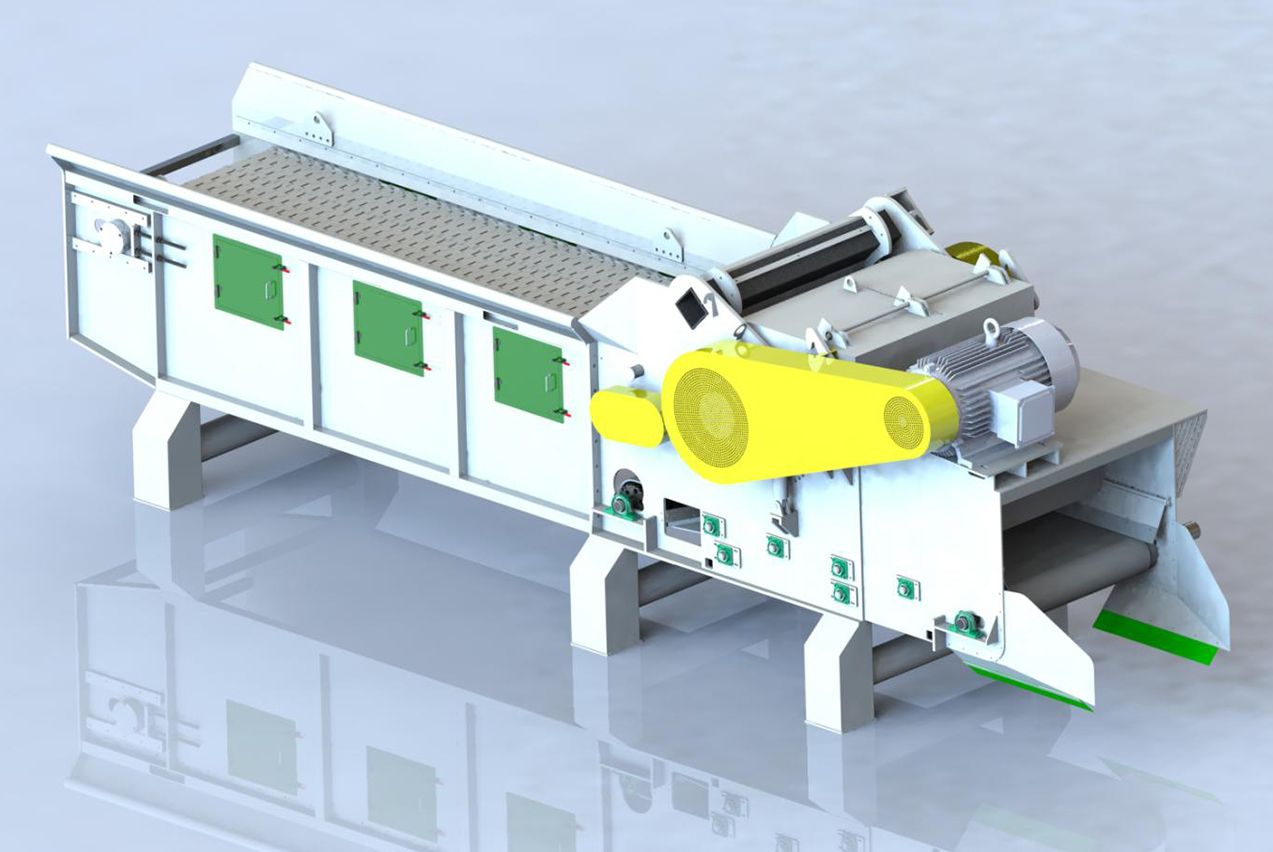
Ring Die Wood Pellet Mill: Design for Efficiency & Quality
Kingwood · May 26, 2026
Ring Die Design: The Core Variable in Pellet Quality
The ring die is the mechanical heart of an industrial wood pellet mill. It is a cylindrical steel component perforated with precisely machined holes — each hole functioning as a compression and extrusion channel through which conditioned biomass is forced under roller pressure to form a densified pellet.
Three die parameters govern output quality:
Compression ratio (L/D ratio): The ratio of hole length to hole diameter. For wood biomass, typical L/D values range from 4:1 to 8:1 depending on feedstock lignin content and target pellet hardness. A higher L/D increases pellet density and surface hardness but raises energy draw per tonne. Under-specifying L/D produces soft pellets that crumble during handling and fail bulk density requirements under ISO 17225 or ENplus standards.
Hole diameter: Typically 6–10 mm for industrial wood pellet production. Diameter selection must match the particle size distribution of the ground feedstock — oversized particles cause bridging and die blockage; particles too fine relative to hole diameter produce excessive fines and reduce throughput.
Hole distribution pattern: Uniform angular and radial distribution across the die face ensures that roller pressure is applied evenly. Non-uniform patterns create localized high-pressure zones that accelerate die wear asymmetrically and introduce density variation across the pellet batch.
Die service life is a direct function of steel grade and heat treatment. Industrial dies are manufactured from carburized alloy steels heat-treated to 55–60 HRC surface hardness to resist the abrasive wear of silica-containing wood biomass. Premature die failure is one of the primary drivers of unplanned downtime in pellet production, making die material specification a total-cost-of-ownership decision, not merely a capital one.
Roller Systems, Drive Mechanics, and Process Integration
Rollers transmit the compressive force that moves conditioned material through the die. In a ring die pellet mill, rollers orbit inside the rotating die, pressing the material bed against the die inner face. The critical engineering parameters are:
Roller-to-die clearance: The gap between the roller surface and the die inner bore, typically set at 0.1–0.3 mm for standard wood biomass. Operators must re-verify this setting after every die change, as dimensional variation between dies affects the effective compression applied to the material layer.
Roller surface profile: Corrugated or slotted roller surfaces grip the material bed and prevent slip, improving feed consistency and reducing energy waste from roller skidding.
Drive system reliability: Industrial pellet mills require consistent shaft speed and torque to maintain stable pellet dimensions. Variable or interrupted torque — caused by undersized drive motors, worn couplings, or inadequate power supply regulation — causes length variation in extruded pellets and increases the fraction of fines in the output.
Kingwood’s ring die pellet mills, including the horizontal JZWH-860, are engineered with robust drive assemblies that maintain rated torque across the full operating range, supporting stable production at 4–5 t/h of finished biomass pellets.
Cooling, Conditioning, and Automation: Closing the Quality Loop
Steam conditioning before the die is as important as the die itself. Introducing controlled steam raises feedstock temperature and plasticizes lignin — the natural binder in wood fiber — reducing the energy required for pellet formation and improving inter-particle bonding. Target moisture at the conditioner outlet for wood feedstocks is 14–17%. Moisture below this range increases die friction and energy consumption; moisture above it produces soft, high-moisture pellets that fail storage stability requirements.
Post-die cooling is non-negotiable for commercial-grade pellet fuel. Pellets exit the die at 70–90 °C with surface moisture elevated by the steam conditioning process. A counter-flow cooler reduces pellet temperature to within 3–5 °C of ambient and moisture content to below 15% — the threshold required under EU standard EN ISO 17225, the U.S. PFI standard, and Japan’s pellet fuel specification. Kingwood counter-flow coolers are designed as integrated components of complete wet-feed pellet production lines, ensuring thermal and moisture targets are consistently met before downstream packaging.
Automation and PLC control close the quality loop by removing human variability from critical process parameters. Modern pellet production lines controlled by PLC systems continuously monitor feed rate, conditioner temperature, steam flow, and roller pressure, adjusting each in real time to maintain target output specifications. This is particularly important when feedstock moisture or particle size varies across incoming raw material batches — a common operational reality in commercial wood pellet facilities sourcing from multiple fiber suppliers.
Kingwood’s Three-Standardization Framework — Integrated, Dust-Free, and Automated production lines — embeds automation and enclosed processing as design standards across its complete line configurations, not as optional upgrades. Production lines designed under this framework have supported projects from 1 t/h pilot installations to 30 t/h commercial facilities in Chongqing, China, and 24 t/h export lines in Vietnam.
For upstream size reduction before pelletizing, Kingwood’s XPJ1250/XPJ1400 Biomass Wood Crusher provides the coarse grinding capacity required to feed ring die mills with properly sized biomass material.
Jiangsu Kingwood Industrial Co., Ltd. has been engineering biomass pellet equipment since 1999. Headquartered at #568 Hongsheng Road, Liyang City, Jiangsu Province, China, Kingwood holds ISO 9001, ISO 14001, and CE certifications and is listed on China’s NEEQ exchange under stock code 871765. For technical specifications on ring die pellet mill configurations, contact the Kingwood engineering team directly.
FAQ
What role does ring die geometry play in pellet quality?
The ring die's hole diameter, compression ratio (L/D ratio), and hole distribution pattern determine how uniformly raw material is compressed and extruded. An uneven hole layout creates pressure differentials that produce inconsistent pellet density and surface finish. A well-engineered die maintains uniform compression across the entire die face, yielding pellets with consistent length, hardness, and calorific value.
How do roller design and roller gap adjustment affect production efficiency?
Rollers apply the compressive force that drives material through the die holes. The gap between the roller surface and the inner face of the ring die — typically 0.1–0.3 mm for wood biomass — must be calibrated to match raw material bulk density and moisture. Insufficient gap causes die blockage; excessive gap reduces compression and pellet hardness. Adjustable roller assemblies allow operators to fine-tune this parameter without stopping the line.
Why is cooling system design critical in a ring die pellet mill?
Pellets exit the die at 70–90 °C and with elevated moisture from steam conditioning. Without adequate cooling — typically handled by a counter-flow cooler — pellets remain soft, deform under their own weight in storage, and absorb ambient moisture. A counter-flow cooler reduces pellet temperature to within 3–5 °C of ambient and brings moisture content below 15%, meeting EU and ISO pellet fuel standards.
What materials are ring dies manufactured from, and why does it matter?
Industrial ring dies for wood pellet mills are typically made from alloy steel (e.g., X46Cr13 stainless or 20CrMnTi carburized steel) and heat-treated to 55–60 HRC surface hardness. Harder die steel resists abrasive wear from silica-containing biomass feedstocks, extending die service life and reducing cost per tonne of output. Die material selection directly affects total cost of ownership.
How does automation improve pellet mill performance in an industrial setting?
Automated control systems monitor and adjust feed rate, conditioner temperature, steam injection, and roller pressure in real time. This prevents raw material surges that cause die blocking, maintains consistent moisture conditioning (typically 14–17% moisture at the conditioner outlet for wood), and reduces operator dependency. Modern pellet lines integrating PLC-based automation consistently outperform manually operated equivalents on OEE (Overall Equipment Effectiveness) metrics.
What is the difference between a ring die and a flat die pellet mill for wood biomass?
A ring die pellet mill is designed for continuous, high-throughput industrial production — capacities from 1 t/h to 30+ t/h — with the die rotating around stationary or co-rotating rollers. A flat die mill suits smaller batch volumes. For wood biomass with coarse particle sizes and variable moisture, ring die mills provide more consistent compression, better thermal management, and significantly higher throughput, making them the standard choice for commercial biomass fuel production.
How does hole pattern optimization differ across biomass feedstock types?
Softwood sawdust, hardwood chips, agricultural straw, and energy crops differ in lignin content, fiber structure, and bulk density. Higher-lignin softwoods bond more readily under heat and pressure, allowing larger hole diameters (6–8 mm) and higher L/D ratios. Low-lignin agricultural residues may require smaller holes (4–6 mm), steam conditioning, or binders. Correct hole pattern selection for the specific feedstock is one of the most impactful single decisions in pellet mill configuration.
- Global wood pellet production reached approximately 42 million metric tons in 2023, with industrial-grade pellet mills operating at capacities between 4 and 30+ t/h representing the dominant installed base in commercial facilities. (2024, IEA Bioenergy Task 40 — Global Wood Pellet Industry and Trade Study 2023)
- Pellet mills operating with optimized ring die compression ratios and automated moisture control report specific energy consumption of 45–70 kWh per metric ton of finished pellets for dry wood feedstock, versus 80–120 kWh/t on poorly calibrated equipment. (2023, Biomass Energy Europe — Wood Pellet Production Handbook, Technical Edition)