How Wood Species Selection Impacts Industrial Pellet Quality
Kingwood · May 26, 2026
Wood Species Is a Primary Process Variable, Not a Secondary Decision
In industrial biomass pellet production, raw material selection is an engineering decision with direct downstream consequences. The wood species — or species blend — fed into a pellet mill determines the mechanical behavior of the feedstock during compression, the physical quality of the finished pellet, and its combustion performance in the field.
Industrial procurement teams and pellet plant operators increasingly evaluate wood species selection at the line-design stage, not after commissioning. Understanding the technical distinctions between species categories is essential for specifying the right equipment parameters, achieving target pellet grades, and meeting the quality standards required by end-use markets.
Hardwood vs. Softwood: Divergent Performance Profiles
The broadest feedstock distinction is between hardwood and softwood, and each class produces pellets with meaningfully different characteristics.
Hardwoods — including oak, maple, beech, and acacia — are anatomically denser. When processed through a ring die pellet mill, hardwood feedstock produces pellets with higher bulk density and energy density per kilogram. For applications where sustained, high-output combustion is required — industrial boilers, district heating systems, co-firing plants — hardwood pellets deliver more heat per unit volume. Hardwood pellets also tend to exhibit lower ash content post-combustion, which reduces maintenance intervals and supports cleaner operation in automated boiler systems.
Softwoods — including pine, spruce, and fir — are lower in density but higher in natural resin content. This composition accelerates ignition and supports rapid flame establishment, making softwood pellets suitable for residential stoves and smaller commercial boilers with fast heat-demand cycles. Softwood pellets also have lower ash fusion temperatures compared to some hardwood species, which reduces clinker formation risk — a practical advantage for pellet burner maintenance.
The critical process implication: hardwood feedstock requires higher compression ratios at the ring die to achieve cohesive pellet formation, while softwood’s resin content acts as a natural binder that can ease pelletizing but may require adjusted drying parameters to prevent over-compression or surface cracking.
Ash Content, Durability, and ISO Grade Compliance
Pellet quality for B2B and export markets is governed by grading standards — most notably ISO 17225-2, which classifies wood pellets into grades A1, A2, and B based on ash content, moisture, calorific value, and mechanical durability. Wood species selection is the single largest determinant of which grade a production line can consistently achieve.
| Quality Parameter | Hardwood Pellets | Softwood Pellets |
|---|---|---|
| Energy density | Higher | Moderate |
| Ash content | Generally lower | Variable by species |
| Ignition rate | Slower | Faster |
| Clinker risk | Moderate | Lower |
| Pellet durability | High | High (with correct die spec) |
For operators targeting ISO 17225-2 Class A1 — the grade required by most European utility buyers and premium residential markets — hardwood species from low-ash feedstock sources typically provide the most reliable compliance pathway. For producers supplying industrial process heat applications with less stringent ash specifications, softwood or mixed-species pellets may offer a lower feedstock cost while still meeting Class B or equivalent requirements.
Kingwood’s biomass pellet production lines are designed with this grading logic in mind. The wet-feed line architecture — integrating drum chippers, hammer mills, drum dryers, ring die pellet mills, and counter-flow coolers in a fully enclosed, dust-controlled sequence — allows operators to tune each processing stage to the specific wood species or blend in use. Die compression ratio, roller gap, dryer retention time, and cooler airflow are all configurable to feedstock density and moisture profile. See how Kingwood’s complete wet-feed pellet line is configured for high-moisture wood chip inputs.
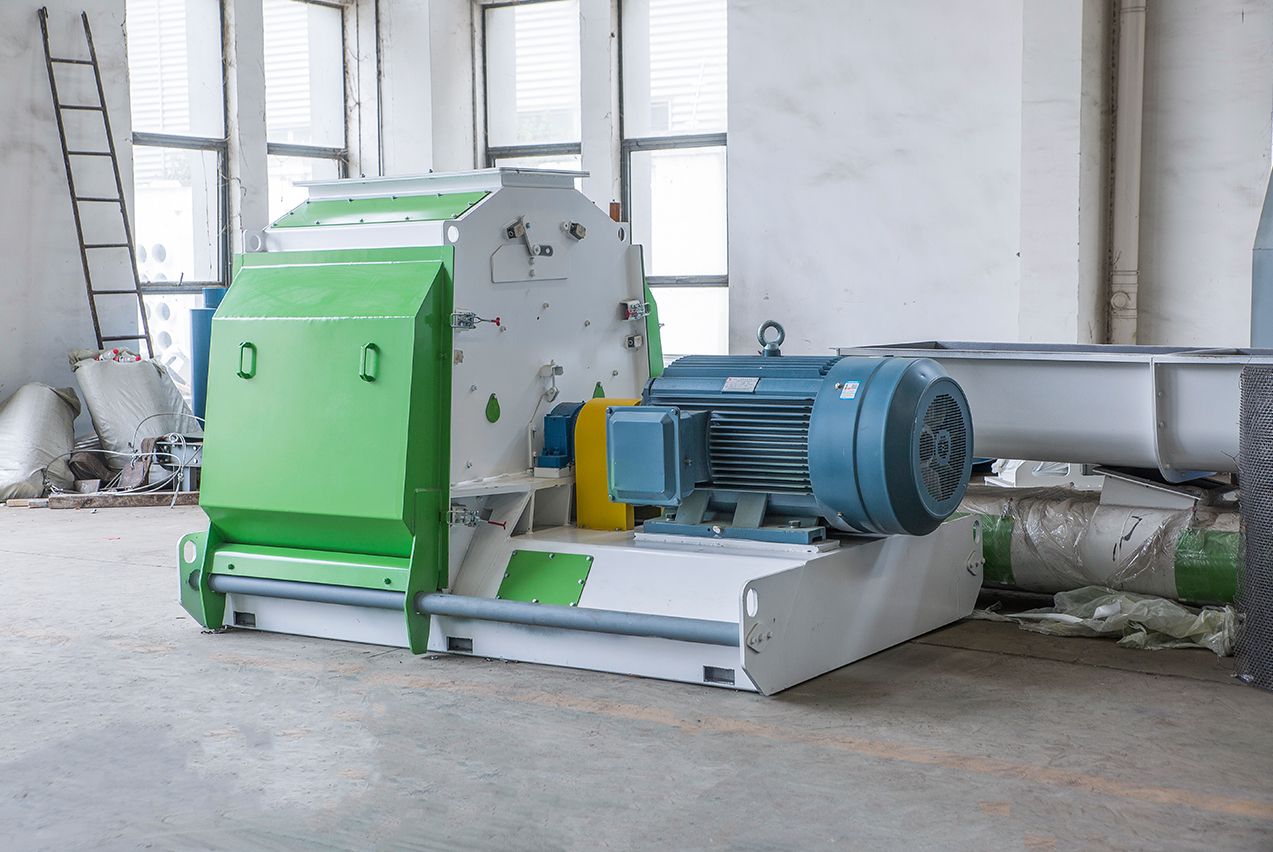
For high-throughput size-reduction of varied wood species before pelletizing, Kingwood’s FSP80T/FSP100T/FSP120T/FSP140T Biomass Wood Hammer Mill with 84/108/132/144 Knives provides consistent particle sizing across hardwood and softwood feedstocks — a prerequisite for uniform pellet density and die longevity.
Blended Feedstock and Sustainability Sourcing
Mixed-species blending is a common operational strategy for producers who cannot guarantee consistent single-species supply or who want to optimize pellet characteristics across multiple performance metrics simultaneously. A hardwood-softwood blend can be engineered to balance energy density, ignition behavior, and ash content — effectively achieving a performance profile that neither species alone would produce.
Blending requires careful upstream size reduction and drying to homogenize particle size and moisture across species with different initial densities and water absorption rates. Kingwood’s integrated line design handles this through sequential processing: drum chipping to uniform chip size, hammer milling to target particle distribution, and drum drying to bring blended moisture content below 15% before the pellet mill.
Beyond process engineering, species sourcing carries commercial and regulatory weight. Biomass pellets exported to EU member states, Japan, and increasingly Southeast Asian markets face sustainability certification requirements tied to forest origin. FSC-certified or equivalent chain-of-custody documentation is now a standard B2B procurement requirement for utility-scale buyers. Producers who can demonstrate certified wood sourcing — and who operate equipment that maintains pellet quality consistency across certified supply chains — hold a measurable commercial advantage.
Kingwood has served industrial pellet producers across 30 countries, with reference projects including a 24 t/h wood chip pellet production line in Vietnam (2023) and a 12 t/h line in Vietnam (2024) achieving payback in 23 months. In each deployment, feedstock species composition was a primary factor in line configuration — confirming that wood species selection is not a downstream quality variable but an upstream engineering input.
FAQ
Do hardwood or softwood pellets produce more energy per kilogram?
Hardwood pellets — from species such as oak and maple — have higher density and typically deliver greater energy output per kilogram burned. This makes them preferable for high-demand applications including commercial heating systems and industrial process heat.
Why do softwood pellets ignite faster than hardwood pellets?
Softwoods such as pine and spruce have lower bulk density and higher resin content, which accelerates ignition. This characteristic makes softwood pellets well-suited for applications requiring rapid heat-up cycles rather than sustained high-output combustion.
How does wood species affect ash content in biomass pellets?
Hardwood species generally produce pellets with lower ash content after combustion, reducing the frequency of ash removal and supporting cleaner boiler or stove operation. Softwood pellets typically have lower ash fusion temperatures, which lowers the risk of clinker formation in pellet burners.
Can industrial pellet mills process mixed hardwood and softwood feedstock?
Yes. Many industrial operators use blended feedstocks to balance energy density, ignition characteristics, and ash behavior. Kingwood's wet-feed pellet production lines are engineered to handle variable-moisture, mixed-species biomass inputs through integrated crushing, drying, and pelletizing stages.
What moisture content is required before wood biomass enters a pellet mill?
Feedstock moisture should be below 15% at the pelletizing stage for consistent pellet quality. Kingwood's complete production lines incorporate drum dryers upstream of the pellet mill to condition high-moisture biomass — including fresh wood chips — before compaction.
Does wood species sourcing affect regulatory compliance or export eligibility?
Yes. Pellets destined for European, Japanese, or North American markets are subject to sustainability certification requirements such as FSC (Forest Stewardship Council). Sourcing from certified, sustainably managed forests is increasingly a commercial prerequisite for B2B biomass fuel buyers.
How does Kingwood's equipment handle species-specific variation in raw material density?
Kingwood pellet mills, including the JWZL and JZWH series, are built with ring die assemblies designed for consistent compression across varying feedstock densities. Production line parameters — die compression ratio, roller gap, and dryer retention time — can be configured to the specific wood species or blend being processed.
- Global industrial wood pellet demand reached approximately 32 million metric tons in 2023, with energy density and ash content among the primary quality criteria for utility-grade procurement. (2023, IEA Bioenergy Task 32 — Biomass Combustion and Co-firing, 2023 Annual Report)
- ISO 17225-2 defines pellet quality classes (A1, A2, B) with ash content thresholds ranging from ≤0.7% (A1) to ≤3.0% (B), directly linking wood species selection to tradeable pellet grade. (2021, ISO 17225-2:2021 — Solid Biofuels: Fuel Specifications and Classes for Wood Pellets)