How Kingwood Pellet Press Technology Reduces Carbon Emissions
Kingwood · May 26, 2026
Carbon Emissions and the Pellet Manufacturing Process
Biomass pellet production sits at the intersection of renewable energy and industrial manufacturing. Done correctly, it displaces coal and heavy fuel oil with a carbon-neutral feedstock. Done poorly, it generates unnecessary process emissions and wastes energy at every stage. The difference lies almost entirely in equipment design and production line architecture.
Kingwood — formally Jiangsu Kingwood Industrial Co., Ltd., founded in 1999 and listed on the NEEQ (stock code: 871765) — has spent 27 years engineering pellet mills and complete production lines specifically to minimize both process energy consumption and atmospheric emissions. The technical choices embedded in Kingwood equipment are deliberate responses to measurable environmental parameters, not marketing positions.
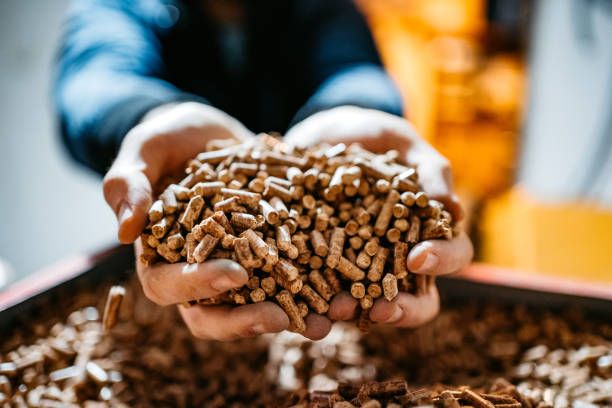
Kingwood biomass pellets produced on these lines deliver a calorific value of 4,800 kcal/kg, moisture content below 15%, sulfur content below 0.3%, and ash content below 18%. All combustion emission indicators fall below GB13271-2001, China’s national Emission Standard of Air Pollutants for Boilers. These figures are verifiable at the stack, not estimated.
Key Engineering Features That Lower Carbon Intensity
1. Energy-Optimized Pellet Mill Drive Systems
Mechanical efficiency in the pelletizing stage directly determines how much electrical energy — and therefore grid-sourced carbon — is consumed per ton of output. Kingwood’s vertical pellet mill series, including the JWZL-688D (3–3.5 t/h) and JWZL-928 (4–5 t/h), are engineered with optimized ring die geometry and roller pressure distribution to reduce specific energy consumption per ton of pellets produced. Reducing kilowatt-hours per ton is a direct carbon reduction lever in any grid-connected facility.
2. Integrated Waste Heat Recovery at the Drying Stage
Biomass feedstock entering a wet-feed production line typically carries moisture levels that require active drying before pelletizing can proceed. Kingwood’s drum dryer is designed to accept recirculated waste heat from upstream and downstream thermal processes, reducing the primary fuel load needed to reach target moisture levels. This is not a supplementary feature — it is engineered into the production line layout from the design phase, and it materially reduces the combustion energy input per production run.
The counter-flow cooler downstream of the pellet mill also plays a role: by cooling pellets with ambient air in a controlled counter-flow pattern, it recovers thermal energy that would otherwise be vented, while simultaneously bringing pellets to safe storage temperature without moisture re-absorption.
3. Dust-Free Enclosed Processing Under the Three-Standardization Framework
Fugitive dust in a biomass facility is not only a safety and health concern — airborne fine particulates represent material loss and, when combustible, a fire and explosion hazard requiring suppression systems that themselves consume energy. Kingwood’s Three-Standardization Framework mandates Dust-Free production lines as one of its three core pillars, alongside Integrated and Automated configurations.
In practice, this means enclosed conveying, integrated dust collection, and negative-pressure processing zones throughout the line. The 2024 Guizhou facility — documented in the Kingwood case library — demonstrates a full Dust-Free implementation at commercial scale. Operators in that facility work in a clean-air environment while the process captures and recycles fine biomass particles back into the feed stream rather than releasing them to atmosphere.
4. Sustainable Feedstock Compatibility
The carbon profile of a biomass pellet starts with the raw material. Kingwood’s wet-feed production lines are engineered to process a wide range of high-moisture biomass: wood chips, sawdust, forestry residues, agricultural straw, and similar materials that are byproducts of existing industries. Processing these materials into dense, standardized pellets rather than disposing of or open-burning them converts a potential emission source into a low-carbon fuel product.
The hammer mill and drum chipper in the Kingwood auxiliary equipment range handle size reduction upstream of drying and pelletizing, ensuring consistent particle size that optimizes both dryer efficiency and ring die performance in the pellet mill.
From Equipment Features to Verified Outcomes
Technical specifications only become meaningful when they produce verified outcomes at operating facilities. Kingwood has planned and designed over 2,000 production line projects across more than 30 countries. Several recent deployments illustrate the carbon and economic case simultaneously:
- Vietnam, 2024 — 12 t/h wood pellet line: Full project documentation shows a 23-month capital payback period, driven in part by the 40–50% fuel cost reduction that biomass pellets deliver versus fossil fuel alternatives.
- Vietnam, 2023 — 24 t/h wood chip pellet line: A high-throughput facility demonstrating that Kingwood’s Integrated production line architecture scales without proportional increases in specific energy consumption.
- Beijing, 2024 — First biomass pellet demonstration project: Documented here, this project operates under direct regulatory scrutiny, requiring emission performance that meets the capital’s strict air quality standards.
Complete Kingwood production lines can be designed for annual capacities up to 200,000 metric tons, with the full process — crushing, coarse grinding, drying, fine grinding, pelletizing, and packaging — fully automated and enclosed.
Selecting the Right Pellet Mill for Low-Emission Operation
For buyers evaluating pellet mill specifications against carbon reduction targets, the relevant variables are throughput efficiency, specific energy consumption, and integration with drying and cooling equipment. Kingwood’s current vertical pellet mill range spans from the JWZL-420 (1–1.5 t/h) through to the JWZL-928 (4–5 t/h), with the horizontal JZWH-860 offering a 4–5 t/h alternative for facilities with different spatial constraints. The JWZL-1068 is available for larger configurations — contact Kingwood sales for capacity specifications.
Kingwood holds ISO 9001, ISO 14001, and CE certifications, and is recognized as a Jiangsu Provincial High-Tech Enterprise. The ISO 14001 certification in particular reflects a documented environmental management system applied to manufacturing operations, not only to the products manufactured.
For project-specific guidance on matching equipment configuration to feedstock type, moisture content, and emissions compliance requirements, contact the Kingwood engineering team directly.
FAQ
How does a Kingwood pellet press reduce carbon emissions compared to fossil fuel production?
Kingwood pellet mills process renewable biomass feedstocks into high-density fuel pellets that replace coal and other fossil fuels. Kingwood biomass pellets deliver a calorific value of 4,800 kcal/kg with sulfur content below 0.3% — well under the limits set by GB13271-2001 — and can reduce fuel costs by 40–50% versus conventional fossil fuels.
What role does waste heat recovery play in Kingwood's pellet manufacturing process?
Kingwood's production line design incorporates waste heat recovery at the drying stage. Heat generated during pelletizing and drying is recaptured and redirected into the drum dryer circuit, reducing primary energy input and lowering the overall carbon intensity of each production run.
What raw materials are compatible with Kingwood pellet mills?
Kingwood's wet-feed pellet production lines handle high-moisture biomass including wood chips, sawdust, agricultural residues, and forestry byproducts. The integrated process covers crushing, coarse grinding, drying, fine grinding, pelletizing, and packaging — all in an enclosed, dust-controlled environment.
What emissions standards do Kingwood biomass pellets meet?
Kingwood biomass pellets meet or exceed multiple international standards: moisture below 15% (EU standard), calorific value above 2,500 kcal/kg (USA standard), sulfur content ≤0.5% (Japan standard), ash content below 20% (ISO standard), and dioxin content ≤1.0 ng TEQ (China GB standard). All combustion emission indicators fall below GB13271-2001.
What is the Three-Standardization Framework and how does it relate to clean production?
Kingwood's Three-Standardization Framework covers Integrated, Dust-Free, and Automated production lines. The Dust-Free pillar directly addresses airborne particulate emissions at the plant level, enabling customers to operate biomass pellet facilities that comply with increasingly strict environmental regulations.
Which Kingwood pellet mill models are suited for large-scale, low-emission production?
For high-throughput operations, the JWZL-928 (4–5 t/h) and JWZL-688D (3–3.5 t/h) vertical pellet mills offer efficient pelletizing with minimal mechanical losses. The horizontal JZWH-860 also delivers 4–5 t/h and suits facilities requiring a compact floor layout. Complete lines can be designed up to 200,000 tons per year.
Where has Kingwood deployed carbon-conscious pellet production lines?
Documented deployments include a 24 t/h wood chip pellet line in Vietnam (2023), a 12 t/h line in Vietnam with a 23-month payback period (2024), a 30 t/h line in Chongqing, China (2021), and Beijing's first biomass pellet demonstration project (2024). A Dust-Free facility was also commissioned in Guizhou, China in 2024.
- Kingwood biomass pellets achieve a calorific value of 4,800 kcal/kg with sulfur content below 0.3% and ash content below 18%, meeting or exceeding Chinese, EU, US, Japanese, and ISO combustion standards. (2025, Kingwood product specification sheet, kingwoodpellet.com)
- Kingwood has planned and designed over 2,000 biomass pellet production line projects across more than 30 countries since its founding in 1999. (2025, Kingwood company profile, kingwoodpellet.com)