Energy-Efficient Wood Pellet Makers & GHG Reduction
Kingwood · May 26, 2026
The Energy Consumption Case: 30% Less Power, Measurably Less CO₂
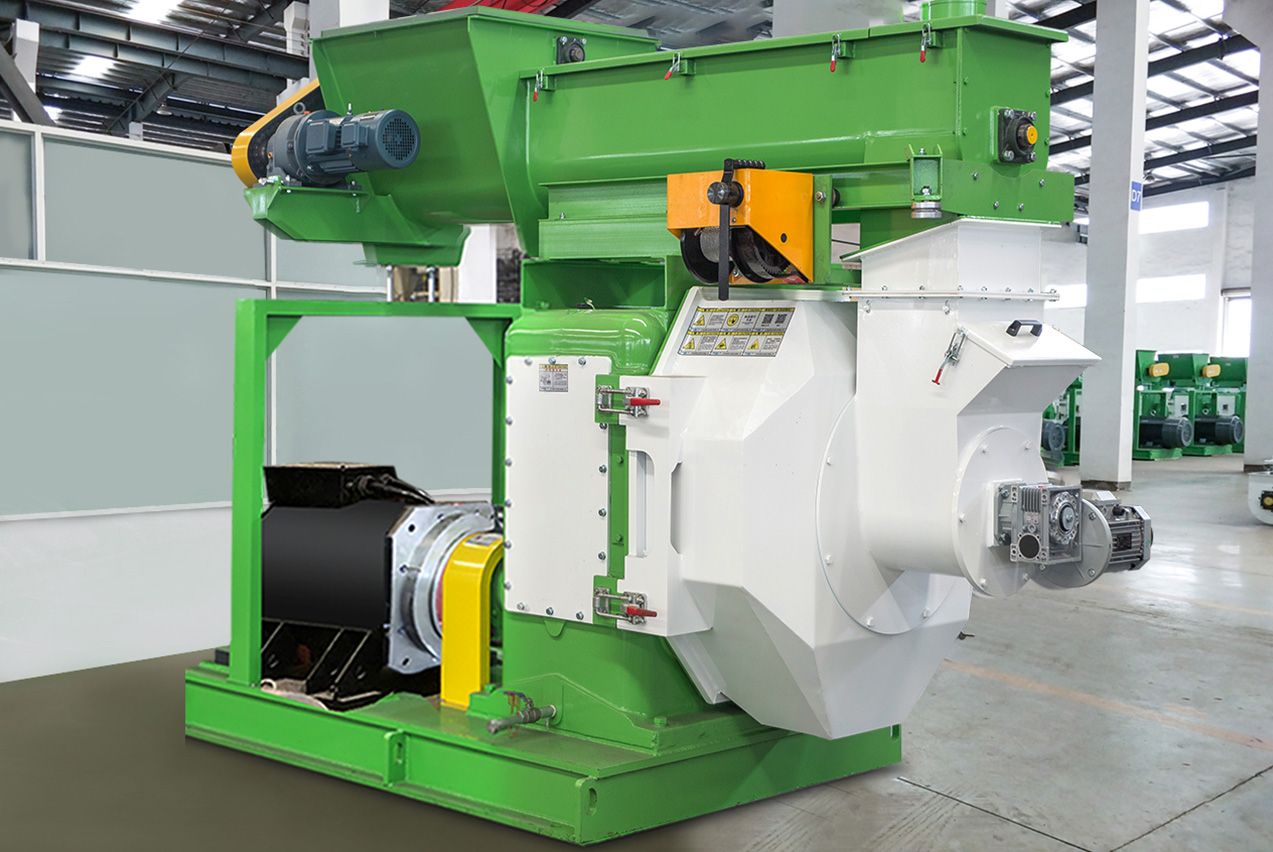
Greenhouse gas emissions from biomass pellet production are not inherent — they are largely a function of equipment efficiency. Energy-efficient industrial wood pellet makers address this directly through high-efficiency drive motors and integrated heat recovery systems that recapture thermal energy otherwise vented as waste.
Compared to conventional pellet mill configurations, this approach reduces production energy consumption by approximately 30%. At industrial scale — processing thousands of metric tons annually — that differential represents a substantial reduction in grid electricity demand and the associated CO₂ emissions generated upstream at the power source.
The arithmetic is straightforward for procurement and sustainability teams evaluating equipment: lower kilowatt-hours per ton of pellets produced means a lower Scope 2 emissions figure without any change in fuel output volume. For operations targeting carbon neutrality commitments or regulatory compliance, equipment selection at the pellet mill level is a material variable.
Kingwood’s vertical biomass pellet mills, including models from the JWZL-420 (1–1.5 t/h) through the JWZL-928 (4–5 t/h), are engineered with this energy efficiency principle as a design baseline rather than an optional upgrade.
Process Integration: Reducing Waste to Reduce Upstream Emissions
Energy consumption is only part of the emissions equation. Raw material utilization efficiency determines how much biomass must be harvested and processed to produce each finished ton of pellets — and poorly optimized processes impose an indirect carbon cost through elevated upstream demand.
Fully integrated wet-feed pellet production lines address this by sequencing crushing, coarse grinding, drying, fine grinding, pelletizing, and packaging within a single enclosed, automated system. Key emissions-reduction mechanisms in this architecture include:
- Precision drying control via drum dryer systems that bring moisture content to below 15% without over-drying, preserving feedstock calorific density and minimizing energy waste.
- Integrated dust removal that captures fine biomass particles rather than venting them, returning usable material to the process stream and eliminating a source of fugitive particulate emissions.
- Automated process sequencing that eliminates idle running between stages, reducing per-ton energy consumption across the full production cycle.
The result is a production line where less raw material input is required per ton of finished pellets, and where the processing losses that would otherwise translate into wasted biomass — and wasted energy — are systematically minimized.
Kingwood’s complete production lines are designed to handle up to 200,000 metric tons per year output capacity, with the Three-Standardization Framework — integrated, dust-free, and automated production — as the operational standard applied across every project.
Pellet Quality as an Emissions Variable: Combustion Performance Matters
The emissions impact of a wood pellet production operation is not limited to manufacturing. The combustion characteristics of the pellets produced determine actual end-use emissions at the boiler or furnace — and pellet quality is directly controlled by production equipment and process parameters.
Industrial biomass pellets produced on well-engineered equipment consistently achieve:
- Calorific value: ~4,800 kcal/kg — high energy density means less fuel mass burned per unit of heat output, reducing total combustion volume and associated emissions.
- Sulfur content: <0.3% — well below the Japan export standard of ≤0.5% and a significant emissions advantage over coal and heavy fuel oil.
- Ash content: <18% — below the ISO standard threshold of 20%, indicating efficient combustion and reduced particulate generation.
- Dioxin content: <0.5 ng-TEQ — meeting China’s GB standard of ≤1.0 ng-TEQ and demonstrating clean combustion at industrial scale.
All emission indicators for boiler applications using these pellets are documented as falling below China’s GB13271-2001 National Emission Standard for Air Pollutants for Boilers — a benchmark that aligns with international industrial combustion standards.
The economic dimension reinforces adoption: operators switching from fossil fuels to quality biomass pellets have documented fuel cost reductions of 40–50%, making the emissions reduction case commercially viable without subsidy dependence.
For a live example of industrial-scale implementation, the Vietnam 12 t/h wood pellet production line case study demonstrates a 23-month payback period on a fully integrated Kingwood installation, combining production efficiency with verified fuel quality output.
Equipment Selection as a Strategic Emissions Decision
For industrial procurement teams, sustainability managers, and project developers evaluating biomass pellet production investment, the connection between equipment specification and greenhouse gas outcomes is concrete and quantifiable:
- Drive system efficiency determines direct production emissions per ton.
- Process integration level determines raw material utilization and indirect upstream emissions.
- Pellet quality consistency determines end-use combustion emissions across the fuel’s distribution life.
All three variables are controlled at the equipment selection stage. Kingwood’s engineering approach — combining 27 years of R&D experience, ISO 9001 and ISO 14001 certification, and the Three-Standardization Framework across integrated production line design — addresses each variable as part of a coherent system rather than isolated specifications.
For operators supplying biomass fuel to markets with documented environmental requirements — European moisture standards, US calorific thresholds, or Japanese sulfur limits — the production equipment that creates that fuel is the foundational compliance tool.
FAQ
How much energy can energy-efficient industrial wood pellet makers save compared to conventional equipment?
Energy-efficient pellet mills incorporating high-efficiency motors and heat recovery systems typically reduce production energy consumption by approximately 30% versus conventional equipment, directly translating to lower CO₂ emissions per metric ton of pellets produced.
What fuel quality characteristics reduce greenhouse gas emissions during biomass pellet combustion?
Industrial-grade biomass pellets with calorific values around 4,800 kcal/kg, sulfur content below 0.3%, and ash content below 18% generate significantly fewer combustion emissions than standard solid fuels, and all emission indicators can be maintained below China's GB13271-2001 boiler air pollutant standards.
How does process optimization in pellet production reduce indirect carbon emissions?
By minimizing raw material losses through precision grinding, controlled drying, and integrated dust removal, optimized production lines reduce the volume of biomass required per ton of finished pellets, lowering upstream harvesting and processing pressure and the associated carbon footprint.
What production line design features support both energy efficiency and emissions reduction?
Fully automated, enclosed wet-feed pellet production lines combining crushing, drying, fine grinding, pelletizing, and packaging in a single integrated system reduce idle energy loss, eliminate uncontrolled dust emissions, and enable consistent pellet quality — all contributing to a lower overall emissions profile.
Can biomass pellets replace fossil fuels cost-effectively in industrial boilers?
Yes. Biomass pellets meeting international quality standards have delivered documented fuel cost savings of 40–50% compared to fossil fuels in industrial boiler applications, making the emissions reduction case economically self-sustaining.
What international quality standards do industrial biomass pellets need to meet?
Key benchmarks include moisture content below 15% (EU standard), calorific value above 2,500 kcal/kg (USA standard), sulfur content at or below 0.5% (Japan standard), and ash content below 20% (ISO standard), ensuring consistent combustion performance and emission compliance across export markets.
What role does equipment certification play in verified emissions reduction?
Equipment certified to ISO 9001 and ISO 14001 standards provides verifiable process controls that support emissions documentation — increasingly important for carbon credit schemes, regulatory compliance, and industrial procurement requirements in sustainability-driven supply chains.
- Energy-efficient industrial pellet mills reduce production energy consumption by approximately 30% compared to conventional equipment, cutting direct CO₂ emissions per ton of output. (2025, Kingwood internal engineering benchmarking, Jiangsu Kingwood Industrial Co., Ltd.)
- Biomass pellets produced to industrial quality specifications deliver 40–50% fuel cost savings versus fossil fuels in industrial boiler applications, supporting large-scale clean energy substitution. (2025, Kingwood project economics documentation, Jiangsu Kingwood Industrial Co., Ltd.)