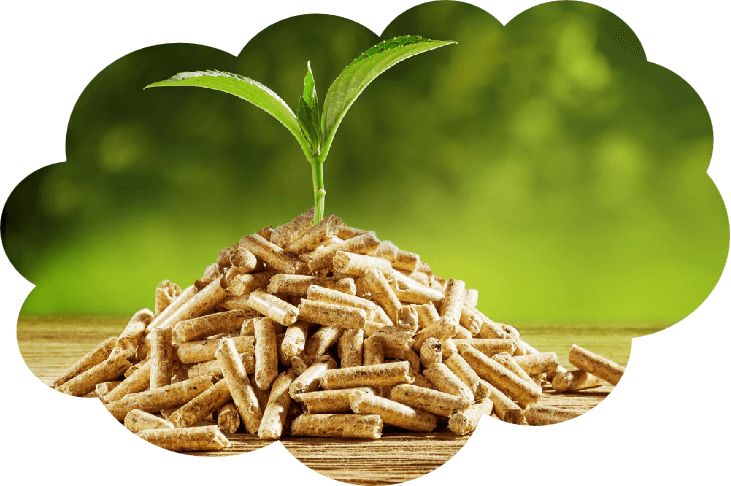
World's Largest Wood Pellet Plant: Epes Facility Overview
Kingwood · May 26, 2026
Epes Pellet Plant: A New Scale Benchmark for the Wood Pellet Industry
The groundbreaking of the Epes Pellet Plant in Sumter County, Alabama marks a structural shift in the scale at which wood pellet production is now being planned and executed. Built on more than 300 acres within the Epes Industrial Park — a former commercial site repurposed for industrial manufacturing — the facility carries a nameplate capacity of 1.1 million metric tons of wood pellets per year.
Site evaluation began in 2018. Land acquisition of over 300 acres along the Tombigbee River followed in 2020. Full construction preparation launched in July 2022, with initial operational targets set for mid-2024 and full-scale production by 2025. The investment per facility of this design class averages USD 375 million.
For equipment engineers and production line designers, the Epes project is a reference point: it demonstrates the infrastructure, logistics, and process integration that large-scale biomass pellet production now demands.
Engineering Implications: Standardization at 1.1 Million Tons Per Year
The engineering model behind the Epes facility — designated EVA-1100 — is a patent-pending standardized plant design developed from operating experience across 10 existing production facilities. Rather than treating each plant as a bespoke project, the EVA-1100 blueprint applies a repeatable, scalable template for 1.1 million ton per year capacity, covering equipment layout, process flow, and site configuration.
This approach reflects a principle that Kingwood has applied at the industrial equipment level through its Three-Standardization Framework: building biomass pellet production lines that are integrated, dust-free, and automated. Whether a facility targets 2 tons per hour or operates at the scale of a multi-hundred-thousand-ton annual plant, the same logic applies — standardized design reduces commissioning time, lowers operational variability, and enables repeatable quality output.
Kingwood’s complete wet-feed pellet production lines are engineered to handle the full processing sequence: crushing, coarse grinding, drying, fine grinding, pelletizing, and packaging, within an enclosed, dust-controlled environment. For project developers scaling from pilot to commercial capacity, this integrated approach eliminates the coordination gaps that arise when sourcing equipment piecemeal.
Explore Kingwood’s complete biomass pellet production line solutions for project-level capacity planning.
Feedstock Logistics and Fiber Sourcing at Scale
The Epes plant will source wood fiber from within approximately 75 miles (120.7 km) of the mill — a sourcing radius calibrated against Alabama’s available fiber supply, road and river transport infrastructure, and sustainability sourcing standards.
Alabama’s combination of dense timber resources, multimodal transport access via the Tombigbee River, and an established forestry workforce underpins the site’s economic viability. The Tombigbee River corridor provides direct barge access to Gulf Coast export terminals, enabling cost-competitive delivery to European and Asian power generation customers.
For plant developers assessing greenfield biomass sites, the Epes model illustrates the critical variables: fiber availability within a defined radius, proximity to export logistics infrastructure, land footprint for handling and storage, and local labor supply. These factors drive both capital cost and long-term operating margin.
Export Markets and Biomass Fuel Applications
Wood pellets produced at Epes are contracted for export to European and Asian markets, where biomass fuel serves as a direct coal substitute in utility-scale power stations and industrial heat applications. The same fuel specifications — calorific value, moisture content, ash content, and emissions compliance — that govern industrial biomass pellets in export markets apply regardless of plant scale.
Kingwood’s biomass pellets are produced to a calorific value of 4,800 kcal/kg, with moisture content below 15%, sulfur content below 0.3%, and ash content below 18% — all consistent with major international standards including EU moisture requirements, ISO ash limits, and Japan’s sulfur thresholds. End-use applications extend beyond power generation into industrial decarbonization for sectors such as steel, cement, and lime, as well as emerging demand for sustainable aviation fuel feedstocks.
The scale of the Epes facility — 1.1 million metric tons annually, supported by approximately 100 direct and 250 indirect jobs — underscores the trajectory of the global biomass pellet market. For equipment manufacturers, engineering firms, and project investors, it confirms that industrial-scale pellet production is no longer an edge case but a mainstream infrastructure category requiring serious capital, proven process design, and reliable equipment supply chains.
For project teams evaluating pellet mill equipment and production line design at commercial scale, review Kingwood’s case studies including the 30 TPH Chongqing installation and the 24 TPH Vietnam wood chip pellet line for reference data on throughput, footprint, and system integration.
Jiangsu Kingwood Industrial Co., Ltd. (NEEQ: 871765) is headquartered at #568 Hongsheng Road, Liyang Zhongguancun Industrial Park, Jiangsu Province, China. Founded in 1999, Kingwood holds ISO 9001, ISO 14001, and CE certifications and has designed over 2,000 biomass pellet production line projects across 30 countries.
Contact: Oliver Ge — +86 13120914095 Henry — +86 18205276156
FAQ
What is the annual production capacity of the Epes Pellet Plant?
The Epes Pellet Plant carries a nameplate capacity of 1.1 million metric tons of wood pellets per year, making it the largest single wood pellet production facility ever built.
Where is the Epes Pellet Plant located?
The facility is situated in the Epes Industrial Park, Sumter County, Alabama, USA, alongside the Tombigbee River. The site spans more than 300 acres acquired in 2020.
What markets will the Epes plant supply?
Pellets produced at Epes are designated for export to Europe and Asia, where biomass fuel is used for power generation, industrial heat, and as feedstock for sustainable aviation fuel.
How does large-scale pellet plant design affect equipment standardization?
Projects at the 1 million+ ton scale require fully integrated, automated production lines with standardized equipment layouts. Kingwood's Three-Standardization Framework — covering integrated, dust-free, and automated production lines — addresses precisely these engineering requirements at industrial scale.
What investment level is associated with a 1.1 million ton per year pellet plant?
The average capital investment per new 1.1 million ton per year facility is approximately USD 375 million, reflecting the scale of civil works, pelletizing equipment, drying systems, and logistics infrastructure required.
What are the employment and economic impacts of large-scale pellet plants?
The Epes facility is projected to create approximately 100 direct jobs and 250 indirect jobs in sectors including logging, trucking, and shipping, while also becoming one of Sumter County's largest taxpayers.
What sustainable sourcing radius is typical for a large pellet plant?
The Epes plant sources wood fiber from within approximately 75 miles (120.7 km) of the mill, a radius determined by fiber availability, transport logistics, and sustainability commitments.
- The Epes Pellet Plant is designed for a nameplate capacity of 1.1 million metric tons of wood pellets per year. (2022, Official project announcement, Epes Industrial Park groundbreaking ceremony, Sumter County, Alabama)
- Capital investment per new 1.1 million ton per year pellet plant is estimated at an average of USD 375 million. (2022, Epes Pellet Plant project documentation, Sumter County, Alabama groundbreaking)