Wood Pellet Machine Market: Growth Drivers & Outlook
Kingwood · May 26, 2026
Why the Wood Pellet Machine Market Is Expanding Now
Structural forces — not short-term sentiment — are reshaping global energy procurement. Carbon pricing mechanisms, national renewable portfolio standards, and industrial decarbonization targets are making biomass pellets a bankable long-term fuel strategy for power generators, district heating operators, and process heat users across Europe, Asia-Pacific, and North America.
The downstream effect is direct: as biomass pellet demand scales, so does capital investment in pellet production capacity. Operators who previously relied on spot purchases are increasingly building captive production lines to control feedstock costs and supply security. That shift creates durable, project-based demand for industrial pellet mill equipment — not a commodity cycle, but an infrastructure buildout.
Biomass pellets produced on industrial-grade equipment offer a calorific value of 4,800 kcal/kg, moisture content below 15%, sulfur content below 0.3%, and ash content below 18% — parameters that satisfy ISO, EU, Japanese JIS, and China GB standards simultaneously. These specifications allow pellets to substitute directly for coal or heavy fuel oil in existing boiler infrastructure, reducing fuel costs by 40–50% compared to fossil alternatives while meeting stringent air emission limits.
Technology Advancement as a Competitive Differentiator
Equipment performance is no longer a secondary consideration for biomass investors. Project IRR calculations now depend heavily on throughput reliability, energy consumption per tonne, and maintenance intervals — all of which are equipment-specification questions before they become operational ones.
Kingwood, founded in 1999 and operating from a 25,000 m² production facility in Liyang Zhongguancun Industrial Park, Jiangsu Province, has invested in 27 years of focused R&D through a team of 20 dedicated engineering experts. The result is a product line built around the proprietary Three-Standardization Framework: Integrated production lines, Dust-Free production lines, and Automated production lines. Each pillar addresses a measurable operational risk — supply chain fragmentation, occupational health liability, and labor cost exposure respectively.
The vertical pellet mill range covers four production scales:
| Model | Rated Capacity |
|---|---|
| JWZL-420 | 1–1.5 t/h |
| JWZL-688 | 2–2.3 t/h |
| JWZL-688D | 3–3.5 t/h |
| JWZL-928 | 4–5 t/h |
The horizontal JZWH-860 ring die pellet mill delivers 4–5 t/h for applications where horizontal force-feeding is process-preferred. For greenfield and expansion projects requiring high annual throughput, Kingwood engineers complete wet-feed production lines — covering crushing, coarse grinding, drying, fine grinding, pelletizing, and packaging — with automated process control and enclosed dust removal, scalable to 200,000 metric tons per year.
Improvements in ring die geometry, pellet cooling system design, and supervisory control integration have materially raised production uptime and reduced per-tonne energy draw across the current generation of Kingwood equipment. These are not incremental refinements — they are the engineering variables that determine whether a pellet plant hits its modeled economics.
Proven Projects and the Path to Bankable Returns
Market projections matter less to a capital allocator than a documented payback period on a comparable installation. Kingwood’s project portfolio across 30 countries provides that reference base.
In Vietnam, a 12 t/h wood pellet production line commissioned in 2024 achieved full capital recovery within 23 months — a payback period competitive with most industrial energy infrastructure investments. A separate 24 t/h wood chip pellet production line, also in Vietnam, was completed in 2023, demonstrating that multi-machine configurations scale without proportional increases in site complexity. In China, a 30 t/h wood pellet installation in Chongqing (2021) and Beijing’s first biomass pellet demonstration project (2024) document Kingwood’s capability across both high-throughput commercial sites and technically scrutinized showcase installations.
The Guizhou Dust-Free biomass pellet workshop (2024) illustrates a different dimension of project value: regulatory and ESG compliance. As permitting environments tighten in China and internationally, enclosed dust-free plant design transitions from a premium option to a baseline requirement. Kingwood’s Dust-Free production line standard is engineered to that expectation from the initial layout phase.
These projects are supported by an ISO 9001 and ISO 14001 certified quality system, CE marking, and recognition as a Jiangsu Provincial High-Tech Enterprise and Jiangsu Provincial Specialized & Innovative Niche Leader. Kingwood is listed on the NEEQ (National Equities Exchange and Quotations) under stock code 871765, providing an additional layer of corporate transparency for international partners conducting due diligence.
Positioning for the Next Phase of Market Growth
The global wood pellet machine market is entering a phase where equipment selection directly determines project financiability. Lenders and equity sponsors scrutinize equipment provenance, supplier track record, and production line integration — not just nameplate capacity. Operators who specify machinery from manufacturers with documented international references, verifiable certifications, and engineering support capacity reduce their technology risk profile materially.
Kingwood’s annual biomass fuel production capacity supported by its installed base now reaches 10,000,000 metric tons, with over 2,000 production line projects planned and designed since inception. That scale of reference data underpins engineering decisions that smaller or less-experienced suppliers cannot replicate.
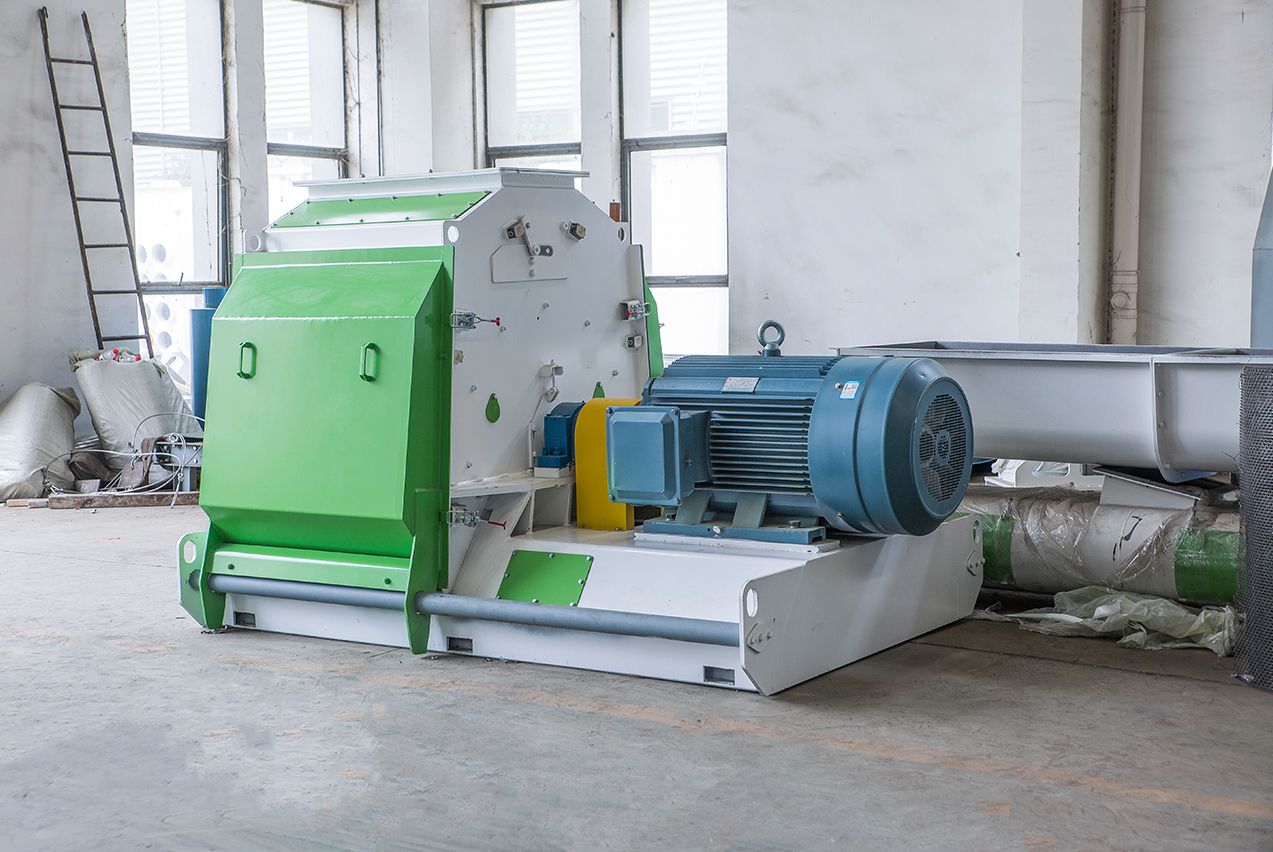
For procurement teams, project developers, and EPC contractors evaluating equipment for new biomass pellet capacity, the combination of a full auxiliary equipment offering — hammer mill, drum chipper, drum dryer, counter-flow cooler, and pellet packaging machine — with single-source line engineering reduces interface risk and shortens commissioning timelines.
The market’s growth trajectory is established. The differentiation between operators who capture that growth and those who absorb its costs will be determined by equipment quality, line integration, and supplier capability.
Jiangsu Kingwood Industrial Co., Ltd. — #568 Hongsheng Road, Liyang City, Jiangsu Province, China | NEEQ: 871765
Let’s Fuel the Sustainable Future
FAQ
What is driving growth in the global wood pellet machine market?
Government renewable energy mandates, carbon reduction targets, and rising fossil fuel costs are the primary structural drivers. Biomass pellets qualify as a low-carbon fuel under frameworks such as the EU Renewable Energy Directive, creating sustained industrial demand for pellet production equipment.
What raw materials can industrial wood pellet machines process?
Industrial pellet mills process wood residues, sawdust, wood chips, agricultural straw, rice husks, and other lignocellulosic biomass. Kingwood's wet-feed production lines handle high-moisture feedstocks through integrated crushing, drying, and pelletizing stages before final packaging.
How much can biomass pellets reduce fuel costs compared to fossil fuels?
Biomass pellets produced on Kingwood equipment can reduce fuel costs by 40–50% versus conventional fossil fuels, based on documented project data from Kingwood installations.
What emission standards do industrial biomass pellets meet?
Biomass pellets produced on Kingwood lines meet all emission indicators below China's GB13271-2001 Boiler Air Pollutant Emission Standard. Key specifications include moisture content below 15%, sulfur content below 0.3%, ash content below 18%, and dioxin content below 0.5 ng TEQ/m³.
What production capacities are available for industrial pellet lines?
Kingwood vertical pellet mills range from 1 t/h (JWZL-420) to 4–5 t/h (JWZL-928), with the horizontal JZWH-860 also rated at 4–5 t/h. Complete integrated production lines are engineered to capacities up to 200,000 metric tons per year.
What is Kingwood's Three-Standardization Framework?
The Three-Standardization Framework is Kingwood's proprietary manufacturing standard built on three pillars: Integrated production lines, Dust-Free production lines, and Automated production lines. It drives quality consistency, operator safety, and process efficiency across every installation.
Has Kingwood delivered projects outside China?
Yes. Kingwood has supplied equipment and complete lines across 30 countries. Recent documented international projects include a 24 t/h wood chip pellet production line in Vietnam (2023) and a 12 t/h wood pellet line in Vietnam (2024) that achieved full investment payback within 23 months.
- Global biomass energy capacity additions reached a record 9.7 GW in 2023, reinforcing sustained industrial demand for pellet production equipment. (2023, International Renewable Energy Agency (IRENA), Renewable Power Generation Costs 2023)
- The EU Renewable Energy Directive (RED III) targets a 42.5% renewable energy share by 2030, with solid biomass remaining a primary contributor to industrial heat and power generation. (2023, European Commission, Directive (EU) 2023/2413 (RED III))