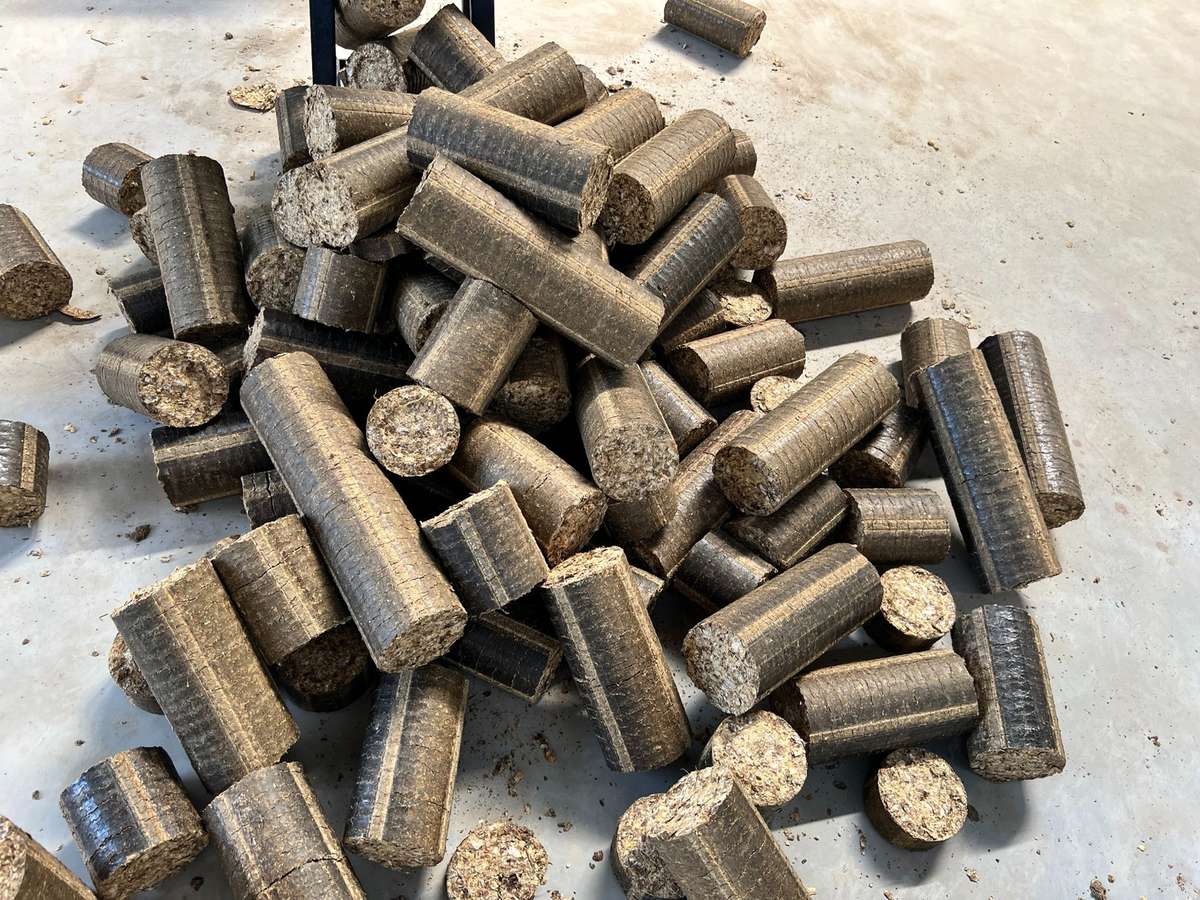
Efficient Pellet Compression Systems: Maximizing Output
Kingwood · May 26, 2026
Why Pellet Compression Efficiency Matters in Industrial Biomass Production
Industrial biomass manufacturing operates on thin margins. Raw material costs, energy consumption, and throughput consistency determine whether a production line is commercially viable. Pellet compression systems—when properly specified and integrated—address all three variables simultaneously.
The core function of a pellet compression system is to convert loose, irregular, or high-moisture biomass feedstock into dense, uniform pellets. This is not simply a size-reduction task. Compression forces molecular bonding within the biomass matrix, producing a pellet with predictable calorific value, moisture content, and mechanical durability. For industrial buyers, that predictability translates directly into reliable boiler performance, lower reject rates, and consistent downstream logistics.
Kingwood, established in 1999 and operating from its 31,200 m² facility in Liyang Zhongguancun Industrial Park, Jiangsu Province, has built its equipment portfolio specifically around these production realities. With 27 years of R&D investment and over 2,000 production line projects planned and designed across 30 countries, the engineering approach is grounded in operational data rather than theoretical throughput claims.
How Ring Die Compression Systems Reduce Waste and Improve Output
The mechanical choice at the center of any high-efficiency biomass compression line is the pellet mill design. Kingwood’s ring die pellet mills compress prepared biomass through a rotating die, generating the radial pressure required to form stable pellets without binders. This contrasts with flat-die configurations, which are mechanically unsuitable above roughly 1 t/h.
Kingwood’s vertical ring die series spans five models:
- JWZL-420: 1–1.5 t/h — suited for smaller-scale or trial production
- JWZL-688: 2–2.3 t/h — mid-range industrial throughput
- JWZL-688D: 3–3.5 t/h — dual-ring configuration for continuous-duty operation
- JWZL-928: 4–5 t/h — high-capacity vertical configuration
- JWZL-1068: contact sales for capacity specification
The horizontal JZWH-860 delivers an equivalent 4–5 t/h in a layout optimized for certain plant footprints and material flow configurations.
Waste reduction in a compression system is not achieved by the pellet mill alone. It requires control at every upstream stage. Kingwood’s wet-feed production lines address this through an integrated sequence: drum chipper → hammer mill → drum dryer → fine grinding → pelletizing → counter-flow cooler → packaging. Each stage is enclosed, with integrated dust removal preventing material loss that open-loop systems routinely absorb as shrinkage. The result is a higher yield per metric ton of incoming raw material—a measurable improvement in raw material utilization.
For grinding-stage equipment, Kingwood’s FSP80T/FSP100T/FSP120T/FSP140T biomass wood hammer mills with 84–144 knives deliver the consistent particle size distribution that ring die compression requires. Irregular feedstock particle sizing is a primary cause of die wear and pellet fines—both direct waste contributors.
Three-Standardization Framework: The Engineering Basis for Consistent Performance
Efficiency in pellet compression is not a single-machine attribute. It is a system property. Kingwood’s Three-Standardization Framework—Integrated production lines, Dust-Free production lines, and Automated production lines—provides the structural basis for achieving consistent output at industrial scale.
Integrated production lines eliminate the inter-equipment material handling losses and process bottlenecks that occur when components from multiple suppliers are assembled without a unified design. Kingwood engineers complete lines up to 200,000 metric tons per year capacity under a single design authority.
Dust-Free production lines are not primarily a regulatory compliance measure, though they meet applicable standards. They are a yield management tool. Every kilogram of biomass dust that escapes the process boundary is lost revenue. Kingwood’s 2024 Guizhou installation demonstrates this approach at a commercial scale in the Chinese domestic market.
Automated production lines reduce labor-dependent variability in feed rates, moisture monitoring, and die pressure settings—variables that directly affect pellet quality and hourly throughput consistency. Automation also enables continuous operation with minimal shift-change disruption, improving effective annual utilization of installed capacity.
The commercial case for this framework is supported by documented project outcomes. A 24 t/h wood chip pellet production line in Vietnam (2023) and a 12 t/h line also in Vietnam (2024) that achieved full payback in 23 months both reflect line designs built on these three principles. Biomass fuel produced on Kingwood lines carries a calorific value of 4,800 kcal/kg with moisture content below 15%, sulfur below 0.3%, and ash below 18%—all meeting or exceeding EU, USA, Japanese, and Chinese GB standards. Operating cost savings versus fossil fuel alternatives run 40–50%.
For procurement engineers and project developers evaluating pellet compression systems, the relevant metrics are throughput consistency, per-ton energy consumption, raw material yield, and total cost of ownership over a ten-year operating horizon. Kingwood’s ISO 9001 and ISO 14001 certified manufacturing, CE certification, and NEEQ listing (stock code: 871765) provide the institutional transparency that industrial procurement requires when specifying long-lead capital equipment.
Contact Kingwood’s technical sales team to discuss feedstock characterization, line configuration, and site-specific capacity requirements.
FAQ
What is a pellet compression system in industrial biomass manufacturing?
A pellet compression system is an integrated line of equipment—typically including a hammer mill, drum dryer, ring die pellet mill, and counter-flow cooler—that converts high-moisture raw biomass into dense, uniform pellets suitable for fuel or feed applications.
How does pellet compression reduce material waste?
By compacting loose or irregular biomass feedstock into uniform pellets, compression systems minimize handling losses, fines generation, and off-spec product. Kingwood's enclosed, dust-free production lines further recover airborne particles that would otherwise be lost.
What production capacities are available in Kingwood pellet mills?
Kingwood offers vertical ring die pellet mills from 1 t/h (JWZL-420) up to 4–5 t/h (JWZL-928), plus the horizontal JZWH-860 at 4–5 t/h. Complete wet-feed production lines are engineered up to 200,000 metric tons per year.
Are pellet compression systems energy-efficient compared to conventional processing?
Yes. Ring die compression requires significantly less specific energy per ton than flat-die or open-loop systems. Kingwood's automated lines also eliminate redundant material handling steps, reducing total plant energy consumption.
What feedstocks can Kingwood pellet compression lines handle?
Kingwood wet-feed lines are designed for high-moisture biomass including wood chips, agricultural residues, and forestry by-products. The process covers crushing, coarse grinding, drying, fine grinding, pelletizing, and packaging in a single integrated sequence.
How quickly can a Kingwood pellet production line achieve payback?
A 12 t/h wood pellet line installed in Vietnam in 2024 achieved full investment payback in 23 months. Biomass fuel produced on Kingwood lines delivers 40–50% cost savings versus fossil fuel alternatives.
What quality and compliance standards apply to Kingwood pellet systems?
Kingwood holds ISO 9001, ISO 14001, and CE certifications. Biomass pellets produced on its lines comply with Chinese GB13271-2001 boiler emission standards, with sulfur content below 0.3%, ash below 18%, and calorific value of 4,800 kcal/kg.
- Global biomass pellet production capacity exceeded 50 million metric tons in 2023, driven by industrial decarbonization targets in Europe, Asia, and North America. (2023, IEA Bioenergy Task 40 — Sustainable International Bioenergy Trade, 2023 Status Report)
- Biomass energy is projected to account for approximately 10% of global primary energy supply through 2030 under sustainable development scenarios. (2024, IEA World Energy Outlook 2024)