Crop Straw Comprehensive Utilization: Policy & Industrial Strategies
Kingwood · May 26, 2026
Industrial Planning for Straw Resource Utilization
Effective straw utilization begins with structured accountability at the government level. Functional departments must define clear responsibilities for overseeing collection logistics, feedstock development programs, and technology adoption incentives. Without this institutional clarity, fragmented local efforts produce inconsistent outcomes—straw either accumulates and decays, creating runoff contamination, or is burned in fields, generating particulate emissions that violate air quality standards.
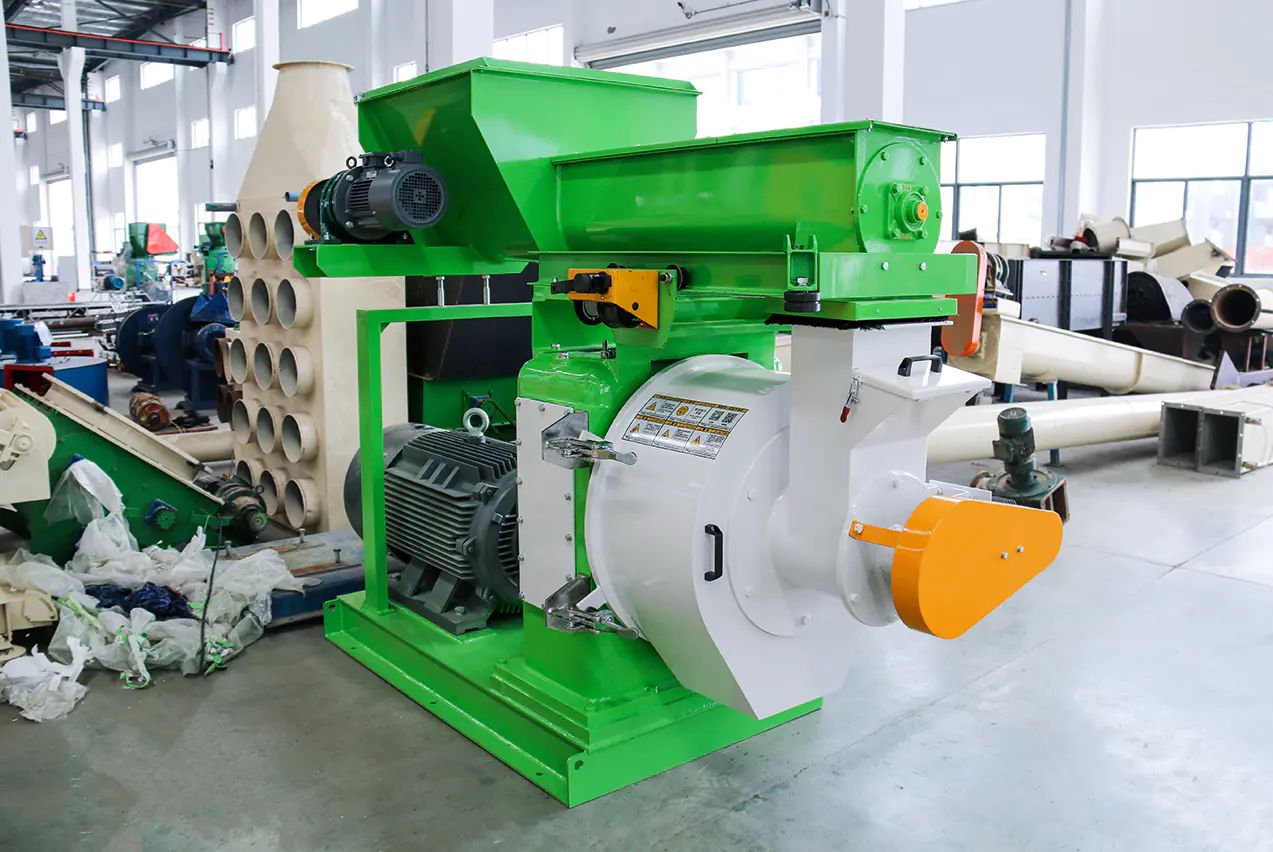
Regional planning should draw on documented successful models, mapping available straw volumes against viable industrial applications: biomass fuel pelletizing, composting for organic fertilizer, anaerobic digestion for biogas, or fiber board manufacturing. For operators evaluating feedstock-to-fuel pathways, straw-to-pellet conversion is among the most technically mature and commercially scalable routes. Fully integrated production lines capable of processing high-moisture biomass—from coarse chipping through ring die pelletizing to automated packaging—are now designed to handle up to 200,000 metric tons per year, accommodating the throughput demands of centralized straw processing operations.
Government capital investment in this sector should prioritize pre-processing infrastructure and demonstration facilities, not only downstream conversion equipment. The bottleneck in most regions is not pelletizing capacity but feedstock preparation and aggregation.
Strengthening Stakeholder Awareness and Operational Training
Field-level adoption of straw utilization practices depends on farmer and operator understanding of both regulatory requirements and economic returns. Multimedia outreach campaigns—deployed through township agricultural extension stations, mobile platforms, and on-site demonstrations—are more effective than printed policy circulars alone.
Key messaging must address the direct economic benefit to agricultural practitioners. Straw that previously represented a disposal cost can generate revenue as feedstock for biomass pellet producers. Biomass pellets meeting standard specifications—calorific value of 4,800 kcal/kg, moisture content below 15%, sulfur content below 0.3%, and ash content below 18%—command stable industrial pricing and can reduce end-user fuel costs by 40–50% compared to fossil fuel alternatives.
Organizing agricultural practitioners into formalized straw collection cooperatives creates a structured supply pipeline while reducing the coordination burden on individual operators. This model has proven effective in regions where municipal and county governments co-fund logistics and storage, enabling consistent feedstock delivery to processing facilities regardless of seasonal harvest concentration.
Deepening awareness within grassroots government departments is equally critical. Administrative enforcement of no-burning ordinances requires officials who understand utilization alternatives and can direct farmers to viable disposal channels—rather than simply issuing penalties without offering compliant pathways.
R&D Investment and Market Standardization
Research and Development Infrastructure
Advancing straw utilization technology requires dedicated R&D centers with mandates spanning feedstock characterization, preprocessing optimization, and conversion efficiency. Priority research areas include:
- Straw-to-fertilizer biological conversion: Accelerated composting formulations suited to high-silica cereal straw
- Pelletizing process optimization: Ring die configurations, compression ratios, and additive protocols for low-lignin feedstocks such as rice and wheat straw, which behave differently from wood-based biomass
- Emissions profiling: Combustion behavior of straw pellets under real boiler conditions, validating compliance with GB13271-2001 and equivalent international standards
Establishing no-burning demonstration zones with visible, measurable outcomes—documented yield improvements from straw-based soil amendments, or recorded fuel cost reductions from on-site pellet boilers—provides the empirical evidence that accelerates technology adoption among skeptical operators.
Standardizing Straw Market Transactions
The logistical complexity of straw collection is frequently underestimated. Harvest windows for major cereal crops compress collection activity into periods of two to four weeks. Individual farmers cannot self-organize storage, transport, and quality sorting at scale. A functioning straw commodity market requires:
- Government-backed storage facility networks: Covered, ventilated depots positioned within economic transport distance of processing plants
- Quality grading protocols: Moisture content thresholds, contamination limits, and bale density specifications that enable consistent pricing
- Contracted aggregator roles: Professional logistics operators, supported by policy incentives, who bridge the gap between farm-level supply and industrial-scale demand
Without this market infrastructure, even well-equipped biomass pellet production lines face feedstock supply disruptions that undermine capacity utilization and investment return timelines.
For operators considering straw-based biomass pellet production, consistent feedstock supply is as critical a project variable as equipment specification. Kingwood’s engineering teams integrate feedstock logistics assessments into production line project planning—a practice reflected in the design of over 2,000 production line projects across 30 countries. For technical context on how straw and agricultural residue feedstocks are processed in integrated systems, see our wet-feed biomass pellet production line overview.
Toward a Scalable Straw Utilization Model
The pathway from open-field straw burning to industrial biomass fuel production is technically established. The remaining constraints are systemic: institutional coordination, market infrastructure, and consistent R&D-to-commercialization translation. Regions that resolve these constraints—through clear policy mandates, funded logistics networks, and accessible processing technology—create durable feedstock economies that benefit agricultural operators, industrial fuel buyers, and regional air quality simultaneously.
For biomass energy operators and project developers evaluating straw as a primary or supplementary feedstock, equipment selection should account for the specific preprocessing demands of agricultural residues. Kingwood’s hammer mill and drum dryer configurations are engineered to handle the moisture variability and fiber characteristics typical of cereal straw, supporting stable downstream pelletizing performance across the full production cycle.
FAQ
Why is comprehensive crop straw utilization an industrial priority?
Open-field straw burning generates air pollutants and wastes a significant renewable feedstock. Systematic utilization—through pelletizing, composting, or biogas—reduces emissions, recovers energy value, and creates supply chains for industrial biomass fuel production.
What role does government policy play in straw resource development?
Grassroots government departments are responsible for clarifying functional responsibilities, funding collection and storage infrastructure, organizing professional training, and establishing no-burning demonstration zones that model compliant straw management practices.
How is straw converted into usable biomass fuel?
Agricultural straw undergoes size reduction (chipping, hammer milling), moisture conditioning, drying, fine grinding, and ring die pelletizing. The resulting biomass pellets achieve calorific values up to 4,800 kcal/kg with moisture content below 15%—meeting EU, ISO, and Chinese national standards.
What are the main technical challenges in straw pellet production?
Straw feedstock varies in fiber density, silica content, and moisture. Preprocessing consistency—particularly drying and particle size uniformity—is critical for stable ring die throughput and pellet durability. Integrated wet-feed production lines are engineered specifically for this variability.
What market infrastructure is needed for a viable straw supply chain?
Standardized collection and storage systems are essential. Because harvest windows are short and volumes are large, market transactions require government-backed logistics support, defined quality grading, and contracted storage operators—individual farmers cannot manage this scale alone.
What is a straw no-burning demonstration zone?
A designated area where local authorities showcase the economic and environmental benefits of straw utilization alternatives—composting, pelletizing, or biogas—in contrast to open burning. These zones build stakeholder confidence and accelerate regional adoption of compliant practices.
How does biomass pellet fuel compare to fossil fuels in cost terms?
Biomass pellets produced from agricultural residues such as straw can reduce fuel costs by 40–50% compared to conventional fossil fuels, while meeting emissions standards below China's GB13271-2001 boiler air pollutant limits.
- China generates over 800 million metric tons of crop straw annually, of which an estimated 25–30% has historically been burned in open fields, contributing to seasonal air quality deterioration across major agricultural provinces. (2023, Ministry of Agriculture and Rural Affairs of China — National Straw Comprehensive Utilization Report)
- Biomass energy accounts for approximately 14% of global total energy consumption, with agricultural residues representing one of the largest underutilized feedstock categories in developing economies. (2024, International Energy Agency (IEA) — Bioenergy Report)