Crop Straw Comprehensive Utilization: Policy & Industry Roadmap
Kingwood · May 26, 2026
The Industrial Case for Structured Straw Utilization
Crop straw is among the largest and most underutilized biomass feedstock streams in agricultural economies. In China alone, annual straw generation exceeds 800 million metric tons across wheat, rice, corn, and other staple crops. Historically, a substantial portion of this material was disposed of through open-field burning — a practice that generates particulate emissions, wastes recoverable energy, and degrades soil organic content over time.
The shift from disposal to industrial utilization is not primarily a technical problem. The conversion pathways — pelletizing, composting, biogas, fiber processing — are commercially proven. The constraint is systemic: fragmented collection logistics, inconsistent policy enforcement, limited farmer awareness of economic returns, and under-investment in regional processing infrastructure.
Addressing these constraints requires a coordinated approach spanning government planning, R&D investment, market structure, and deployment of reliable industrial equipment. This article examines the four operational levers through which straw comprehensive utilization can be scaled effectively.
Four Operational Levers for Scaling Straw Utilization
1. Industrial Planning and Regional Layout
Effective straw utilization begins with defined institutional responsibility. Regional and grassroots government departments must have explicit mandates for straw resource planning — not advisory roles, but accountable ones with measurable targets for utilization rates, burn reduction, and processing capacity deployment.
Planning should account for regional feedstock volumes, existing logistics infrastructure, proximity to end-users (industrial boilers, power plants, feed processors), and land availability for processing facilities. A zoned approach — designating areas for energy conversion, composting, or fiber use based on local demand — prevents investment duplication and creates stable feedstock supply corridors for commercial operators.
China’s national policy framework has progressively strengthened requirements in this area, with subsidies and preferential credit directed toward straw industrialization projects. For equipment investors and plant operators, regions with active government support represent lower-risk deployment environments.
2. R&D Investment and Technology Demonstration
Technology development for straw comprehensive utilization covers several active research areas: enzymatic composting acceleration, anaerobic digestion optimization for high-silica straws, pellet die wear resistance for abrasive rice straw, and straw-to-fiber processing for construction materials.
The establishment of regional R&D centers — co-funded by government and industry — is essential for translating laboratory findings into deployable commercial processes. Equally important are field demonstration projects that generate verifiable economic data.
Burn-ban demonstration zones serve a dual function: they enforce compliance while simultaneously showcasing the revenue potential of straw processing to surrounding agricultural communities. When farmers observe neighboring operators generating income from straw collection contracts, behavioral change accelerates without enforcement pressure alone.
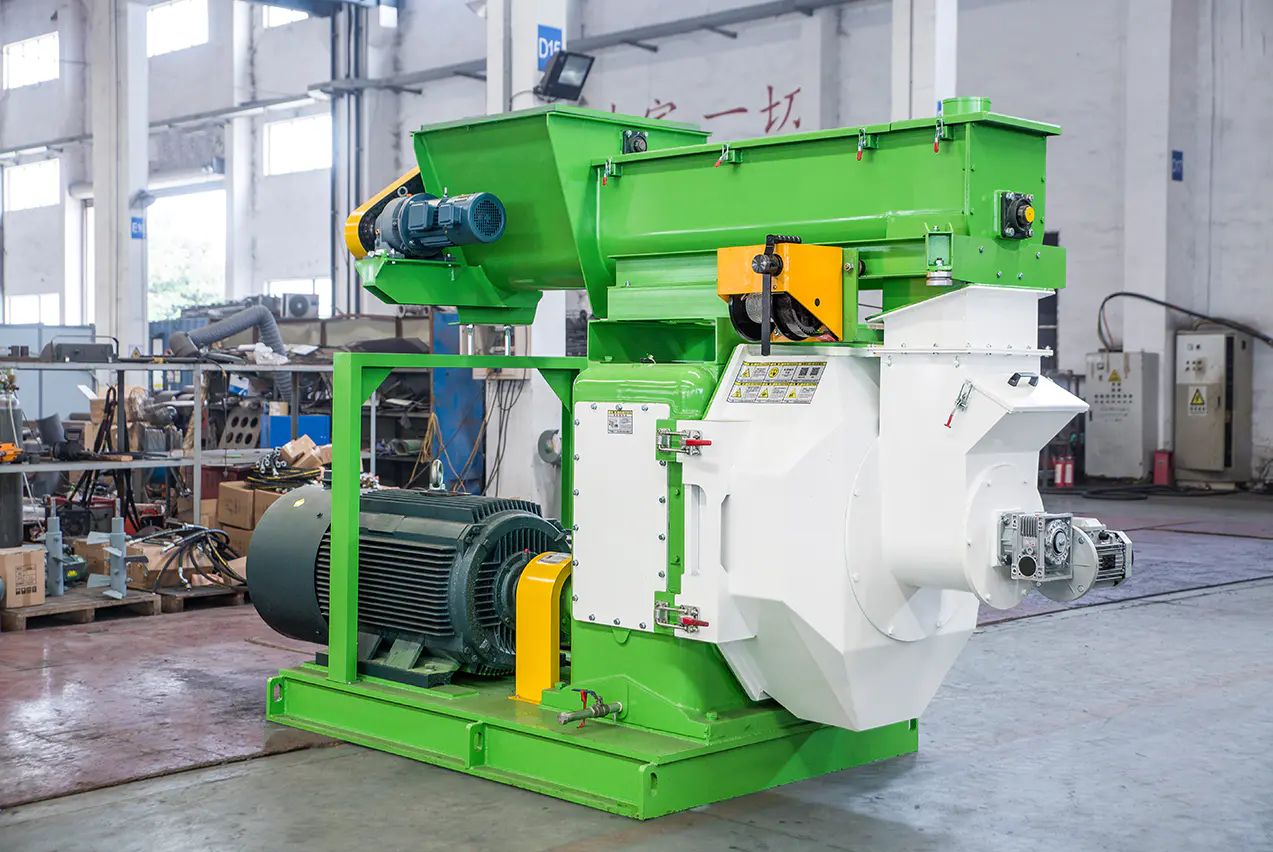
For the biomass energy pathway specifically, Kingwood’s wet-feed pellet production lines demonstrate the complete conversion sequence: drum chipper or hammer mill for coarse reduction, drum dryer to achieve moisture content below 15%, ring die pellet mill for densification to EN-standard pellet density, counter-flow cooler for stabilization, and automated packaging. These integrated lines are designed for capacities from 1 ton per hour up to full-facility outputs supporting 200,000 metric tons per year.
3. Raising Utilization Awareness Among Agricultural Practitioners
Technical infrastructure is necessary but insufficient. Farmers making daily decisions about straw management need accessible, practical information about collection economics, equipment options, and local offtake arrangements.
Structured awareness programs — delivered through agricultural extension services, county-level demonstration events, and targeted digital content — should focus on economics rather than environmental messaging alone. Concrete data points: what does a straw collection contract pay per metric ton? What processing equipment investment is required? What is the realistic payback period for a regional pellet operation?
Kingwood’s documented project data provides useful reference points. A 12 tph wood pellet production line in Vietnam achieved full investment payback within 23 months under normal operating conditions. While straw feedstock economics differ from wood chip inputs, the fundamental return profile of biomass pellet production is comparable across feedstock types when collection logistics are structured correctly.
Reducing straw burning also requires organizing post-harvest field cleanup as a managed process rather than leaving it to individual farmer discretion. Coordinated collection scheduling, matched to processing facility intake capacity, prevents field accumulation that historically defaults to burning.
4. Standardizing Straw Market Transactions
The single largest operational bottleneck in straw comprehensive utilization is the collection and storage system. Straw harvest is highly concentrated — most field collection must occur within a two-to-four-week window per crop cycle. This time concentration creates acute logistics pressure that individual farmers and small operators cannot manage without institutional support.
A functional straw market requires:
- Defined pricing mechanisms that give farmers predictable returns per metric ton, adjusted for moisture content and crop type
- Contracted aggregator networks that manage field baling, transport, and intermediate storage
- Storage infrastructure designed for high-moisture biomass, including covered yards and ventilation systems to prevent degradation before processing
- Quality grading standards that align with downstream processing requirements — particularly moisture content thresholds, which directly affect pellet mill throughput and die wear
Government participation in market structure — through standard-setting, storage facility co-investment, and contract enforcement frameworks — is essential at the current stage of market development. Purely private market mechanisms have consistently failed to resolve the coordination problem in concentrated harvest logistics.
Converting Policy Intent into Commercial Output
The measures described above are interdependent. Planning without R&D produces infrastructure without viable technology. R&D without market standardization produces technology without reliable feedstock supply. Market standardization without awareness programs produces infrastructure that farmers do not engage with.
For industrial equipment investors and pellet production operators, the practical implication is straightforward: project viability in straw-based biomass fuel depends on regional policy environment as much as equipment specification. Sites within designated straw utilization zones, with active government collection support programs and established aggregator networks, offer substantially lower feedstock supply risk than greenfield deployments in regions without this infrastructure.
Kingwood’s engineering and project planning teams work with clients at the pre-feasibility stage to assess feedstock availability, logistics constraints, and regional policy conditions — alongside equipment specification and line design. For operators evaluating straw as a primary or supplementary biomass input, contact Kingwood to discuss site-specific production line configuration and capacity planning.
FAQ
Why is crop straw comprehensive utilization an industrial priority in China?
Open-field straw burning is a primary source of rural particulate emissions and represents a significant waste of lignocellulosic biomass. China's national and provincial governments have introduced successive policy packages directing straw toward energy, feed, fertilizer, and material applications, supported by capital subsidies and burn-ban enforcement zones.
What are the main technical pathways for straw comprehensive utilization?
The four principal pathways are: biomass energy conversion (pelletizing, gasification, biogas), return-to-field composting, industrial feedstock use (fiber board, packaging), and animal feed processing. Biomass pellet production via ring die pellet mills is currently the most scalable energy pathway for commercial operators.
How is a straw collection and storage system structured at industrial scale?
Industrial straw collection requires government-backed logistics coordination, contracted field aggregators, centralized storage yards with moisture management, and scheduled transport to processing facilities. The concentrated harvest window — typically two to four weeks per crop cycle — means storage infrastructure and pre-positioning of equipment are critical to avoiding supply gaps.
What role do demonstration zones play in straw utilization policy?
Burn-ban demonstration areas allow regional governments to showcase the economic returns from straw industrialization versus open burning. Successful demonstrations accelerate farmer adoption by making the value chain visible — from field collection through pellet sale — and provide data to justify further capital deployment.
What equipment is required to convert crop straw into biomass pellets commercially?
A complete wet-feed straw pellet production line includes a drum chipper or hammer mill for size reduction, a drum dryer to bring moisture below 15%, a ring die pellet mill for densification, a counter-flow cooler for pellet stabilization, and automated packaging. Kingwood designs integrated lines up to 200,000 metric tons per year capacity.
What are the fuel quality benchmarks for straw-derived biomass pellets?
Straw biomass pellets must meet moisture content below 15%, calorific value above 4,800 kcal/kg, sulfur content below 0.3%, ash content below 18%, and dioxin emissions below 0.5 ng TEQ. These specifications satisfy GB13271-2001 boiler emission standards and are broadly aligned with EU, US, and Japan biomass fuel requirements.
How much can biomass pellet fuel reduce energy costs compared to fossil fuels?
Biomass pellet fuel produced from agricultural residues including crop straw can reduce fuel costs by 40–50% versus conventional fossil fuel alternatives, based on verified Kingwood project data across industrial boiler applications.
- China generates over 800 million metric tons of crop straw annually, of which an estimated 25–30% was historically disposed of through open-field burning before national burn-ban policies were enforced. (2023, China National Development and Reform Commission — Crop Straw Comprehensive Utilization Action Plan)
- Biomass energy accounted for approximately 6.4% of China's total renewable energy consumption in 2023, with agricultural residue pellets representing a growing share of solid biomass fuel supply. (2024, National Energy Administration of China — Renewable Energy Development Report 2024)