Particulate Matter Emissions: Biomass vs Coal-Fired Boilers
Kingwood · May 26, 2026
Why Particulate Matter Profiles Differ Between Biomass and Coal Combustion
Industrial boiler operators evaluating fuel switching from coal to biomass need reliable data on how combustion characteristics translate into actual stack emissions. The two fuel types are structurally different—coal is a dense, mineral-rich solid with high fixed carbon and sulfur content, while biomass is a lignocellulosic material with higher volatile matter, lower sulfur, and lower calorific density per unit volume. These differences produce measurable divergence in the composition, particle size distribution, and total concentration of emitted particulate matter.
Experimental analysis using purpose-designed biomass boilers and coal-fired boilers of comparable thermal output demonstrates that particulate matter from biomass combustion differs in three primary dimensions: chemical composition (lower sulfur compounds, lower heavy metal content), physical morphology (lighter, lower-density fly ash), and total emission load (highly sensitive to fuel moisture and combustion temperature).
Key variables that amplify these differences in practice:
- Fuel moisture content. Wet biomass drives down combustion temperature, increasing unburned carbon particles and CO. Standardized biomass pellets with moisture below 15% maintain stable flame temperatures and reduce this source of particulate formation.
- Volatile matter content. Biomass typically contains 70–80% volatile matter versus 20–40% in coal. This means biomass ignites faster and requires boiler designs that accommodate rapid volatile release—otherwise, incomplete combustion creates elevated particulate loads.
- Ash mineralogy. Coal ash contains higher concentrations of silica, alumina, and heavy metals that contribute to fine respirable particulate (PM2.5). Biomass ash is richer in potassium and calcium, with different aerosol formation pathways.
Experimental Boiler Configurations and Test Parameters
Comparative emission studies use intermittent-cycle boiler operation—typically 10-hour heating periods—to simulate real industrial and district heating use cases. Three boiler configurations are commonly evaluated: two purpose-built biomass boilers of different structural designs, and one coal-fired boiler matched by thermal output for direct comparison.
Test fuels in biomass configurations include agricultural straw (wheat, corn) and woody biomass. The differences between these two biomass categories matter: woody biomass has lower ash content and more consistent density, producing more stable combustion and lower particulate variability. Agricultural straw has higher alkali metal content, which increases the risk of fine particulate aerosol formation and boiler fouling if combustion conditions are not carefully controlled.
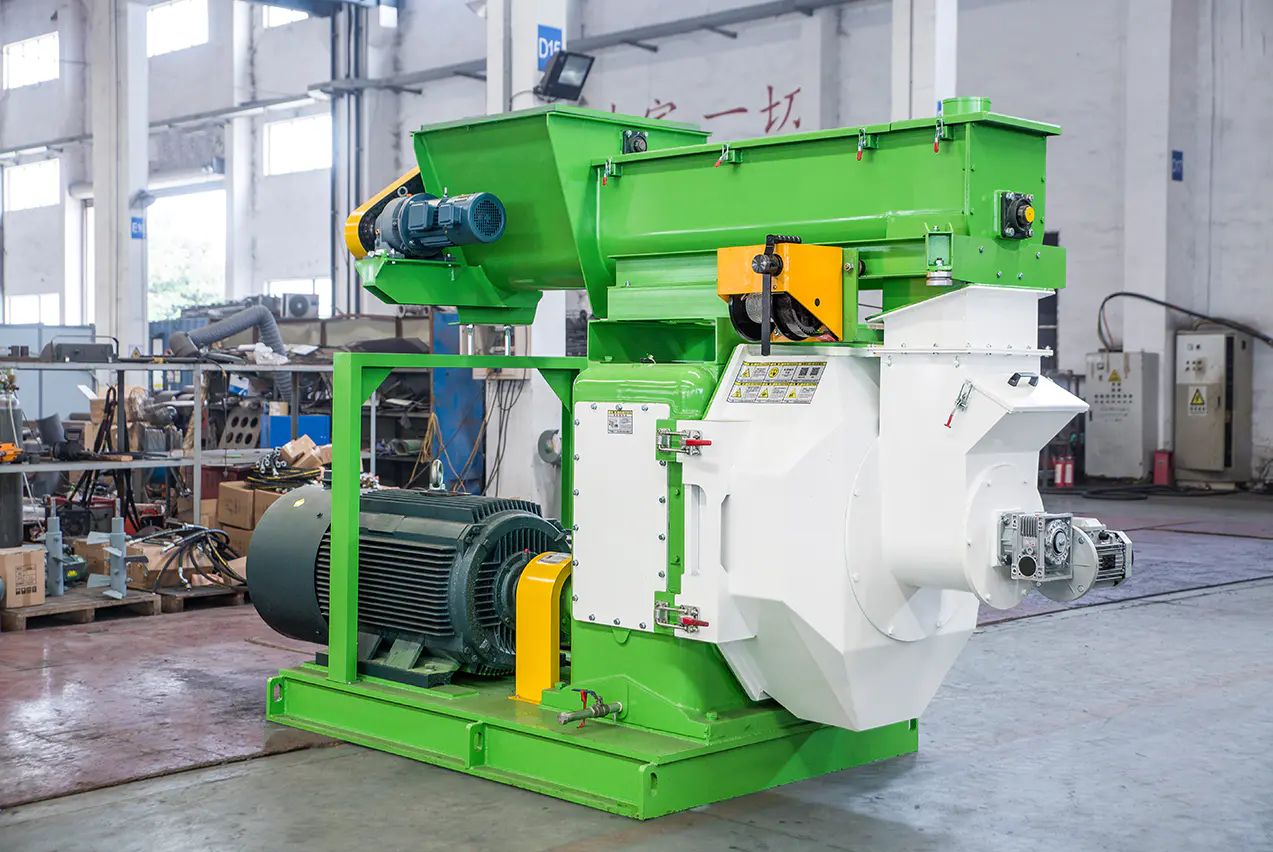
This is precisely why fuel standardization is operationally critical. Loose, variable-moisture agricultural residue fed directly into a boiler produces emission profiles that are difficult to predict or control. The same material pelletized to consistent density, moisture below 15%, and uniform particle geometry burns predictably. The biomass pellet production process converts raw high-moisture biomass through crushing, drying, fine grinding, and ring die pelletizing into a standardized fuel that industrial boiler operators can treat as a controlled input.
Emission measurement protocols in these tests capture total suspended particulate (TSP), PM10, and PM2.5 fractions separately, along with SO₂, NOₓ, CO, and dioxin concentrations. The separation of size fractions matters because regulatory limits, health impact assessments, and filtration equipment specifications are all fraction-specific.
Emission Compliance Implications for Industrial Operators
For industrial operators in China, the baseline regulatory threshold is GB13271-2001—the national Emission Standard of Air Pollutants for Boilers. Biomass pellets meeting standard fuel specifications produce emissions below all GB13271-2001 indicators. The sulfur pathway is particularly clear: coal with 1–3% sulfur content generates SO₂ loads that require flue gas desulfurization systems at scale, while biomass pellets with sulfur below 0.3% produce SO₂ concentrations that stay within limits without additional treatment in most boiler configurations.
Dioxin emission is a secondary concern. China’s national standard allows up to 1.0 ng-TEQ per cubic meter. Kingwood-specification biomass pellets produce dioxin outputs below 0.5 ng-TEQ—half the permissible limit—when combusted in properly designed boilers at adequate temperatures. The critical control parameter here is combustion temperature: dioxin formation increases when combustion zones fall below approximately 850°C, which again points to fuel quality (moisture, calorific value, density uniformity) as the primary lever available to operators.
International operators should note that these findings align with wider standards. The EU requires biomass fuel moisture below 15%; the USA requires calorific value above 2,500 kcal/kg; Japan limits sulfur to 0.5% or below; ISO standards cap ash below 20%. Kingwood biomass pellets—at 4,800 kcal/kg calorific value, below 15% moisture, below 0.3% sulfur, and below 18% ash—satisfy all four frameworks simultaneously.
The economic case reinforces the technical one. Industrial operators who have completed coal-to-biomass transitions report fuel cost reductions of 40–50%. The 12 t/h Vietnam wood pellet production line achieved full capital payback in 23 months, demonstrating that emission compliance and cost reduction are achievable simultaneously with correctly specified pellet production equipment.
For operators currently running coal-fired boilers who are assessing regulatory exposure or fuel cost reduction, the particulate matter emission data from biomass combustion research provides a technical foundation for feasibility analysis—and the difference in sulfur, dioxin, and ash-related particulate load between the two fuel types is large enough to materially change both compliance cost and operational risk profiles.
FAQ
How do particulate matter emissions from biomass boilers compare to coal-fired boilers?
Experimental data consistently shows biomass boilers emit particulate matter with distinct physical and chemical profiles compared to coal-fired boilers. Biomass combustion typically produces lower sulfur dioxide and dioxin concentrations, though total particulate volumes depend heavily on fuel moisture content, combustion temperature, and boiler design.
What biomass fuel types were used in comparative boiler emission studies?
Common test fuels include agricultural residues such as wheat straw and corn straw, as well as woody biomass. Standardized biomass pellets with moisture content below 15% and sulfur content below 0.3% produce the most controlled and repeatable emission profiles.
Do biomass boilers comply with China's boiler emission standards?
Biomass pellets meeting Kingwood's fuel specifications produce emissions that fall below all indicators in GB13271-2001, China's national Emission Standard of Air Pollutants for Boilers.
Why does fuel form affect particulate matter emissions in biomass boilers?
Raw biomass with high moisture content and inconsistent particle size causes incomplete combustion, elevating particulate output. Pelletized biomass with standardized density and moisture below 15% enables more complete, lower-emission combustion.
What role does boiler design play in emission differences between biomass and coal systems?
Biomass boilers are purpose-designed for the volatile content and lower bulk density of biomass fuels. Coal-modified boilers running biomass typically show higher particulate variability. Dedicated biomass boiler configurations operating in controlled intermittent cycles produce more consistent emission data.
How does ash content affect biomass boiler particulate emissions?
Ash content directly influences fly ash particulate load in flue gas. Kingwood-specification biomass pellets carry less than 18% ash, and ISO-standard pellets less than 20%, keeping fly ash generation within manageable ranges for standard filtration equipment.
What cost advantage does switching from coal to biomass fuel offer industrial operators?
Industrial operators switching from coal to standardized biomass pellets typically achieve 40–50% reduction in fuel costs, while also reducing sulfur and dioxin emissions to levels that simplify regulatory compliance.
- Biomass pellets with sulfur content below 0.3% produce SO₂ emissions well within GB13271-2001 boiler standards, compared to typical coal sulfur content of 0.5–3%. (2024, China National Standard GB13271-2001, Emission Standard of Air Pollutants for Boilers)
- Kingwood-specification biomass pellets deliver a calorific value of 4,800 kcal/kg with moisture below 15%, enabling stable combustion conditions that minimize incomplete-combustion particulate formation. (2025, Kingwood product specification documentation, Jiangsu Kingwood Industrial Co., Ltd.)