Hardwood Sawdust Fuel Pellet Mill Press: How to Choose
Kingwood · May 26, 2026
Selecting a hardwood sawdust fuel pellet mill press is an engineering and commercial decision — not a catalogue exercise. The feedstock profile, required throughput, moisture regime, and downstream fuel specification each constrain the viable equipment configuration. This guide maps those constraints to specific Kingwood models and line architectures.
Feedstock Determines Equipment Class
Not all pellet presses are interchangeable. Hardwood feedstocks — oak, beech, eucalyptus, mixed tropical hardwoods — present higher bulk density and greater fiber resistance than softwood sawdust or agricultural residues. A press sized for pine sawdust will underperform or suffer accelerated ring die wear on dense hardwood chip inputs.
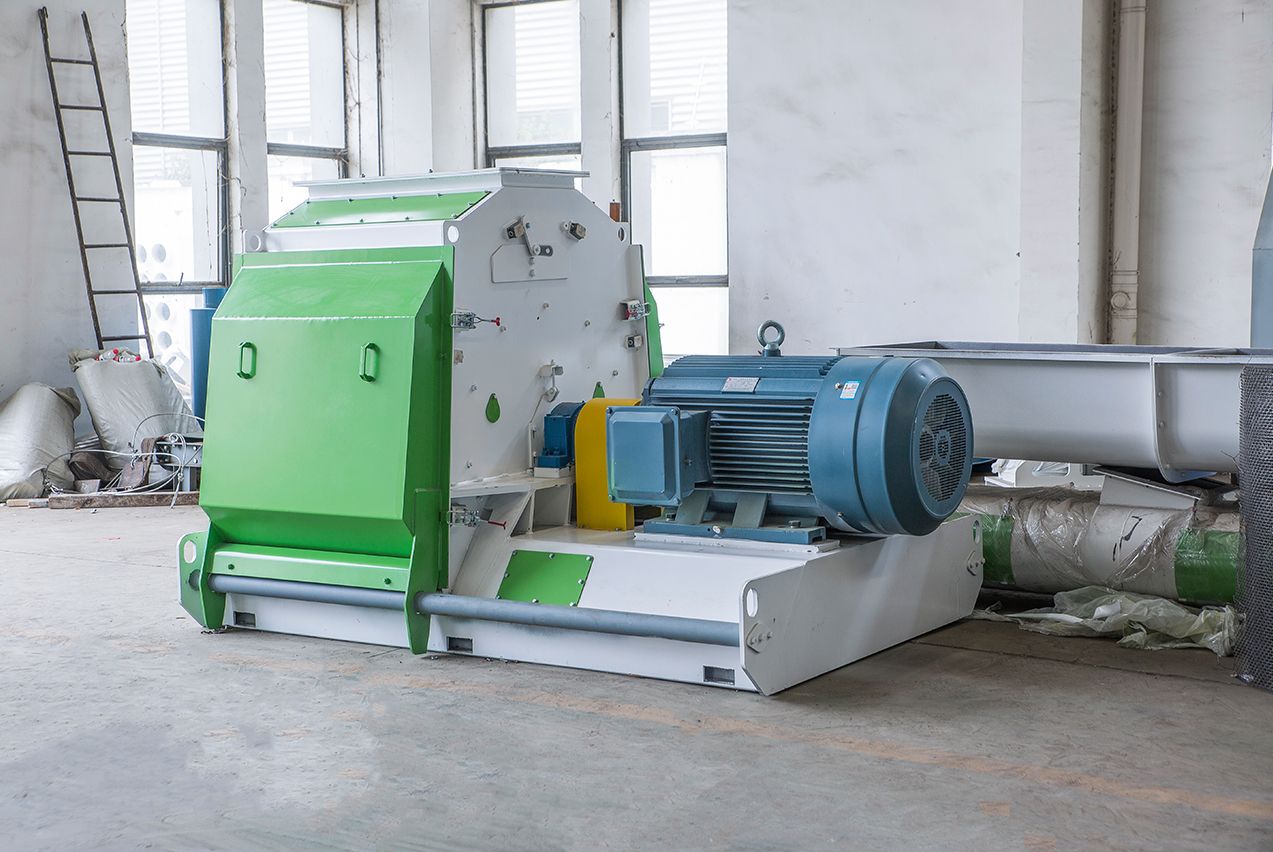
Kingwood’s vertical biomass pellet mill series addresses this directly through die geometry and press roller design calibrated to feedstock density:
- JWZL-420: 1–1.5 t/h — suitable for small-scale hardwood sawdust operations or pilot lines
- JWZL-688: 2–2.3 t/h — mid-range capacity for single-shift sawmill residue processing
- JWZL-688D: 3–3.5 t/h — dual-roller configuration for higher-density mixed hardwood inputs
- JWZL-928: 4–5 t/h — heavy-duty vertical mill for continuous hardwood or mixed biomass production
- JZWH-860: 4–5 t/h — horizontal ring die configuration preferred for industrial-scale continuous lines
For operations handling high-moisture green wood chips or mixed agricultural and woody residues, the complete wet-feed production line — incorporating drum chipping, hammer milling, drum drying, and counter-flow cooling stages — is the appropriate system architecture, not a standalone press.
Key Selection Criteria for Industrial Buyers
Capacity and Line Utilisation
Specify your required annual output, not just peak hourly rate. A 4 t/h press running two shifts at 85% utilisation delivers roughly 19,000 metric tons per year — adequate for a regional fuel supply contract but undersized for utility-scale biomass fuel supply. Kingwood designs complete lines up to 200,000 metric tons per year, integrating multiple pellet mill units with shared preprocessing and packaging infrastructure.
Material Compatibility and Moisture Management
Hardwood sawdust entering a pellet press at >18% moisture produces poor pellet durability and increases energy consumption in the press itself. Kingwood’s wet-feed line architecture handles this upstream: the drum dryer reduces incoming moisture to the target <15% specification before the material reaches the pellet mill. This is not optional for green wood inputs — it is a process requirement.
Agricultural residues (rice husk, straw, palm shell) introduce additional variables: ash content, silica abrasion on dies, and bulk density differences from wood. Kingwood’s engineering team specifies die compression ratios, roller gap settings, and feed conditioning parameters for each feedstock combination.
Dust Control and Workshop Safety
Fine sawdust is both a respiratory hazard and a combustion risk. This is where Kingwood’s Three-Standardization Framework has direct operational relevance. The Dust-Free pillar mandates enclosed conveying systems, negative-pressure workshop design, and integrated dust removal throughout the line — from hammer mill discharge through pellet cooler exhaust. The Guizhou Dust-Free biomass pellet workshop project (2024) demonstrates this architecture at operational scale.
Pellet Quality Targets
Define your output specification before specifying equipment. Kingwood lines are engineered to produce pellets meeting:
- Calorific value: ≥4,800 kcal/kg
- Moisture: <15%
- Sulfur content: <0.3%
- Ash content: <18%
- Dioxin emissions: <0.5 ng-TEQ
These parameters satisfy EU moisture standards, ISO ash limits, Japan sulfur requirements, and China GB13271-2001 boiler emission standards simultaneously — relevant for producers supplying multiple export markets.
Complete Line Design vs. Standalone Press
A common procurement error is purchasing a pellet press without accounting for the full material flow. A standalone press requires matched preprocessing capacity upstream and cooling, screening, and packaging capacity downstream. Undersized hammer milling creates a bottleneck; an oversized dryer adds unnecessary capital cost and energy draw.
Kingwood’s approach — informed by over 2,000 planned and designed production line projects across 30 countries — is to specify the complete line as a system. The Vietnam 12 t/h wood pellet line (2024) achieved 23-month payback in part because preprocessing, pelletizing, and packaging capacities were balanced at design stage, minimising downtime and off-spec product.
For very large-scale operations, the Vietnam 24 t/h wood chip pellet production line (2023) demonstrates how multiple JWZL units can be integrated into a single automated facility with shared utilities and centralised control.
Customisation and Long-Term Scalability
Industrial pellet production economics change over time: feedstock contracts shift, fuel offtake volumes grow, regulatory requirements tighten. Kingwood’s modular line architecture is designed for phased capacity expansion — a facility starting at 2–3 t/h can add pellet mill units, upgrade the dryer, and extend packaging automation without replacing the core infrastructure.
Custom configurations are available for:
- Specific feedstock blends requiring adjusted die compression ratios
- Dust-free enclosed workshop builds for urban or peri-urban sites
- Automated production lines with PLC-based monitoring and remote diagnostics
- Export-specification packaging for EU, Japanese, or South Korean biomass fuel markets
Kingwood has held ISO 9001 and ISO 14001 certification and CE marking across its equipment range, and is listed on the NEEQ (stock code: 871765) — providing the financial transparency and institutional accountability that large B2B procurement processes require.
For a capacity assessment or feedstock-specific equipment recommendation, contact Kingwood’s technical sales team with your annual output target, primary feedstock type, and target pellet specification.
FAQ
What is the difference between a hardwood pellet mill and a sawdust pellet press?
A hardwood pellet mill is engineered for high-density, low-moisture feedstocks such as oak, beech, or maple chips, requiring stronger die pressure and reinforced ring die assemblies. A sawdust pellet press typically handles finer, drier particles — sawdust, wood shavings, or agricultural residues — at higher throughput rates with lower mechanical resistance. Kingwood offers dedicated configurations for both feedstock profiles.
Which Kingwood pellet mill model suits a 4–5 t/h hardwood sawdust line?
Both the JWZL-928 (vertical) and the JZWH-860 (horizontal ring die) are rated at 4–5 t/h. The JWZL-928 suits high-moisture or mixed hardwood inputs; the JZWH-860 is preferred for continuous-duty industrial lines requiring horizontal ring die geometry.
What raw materials can Kingwood pellet presses handle?
Kingwood pellet mills process hardwood chips, softwood sawdust, wood shavings, rice husks, straw, palm shell, and mixed agricultural residues. Wet-feed production lines include drum drying and hammer milling stages to accommodate incoming moisture up to the feedstock's natural green state.
How does Kingwood's Three-Standardization Framework apply to sawdust pellet lines?
The Three-Standardization Framework mandates Integrated, Dust-Free, and Automated production line design. For sawdust operations — where airborne fine particulates are a health and fire hazard — the Dust-Free pillar is operationally critical. Kingwood's enclosed conveyance, integrated dust removal, and negative-pressure workshop design address this directly.
What pellet quality can I expect from a Kingwood fuel pellet machine?
Pellets produced on Kingwood lines achieve ≥4,800 kcal/kg calorific value, <15% moisture, <0.3% sulfur, and <18% ash — meeting EU, ISO, and China GB standards. All emission indicators from combustion fall below GB13271-2001.
Can Kingwood customize a pellet line for a specific annual output target?
Yes. Kingwood designs complete wet-feed pellet production lines up to 200,000 metric tons per year, covering crushing, coarse grinding, drying, fine grinding, pelletizing, and automated packaging — fully enclosed with integrated dust removal.
How quickly can a Kingwood pellet line reach payback?
A documented 12 t/h Vietnam installation reached payback in 23 months. Biomass fuel pellets typically reduce fuel costs 40–50% versus fossil fuel alternatives, accelerating ROI on equipment investment.
- Global industrial wood pellet demand reached approximately 32 million metric tons in 2023, driven by coal-to-biomass conversion mandates across the EU and East Asia. (2024, IEA Renewables 2024 Report (International Energy Agency))
- Biomass pellets replacing coal in industrial boilers reduce SO₂ emissions by over 90% and CO₂ on a lifecycle basis, according to EU Renewable Energy Directive assessments. (2023, European Commission, Renewable Energy Directive (RED III) Impact Assessment, 2023)