China Wood Pellet Press Machine Manufacturer — Kingwood
Kingwood · May 26, 2026
Kingwood: Industrial Wood Pellet Press Machine Manufacturer Since 1999
Jiangsu Kingwood Industrial Co., Ltd. is a China-based manufacturer of industrial wood pellet press machines and complete biomass pellet production lines. Founded in 1999 and operating from Liyang Zhongguancun Industrial Park in Jiangsu Province, Kingwood brings 27 years of focused R&D to the biomass energy equipment sector. The company is publicly accountable as a NEEQ-listed enterprise (stock code: 871765) and holds ISO 9001, ISO 14001, and CE certifications — baseline requirements for B2B buyers sourcing wholesale wood pellet making machines from China.
The 31,200 m² facility — 25,000 m² of production floor and 6,200 m² of offices and R&D labs — supports a team of 20 dedicated R&D engineers and the full-cycle manufacturing of pellet mills, auxiliary preprocessing equipment, and turnkey line integration. To date, Kingwood has planned and engineered over 2,000 production line projects across more than 30 countries, with a combined installed annual biomass fuel output capacity exceeding 10 million metric tons.
Wood Pellet Press Machine Models and Production Line Capacity
Kingwood’s core product range centers on ring die pellet mills in both vertical and horizontal configurations. Each model is engineered for continuous industrial operation on lignocellulosic feedstocks, including wood chips, sawdust, and agricultural residues.
Vertical ring die pellet mills:
| Model | Throughput |
|---|---|
| JWZL-420 | 1–1.5 t/h |
| JWZL-688 | 2–2.3 t/h |
| JWZL-688D | 3–3.5 t/h |
| JWZL-928 | 4–5 t/h |
| JWZL-1068 | Contact sales for specification |
Horizontal ring die pellet mill:
| Model | Throughput |
|---|---|
| JZWH-860 | 4–5 t/h |
For buyers requiring turnkey solutions rather than standalone machines, Kingwood engineers complete wet-feed biomass pellet production lines scaled up to 200,000 metric tons per year. These lines handle high-moisture feedstock through a fully sequenced process: crushing → coarse grinding → drum drying → fine grinding via hammer mill → pelletizing → counter-flow cooling → packaging. The entire process runs within an enclosed, dust-controlled environment with integrated automated controls — core tenets of Kingwood’s proprietary Three-Standardization Framework.
Auxiliary equipment supplied as part of complete lines includes drum chippers, hammer mills, drum dryers, counter-flow coolers, and pellet packaging machines — all manufactured in-house and engineered to interface directly with Kingwood pellet mills without third-party adaptation.
Three-Standardization Framework: The Engineering Differentiator
Kingwood applies its Three-Standardization Framework to every production line it designs and delivers. The three pillars are:
- Integrated production lines — all process stages engineered as a unified system with matched throughput capacity at each stage, eliminating bottlenecks common in assembled multi-vendor lines.
- Dust-Free production lines — fully enclosed material handling with integrated dust extraction at every transfer and processing point, meeting occupational safety and environmental compliance requirements in regulated markets. See the Dust-Free biomass pellet workshop case study from Guizhou for a documented implementation.
- Automated production lines — PLC-based process control with remote monitoring capability, reducing dependence on manual labor and enabling consistent pellet quality output at scale.
This framework is not a marketing claim — it is a structured engineering standard that is applied consistently across projects ranging from a single JWZL-420 unit to a 30 t/h multi-mill Chongqing installation.
Verified Project References and Fuel Performance Standards
Kingwood’s wholesale wood pellet press machines and production lines are operating across documented industrial projects. Reference cases include:
- Vietnam, 2024 — 12 t/h wood pellet production line; documented payback period of 23 months. Full case details
- Vietnam, 2023 — 24 t/h wood chip pellet production line. Project overview
- Chongqing, China, 2021 — 30 t/h wood pellet mill installation. Case study
- Beijing, China, 2024 — Beijing’s first biomass pellet demonstration project. Project reference
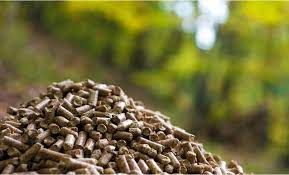
Pellets produced on Kingwood lines consistently meet international fuel specifications: 4,800 kcal/kg calorific value, moisture content below 15% (aligned with EU standards), sulfur content below 0.3% (within Japan’s ≤0.5% threshold), and ash content below 18% (below ISO’s <20% threshold). Fuel cost savings of 40–50% versus conventional fossil fuels have been recorded across client operations.
All emission indicators from Kingwood-equipped boiler applications fall below China’s GB13271-2001 national boiler air pollutant emission standard.
For wholesale procurement inquiries, technical specifications, or project feasibility consultation, contact Jiangsu Kingwood Industrial Co., Ltd. at #568 Hongsheng Road, Liyang Zhongguancun Industrial Park, Liyang City, Jiangsu Province, China.
FAQ
What types of wood pellet press machines does Kingwood manufacture?
Kingwood manufactures vertical ring die pellet mills (JWZL-420, JWZL-688, JWZL-688D, JWZL-928, JWZL-1068) and the horizontal ring die JZWH-860 pellet mill, covering throughput ranges from 1 t/h up to 5 t/h per unit. Complete wet-feed production lines scaled to 200,000 metric tons per year are also available.
Where is Kingwood's manufacturing facility located?
Kingwood operates from #568 Hongsheng Road, Liyang Zhongguancun Industrial Park, Liyang City, Jiangsu Province, China. The facility covers 31,200 m², including 25,000 m² of production floor space and 6,200 m² of office and R&D space.
Is Kingwood a verified, certified manufacturer?
Yes. Kingwood holds ISO 9001, ISO 14001, and CE certifications. The company is listed on China's NEEQ (National Equities Exchange and Quotations) under stock code 871765 and holds Jiangsu Provincial High-Tech Enterprise status, among other provincial and national recognitions.
What is the Three-Standardization Framework that Kingwood applies to its production lines?
Kingwood's Three-Standardization Framework refers to three engineering standards applied to every production line: Integrated production lines, Dust-Free production lines, and Automated production lines. This framework drives quality consistency and differentiates Kingwood's turnkey solutions in the industrial biomass pellet equipment sector.
What raw materials can Kingwood's pellet press machines process?
Kingwood's wet-feed pellet production lines handle high-moisture biomass feedstocks including wood chips, sawdust, agricultural straw, and similar lignocellulosic materials. The process sequence covers crushing, coarse grinding, drying, fine grinding, pelletizing, and packaging within a fully enclosed, dust-controlled system.
What fuel quality do biomass pellets produced on Kingwood lines achieve?
Pellets produced on Kingwood lines typically achieve a calorific value of 4,800 kcal/kg, moisture content below 15%, sulfur content below 0.3%, and ash content below 18%. All emission indicators comply below China's GB13271-2001 boiler air pollutant emission standard.
How many countries has Kingwood supplied wood pellet press machines to?
Kingwood has supplied industrial biomass pellet equipment and engineered production lines to clients in more than 30 countries, with documented project references in Vietnam (12 t/h and 24 t/h lines), China (Beijing, Chongqing, Guizhou), and other markets across Asia, Europe, and beyond.
- Kingwood has planned and designed over 2,000 biomass pellet production line projects, with a combined annual biomass fuel capacity exceeding 10 million metric tons. (2025, Jiangsu Kingwood Industrial Co., Ltd. — company disclosure, NEEQ stock code 871765)
- Biomass pellets produced on Kingwood lines deliver a calorific value of 4,800 kcal/kg and reduce fuel costs by 40–50% compared to conventional fossil fuel alternatives. (2025, Jiangsu Kingwood Industrial Co., Ltd. — product specification and fuel performance data)