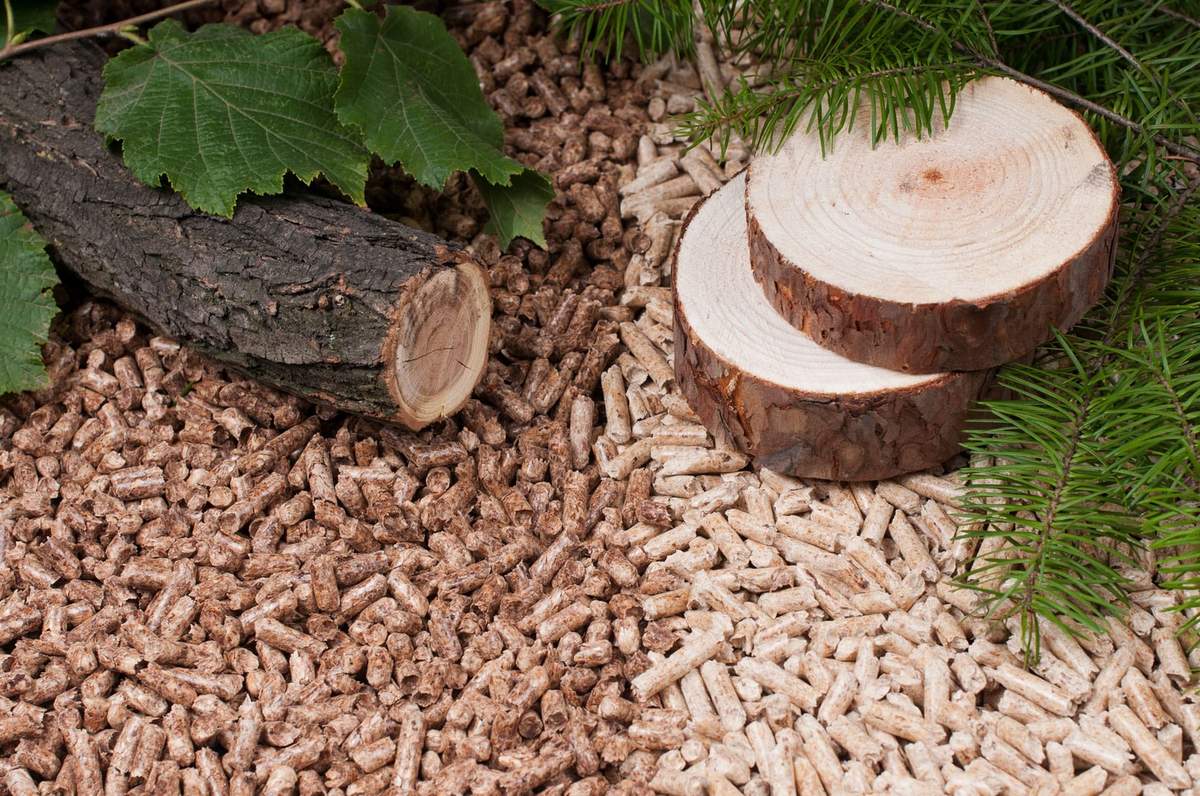
China Wholesale Wood Pellet Press Machine Manufacturer
Kingwood · May 26, 2026
Industrial Wood Pellet Press Machines Built for B2B Scale
Jiangsu Kingwood Industrial Co., Ltd. is a China-based manufacturer of industrial biomass pellet equipment, operating from a 31,200 m² facility at Liyang Zhongguancun Industrial Park, Jiangsu Province. Founded in 1999 and listed on the NEEQ exchange (stock code: 871765), Kingwood has invested 27 years of focused R&D into ring die pellet mill technology, complete production line engineering, and the systems integration required for high-throughput, industrial-scale biomass fuel production.
The company’s product portfolio spans vertical and horizontal pellet mills, auxiliary processing equipment, and fully automated wet-feed production lines with annual design capacities up to 200,000 metric tons. Kingwood’s engineering team of 20 R&D experts has planned and designed over 2,000 production line projects across 30+ countries.
Complete Pellet Production Lines: From Raw Biomass to Finished Fuel
Wholesale B2B buyers sourcing from a China wood pellet press machine factory require more than a single machine — they require a validated process. Kingwood’s wet-feed pellet production line is the company’s core commercial offering: a fully enclosed, automated sequence designed to process high-moisture biomass without manual pre-drying.
Process sequence:
- Size reduction — Drum chipper reduces bulk wood waste and agricultural residues to manageable chip size
- Coarse grinding — Hammer mill reduces chip size to specification for the dryer feed
- Drying — Drum dryer reduces moisture to the target range for pelletizing
- Fine grinding — Secondary hammer mill stage achieves the particle size required for ring die pelletizing
- Pelletizing — Ring die pellet mill compresses biomass into dense, uniform pellets
- Cooling — Counter-flow cooler brings pellet temperature and residual moisture to storage-safe levels
- Packaging — Automated pellet packaging machine completes the line
All stages operate within an enclosed, dust-controlled environment consistent with Kingwood’s Three-Standardization Framework — specifically the Dust-Free production line standard. Integrated dust removal is standard across all complete line projects.
Pellet mill model range by throughput:
| Model | Type | Capacity |
|---|---|---|
| JWZL-420 | Vertical ring die | 1.0–1.5 t/h |
| JWZL-688 | Vertical ring die | 2.0–2.3 t/h |
| JWZL-688D | Vertical ring die | 3.0–3.5 t/h |
| JWZL-928 | Vertical ring die | 4.0–5.0 t/h |
| JWZL-1068 | Vertical ring die | Contact sales |
| JZWH-860 | Horizontal ring die | 4.0–5.0 t/h |
For multi-machine line configurations achieving 24–30 t/h throughput, see Kingwood’s documented project cases.
Biomass Fuel Specifications and Emissions Compliance
Equipment performance is only commercially relevant when the output fuel meets buyer specifications and local regulatory requirements. Kingwood-designed production lines are engineered to consistently achieve the following biomass pellet specifications:
- Calorific value: 4,800 kcal/kg
- Moisture content: <15% (meets EU standard)
- Sulfur content: <0.3% (below Japan’s ≤0.5% standard)
- Ash content: <18% (below ISO <20% threshold)
- Dioxin content: <0.5 ng TEQ (well below China GB standard of ≤1.0 ng TEQ)
All emission indicators from Kingwood-line pellets fall below GB13271-2001, China’s national Emission Standard of Air Pollutants for Boilers. Industrial buyers switching from coal or heavy fuel oil to Kingwood-spec biomass pellets typically report operating cost reductions of 40–50%.
These specifications are validated in Kingwood’s operational reference projects, including Beijing’s first biomass pellet demonstration project (2024) and a 12 t/h Vietnam wood pellet line that achieved full payback within 23 months.
Why B2B Buyers Source Pellet Equipment from Kingwood
Certifications: ISO 9001, ISO 14001, CE, Jiangsu Provincial High-Tech Enterprise, and recognition as a Top 10 Brand in Biomass Molding Equipment provide auditable quality assurance for procurement teams.
Three-Standardization Framework: Every Kingwood production line is designed against three non-negotiable engineering standards — Integrated, Dust-Free, and Automated. This framework is not a marketing label; it is an operational checklist applied to each project specification, reducing commissioning risk and long-term maintenance costs for the buyer.
Scale of reference: With over 2,000 production lines planned and designed, and operational case studies spanning Vietnam, China, and markets across 30 countries, Kingwood provides the project reference documentation that industrial procurement teams require before committing capital.
Annual fuel capacity: Kingwood’s own biomass fuel operations run at 10,000,000 metric tons per year of production capacity — giving the company direct operational insight into the performance requirements that wholesale pellet producers and industrial energy users face.
For technical specifications, line capacity calculations, or export pricing inquiries, contact Kingwood’s B2B sales team through the product pages or submit a project brief directly.
FAQ
What types of wood pellet press machines does Kingwood manufacture?
Kingwood produces both vertical and horizontal ring die pellet mills. Vertical models include the JWZL-420 (1–1.5 t/h), JWZL-688 (2–2.3 t/h), JWZL-688D (3–3.5 t/h), JWZL-928 (4–5 t/h), and JWZL-1068. The horizontal line features the JZWH-860 (4–5 t/h). Complete turnkey lines scale up to 200,000 metric tons per year.
What auxiliary equipment is included in a Kingwood complete pellet production line?
A complete Kingwood wet-feed pellet production line integrates a drum chipper, hammer mill, drum dryer, ring die pellet mill, counter-flow cooler, and pellet packaging machine — fully automated, enclosed processing with integrated dust removal.
What quality certifications does Kingwood hold?
Kingwood holds ISO 9001, ISO 14001, and CE certifications. The company is also recognized as a Jiangsu Provincial High-Tech Enterprise, Jiangsu Provincial Gazelle Enterprise, and is listed on the NEEQ stock exchange under code 871765.
What biomass fuel quality standards do Kingwood pellet lines achieve?
Biomass pellets produced on Kingwood lines achieve a calorific value of 4,800 kcal/kg, moisture content below 15%, sulfur content below 0.3%, and ash content below 18% — meeting EU, ISO, and China GB13271-2001 emission standards. Operating costs run 40–50% below comparable fossil fuel systems.
Which countries has Kingwood supplied pellet production lines to?
Kingwood has supplied equipment to clients in 30+ countries. Documented projects include a 24 t/h wood chip pellet line in Vietnam (2023), a 12 t/h line in Vietnam with a 23-month payback period (2024), a 30 t/h line in Chongqing, China (2021), and Beijing's first biomass pellet demonstration project (2024).
What is Kingwood's Three-Standardization Framework?
The Three-Standardization Framework is Kingwood's proprietary engineering standard built on three pillars: Integrated production lines, Dust-Free production lines, and Automated production lines. It drives measurable quality differentiation across all equipment and project designs.
Can Kingwood handle high-moisture biomass feedstocks?
Yes. Kingwood's wet-feed pellet production line is engineered specifically for high-moisture biomass. The process sequence — crushing, coarse grinding, drying, fine grinding, pelletizing, and packaging — handles green wood chips, agricultural residues, and other high-moisture inputs without pre-drying.
- Global biomass pellet production capacity reached approximately 50 million metric tons in 2023, with industrial demand from power and heat sectors accounting for over 75% of consumption. (2023, IEA Bioenergy Task 32 — Biomass Combustion and Cofiring Annual Report 2023)
- Asia-Pacific biomass pellet imports grew by over 12% year-on-year in 2023, driven by South Korea, Japan, and Vietnam's industrial energy transition mandates. (2023, USDA Foreign Agricultural Service — Wood Pellets: World Markets and Trade, December 2023)