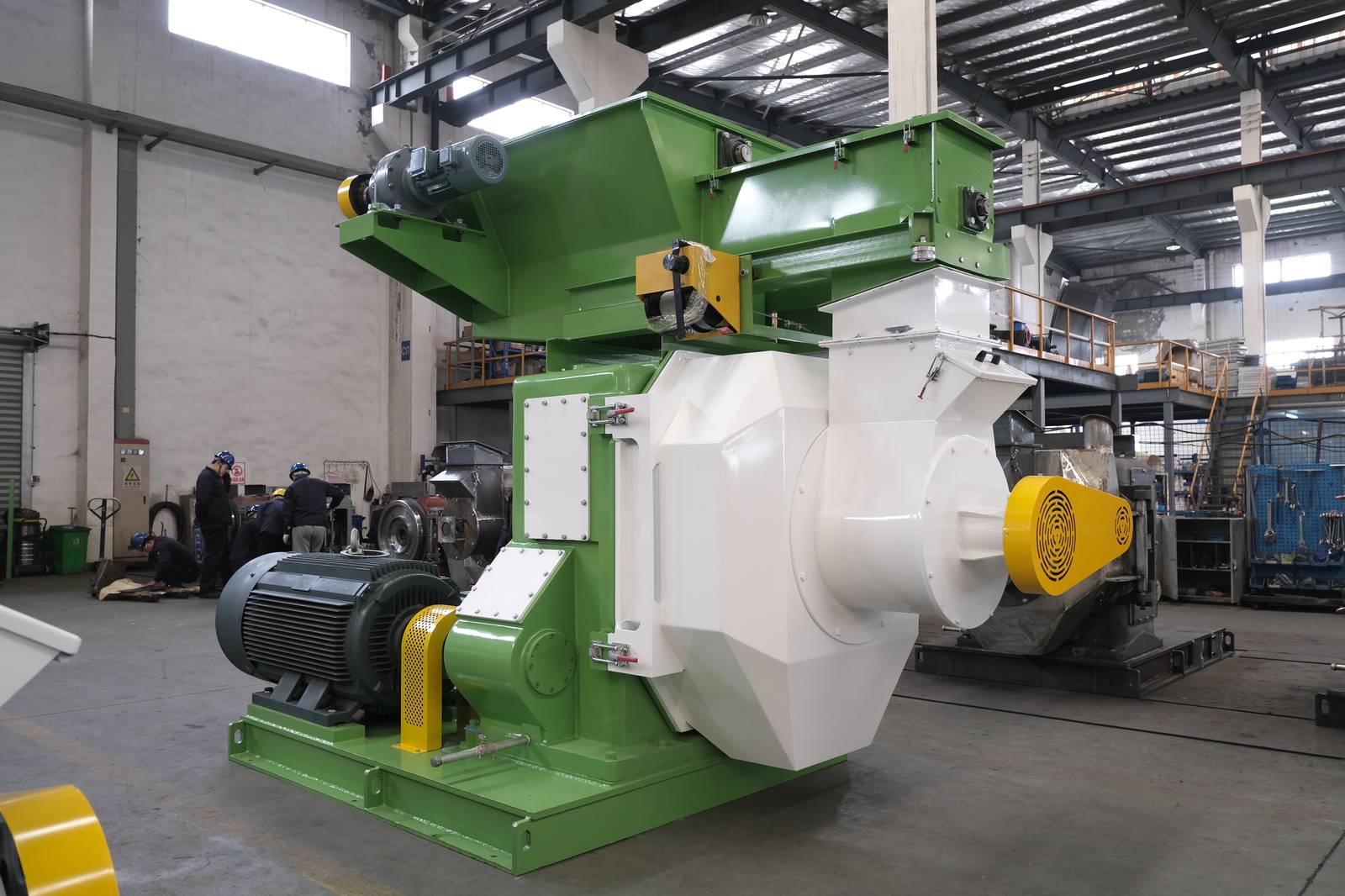
Wood Pelletizing Apparatus: New Standards in Biomass
Kingwood · May 26, 2026
The Problem with Conventional Air-Dried Wood Pellets
Standard air-dried white wood pellets are widely recognized as a cleaner alternative to cordwood and fossil fuels. They offer high energy density, consistent sizing, and straightforward logistics. However, industrial operators converting large facilities to biomass often encounter a structural cost problem: air-dried pellets require covered fuel storage, humidity-controlled environments, and specialized handling equipment that cordwood systems were never built to accommodate.
For utilities, district heating operators, and industrial boiler managers, these infrastructure demands translate directly into capital expenditure and ongoing maintenance costs—often enough to delay or cancel conversion projects that are otherwise economically sound.
Composite Pellet Technology: How Kingwood Addresses Handling Costs
Kingwood’s advanced wood pelletizing apparatus is engineered to produce composite biomass pellets that resolve the volatility and moisture sensitivity of conventional air-dried pellets. The production process involves intimately mixing wood fiber with a polymer binder, coating all exterior fiber surfaces before extrusion, then heating the blend to melt the polymer and molding the output into dimensionally consistent pellets.
The resulting product is a high-density, odorless pellet with measurable improvements across key performance parameters:
- Moisture resistance: Composite pellets tolerate ambient humidity without the structural degradation that affects standard white pellets, reducing storage infrastructure requirements.
- Low ash content: Ash content below 18% (well within the ISO threshold of 20%) lowers processing and ash-handling costs at the combustion end.
- Dust reduction: Enhanced surface hardness reduces fines generation during conveying and feeding, cutting dust control costs at the plant level.
- Compatibility with pulverizers: The mechanical properties of composite pellets are closer to coal than those of air-dried pellets, making them viable in existing coal pulverizer infrastructure during fuel-switching projects.
Calorific value is maintained at 4,800 kcal/kg. Sulfur content remains below 0.3%—well under Japan’s ≤0.5% standard—and dioxin emissions test below 0.5 ng TEQ, significantly stricter than China’s GB national limit of ≤1.0 ng TEQ.
Industrial-Scale Pellet Mill Equipment and Complete Line Design
Kingwood’s pelletizing technology is backed by a full equipment range built for continuous industrial operation. The vertical ring die pellet mill lineup—JWZL-420, JWZL-688, JWZL-688D, JWZL-928, and JWZL-1068—covers throughputs from 1 t/h to 5+ t/h per unit, and the horizontal JZWH-860 delivers 4–5 t/h for operations with different layout requirements.
For operators building or upgrading a complete facility, Kingwood designs and supplies wet-feed pellet production lines handling high-moisture biomass feedstocks through the full process sequence: drum chipping, coarse grinding via hammer mill, thermal drying in a drum dryer, fine grinding, ring die pelletizing, counter-flow cooling, and automated packaging. Complete lines are engineered up to 200,000 metric tons per year of output capacity under the company’s Three-Standardization Framework—Integrated, Dust-Free, and Automated production lines.
Dust-free enclosed processing is particularly relevant for composite pellet production, where polymer-coated fiber handling generates different particulate profiles than standard wood processing. Kingwood’s integrated dust removal systems are specified as part of each line design, not retrofitted as afterthoughts.
For reference deployments, the 24 t/h Vietnam wood chip pellet production line (2023) and the 12 t/h Vietnam line that achieved investment payback in 23 months (2024) illustrate the commercial performance operators can expect from Kingwood-designed systems.
Kingwood: Technical Background and Industry Standing
Founded in 1999 and listed on China’s NEEQ exchange (stock code: 871765), Jiangsu Kingwood Industrial Co., Ltd. operates from a 31,200 m² facility in Liyang Zhongguancun Industrial Park, Jiangsu Province. With 27 years of focused R&D in biomass pellet equipment and a team of 20 dedicated R&D specialists, Kingwood has planned and designed more than 2,000 production line projects and supports clients across 30 countries.
Certifications include ISO 9001, ISO 14001, and CE, alongside recognition as a Jiangsu Provincial High-Tech Enterprise, Jiangsu Provincial Gazelle Enterprise, and a Deputy Director Member Unit of the China Biomass Energy Industry Alliance.
The company’s technical scope covers the full project lifecycle: feasibility consultation, process engineering, equipment manufacture, freight logistics, on-site installation and commissioning, operator training, and after-sales support—structured to minimize the integration risk that typically accompanies large biomass conversion projects.
For specifications on specific pellet mill models or complete production line design parameters, contact Kingwood’s engineering team directly through kingwoodpellet.com.
FAQ
What makes composite biomass pellets different from standard air-dried white wood pellets?
Composite biomass pellets produced by Kingwood's advanced wood pelletizing apparatus are less volatile than air-dried white pellets. They offer improved durability, moisture resistance, temperature tolerance, and lower ash content—reducing the need for covered fuel storage and specialized handling equipment that standard air-dried pellets require.
How does Kingwood's pelletizing process improve downstream operational economics?
The enhanced physical properties of composite pellets reduce dust control costs, lower ash handling overhead, and improve compatibility with existing coal pulverizer infrastructure. Operators converting from conventional biomass systems can expect 40–50% cost savings versus fossil fuel alternatives, based on Kingwood fuel specifications.
What emission standards do Kingwood biomass pellets comply with?
Kingwood biomass pellets meet or exceed multiple international standards: sulfur content ≤0.5% (Japan standard), ash content below 20% (ISO standard), and dioxin emissions below 0.5 ng TEQ. All air emission indicators fall below China's GB13271-2001 national boiler emission standard.
Which Kingwood pellet mill models are available for industrial-scale production lines?
Kingwood offers five vertical pellet mill models—JWZL-420 (1–1.5 t/h), JWZL-688 (2–2.3 t/h), JWZL-688D (3–3.5 t/h), JWZL-928 (4–5 t/h), and JWZL-1068 (capacity on request)—plus the horizontal JZWH-860 at 4–5 t/h. Complete wet-feed production lines can be designed up to 200,000 metric tons per year.
What is Kingwood's Three-Standardization Framework and why does it matter for pellet plant operators?
The Three-Standardization Framework structures Kingwood's production line design around three pillars: Integrated production lines, Dust-Free production lines, and Automated production lines. For plant operators, this means reduced maintenance overhead, improved worker safety through enclosed dust-free processing, and consistent pellet quality across high-throughput operations.
Does Kingwood provide full engineering support beyond equipment supply?
Yes. Kingwood delivers end-to-end project support covering consultation, process design, equipment manufacture, logistics, on-site installation, commissioning, operator training, and ongoing after-sales service for complete biomass pellet production lines.
Where has Kingwood deployed large-scale pellet production lines internationally?
Kingwood has supplied and commissioned production lines across 30 countries. Documented deployments include a 24 t/h wood chip pellet line in Vietnam (2023), a 12 t/h line in Vietnam achieving payback within 23 months (2024), a 30 t/h line in Chongqing, China (2021), and Beijing's first biomass pellet demonstration project (2024).
- Kingwood has planned and designed over 2,000 biomass pellet production line projects and supports an annual biomass fuel production capacity of 10 million metric tons. (2025, Kingwood corporate profile, kingwoodpellet.com)
- Biomass pellets produced on Kingwood equipment deliver a calorific value of 4,800 kcal/kg with sulfur content below 0.3% and ash content below 18%—exceeding ISO and China GB standards. (2025, Kingwood product technical specifications, kingwoodpellet.com)